|
Ecocities Emerging
To support humanity's transition into the Ecozoic Era
| Ecocity Builders
October 2012
| |
|
Greetings,
Ecocity Builders is recently back from Incheon, South Korea, where we joined the UNISDR's (United Nation office for disaster risk reduction) "Making Cities Resilient" campaign (linked to UN-HABITAT's larger World Urban Campaign of which we are an associate partner). Both campaigns are interested in using the Ecocity Framework for assessing and benchmarking resilience and reducing risk in urban areas, and we plan to collaborate with them over the next year in identifying common indicators that will measure and track the health of the urban ecosystem.
While in Incheon we met with representatives of organizations from around the world interested in utilizing ecocity principles and tools to increase city and citizen resilience, including the Philippine division of Plan International, one of the oldest and largest children's development organizations in the world. They are considering piloting the Ecocitizen World Map that we've been testing with the help of Catalytic Communities in Rio de Janeiro with some favela communities (see article in this edition of the newsletter), which is also cross connected to the Ecocity Framework. Plan is interested in linking aid to individual children with empowering them to get more involved in the betterment of their communities. We look forward to a fruitful partnership.
Richard Register is recently back from China where he was a headliner for the Binhai Eco-city Forum in Tianjin and gave input and feedback into the city of Nanjing's program for their next generation of proposed ecocity development. You can read more about his visit in his report back in this edition of Ecocities Emerging.
Ecocity World Summit 2013, convening next September in Nantes, France has issued the Call for Contributions. This conference is already shaping up to be an especially creative, dynamic and high powered worldwide gathering of the ecocity movement, so we urge you to download the PDF from the conference website, make a submission, and help us co-create the conference!
Closer to home, we are working with the City of San Francisco's Chief of Citywide Planning Jose Campos to welcome the first meeting of the Steering Committee of City Protocol, conceived of as a new "open, global, and progressive working framework for cities worldwide to assess and improve performance in environmental sustainability, economic competitiveness, quality of life, and city services." Ecocity Builders is a member of the City Protocol Steering Committee and will be co-hosting a tour for the group of San Francisco's proposed eco-districts led by Mr. Campos.
The work that we do -- bringing the ecocity vision and tools to the world through international collaboration and outreach -- would not be possible without the support of organizations like the Helen and William Mazer Foundation. Our heartfelt thanks and appreciation goes out to the Mazer Foundation and to our Board Members Steven Bercu and Isabel Wade for their support and guidance for the International Ecocity Framework and Standards Initiative. Thank you!
And speaking of support -- it's getting to be that 'end of the year' time, and we would like to respectfully request that if you are planning any year end donations or contributions to a worthy organization working hard for people and planet that you consider supporting Ecocity Builders. You would be hard pressed to find another organization out there that works as hard as we do with as much impact and determination while always staying true to our core principles and ideals. We are a 501 c (3) nonprofit organization and all donations to Ecocity Builders are tax deductible.
As we build, so shall we live.
Sincerely,

Kirstin Miller
Executive Director

Keeper of the International Ecocity Conference Series
Ecocity Builders is a non-profit organization dedicated to reshaping cities, towns and villages for long-term health of human and natural systems. Ecocity Builders 339 15th Street, Suite 208 Oakland CA 94612 USA www.ecocitybuilders.org www.ecocitystandards.org
 Thank you to our major supporters: British Columbia Institute of Technology - School of Construction and the Environment; Helen and William Mazer Foundation; Columbia Foundation; HealthBridge Canada
|
 CALL FOR CONTRIBUTIONS NOW OPEN
|
|
|
EcoCitizen World Map in Action
Community Asset Mapping to Identify Risks and Solutions in Pica-Pau
by Rexy Josh Dorado, Volunteer Orienter, Catalytic Communities
Note: Pica-Pau is a favela community in Rio de Janeiro, Brazil and is one of the communities piloting the EcoCitizen World Map, developed by Ecocity Builders in partnership with Esri and Ushahidi, and brought to Pica-Pau through Catalytic Communities, an NGO "working to destigmatize Rio de Janeiro's favela communities and integrate them into the wider society, generating global recognition of their heritage status."
Click here to see Pica-Pau on the EcoCitizen World Map!
Equipped with a GPS, voice recorder, and pair of cameras, my partner Ana Puhač and I entered Pica-Pau, Cordovil looking to compose a profile of the social, economic, and ecological dimensions that color life in the North Zone favela. Over two months, Irenaldo Honorio da Silva, president of the community's Neighborhood Association, led us through its alleys and inclines, his quick voice detailing the problems that have festered in the long absence of government services, and the efforts that have emerged from both residents and municipal government to turn the tide.

We now present our observations on the interactive EcoCitizen Map, built on the Ushahidi platform by EcoCity Builders, an NGO "dedicated to reshaping cities for the long-term health of human and natural systems." These reports can be viewed on a separate Esri interface, layered alongside data extracted from social networks as well as studies on land use and landslide risk. The right composites, we hope, will highlight linkages between geography and its social outcomes.
 | |
Irenaldo Honorio da Silva, president of the community's Neighborhood Association
|
Common themes on RioOnWatch make their appearances here: wastethat swelters in the absence of sanitation,
schools that fail to prepare their children,
drugs that corrupt the bodies and human relationships of their dependents. Regular readers will remember the deteriorating houses that cling to the side of its hilled slope.
A history of government interventions that are dreadfully out of sync with the priorities of its people has left its mark on the expectations of the population, who, fearing empty politics, hesitate to get involved in upcoming projects that proclaim "participation." And residents organize to provide for themselves, tackling those said problems with the force of collective action.
The goal of the EcoCitizen map is, first, to trace the well-being of diverse human settlements throughout the globe - and then to use this information as a vehicle for transformation. Since Pica-Pau is the first community to have both its assets and issues mapped (previous excursions have only documented efforts and achievements rather than areas of necessity), this project hopes to inform solutions to some of the community's problems, and at the same time bring light to the capacities of an often maligned favela population. With the City government's urban integration project, Morar Carioca, in the horizon, this could serve as a valuable inventory of the problems that call for solutions in Pica-Pau, as well as a reference point for evaluating Morar Carioca's long-term efficacy.
So - what happens now? What are the next steps? This platform will eventually be presented to the community of Pica-Pau, potentially mobilizing community members to provide more detailed reports of the situation in Cordovil as it develops. Some of this information has been uploaded to Mootiro Maps, another interactive map that has seen a recent surge of interest and participation from residents of other favelas. And EcoCity Builders has located more volunteers who will attempt to replicate this project in similar communities throughout the world.

Then there's your role. Play with the Esri site and smoke out connections. If you're fluent in Portuguese, assist us in providing more accurate translations. Leave comments and questions on the reports that we will forward to Irenaldo, piecing together a better understanding of Pica-Pau's situation through dialogue.
+++ Article by Brown University '14 Originally published in RioOnWatch a program to bring visibility to favela community voices in the lead-up to the 2016 Olympics, to be held in Rio de Janeiro. |
|
Can We Make our Cities Sustainable with Permaculture?
Tuesday, 25th September 2012
It is predicted that the next century will see 70% of the world's populations reside within the 'safety' of the modern metropolis. Here are 15 ways to make our cities more healthy, creative and sustainable.
If we are seriously attempting to address a holistic approach to sustainability, we must engage with our cities too, attracting the attention of architects, urban planners and developers the world over, in order to provide substance to the 'green,' 'eco' architectures of our present day.
This challenge calls us to think differently about permaculture and the way we apply the skills we learn following on from design courses. Permaculture is predominantly based on three principles: Earth Care, People Care and Fair Share. However, As Looby Macnamara's People & Permaculture emphasizes, the vast majority of permaculture courses only deal with Earth Care, often excluding in one way or another, the other two principles.

Could this give us an insight into the cities of the future?
Picture by Richard Register
Creatively Designing Our Cities With Sustainability in Mind
Herbert Girardet's Schumacher Briefing, Creating Sustainable Cities, describes the sustainable city as a place "organized so as to enable all its citizens to meet their own needs and to enhance their well-being without damaging the natural world or endangering the living conditions of other people, now or in the future." Adding to this, Richard Register - the man responsible for coining the term 'Ecocities' - states that "the whole notion is to have a beautiful city that is really creative". Working as a sculptor in the 1980's, he envisaged that "we could all be living in these sculptures that are very supportive of human creativity". READ ON |
|
Freiburg Charter
Requirements on Urban Development and Planning for the Future
(The following is from the forward/preface of the Freiburg Charter, pg. 6, by Prof. Wulf Daseking)
 | | Professor Daseking making a point at Ecocity World Summit in San Francisco, 2008 |
There is no clear definition of what makes a city. Cities may emerge as the result of specific planning - or sometimes through coincidence. There is no alternative to cities! In the past, cities served to protect their inhabitants, trade and divisions of labor, to secure territory and act as a meeting place. Today, urban systems are extremely complex structures - usually covering a very small area. Cities are not static entities - quite the contrary, they are the result of centuries of development, characterized by events and upheavals, which were always connected with social and/or technical innovations. The Industrial Revolution, which started at the beginning of the 19th century, brought with it the most drastic changes to urban systems experienced so far. Complete reorientation ensured. In the 20th century, the face of cities changed following the arrival of the motor car and the subsequent adaptations to increasing motorization. Communication technologies - particularly those developed in the 21st century - will once again bring about deep-rooted transformation. Today, our cities mirror the complex social structure of urban societies. In the future, their design must become a model for all those who wish to treat their environment and its limited resources responsibly. This argument was poignantly made in the report on "Limits to Growth" published by the Club of Rome back in 1972, which recognized the limitations of our resources and called for responsible resource management. Anyone for whom the message was not yet clear was finally forced to recognize that things would not simply be able to continue as before when the oil crisis hit in 1973 and when the Chernobyl nuclear power station exploded in 1986. Countries, cities and their regions have to face up to these challenges and develop new strategies.
More recent environmental disasters - which support such stipulations - occurred in 2010, when the oil platform Deepwater Horizon exploded in the Gulf of Mexico, and in 2011, when the tsunami and earthquake struck Japan. These events triggered explosions in four reactors of the Fukushima nuclear power plant, the consequences of which remain impossible to predict. The response from the German parliament was its decision, in 2011, to phase out nuclear energy by 2022.
This means that new sources of much-needed energy must be found while cutting consumption at the same time. There is no doubt that urban development and planning play an important pioneering role in solving the issues before us. The areas of economy, ecology, social affairs and education as well as cultural diversity must by addressed through an integrated approach. Involving citizens at an early stage in the planning process and giving consideration to regional integration and basic preconditions for viable urban development.
Prof. Wulf Daseking
Tel.: 0049 -761/ 696205
mail: d@seking.de
Web: www.wulf-daseking.de
++++++ The English version of The Frieburg Charter, a guide for cities on how to become greener and more enjoyable places to live has been launched by The City of Freiburg and think-tank The Academy of Urbanism with sponsorship from Land Securities. It draws on the lessons from a generation of proactive planning in Freiburg and advocates 12 principles for achieving sustainable urbanism, which include advice on how to develop eco-friendly neighbourhoods, promote wider use of public transport and accessibility for all. To order a copy, please contact Stephen Gallagher at on 020 7251 8777 or
|
|
Soil is the Solution, or the most important environmental story I'll ever write
 Sven, "Soil is the Solution" might be the most important environmental story you'll ever write. It is part of the solution to our environmental challenges. The story belongs on the front of the NY Times and on 60 Minutes. - Email from Robert Reed, composting manager at Recology, San Francisco's waste management company Sven, "Soil is the Solution" might be the most important environmental story you'll ever write. It is part of the solution to our environmental challenges. The story belongs on the front of the NY Times and on 60 Minutes. - Email from Robert Reed, composting manager at Recology, San Francisco's waste management company
This is a story of hope and possibility in times of great turmoil and struggle.
A few months ago I was working on an article about
San Francisco's pioneering efforts to become the world's first zero-waste city by 2020. Chronicling this journey toward a current nation-leading 78 percent waste diversion rate, a major focus of the story was on the city's mandatory composting program that has played a huge role in keeping over a million tons of food scraps, plant trimmings, soiled paper, and other compostable materials from clogging up landfills and releasing methane into the atmosphere. I was particularly interested in the idea of the food cycle, and it was heartening to see just how far along the City by the Bay has come in closing it: each day 600 tons of sloppy goodness from hundreds of thousands of residents, businesses, and over 5,000 restaurants gets shipped to a local state of the art composting facility, from where it returns to residents' dinner tables in the form of fresh, organic foods grown by local farmers who use the city's nutrient-rich compost as fertilizer. It wasn't until after the story was published that I was alerted to the most remarkable and possibly game-changing discovery about urban compost: its potential to offset 20 percent and perhaps as much as 40 percent of America's carbon emissions!
Please follow me below the tuber curtain to dig a little deeper...
 |
|
Ecocity Insights
by Jennie Moore, Director, Sustainable Development and Environmental Stewardship, British Columbia Institute of Technology

Using Transportation to Support a Healthy and Equitable Economy
A socio-cultural feature of ecocities is that they support a healthy and equitable economy. The International Ecocity Framework and Standards (IEFS) calls for the city's economy to favor economic activities that reduce harm and positively benefit the environment and human health. It also calls for support of local and equitable employment options that are integrated with urban design of the city (i.e.,layout of land uses) as well as the city's policy framework. This approach sets the foundation for "green jobs" and "ecological development" (www.ecocitystandards.org).
Cities such as Bogota, Curitiba, and Copenhagen have advanced a healthy and equitable economy by placing emphasis on a more equitable transportation system, one that promotes accessibility for everyone, not just those who can afford a car (Curtis 2003; Goodman et al. 2005; Nelson 2007). For example, these cities implemented integrated land use and transportation demand management strategies including a) increases in density of both jobs and housing close to transit services, b) expansion of pedestrian, bicycle and transportation infrastructure and services, c) restrictions on motor vehicle use. Restrictions include a cap or even a reduction in roadway and parking available to cars, road tolls and parking fee increases, and limited access to the downtown based on license plate numbers and designated car-free days.
Cities with very high walking, cycling and transit mode share (i.e., 75% or more) typically have high density , mixed use urban centres at or above 100-200 people per hectare and are supported by a transportation strategy that prioritizes pedestrians, cyclists and transit users (Newman and Kenworthy1999). Even though the cities of Bogota, Curitiba and Copenhagen meet the above cited criteria for high-density, combining an education program with the regulatory and financial changes that favour walking, cycling, and transit was also deemed necessary to address significant public resistance during the introduction of the changes. However, once implemented, these changes gained public acceptance that eventually grew into strong public support (Curtis 2003; Goodman et al. 2005; Nelson 2007).
References:
Curtis, Ryan. 2003. Bogota Designs Transportation for People, Not Cars, World Resources Institute Features, Vol. 1, No. 1. http:archive.wri.org/newsroom/wrifeatures_text.cfm?ContentID=880
Goodman, Joseph, Melissa Laube, Judith Schwenk. 2005. Curitiba's Bus System is Model for Rapid Transit, Race, Poverty and the Environment, Winter 2005-2006: 75-76. http://urbanhabitat.org/node/344
Nelson, Alyse. 2007. Livable Copenhagen: The Design of a Bicycle City. Seattle: University of Washington. http://greenfutures.washington.edu/pdf/Livable_Copenhagen_reduced.pdf
Newman, Peter and Jeffery Kenworthy. 1999. Sustainability and Cities: Overcoming Automobile Dependence. Washington DC: Island Press.
British Columbia Institute of Technology School of Construction and the Environment is Lead Sponsor of the International Ecocity Framework and Standards Initiative
|
|
|
Report from China - Progress at Tianjin Eco-city and Promise at Nanjing
By Richard Register, Founder and President, Ecocity Builders
 | | Richard Register |
What on Earth is going on? Well, the US is big and cars are losing popularity gradually as young people turn to portable electronic communications, take in the advantages and direct experience of the pleasures of urban life - and can rent the damn things for travel to the country any time they want and save thousands of dollars every year. (Maybe rising college tuition is a factor against cars for the youthful...) In Russia, still bristling with nuclear weapons, Pussy Riot is threatening to bring down the 13 year Putin regime - at least someone still prays over there even if in dance and song. In China, biggest of all, four times the population of the United States, they are building automobile infrastructure like crazy and, for the last two years buying more cars than Americans are. And attempting at the same time to build what they call eco-cities.  | |
"Tong Yen Ho, the former UN senior diplomat from Singapore and CEO of the Sino-Singapore Tianjin Eco-city Investment and Development Co. Ltd. Sent us this image of the new building cluster just completed with solar electric power and showpiece field of sunflowers
|
That's the strong card in my hand since I came up with the term many years ago and there and in Korea I get credit for the linguistic innovation. California Governor Jerry Brown doesn't answer my mail though I knew him and worked with him for a couple years just before he became Oakland Mayor, traveled with him three times to his 25,000 acre spread west of Williams to dream about his ranch's future and ecocity designs and organized a number of seminars at his We the People "compound" in Jack London Square. But in China I meet with the country's second in command for housing, rural and urban development Qiu Boaxing, big developers and heads of city planning agencies. So we do the best we can and China is currently more friendly than the US to my work. To say, with its stunning rate of building, China is the place to be if you are interested in new city development is a 21st century understatement. This was my third trip to Tianjin Eco-city and second to speak at the world Binhai Eco-city Forum in the new development district on the coast next door to Tianjin proper. I was hired earlier this year by Xuefeng Lin, Director of the project known as the Sino-Singapore Tianjin Eco-city. My assignment: to write a report from Ecocity Builders' perspective on the SSTEC effort, throwing in a few added suggestions for amendments into the future. I found their project inspiring. There was to be a predecessor: Dongtan, the "worlds first ecocity" according to Arup, the engineering firm from England that was doing the main design and planning for that effort to be located on Chongming Island just north of Shanghai. But mysteriously all work ceased on the project. I think it had something to do with the fact that the chief local champion of the project, a high politician in Shanghai, ended up in jail for 18 years for corruption and influence pedaling, which tends to dampen things in that country where honor and saving face is a prerequisite for surviving, much less leadership. That, back around 2009, left standing only Masdar in Abu Dhabi and just-starting Tianjin Eco-city as the world's two remaining serious new town ecocity contenders. Given that Masdar represents the weirdest of circumstances - deep pockets of money from literally deep pockets of oil nearby, which almost nobody else in the world has, makes considerably less relevant as a model for any kind of city much less an ecocity. And it's in an enormous desert so hot and large the only way it can survive is by shipping in massive amount of food from great distances spending the energy they save on compact development just to keep the city relatively cool. News has it that much of the early enthusiasm and considerable investment money has dried up and left Masdar close to spinning its wheels there with little progress happening at the present time. That leaves Tianjin Eco-city, and the first to use the word I made up back in 1979 in its official name. Am I happy to be involved? Very. How's it doing? Pretty well. The first 200 families are moved in and more coming quickly. But you'd think by looking at the scale and number of the buildings 20,000 families would already be there. That's because the interiors of dozens of buildings in the 10 to 20 story range are still being worked on while many are rising pillars, slabs and floor plates surround by ever rising scaffolding and those green sheets of cloth that keep falling material under control and dampen the breezes in the structures under construction. The first shopping center has about five stores, an exercise club, a couple restaurants and more stores being outfitted for opening shortly. A modest sized Hilton Hotel in traditional Chinese style is to be opened in the early New Year. Classes are underway at the first high school for residents and a few students from outside.  | |
A section under construction of the future eco-valley pedestrian and bicycle pathway that will run the full north to south length of Tianjin Eco-city.
|
The pedestrian and bicycle path that runs the length of the whole project from south to north, which they call their "eco-valley," which it looks something like since buildings lift up like hills around it, is linking up block by block. The national animation center, a big, high tech facility is buzzing along, and cart wheeling wind electric machines are popping up here and there some reaching higher than the tallest buildings. A string of solar electric panels is stretched out what looks like a couple miles along the highway to the east of the project providing a significant slice of the energy for the eco-city. The neighborhood buildings around the project offices are nearing completion, heated and cooled largely by geothermal energy, sometimes called geo-exchange, exchanging heat from ground to piped water to buildings. The system uses the steady mid range temperatures of the earth deep below the surface to augment and reduce the requirements for achieving comfortable temperatures for interiors by pumping water underground then around the neighborhood buildings. For heating in winter some gas is burned in their co-generation facility that provides some of the site's electricity, "waste" heat added to the mid range temperatures from the geo-exchange system.
Restoration of natural habitat in the area? Better than restoration since they are creating environments along their waterways that harbor more biodiversity than existed there before. That initiative is more like an example of cities' ability to turn a net contribution to life systems if you simply design them that way. The weak side of the story there is the general layout following the development pattern so well established in China at this point, which looks every bit as if created to encourage driving. Their goal is 90% "green trips" by 2020, meaning that 90% of all trips anywhere, commuting or local, would be by foot, bicycle or transit. I'm assured that the long, wide streets that stretch along the "super blocks" that must have four to eight times the land area of the typical American urban block, will be interrupted by signal light controlled pedestrian and bicycle crosswalks to dampen the speed and mellow out the psychology of the driver in the car while making the whole environment more friendly to the cyclist and person on foot. Their goal that improves the alternatives while not talking about what they are alternative to, is a somewhat delicate criticism of cars - they could name names and say, "We are trying to get rid of them as quickly as we can." But in China, as in the USA, and everywhere else I can think of, the automobile has almost sacred status, the fetish of overmobility as a German friend once called the hurtling boxes of metal and glass on rubber. It is so taboo that of course the Key Performance Indicators guiding development at Tianjin Eco-city don't mention the car at all, and even our own International Ecocity Framework and Standards (IEFS) eschew direct criticism. Implied yes, explicitly stated, not so much. Meantime I dream of the day we pass over the threshold and can just say with impunity that this strange thing that weighs 30 times as much as a human being, goes ten times and fast and takes up 1000 times the volume of space over the surface it requires - parking as well as driving space - is just a dangerous, damaging thing to design cities around. Better to design cities for people. But meantime we prepare the ground for the leap over the threshold into a new world of ecocities pouring forth. Kenneth Boulding once said peace in the world might be something like the myth of Sisyphus: you keep rolling the rock up the hill toward the summit but it slips away and falls back and you try again and again. It's hard but once you get to the top and over the rock rolls ever faster down the other side. He used the example of slavery, an institution that goes back thousands of years to even before city-based civilization began... evaporating in the 19th century. (People quibble that we have economic slavery among some now - but they aren't thinking through the full meaning of the reality that was full-on slavery.) Steven Pinker in his book "The Better Angeles of Our Nature - why violence has declined" points out the same humanizing trend put an end to dueling too: he says, "...dueling petered out in the English-speaking world by the middle of the 19th century... Historians have noted that the institution was buried not so much by legal bans or moral disapproval as by ridicule. 'Solemn gentlemen went to the field of honor only to be laughed at by the younger generation, that was more than any custom, no matter how sanctified by tradition, could endure.' (He credits only 'Stevens,' 'Ridicule ended Dueling,' 1940.) Today the expression 'Take ten paces, turn, and fire' is more likely to call to mind Bugs Bunny and Yosemite Sam than 'men of honor.'" All that to suggest that a civilizing trend my be just a glimmer in the eye of places like Tianjin Eco-city, but the small, almost counter culture trend away from cars might just break free and usher in a flood of real ecocities fairly soon. READ ON |
"We usually say there is always a 'Plan B,' but there is no 'Planet B.'"
- Jan Eliasson, deputy secretary-general, United Nations |
Ecocity Builders joins UNISDR led

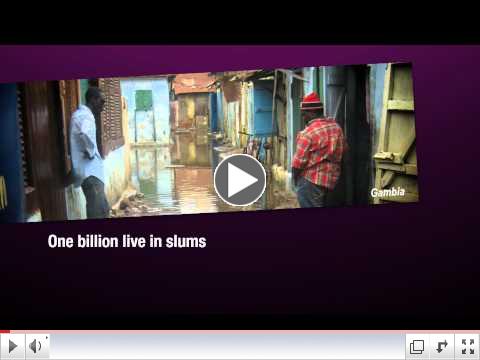
Recent UNISDR stock-taking workshop in Incheon, South Korea. Left to right: Baltz Tribunalo Jr., Plan Internatiional Philippines; Masahiko Murata, Diaster Reduction and Human Renovation Institute of Japan; Violeta Seva, Senior Adviser, City Government of Makati, Philippines and Kirstin Miller, Executive Director, Ecocity Builders The Making Cities Resilient: 'My City is Getting Ready!' campaign will enter its second phase 2012-2015 and Ecocity Builders is joining as a campaign partner. The campaign, launched in May 2010, addresses issues of local governance and urban risk. Among other things, Ecocity Builders will work with the campaign to develop a set of common standards, metrics and indicators to help facilitate and coordinate the shared discussion, planning, design and implementation of integrated strategies to increase health and resilience in urban areas. Utilizing ecocity design principles informed by the Ecocity Framework assessment, cities and citizens can implement preventative measures to reduce risk and increase the health of the whole city-system. Examples might include ecocity advanced planning and implementing more compact, energy and land saving urban design; building on elevated fill in flood prone areas; building safely on hillsides and slopes; clustering to protect against fire hazards; and educating citizens about how integrating healthy nature and green spaces in cities can help buffer against disasters while boosting health and livability. The campaign will continue to advocate widespread commitment by local governments to build resilience to disasters and increased support by national governments to cities.
Learn about how to join the campaign and get your community involved!
 | | UNISDR World Disaster Reduction Campaign |
|
|
Car Free Journey
By Steve Atlas

Baltimore, Maryland
Nicknames: Charm City, Mobtown, B'more, The City of Firsts, Monument City, Ravenstown
Mottos: "The Greatest City in America.", "Get in on it.", "The city that reads.", "Believe."
For the past several years, my hometown of Baltimore, Free Fall Baltimore: held every October to a series of free events, free admission to several attractions, and many other free programs and activities. The city offers several free shuttle buses that serve downtown Baltimore and other nearby attractions. The free bus service, Charm City Circulator, makes it easy and fun for visitors to enjoy a weekend here without needing to drive.
Baltimore's local public transit system, Maryland Transit Administration (MTA) provides light rail, subway (Metro), and local and regional bus routes. (On weekdays, MTA provides MARC commuter train service between Baltimore and Washington, D.C.-just an hour away.) A one-day bus (good for unlimited travel on MTA local buses, subway and light rail) costs just $3.60 ($1.20 for senior citizens age 65 and older). For more information about MTA routes, schedules, fares and passes, visit www.mtamaryland.gov, or call (410) 539-5000.
October is a great time to visit Baltimore, the city we will visit in today's Car Free Journey column.
READ ON

|

The International Ecocity Framework and Standards (IEFS) initiative seeks to provide a vision for an ecologically-restorative human civilization as well as a practical methodology for assessing and guiding progress towards the goal.
Website
|


Founded in 1992, Ecocity Builders is a nonprofit organization dedicated to reshaping cities for the long-term health of human and natural systems.
www.ecocitybuilders.org
|
|
|
Principal Features of an Ecocity

|
|
PRINCIPAL SPONSOR OF THE INTERNATIONAL ECOCITY FRAMEWORK AND STANDARDS

|
|
|
|
|



