|
Ecocities Emerging
To support humanity's transition into the Ecozoic Era
| Ecocity Builders
September 2012
| |
|
Greetings,
From August 2011 to June 2012, Ecocity Builders engaged with the process leading up to the United Nations Summit on Sustainable Development (Rio+20) which took place in Rio de Janeiro, Brazil in June, twenty years after the landmark 1992 UN Earth Summit. World leaders, along with thousands of participants from the private sector, NGOs and other groups, came together to discuss global issues, including poverty, social equity and environmental protection on an ever more crowded planet. Part of the process involved the 192 member states co-authoring the Rio+20 "Outcome Document", a shared statement about the world's most pressing issues and how to address them, along with a collective vision for a healthy and sustainable future, " The Future We Want" (tag line of the conference). Imagine how difficult it would be for you and 192 of your closest friends and like-minded associates (let alone a group with people in it with whom you strongly disagree), to co-author a report on any one major world problem and solution, let alone a treatise covering global poverty, food security, water and sanitation, energy, sustainable tourism, sustainable transport, sustainable cities and human settlements, health and population, promoting full and productive employment, decent work for all and social protections, oceans and seas, small island developing states, least developed countries, landlocked least developed countries, Africa, regional efforts, disaster risk reduction, climate change, forests, biodiversity, desertification, land degradation and drought, mountains, chemicals and waste, sustainable consumption and production, mining, education, gender equality and women's empowerment, and sustainable development goals. And so perhaps it's not all that surprising that the 192 co-authors were unable to deliver a compelling vision for our future or a plan for how to dig ourselves out of the current unhealthy and dangerous environmental/social/economic predicament we're in. As such, the conference could be said to be an epic failure. However, as I watched the representatives meeting day after day during the pre conference preparatory negotiations, I had to wonder if the whole process was really such a waste of time. At least everyone was there in the room talking about issues that matter to the 99%: poverty alleviation, jobs, environmental protection, social equity, the future. Additionally, the conference created a platform that launched hundreds of voluntary commitments from government, public and private sectors for sustainable development with an estimated value of $513 billion. The National Resource Defense Council has created a tracking system for these commitments. The Rio+20 outcome document is not binding and is certainly not a working plan to save the planet, launch the global green economy and end poverty, but I urge you to take a look at it, just to get a sense of what they did agree on. It's also worth learning about what other groups thought of the outcome, including students. I personally think this process should happen every other year, not every 10 or 20 years. The value in this convening lies in the process carried out within an international organization set up to promote international peace, security, and cooperation. If countries knew they'd have to come back every other year and report on their progress or lack thereof it might create more incentive for follow through and the everyday global citizenry might become more interested and involved. Ecocity Builders used the Rio+20 process to connect with sustainable city leaders, activists, organizations, companies and institutions from all over the world. And although nations are not organizing around a shared framework for guiding and benchmarking healthy and sustainable human and natural systems assessments, planning and implementation, cities are, and they are forming their own networks of influence without waiting for nations to act. Our contributions, including the International Ecocity Framework, are helping guide the process. The result is that we have a stronger leadership position within the global sustainable city movement -- we are the 'cities and urban issues' facilitator for the NGO Major Group at the UN, we signed a 2 year MoU with ICLEI (the largest local government organization working on environmental issues with cities) to develop a global network of ecocities, and we connected with dozens of major actors and organizations working on similar issues and projects. We are also now on the Steering Committee for the City Protocol project recently launched out of Barcelona and coming to San Francisco next month for their first meeting to discuss a common city framework and language and a shared protocol for delivering ecocity/smart-city services and technologies.
There is a lot of interest in what we're working on, but there is still a need to more firmly anchor the understanding of the fundamental land use shift required to transition over from the car/road/cheap energy city to the land and energy conserving ecocity. Because the right kind of the city can save the earth. We are looking to focus our energies for the remaining months in 2012 and during 2013 on the basics of ecocity land-use and mapping and working on city-citizen long-range planning and strategies that we can spotlight at Ecocity World Summit 2013 in Nantes, France, next September. We hope to position Nantes as a springboard for the next level of global ecocity actions and commitments.
As we build, so shall we live.

Kirstin Miller
Executive Director

Keeper of the International Ecocity Conference Series
Ecocity Builders is a non-profit organization dedicated to reshaping cities, towns and villages for long-term health of human and natural systems. Ecocity Builders 339 15th Street, Suite 208 Oakland CA 94612 USA www.ecocitybuilders.org www.ecocitystandards.org
 Thank you to our major supporters: British Columbia Institute of Technology - School of Construction and the Environment; Helen and William Mazer Foundation; Columbia Foundation; HealthBridge Canada
|
|
| |
 | | Ecocity Manhattan! Super green Times Square depiction on the cover of the August 27, 2012 edition of The New Yorker magazine. |
|
|
Ecocity Update
by Richard Register, founder and president, Ecocity Builders
 | | Richard Register, Bejing, China |
I'm not writing one of my feature-length articles this month because I'm winding up writing my "next" book, World Rescue - an economics built on what we build. But I'll give you a little teaser preview after an at, if not quite over the top, review of my last book Ecocities - Rebuilding Cities in Balance with Nature. Lastly, an advertisement for three of my books. Good stuff for independent learning and use in classes. From the new book I'll provide my "buzz through economics recap."
The Review
As far as the earlier book Ecocities... does anyone know how to locate the reviewer Amy Jo of Ohio? She wrote the most enthusiastic review of that book (New Society Publishers, Gabriola Island, Canada, 2006). Located by Skip Wenz of the on-line "Ecotecture Magazine" (presently off-line while being reconstructed) which he found as an Amazon.com review, here it is:
"The most amazing book I have ever read...life-altering look at evolutionary coexistence. There is hope for our future...with others understanding and implementing ecocity principles. Please - I challenge you to read and use the book...our way of being depends on it." -- AJ "Amy Jo" (of Ohio)
From my New Book, World Rescue
And here's a buzz though economics recap according to my new book, something like a preview trailer for a movie:
- Natures mass/energy chlorophyll based economics;
- Transitioning into human economics most massively through what we literally build (the real economy);
- The non-gamesmen's exaggeration mix of best from capitalism and restraining socialism (realconomics of sociatalism);
- The stages of economic history from the first stage of 1.7 million year duration with the first real tool, the hand ax, the second with regular tools, agriculture and nomadic camps and villages, the third with machines and cities and the fourth electronics and ecocities (still early in evolving);
- The ecological imperative of our times requiring proper proportionalizing and prioritizing;
- Yielding a strategy that can be condensed down to the Five Big Ones (subject of my short comments in our last newsletter);
- Paying for a full-employment transition to the ecocity civilization via accessing the capital of the Three Sacred Cows: the rich, the military and the wasteful use of resources tied up in the automobile/truck based sprawling city reinvested in ecocities;
- Then... spread the word, constituting a loosely organized World Rescue strategy allowing for emergence of new order from some fairly high degree of chaos, and gently try to nudge that emergence - it's a self-organizing system - into a more compassionate and creative evolution.
And last, the Advertisement
Ecocities, the book
My 2006 book Ecocities is available from us and selling better all the time, used in planning, government, architecture, academic and environmental circles in increasing distribution as more and more people are beginning to see the trends finally shifting toward the ecocity vision we've been championing for several decades.
$35 plus postage, book from Ecocity Builders, 270 pages, 130 illustrations, address below.
Ecocities Illustrated
This is a DVD "book" that is excellent for teaching and learning about the basic principles and features of future ecocities as I imagine them to be. Drawing executed over the last 30 years, some very informal and sketchy, some well developed.
$18 plus postage, DVD from Ecocities Builders, 93 drawings, about half in color, chapter introductions and captions.
Introductory Slide Presentation on Ecocities
Another DVD but in PowerPoint, excellent for slide shows and classes and learning and teaching about ecocity principles, features and best practices from around the world, complete with photographs, drawing, charts and maps.
$18 plus postage, DVD PowerPoint presentation of 186 "slides" by Richard Register, the base show from which many variations have been generated with changes and additions in his talks in 29 countries on all inhabited continents.
You can buy these items with a check to Ecocity Builders, 339 15th. St., Oakland, CA 94612, USA.
Richard Register
Founder and President
Ecocity Builders
|
Cities on Speed
Cities on Speed, GLOBAL VISIONS FOR an urban FUTURE is a documentary project commissioned by The Danish Film Institute and the national broadcaster DR. The project is a series of four films - Bogotà Change, Mumbai Disconnected, Cairo Garbage, Shanghai Space - selected through a call for submissions, directed by four different filmmakers who tell character-based stories on four of the world's largest megacities: Bogotá, Cairo, Mumbai and Shanghai. 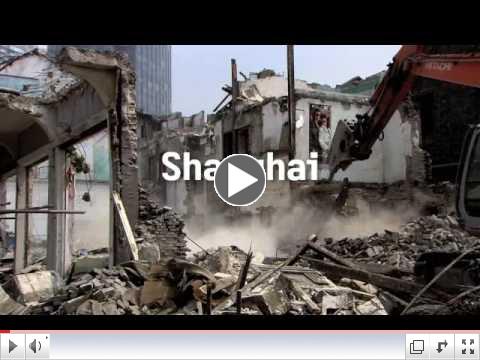 | Official trailer for a feature film series on the megacity issue.
|
You can watch the hour long section on Bogota on Vimeo
 | | Bogota Change |
|
Collective Intelligence: Cities as Global Sustainability Platform
by Warren Karlenzig for TEDxMission
Published on Aug 29, 2012 by TEDxTalks
Social media and collaborative technologies--layered with smart systems combining geo-location data with human experience--will make cities the driving sustainability force in a dawning planetary era. Cities will anticipate new risks with rapid urban systems innovation based upon crowdsourcing, virtual and physical communities, and transparent markets sensitive to full carbon and resource costs. Creatively leveraging collective intelligence for clean energy, low carbon mobility and sustainable food and water, the new urban grid will enable high local quality of life, lifelong learning and vibrant green economies.
Warren Karlenzig is founder and president of Common Current
|


Founded in 1992, Ecocity Builders is a nonprofit organization dedicated to reshaping cities for the long-term health of human and natural systems.
www.ecocitybuilders.org
|
|
Car Free Journey
By Steve Atlas

Charleston, South Carolina
In June, my wife Karen and I visited Charleston, South Carolina: a beautiful city with lots of historic and cultural attractions. Because we wanted to experience both downtown Charleston and the Atlantic Ocean beach, we stayed on the Isle of Palms, a popular beach community outside of Charleston.
Like most of you, we were on a limited schedule, on our way to visit our son in Gainesville, Florida. We spent two evenings at Isle of Palms enjoying the beach, and a day exploring downtown Charleston.
If you are not driving, you can reach Charleston by scheduled airlines (Southwest goes there), Greyhound bus, or Amtrak. (From the northeast U.S., Amtrak's Palmetto arrives in Charleston at 7:15 p.m., still early enough to take a local bus to downtown Charleston.)
READ ON
 | | View of Charleston |
|
|
|
Dear Conservatives: The train is leaving the station. You can hop on or stay cursing at the platform
Dear Conservatives, I'm writing you today to let you know that the train to the future is about to leave the station and a majority of Americans are already on it, seats taken and luggage safely stored away. Most folks were quite happy to book their ticket early for Destination Sustainable Planet with stops along Basic Human Rights, Equality for All, and a Fair Shake for Everyone, but the doors are still open and there's time to hop on. 
I know you think this train is heading towards socialism, and you don't like the sound of that. But what you read about socialism in the brochure isn't really what socialism looks like. It's an entirely different place than advertised. How do I know this? Before immigrating to the great USA I was born and raised in Socialandia, and it's actually what you would consider quite conservative. For example, in my neck of the socialist woods we have some of the biggest multinational capitalist companies in the world, like Daimler, Porsche, and Bosch . My brother for example has been working for Daimler for 25 years, and while the company is quite profitable and considered very conservative, he gets to share the wealth by receiving many benefits like good pay, six weeks vacation, flex time, educational opportunities, and guaranteed retirement benefits. READ ON |
Zurich's Parking Policy Evolution: Cap & Replace
From City Matters, August 2012 Edition
Reporting on an article posted in The Atlantic CITIES, August 8, 2012
 | |
Zurich's Limmatquai before the removal of 20,000 cars per day (Photo: Daniel Sauter)
|
Zurich underwent a major parking policy change for its downtown - from 'predict and provide' (i.e. parking minimums) to 'cap and replace'. When a new parking space is provided, a surface parking space is designated toward public plazas.
Zurich's parking policy evolved from 'conventional' parking minimums in the 1960s to parking maximums in 1989. An 'historic compromise' was reached in 1996, and the final policy was put to a public vote in 2010.
 | |
Zurich's Limmatquai after the removal of 20,000 cars per day (Photo: Daniel Sauter)
|
Visiting Professor at the Swiss Federal Institute of Technology in Zurich and board member of the Congress for the New Urbanism, Norman Garrick teamed-up with Eno Fellow Chris McCahill, both from the University of Connecticut, to describe how the parking policy changed, and the results - how the city's tallest building provided parking at a ratio of just 0.35 spaces/1000 sq. feet. By contrast, most U.S. cities require 3-4 spaces/1000 sq/ft.
Conventional parking policy: Zurich's parking policy, even with its excellent public transit system, began like most American cities, taking "the path of least resistance - facilitating a relentless increase in parking. Ironically, complaints that there is never enough parking seems to grow in direct proportion to the amount of parking supplied."
"The essence of Zurich's historic compromise of 1996 was that parking in the core of the city would be capped at the 1990 level, and that any new parking to be built would, on a one-to-one basis, replace the surface parking that blighted most squares in the city at the time. Today, almost all these squares are free of parking and have been converted to tranquil or convivial places for people to enjoy."
Current parking policy was determined by a 2010 public referendum that "showed that 55 percent of the city's population were in favor of strict parking maximums. The new policy maintains the structure of the 1989 policy in specifying maximums and minimums. But under this new system, there is a default parking level for the whole city, which is then reduced depending on whether or not a particular location is well served by transit."
http://www.theatlanticcities.com/commute/2012/08/lessons-zurichs-parking-revolution/2874/ |
Ecocity Insights
by Jennie Moore, Director, Sustainable Development and Environmental Stewardship, British Columbia Institute of Technology

Growing Food in High Density Cities
High density cities are defined as those at or above 100 - 200 people per hectare (Newman and Kenworthy 1999). High density cities are able to support walking, cycling and transit as the dominant modes of transportation because they enable access by proximity (Register 2006). This means that co-locating jobs, housing, services and recreation close together reduces the need to travel long distances to meet one's daily needs. In contrast, cities with low density (e.g., below 35 people per hectare) are automobile dependent, meaning that most people rely on some form of motor-vehicle transportation to meet their daily needs (Kenworthy 2006; Newman and Kenworthy 1999).
The International Ecocity Framework and Standards (IEFS) calls for "Access by Proximity" as well as "Healthy and Accessible Food." An important question to consider, therefore, is whether high density cities can support healthy and accessible food. Urban form, meaning density and land use, is critical to how a city relates to its bioregion, particularly with regard to how much space is allocated to urban development versus natural habitat and agriculturally productive areas from which the city can source its food, water, energy and materials (Kenworthy 2006).
 | | Community garden, downtown Vancouver, Canada |
A challenge associated with concentrated urban development is that it leaves very little room for agricultural production. A pattern of dispersed density, where development is concentrated in nodes interspersed with agriculturally productive green space could be considered as an alternative (Kenworthy 2006; Odum and Odum 2001). Nevertheless, many very dense cities are able to produce substantial amounts of food within the urban environment. Examples include Hong Kong that produces 45% of the vegetables and 68% of the poultry its residents consume. Shanghai produces 60% of its vegetables and 90% of the milk and eggs consumed. Hanoi produces 80% of its vegetables; 50% of its pork, poultry, and fresh water fish; and 40% of its eggs. Dar Es Salam produces 90% of its vegetables and 60% of its milk. Dakar produces 70% of its vegetables and 65% of its poultry. Accra produces 90% of its vegetables (FAO 2007).
Urban agriculture clearly is possible in high density cities. It plays an important role in complementing nearby peri-urban and rural agricultural capacity.
References:
FAO. 2007. Profitability and Sustainability of Urban Agriculture. Agriculture Management, Marketing and Finance, Occasional Paper 19. Rome: Food and Agriculture Organization. ftp://ftp.fao.org/docrep/fao/010/a1471e/a1471e00.pdf (August 27, 2012.)
Kenworthy, Jeffrey. 2006. The Eco-city: Ten key transport and planning dimensions for sustainable city development, Environment and Urbanization, Vol 18 (1): 67-85.
Newman, Peter and Jeffery Kenworthy. 1999. Sustainability and Cities: Overcoming Automobile Dependence. Washington DC: Island Press.
Odum, Howard and Elizabeth Odum. 2001. A Prosperous Way Down: Principles and Policies. Boulder Colorado: University Press of Colorado.
Register, Richard. 2006. Ecocities: Rebuilding Cities in Balance with Nature. Gabriola Island BC: New Society Publishers.
British Columbia Institute of Technology is Lead Sponsor of the International Ecocity Framework and Standards Initiative
|

The International Ecocity Framework and Standards (IEFS) initiative seeks to provide a vision for an ecologically-restorative human civilization as well as a practical methodology for assessing and guiding progress towards the goal.Website http://www.ecocitystandards.org
To date in English, Chinese, German, French, Korean and Portuguese |
|
|
Principal Features of an Ecocity

|
|
PRINCIPAL SPONSOR OF THE INTERNATIONAL ECOCITY FRAMEWORK AND STANDARDS

|
|
|
|
|



