|
Ecocities Emerging
To support humanity's transition into the Ecozoic Era
| Ecocity Builders
January 2012
| |
|
Greetings,
Welcome to the January 2012 edition of Ecocities Emerging, an initiative of Ecocity Builders and the International Ecocity Conference Series.
Since the mid 1980s, humanity's collective demand on global biocapacity has outpaced nature's ability to fully regenerate. We are living outside our ecological means. In addition to drawdown on biocapacity, our combined human impacts are jeopardizing additional life supporting planetary boundaries, including atmospheric carbon dioxide concentrations, biodiversity and extinction rates, and anthropogenic nitrogen levels.
And, while many countries, cities and citizens use their money and influence to reach out across vast distances to obtain resources from far away ecosystems in order to meet their outsized demands, some poorer countries, cities and citizens still lack efficient access to basic amenities, hindering their ability to improve their social-cultural conditions, and in many cases, hastening local land and water resource degradation.
It is clear that in order for humanity to continue inhabiting the Earth safely and fairly, we must aim quickly for a human presence that operates effectively and humanely within the planet's biocapacity and earth systems framework, both globally and locally -- including the necessary space and conditions for other species to thrive along with us. We absolutely can make it happen -- if we really want to. The hopeful news is that a growing number of cities and citizens around the world are coming together to make progress towards the goal. Some of their efforts and stories are highlighted here in Ecocities Emerging and through the International Ecocity Conference Series events.
As a means to further inspire, inform, validate and guide more effective and rapid progress towards civilization in balance with living systems, the International Ecocity Framework and Standards IEFS initiative is currently underway with Ecocity Builders and our international advisors and partners. The IEFS seeks to define and describe, verify and measure, a world that works for all. Through low carbon, low energy and resource proximity-based city design informed by local culture and conditions, the ecocity approach to sustainable development vastly increases the possibility that local resource sheds can sustainably supply most of the essential bio-geo-physical resources needed to build and sustain human settlements, while providing for and supporting the healthy socio-cultural condition of its inhabitants. Close-in ecocity life - living, working, recreation, dining and so on in the compact city that provides access by proximity also provides jobs in reconstruction of the city itself and in addition restores agriculture, recycling, sports and recreation, and even nature conveniently near and to some extent even in the city. And, the closer in a city can source the resources needed to build, maintain and operate its built environment and provide for the needs of its citizens, the more energy, land and resource efficient it becomes, increasing the likelihood that the ecocity-system can operate with a small ecological footprint and without using more than its global fair share of the earth's biocapacity.
Now is the time for cities, citizens and countries to join together and restore living systems to safe conditions and define a way we can live and thrive on Earth as a global community. As we build, so shall we live. 
Kirstin Miller Executive Director, Ecocity Builders Lead Facilitator, International Ecocity Framework and Standards (IEFS) Ecocity Builders
339 15th Street, Suite 208
Oakland CA 94612 USA
www.ecocitybuilders.org
www.ecocitystandards.org

Keeper of the International Ecocity Conference Series
Ecocity Builders is a non-profit organization dedicated to reshaping cities, towns and villages for long-term health of human and natural systems.

|
|
The Ecozoic Era refers to a vision, first promoted by cosmologist Thomas Berry, of an emerging epoch when humanity lives in a mutually enriching relationship with the larger community of life on Earth.
Will we be able to make the transition in time to retain a biosphere healthy enough to regenerate living systems now under extreme stress? Our role in exploring ecocities is to clarify a vision of cities that can. And then go out and build them. There is no way to be certain we will succeed, but our position is that there's no time to just sit around and wonder about it: now is time for action.
Maybe one day all cities will be ecocities.
|
|
ANNOUNCING
Ecocity World Summit 2013
NANTES, FRANCE
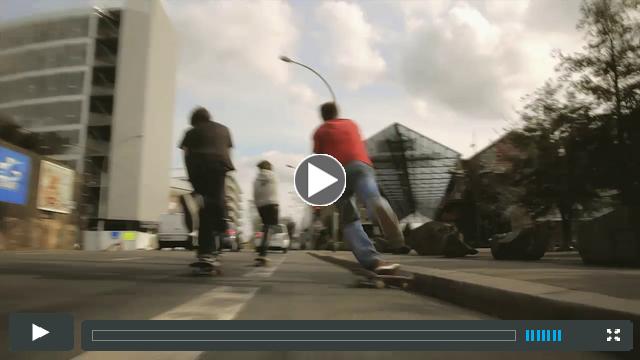 | | Le Voyage à Nantes |
Take the teaser tour of Nantes -- a city of art and culture. Conference details to come.
Vous pensiez connaître la métropole la plus à l'Ouest de l'Europe... La métropole est l'un des pôles culturels, artistiques, créatifs majeurs en France mais vous n'avez encore rien vu... Château des ducs de Bretagne, lieu unique, Nantes-Angers Opéra, centre d'art du Hangar à bananes, Les Machines de l'île, Mémorial de l'abolition de l'esclavage, musée à ciel ouvert d'Estuaire, La Fabrique, les festivals... Au cours d'escapades citadines, sauvages ou maritimes, la ville se dévoile en un dialogue entre art et paysage, patrimoine historique et architecture contemporaine : Le Voyage à Nantes vous fait découvrir ce monument dispersé en un parcours qui fait de Nantes une véritable ville d'art et de culture.
|
Ecocity Builders Upcoming Events in 2012, January - June
Jan. 25-27 - United Nations, New York City. Ecocity Builders will participate in the Initial discussion on the zero draft outcome document for the upcoming UN Conference On Sustainable Development, Rio+20
Feb. 8 - Richard Register at Buildex, Vancouver "Urban Sustainability, the Coming Transformation" Feb 10 - Workshop for BCIT on the International Ecocity Framework and Standards Initiative as it relates to Vancouver Feb 11-12 - IEFS Core Advisors retreat Feb 18-19 - Kirstin Miller to Nairobi for meetings with the United Nations Environment Program in advance of Rio+20 March 26-27 3rd Intersessional Meeting of UNCSD, UN Secretariat, New York March 28-29 Richard Register to speak at the 2nd International Degrowth Conference, Barcelona, Spain April - Richard Register in China to advise on ecocity development
|

The International Ecocity Framework and Standards (IEFS) initiative seeks to provide an innovative vision for an ecologically-restorative human civilization as well as a practical methodology for assessing and guiding progress towards the goal.Website http://www.ecocitystandards.org
To date in English, Chinese, German, French, Korean and Portuguese, more translations coming. |
New Year, Big Picture, World Rescue by Richard Register 
I attended a most unusual conference two months ago but shrinking cities was in the news and needed some commentary. So I postponed writing and posting this report until now... Now, as befits a new year, looking ahead - in fact maybe too far ahead - I'll write about the conference that looked at what happens After the Fall. Say Peak Oil, climate change and accelerating species extinctions may be rushing toward a collision, a perfect storm that could bring on a world economic collapse and general chaos, not a Great Depression, but a full on collapse of now by far the largest civilization the world has known, the technological civilization all us 7 billion and growing are part of, whether benefiting from or not. How can we save something of civilization and begin again - or can we even save anything at all? We (speaking for European history anyway) recovered from the Fall of Rome though it took about 1,000 years and the reorganization was radically different in many ways. Jews have recovered from several thousand years of pogroms back to Egypt and nastiness earlier. American Indian culture is rising in a few places after total extermination of many of its tribes and near extermination of all the rest. What can we learn from religious and cultural traditions and other schools of thought that managed to squeeze through those desperate historic trap doors and start all over again, if not personally, their to the xth generation later descendants? Or can we at all this time around, now that the civilization in question embraces the whole world?  | | John Cobb, leading Protestant theologian |
John Cobb, a Christian theologian and professor at the Claremont Graduate School in Claremont, California is no doom and gloom Chicken Little. He's been extremely upbeat and positive, even inspirational in his commitment to the creative and the healthy ever since I first met him slightly more than 40 years ago and no doubt for years before. He is coauthor with Herman Daly of the book on economics, "Our Common Future - redirecting the economy toward community, the environment and a sustainable future." The conference with many workshops was called "Brave New Planet - Imaging Ecological Communities." For a little dark humor I called it, among a few of my friends, the "After the End of the World Conference." But it was hardly a laughing matter. So if he has been such a thoughtful and positive man all these years why did the YouTube announcement for his conference start like this? He's 86 years old, sitting in a chair that looks to be in his back yard, on the lawn. He won't quit, and he's looking straight into the camera. You can't miss it. He's a genuinely kindly and very thoughtful guy. "This conference is based on some very bad news. Now, we are going to try to make the conference itself come out with a little better news. But we [the hosts, an NGO called Progressive Christians Uniting] think that we as a people, especially we people in the church, need to recognize that the human activity over the past few centuries and increasing recently has created the situation in which disaster, [long pause] catastrophe, [long pause] is inevitable. The civilization that we have created, the global civilization based on economic growth, has overshot, and that old pattern that biologists are familiar with of a species overshooting, is inevitably followed by a collapse. ...Western society... has been using resources and polluting at a rate the natural world simply cannot cope with." Added inducement for me to participate was the fact that I knew John passably well in the early 1970s. He was actively interested in Paolo Soleri's ecological city ideas and John and I had even driven out from the Los Angeles area to a special seminar at Paolo's experimental town in Northern Arizona, Arcosanti, which was in the early stages of construction at the time. At that 1973 seminar Soleri was introducing his ideas for his arcology (architecture + ecology) city designs powered by solar energy and our evolving creative human spirit. He called it the "Two Suns Seminar," one being the sun itself, the other being us and our spirit of creativity, responsibility, compassion - all that gives us something of the radiance of our celestial center.  | Paolo Soleri at Cosanti in the 1960s. Photo: Cosanti Foundation
|
The other two reasons I went: first I wanted to say I think we still have time to learn fast and fly right so here's my proposal, and, number two, as my Grandmother once admonished me looking over her shoulder as if someone might be listening and holding a forefinger to her lips, "Say you believe, Richard. Be on the safe side." So maybe I'd learn something about salvation here or on the other side of the divide that's collapse in the here and now, or, perhaps learn something about personal death and the heaven most of those in attendance believed they are going to - Earthly civilization collapse or not - on the other side of the life/death divide. I decided to present a paper in the spirit of "what would it take to not collapse but regroup, learn, plan, build and thrive?" Admittedly a tall order in such a forum or any forum if we take our converging crises and collapse seriously, but to capitulate, even very late in the game as it may or may not be, while I still have some time on this planet, is not my idea of a worthy game to be spending my days playing. Maybe some others feel that way too and want to "get organized." Imagining what would actually work was a big order, but I'd done some thinking about it already. Some of you reading this may have seen one or another of my talks in the last year and will remember a point of two. But the new and revised version-for-the-occasion I called "World Rescue" to address the coming collapse of resources, biology and climate around the world. I organize it according to these italicized headings: Read On |
|
Ecocity Insights
by Jennie Moore,
Director, Sustainable Development and Environmental Stewardship, British Columbia Institute of Technology

IEFS PRINCIPLE OF RESPONSIBLE RESOURCES AND MATERIALS
The International Ecocity Framework and Standards Initiative (IEFS) is a project of Ecocity Builders and the IEFS Advisory Committee, funded in part by the BCIT's School of Construction and the Environment.
Cities concentrate people. This has a positive benefit in terms of enabling people to access services more efficiently. However, by virtue of concentrating people, cities also concentrate consumption of resources and materials. Residents of the world's industrialized economies account for only 20% of the global population, but consume approximately 80% of global resources including: aluminium (85%), paper (81%), iron and steel (80%), and lumber (76%) (Young and Sachs, 1994).
The International Ecocity Framework and Standards (IEFS) calls for the city's renewable and non-renewable resources to be sourced, allocated, managed and recycled responsibly and equitably, and without adversely affecting human health or the resilience of ecosystems. Furthermore, it calls for most resources/materials to be primarily sourced from within the bioregion.
The ecological footprint of high-income/high-consuming cities is approximately 200 times their physical land area (Rees 1996). This means that the amount of land required to produce all the resources consumed in these cities is 200-300 times greater than the physical space the city actually occupies. If one excludes food and energy from this estimate, the amount of goods consumed and the resources required to produce them along with the materials used to physically construct the city requires an ecosystem area, assuming global average bio-productivity, of approximately 43 times the cities physical size. Of this amount, approximately half is attributed to the consumption of goods and half is attributed to the materials used to construct the city (Rees and Moore forthcoming). The latter may seem surprisingly low considering how much materials are used to build cities. However, it is important to consider the duration of the material's life once incorporated in the construction of the city. Whereas most goods are consumed and discarded within the year they are purchased, the buildings and infrastructure (i.e. the built environment) of the city typically lasts for 50 to 75 years, if not longer.
To achieve the IEFS principle of responsible resources/materials requires a focus on both the type and amount of goods we consume as well as the way we build and maintain our cities. Manufacturing processes associated with the production of just five products: paper, plastics, chemicals and metals account for 71% of USA toxic emissions (Young and Sachs, 1994). Paper and metal products enjoy high recycle rates in many industrialized economies, but the process remains energy intensive and some products, such as many plastics, can only be down-cycled not recycled. This means that decisions about what we consume and the durability and capacity for reuse of what we consume are important aspects of responsible resource/materials use.
Decisions about what materials to use in city-building are also important from both the perspective of the functioning of the city, and its impact on local and global ecosystems. For example, local governments in high-income cities are typically the largest users of concrete for municipal infrastructure, including roads and sidewalks. For every tonne of concrete produced, one tonne of greenhouse gas emissions is also produced as part of the cement manufacturing process.
Sustainable cities use materials responsibly. This means building durable cities that will last a long time, and that allow for the flexible use and reconfiguration of spaces. It also means avoiding materials that produce or use toxic substances in their manufacturing. Cities that make use of locally available materials reduce the need for importing foreign substance and support locally appropriate building technologies that enable people to access these locally available materials to construct their own residences. Appropriate technologies that match supply of materials to demand for services is also an important strategy. For example, not all urban surfaces need to be paved. Maximizing green spaces and using alternatives such as stone pebbles to line heavily trodden paths can provide similar surface integrity to concrete.
References
Rees, W.E. 1996. Revisiting Carrying Capacity: Area-Based Indicators of Sustainability, Population and Environment, Vol. 17, No. 3.
Young, J. and A. Sachs. 1994. The Next Efficiency Revolution: Creating a Sustainable Materials Economy. Worldwatch Paper 121. Washington DC: Worldwatch Institute. (http://www.worldwatch.org/bookstore/publication/worldwatch-paper-121-next-efficiency-revolution-creating-sustainable-materials)
http://www.bcit.ca/construction)
|
|
Car Free Journey
By Steve Atlas

Welcome to 2012. I hope you enjoyed your holidays. This year, Car Free Journey will continue to spotlight a variety of vacation spots, cities, and other areas that you can enjoy without driving.
This month, we will spotlight South Florida. This popular, expensive, and traffic-clogged area includes Palm Beach and Palm Beach County, Fort Lauderdale and Broward County, and Miami/Miami Beach and Dade County.
 | | South Florida beaches |
There are airports in Palm Beach, Fort Lauderdale, and Miami. Each county has its own transit system, and visitor center. Tri-Rail, operated by the South Florida Regional Transportation Authority, is a commuter rail system (operating every day) that links all of these areas.
Read On
|


We partner with local community groups and organizations to initiate and build demonstration projects pieces of the ecocity and are consultants to projects both locally and globally. www.ecocitybuilders.org
|
|
"The problem is the present design of cities only a few stories high, stretching outward in unwieldy sprawl for miles. As a result of their sprawl, they literally transform the earth, turn farms into parking lots and waste enormous amounts of time and energy transporting people, goods and services over their expanses. My solution is urban implosion rather than explosion."
-Paolo Soleri
|
"Just because we scientists have Ph.D.s we should not hang up our citizenship at the door of a public meeting." - Stephen Schneider
Schneider founded the interdisciplinary journal, "Climatic Change" in 1975, and continued to serve as its Editor-in-Chief until his death in 2010. In 2002, he was elected to the U.S. National Academy of Sciences. He was an author for all four assessment reports of the Intergovernmental Panel on Climate Change(IPCC) under the auspices of the World Meteorological Organization and the United Nations Environment Program. He was a coordinating lead author in IPCC Working Group 2 for the last two reports; and also served on the synthesis report writing teams. In 2000, he and Richard Moss co-authored the uncertainties guidance paper for IPCC authors. He was one of four "generations" of IPCC authors honored for their work when the IPCC shared the 2007 Nobel Peace Prize with former USA Vice President, Al Gore, and was at Mr Gore's side as they were presented with the award. We were delighted when Stephen Schneider agreed to speak at the 7th International Ecocity Conference in San Francisco and we were inspired by his powerful presentation. That was in the spring of 2008. More than 30 years earlier he was well on his way to being the country's leading expert on climate change and proponent for solving the problem.
|
The Reluctant Rebels
Sven Eberlein meets the award-winning green energy campaigners now at the forefront of Germany's new industrial revolution. Reprinted with permission, originally published in Resurgence magazine
 | | Ursula Sladek, photo courtesy EWS |
When Ursula Sladek first grasped the severity of the fallout from the Chernobyl nuclear meltdown in the spring of 1986, the mother of five from the small town of Schönau (population 2,382) in Germany's Black Forest region had no clue she would one day be co-founder and president of one of Europe's first and largest cooperatively owned green energy companies. Like that of most citizens in the developed world, the 2011 Goldman Environmental Prizewinner's life was once far removed from the energy sources that light our homes and power our appliances. But when the German government began to caution against eating leafy greens and recommended powdered instead of fresh milk for children, she says it felt as if a bomb had detonated: "All of a sudden we were wondering what to feed our children and it became very clear how small the world really is." And just like her, many friends and neighbours in her community who had never thought about energy before started to wonder too. She recalls saying to her husband, a member of their local church council at the time: "Michael, this should also be the church's concern because we're dealing with God's creation here. We can't just destroy it like that." The couple wrote letters to the bishop but got placating responses and nothing actually happened. The government's only reaction was to raise radiation limits (a tactic being used again today in the aftermath of the more recent tragedy in Fukushima). "Nothing changed and so we realised we would have to step up and create the change we wanted ourselves." The Sladeks got together with a small group of like-minded people, calling themselves Parents against Nuclear Power until one group member said he didn't like being against something; he wanted to be for something. "To be for something gave everyone a different feeling, so we called ourselves Parents for a Nuclear-free Future. Of course," she now muses, "this is impossible, but everyone knows what we mean." The new group's activism raised quite a few eyebrows in their conservative hometown, so they decided to form a club, something people were more familiar with. "Clubs are non-profit, which meant we were doing something for the public good, and this gave us a lot more credibility," Ursula explains. They also decided to stage cultural events, holding energy-saving contests and assembling their own cabaret group, Wattkiller. Being able to make light of themselves wasn't just an icebreaker with their fellow citizens: it also helped Ursula and her group cope with the enormity of the cause they had chosen to take on: "When we were exhausted from all the serious business, the fun cabaret nights re-energised us." As it turned out, the Schönau energy rebels would need all that energy in overcoming their next, more formidable obstacle. "We went to KWR, the power company that was operating the local grid, and asked them whether they'd like to join our conservation efforts," Ursula recalls. "We just wanted to add a few energy-saving measures, like rates based on consumption, and incentives for more cogeneration units, but they said, 'Conserve energy? Have you lost your mind? We want to sell energy, not save it!'" Parents For a Nuclear-free Future decided they were not going to let the power company get away with an attitude based on deep-rooted ignorance, setting the stage for a six-year campaign to challenge KWR's monopoly and raise funds to take over the Schönau grid. KWR's licence was up for renewal in 1991, and after two hard-fought referendums - both in the energy rebels' favour - and the now infamous nationwide Ich bin ein Störfall campaign - which raised DM5.7 million (2.9 million euro) to buy out KWR - the newly formed and community-owned power company EWS, with Ursula Sladek at the helm, began operating Germany's first nuclear-free grid in July 1997. Ich bin ein Störfall (literally: 'I'm a disturbance') is a provocative play on the double meaning of the German word for a nuclear incident, depicting ordinary people as nothing but annoyances to the nuclear industry. Conceived, pro bono, by one of Germany's largest advertising agencies, it was an instant media hit. The timing too was great. With the liberalisation of the European electricity markets in 1998, customers could now choose which power company to use - and a growing number of people liked the idea of getting clean energy from a non-profit cooperative. With total sales reaching 67 million euro in 2009, EWS has long outgrown its local market. While Schönau boasts three times the national average in photovoltaics (20 cogeneration units, two hydroelectric plants and a wind turbine), EWS provides power from over 1,800 solar, hydroelectric, wind, biomass and cogeneration facilities to 115,000 homes and businesses throughout the country. But for Ursula Sladek it's not all about big numbers. As she reaches out to towns across Germany with advice on how to set up their own community-owned energy companies, she points out the importance of focusing on small projects that are feasible: "There's nothing more gratifying than to be able to say, 'See, it can be done!' We've been working on our grand vision for 25 years but haven't actually shut down a single nuclear plant. However, we did a number of other things that felt like successes, and made sure we celebrated them." With the Merkel government's recent decision to phase out nuclear energy by 2025 and switch to 100% renewables by 2050, the former rebels suddenly find themselves at the vanguard of a new energy era. While fossil fuels, especially natural gas used in cogeneration, will be needed in the interim, Ursula sees the dawning of a new industrial revolution: "We already have about 350,000 jobs in the renewable energy sector and we're developing all kinds of new technologies for energy storage, new power lines, and intelligent networks to transport electricity from solar facilities or offshore wind parks to users across the country. There's going to be a complete transformation, and the world will look very different when we're done." Undoubtedly, Ursula Sladek and EWS will be at the centre of this movement, though this time not as feisty underdogs but as major players, a role she doesn't mind at all. "I was never really a rebel or a contrarian but rather someone who wants to build something positive and constructive, so this new role really suits me. I love to inspire and create change together with others. There's a lot to do still, but we won't be running out of work any time soon." Sven Eberlein is a writer and ecomuse living in San Francisco, with roots in Germany. He is a member of Ecocity Builders and a Core Advisor to the International Ecocity Framework and Standards initiative. +++++++++++++++++++++++++++++++ Also, Ode Magazine ran an article last month based on Eberlein's visit with Peter Hasenbrink, pastor of the Schönau Lutheran church that became a legend when it covered its church roof in solar panels, calling them "Creation Windows" that provide "heavenly energy."  | | Pastor Peter Hasenbrink in front of Bergkirche in Schönau |
He'll be writing more about Schönau and its cast of energy rebels in the coming months, but for now some visual impressions of this giant little town from his trip last summer...  | | Schönau - Solar Capital of Germany |
 | | Walking to church... |
 | | View from above |
 | | Ursula Sladek in front of one of EWS' transformer stations |
 | | solar-powered mountain |
 | | Community-owned windmill |
 | | Hydro-powered brush factory |
 | | Greetings from Schönau! |
|
AUROVILLE, universal ecocity in the making hit by Cyclone Thane - plans to rebuild begin
"Auroville wants to be a universal town where men and women of all countries are able to live in peace and progressive harmony above all creeds, all politics and all nationalities. The purpose of Auroville is to realise human unity."
http://www.auroville.org
Cyclone Thane hit the Tamil Nadu coast on December 30, 2011 and left a trail of devastation as it swept through Auroville.
Auroville is a place in south India where, for 40 years, people from all over the world have been quietly and painstakingly working on the construction of a new township and a new way of being.
 | | 2007 meeting with Auroville city planners, clockwise from left: Luigi Zanzi, Pashi Kapoor and Lalit Bhati, with Kirstin Miller, Executive Director, Ecocity Builders |
With heavy rains and wind speeds of up to 135 kmph and tidal waves of up to 1.5 m, Thane uprooted innumerable trees, snapped over 150 electric poles, destroyed most of Auroville's windmills, damaged buildings and water supply lines and cut off access to entire communities. Fortunately, damage to the surrounding villages was much less, and the government organisations as well as Auroville's rural outreach organisations are in the process of providing relief to the villagers. In Auroville, even as the residents continue to struggle with limited access to electric power and water, each day fresh reports come in, and they recognize the magnitude of the task that lies ahead.  | | Original city masterplan called the "Galaxy Plan" |
Embracing the Aurovilian spirit of reflection, pragmatism, and resilience, the residents are determined to rebuild Auroville in 2012. For information and updates and to find out how to help: http://www.auroville.org/cyclone/cyclone_summary.html |
|
|
Principal Features of an Ecocity

|
|
PRINCIPAL SPONSOR OF THE INTERNATIONAL ECOCITY FRAMEWORK AND STANDARDS

|
|
|
|
|



