|
Ecocities Emerging
To support humanity's transition into the Ecozoic Era
| Ecocity Builders
August 2011
| |
|
Greetings,
Welcome to the July 2011 edition of Ecocities Emerging, an initiative of Ecocity Builders and the International Ecocity Conference Series. This issue of Ecocities Emerging is dedicated to the memory of Peter Berg, founder of "bioregionalism" and dedicated ecocity builder.
On July 28, 2011, Peter Berg died, his life-partner Judy Goldhaft and daughter Ocean at his side. Actor, organizer, writer and pioneer thinker, he went where few dared tread intellectually but where all should, or rather, where few thought to tread down paths of culture entering the depths of nature, seeking, ever seeking guidance, in spirited enjoyment, soaking up the richness of life in landscapes, weather, plants, animals, people, traditions, dreams, science, sunshine, sensual connection, the artistic, expressive way of living among the pulsing, flowing, life all around, and into the heart of the city too. Peter was a pretty amazing guy. I don't remember what searching on my own part caused me, but I was corresponding with him around 1970, not much, but some. Something about "bioregionalism." By 1972, coming back from the United Nations Conference on the Human Environment in Stockholm, I decided to emulate a tree planting ceremony suggested by an American Indian delegation to the "alternative" conferences there in Stockholm. One hundred or more of us joined in a fast that lasted four days. It was a literal expression of solidarity with the hungry and a commitment to not just limiting human destruction of nature, (the main subject of the UN conference), but to experience some hunger ourselves and bring attention to those needing a little more as nature needs a little less of us humans. We saved the money we would have spent on food, bought four young aspen trees, and, with arrangements involving the city's parks department, planted the trees with all due ceremony to the east, south, west and north, saying in the tradition of various Native American peoples, words of dedication in the center of the square so described. I lived in Truchas, New Mexico at the time and arranged for an almost identical tree planting and ceremony sixty miles away in Santa Fe, with similar dedications and with a few words reporting the conference in Sweden, which was by then about two months in the past. An enormous apple tree next to the park in someone's back yard gave me the idea we should plant fruit trees; maybe my reaction to the fast, remembering food as one of the great gifts of trees. Up walks Peter Berg to take part like all the others. I didn't know he was anywhere near, living in San Francisco as he was at the time. Shortly after he was producing what I still think of as one of the most brilliant and beautifully produced communications media I¹d ever run into: his "bundles" that he would send out to people like myself who had become very interested in his thinking about where and how we are living. Poems, maps, short synopses of scientific papers on geology, forestry, tribal rituals of native peoples from around the world, brief essays on cultural changes that merited serious consideration that were generally not to be see on TV, heard on radio or read in papers. Beautiful graphics, too, and his Planet Drum Foundation logo a Laplander shaman, I was informed, thwacking away on a drum, sending out to the world most grounded information of the most basic and important sort, linking past and future. All sorts of small presents about big ideas arriving in an envelope via US Post Office to "grounded" (I'm a little self-conscious about using the word, but it's accurate) highly local efforts all over the world. Reciprocally, far away and in close to San Francisco, news and activist efforts flowed the other way for content breathing back out with the next issue, that is, bundle. His term "bioregional" was already hinted in various circles ecological, geographical and biological. But Peter tied it to human culture, insisting that we humans are part of nature and in our wild variety can fit beautifully into wherever it makes sense for us and the rest of our living companions to coexist, cooperate, compete and generally move on in healthy, aware evolution. Our bioregion, he believed, was the watershed of the Sacramento and San Joaquin rivers, flowing from Mount Shasta in the north and out of the Sierra Nevada Mountains in the east, comprising the Great Central Valley and the San Francisco Bay Area. You who live here, know it well! Know its past, live its present and defend its future. He spoke of "figures of regulation," which came from thinking about how nature and we people can understand what it is we are doing, how we are living. Judy, his above-mentioned almost life-long collaborator is a dancer and Peter would join in her dance occasionally. He was also one of the earliest San Francisco Mime Troupe instigators and performers. Judy would add movement to his talks, drawing audiences into the experience of the things about which he was speaking, most of it springing from traditional cultures around the world, some coming from life in the streets of big cities, some from sheer improvisational inspiration. "Figures" are a series of movements in dance that flow through time. They can be brief and simple or complex and of longer duration. They tend to express something integral to the whole dance but also particular to some small part of it. In a way, figures link the gesture and the body position with the whole dance in the flow through time. "Regulation" is the discipline of those movements as required for a harmonious whole. Lack of regulation destroys whole economies and throws hundreds of millions of people out of jobs and luck, as some of us noticed in the "Great Downturn" or whatever it will end up being called that started with the financial crisis of 2008. Regulation is what our bodies do to maintain balance so we can function optimally, happily, actively in the world as healthy animals. Regulation is what zoning could be doing well building ecocities but which is currently designed for cars and big energy producers paving the world as if the insights of Peter Berg never existed. Regulation is what nature does in a bioregion in a dynamic balance of immense complexity around the seasons, predators and prey, services like pollination and production like plant food for animals needing it, fertilizing the soil with their waste and eventually, their bodies. I thought Peter was right on and the term "figures of regulation" was a profound way of talking about what society needs now, which is largely understanding where and how we live in our living world. That is what bioregionalism is all about and to say the least, regulation is what we need the most to do ourselves. Using "figures of regulation" in my newsletters as early as the late 1970s quickly brought down the wrath of many of the people I was working with on ecological city issues and turned out to lose more friends than gain. To those not willing to delve into the meanings of those words, they just sounded too foreign, specialized, in the case of "regulation," too bureaucratic. But it was a loss for all of us because Peter was absolutely right about the meanings there in and as usual, knew better than all but a few what we all need but don't usually have his courage or patience to think about. His legacy for me was largely this: he provided a much clearer context in nature and "resources" for cities and like Jane Jacobs, with her city/hinterlands relationships, he gave us what I hope one day will be seen as the whole system of ecocity/bioregion. These whole bio-geographic/cultural systems can be vibrantly healthy. He thought so too, and worked hard for the cause, ultimately our cause in the largest sense. And he had fun doing it. I asked him once where he got his talent for clear ,colorful writing. "Just lucky" he said. - Richard Register, President, Ecocity Builders Ecocity Builders
339 15th Street, Suite 208
Oakland CA 94612 USA
www.ecocitybuilders.org

Keeper of the International Ecocity Conference Series
Ecocity Builders is a non-profit organization dedicated to reshaping cities, towns and villages for long-term health of human and natural systems.

|
|
The Ecozoic Era refers to a vision, first promoted by cosmologist Thomas Berry, of an emerging epoch when humanity lives in a mutually enriching relationship with the larger community of life on Earth.
Will we be able to make the transition in time to retain a biosphere healthy enough to regenerate living systems now under extreme stress? Our role in exploring ecocities is to clarify a vision of cities that can. And then go out and build them. There is no way to be certain we will succeed, but our position is that there's no time to just sit around and wonder about it: now is time for action.
Maybe one day all cities will be ecocities.
|
|
AUGUST UPDATE
Ecocity World Summit 2011

Basilique Notre-Dame, Montréal, Québec, Canada. Vue à partir de la Place d'Armes.
The 9th International Ecocity Conference convenes August 22-26th 2011 in Montreal Canada
Conference Website
REGISTRATION »»»
DETAILED PROGRAM »»»
|
COME SEE US IN ACTION!
ECOCITY BUILDERS AT ECOCITY WORLD SUMMIT 2011 |
|
|
| When: 23.08.2011 13:15-14:45 |
| | Session Title: International Ecocity Standards Projects |

"International Ecocity Standards --- A Framework for Integrated Sustainability"
Currently there are no accepted standards or widely agreed upon definitions for the term ecocity or its conditions. This lack of specificity in terminology, along with accompanying benchmarks and measureable standards, is a major deficiency in advancing the design and planning of cities to be more sustainable.
In response to this challenge, Ecocity Builders and a team of collaborators initiated a project in 2010 to create a framework and guidelines that can help cities move along a path to sustainability in measureable and systemic ways. The International Ecocity Framework and Standards (IEFS) will allow city officials and other community members to analyze and evaluate their city in an integrated framework that supports systemic thinking and solutions.
This panel session will introduce the IEFS work to date -- including conceptual development and research, expert evaluation and input, and the current phase of piloting the approach in several diverse cities around the world.
Panelists: Kirstin Miller, Executive Director, Ecocity Builders; Richard Register, President, Ecocity Builders; Jennie Moore, Director, Sustainable Development and Environmental Stewardship, BCIT School of Construction and the Environment; Dr. William Rees, Professor, School of Community and Regional Planning at the University of British Columbia (UBC); Dr. Ray Tomalty, Ph.D, Principal, Smart Cities Research Services & Adjunct Professor School of Urban Planning, McGill University; Marco Vangelisti, Slow Money Alliance and Ecocity Builders; Dr. Richard Smith, MFA, MSW, PhD, Assistant Professor, School of Social Work, Wayne State University.
IEFS sponsors: Lead partner, British Columbia Institute of Technology School of Construction and the Environment; Columbia Foundation; Helen and William Mazer Foundation; HealthBridge Canada; Novatek.
|
| When: 23.08.2011 17:00-18:30 | | | Session Title: Taking the Ecocity to New Heights -- Can High Rise Development Reconcile with Sustainability and Livability Issues? |
"High-Rise Needs Eco-Design for High Diversity"
Presenter: Richard Register, President, Ecocity Builders 
Richard Register in New York City Photo: Wendy Brawer Without high functional diversity, high-rise cannot produce a sustainable and truly human environment. There needs to be a great diversity of facilities and activities close together - residence, work, learning, commerce, government, food availability and so on with good relationship to one another and such local features as bodies of water, slopes, soils, climate, sun angles, views and the natural biological community and cultural traditions well integrated. Buildings need to be harmonized with one another and adjacent open spaces and such linkages as streets, rails, bridges, elevators, foot and bicycle paths and waterways. This means the ecocity should prioritize for what's often called mixed uses and balanced development. It means there is a transportation hierarchy: feet first, then bicycles, elevators, rail transit, buses, and lastly and generally for trips to the country, automobile. Fine grain features like rooftop and terrace gardens and bridges between buildings, ground level mid-block sky-lit hallways, alleys and gallerias, glass elevators, attached solar greenhouses, plazas that celebrate natural features like creeks and beautiful views - all these are not "bells and whistles." To replace the largess heaped upon freeways, interchanges and parking structures, they are needed to make human scale environments that can be truly sustainable, livable and loveable. |
| When: 24.08.2011 10:15-11:45 |
| | Session Title: Who Is Minding the Store? Business and Communities in the ecocity |
"Food and the Ecocity: the role of Slow Money"
Presenter: Marco Vangelisti, Ecocity Builders, Slow Money 
Marco Vangelisti
One of the largest environmental demands of cities is related to the food the city inhabitants consume. Efforts to re-localize food production, processing and distribution are gaining momentum as the nascent trend of urban farming attests. This trend is motivated by a number of factors, among which the need for transparency in the food supply chain, the demand for fresh and nutritious food, the desire to reduce the carbon footprint of food, and the desire for a stronger community experience around food.
The city-based food production, processing and distribution businesses tend to be small-scale in order to fit in the fabric of already developed cities. One of the major obstacles to the establishment and support of small food and farming enterprises is the lack of capital.
Slow Money is a movement and a grass-root effort to catalyze the flow of capital into local food and farming enterprises. It is the "Slow Food" equivalent for capital.
Slow Money means
- Investing in real places, people and enterprises close to home.
- Investing patiently, over time, with a goal of building healthy enterprises, communities and ecosystems, not just extracting financial wealth.
- Measuring Return on Investment by the tangible world we create around us and the health of our soil, not just the profit we make.
- Providing balance to the Fast Money we've been investing to maximize profit at all costs.
|
|
Ecocity Insights
by Jennie Moore,
Director, Sustainable Development and Environmental Stewardship, British Columbia Institute of Technology

Urban Metabolism and Ecological Footprint Assessments Reveal How Cities and Citizens Each Play a Role in Ecocity Development
Urban metabolism tracks energy and material flows through a city. The ecological footprint measures demand for nature's services, e.g., provision of energy and materials and absorption of wastes. An integrated urban metabolism and ecological footprint assessment tracks how much energy and materials flow through the city, what activities these flows are associated with, and their demand on nature's services. Studies that use this integrated approach identify that food is often the largest component of a city's ecological footprint. This is due to the expansive amounts of land required to grow food as well as the significant energy inputs used in the form of fertilizers, processing, packaging, and distribution. Ecocities enable local food production through transfer of development rights that concentrate density in some areas of the city while releasing other areas from urban development so that they can be used for agriculture. However, these areas must be managed so that: soils build fertility naturally over time; pests are managed without reliance on destructive chemicals; and food is harvested, processed and distributed in low-impact ways. Some cities that practice urban agriculture, such as Havana, Cuba, rely on permaculture, an organic method that produces high yields in small spaces. Transportation is another important component of most cities' ecological footprint. Car-oriented development dedicates up to 30% of the urban environment to roads. This land could, alternatively, be used for growing food. Nevertheless, it is the energy required to operate motor vehicles that "drives" the large ecological footprint associated with transportation. Ecocities are pedestrian oriented and use access-by-proximity to achieve car-free living where people can enjoy high-quality lives without relying on motorized transportation. Since buildings and particularly the energy used within buildings also represents a significant component of the ecological footprint, it is important that ecocities comprise buildings that are designed for passive solar heating and cooling and natural daylight. What citizens consume by way of goods and services also affects the ecological footprint. Recycling is important, but a conserver society can do more to reduce the ecological footprint than a consumer society that recycles.
BCIT School of Construction and the Environment (http://www.bcit.ca/construction)
|


We partner with local community groups and organizations to initiate and build demonstration projects pieces of the ecocity and are consultants to projects both locally and globally.
www.ecocitybuilders.org
|
|
"The problem is the present design of cities only a few stories high, stretching outward in unwieldy sprawl for miles. As a result of their sprawl, they literally transform the earth, turn farms into parking lots and waste enormous amounts of time and energy transporting people, goods and services over their expanses. My solution is urban implosion rather than explosion."
-Paolo Soleri
www.arcosanti.org |
ECOCITY WORLD SUMMIT 2011August 22-26, 2011 Palais des congrès de Montréal, Canada
Hosted by Urban Ecology Montréal, Ecocity World Summit 2011 will build on work of past International Ecocity Conferences while adding new conference themes, participatory methods, and projects that will last beyond the life of the conference. Detailed conference content and design will be developed in collaboration with local and international partners, making sure that the particular urban ecological expertise of Montréal is highlighted.
|
| When: 24.08.2011 17:00-18:30 |
| | Session Title: Culture, Heritage and Urban Ecology |
"Culture and Urban Ecology"
Presenters: Walter Hood, Principal, Hood Design; Kirstin Miller, Executive Director, Ecocity Builders

Walter Hood, Crown Memorial State Beach on the island of Alameda
Photo: Heidi Schumann for the New York Times
Cities, towns and villages are the places where environmental sustainability and culture become intrinsically linked. Today, the degree to which we are able to increase urban sustainability while protecting and advancing culture will determine the livability and quality of the next generation of cities, towns and villages we'll be inhabiting after the age of oil and cheap energy has passed. This session will explore several projects that integrate culture and urban ecology through creative processes rooted within the context of people and place.
Center Street Plaza, Berkeley, California
In March 2010, Berkeley's City Council endorsed the Center Street Plaza concept for Downtown. The concept, developed by Water Hood and co-facilitated by Ecocity Builders, envisions a public gathering space and promenade that integrates green infrastructure and specific features that make visual, gestural and ecological connections with Strawberry Creek and its watershed. Through an intensive community design process, a hybrid space is proposed that will connect people to the local watershed within an urban context while serving as a critical pedestrian corridor. Porous paving that mimics natural gravel will absorb rain and stormwater from either side of the street and adjacent buildings, directing it into underground cisterns that act as catchment and detention reservoirs, like the water table, filtering, holding and metering the water back out into the stormwater system. Additionally the project proposes to weave a portion of Strawberry Creek through the new plaza space. This project sets a new standard for green infrastructure.
Community Development from the Bottoms Up - West Oakland, California
Along with local residents and community groups, projects facilitated by Walter Hood/Hood Design and Ecocity Builders are helping to re-establish a primarily African American West Oakland neighborhood as a cultural destination while mediating adverse impacts of transportation infrastructure, blight, and poverty. Building upon its rich historical context, Hood Design is developing a 2.5 acre street design encompassing the West Oakland BART station that highlights 3 specific zones reinforcing historic, current, and future uses.
Several blocks away, Ecocity Builders is partnering with the Black Dot Artists to envision and build the Village Bottoms Cultural District. The immediate focus is anchored on historic Pine Street between 7th Street and 12th Street, linking the emerging Central Station neighborhood development site and the already established West Oakland BART transit-oriented development. The parties involved are working together with a shared belief that in order to achieve long-term sustainability, a comprehensive and integrated approach is needed. If successful, this cooperative approach could model a new regional vision of economically, environmentally and socially healthy "urban villages" of various sizes and cultural characteristics.
Jalavijaka - "Seeding with Water", Kathmandu, Nepal
Every great civilization has evolved and is sustained by access to water. The ancient urban planning practices in the Kathmandu Valley of Nepal respected and used water in the spirit of jalavijaka, or "seeding with water". In fact, their highly sophisticated water infrastructure was the network around which everything else was developed. Tragically, this water network is disappearing, as many pressures are coming to bear on the people and the land. Once pristine rivers now either run dry or flood. Former habitats for fish are choked with waste and piles of refuse. Community leaders and sustainability experts in Nepal are partnering with Ecocity Builders, Walter Hood and Hood Design, and other environmental designers and urban ecologists in the United States to develop a comprehensive and sustainable vision for the Kathmandu Valley in Nepal. Our goal: To inform, inspire and co-create Kathmandu Valley as a Living City.

Kirstin Miller, Kathmandu Nepal
|
| When: 25.08.2011 - 13:15-14:45 |
| | Session Title: All Together Now: Nature, Youth, Society and Art |
"Street Art and its Role in Creating Ecocity Culture " Presenter: Sven Eberlein, Ecocity Builders

Sven Eberlein
Throughout history, cities' identities have been shaped by creative expression. From unique architecture and standout museums to vibrant music scenes and local culinary customs, it's the flow of the human imagination that lends a city its heart and soul. Art in its most pure manifestation evokes that which does not yet exist, challenging our habitual assumptions about what's possible and inviting us to envision new ways of seeing things. As such, it's in natural alignment with the ecocity, an entity whose realization hinges on our willingness to imagine new and different ways of living together and moving around in the age of climate change. While a general artistic approach is the canvas upon which any aspiring ecocity planner must paint her larger vision, there's a form of creative expression that most closely reflects ecocity culture and its principles: street art.
This visual and musical presentation of San Francisco's Mission District will show how street art can instill an ecocity mentality in its residents by promoting and celebrating the intangible yet crucial elements of successful sustainable urban design, such as walking, slowing down, marveling at the spaces between, and being an active part of the community. From colorful murals on laundromats to soulful street altars on the Day of the Dead, from dance performances on building walls to makeshift living rooms in parking spaces, this diverse neighborhood reminds us of the importance of a creatively engaged community in the transition of the ecocity from theoretical model to living breathing organism.
|
The Forest Amidst the Ruins
Eco Ecuador is an ongoing project of Planet Drum, established by the late Peter Berg, in collaboration with an urban community located in Ecuador to create a sustainable local ecology. They have been working there since 1999. Volunteers and students from around the world are working to assist in the creation of an ecological city. For more information, visit Planet Drum Foundation: http://www.planetdrum.org/ 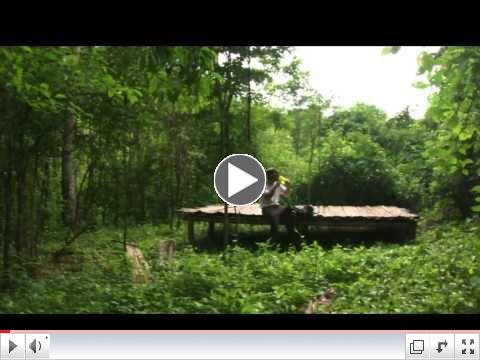 | | Planet Drum Foundation in Ecuador |
 Judy Goldhaft and the late Peter Berg, directors of Planet Drum Judy Goldhaft and the late Peter Berg, directors of Planet Drum
|
|
Car Free Journey
By Steve Atlas

Oregon's Pacific Coast
How about a memorable vacation in the Pacific Northwest-that you can enjoy without driving? Today's column spotlights one of these areas.
Clatsop County on Oregon's Pacific Coast, just a two-hour bus ride from Portland, is a welcome change from a big city. Walking and biking are popular. Many areas are easy to reach by public transportation. Visitors love the small town atmosphere and how easy it is to walk to most places you need to go.
The towns of Cannon Beach and Seaside, on the Pacific Ocean, are small enough that visitors can walk to the beach, the center of town, and other attractions. Breathtaking views, and something special for every member of the family, make these attractive vacation choices for anyone visiting without a car.

Seaside, Oregon
Read On
|
|
|
Principal Features of an Ecocity

|
|
A SAMPLING OF ECOCITY WORLD SUMMIT 2011 SPONSORS

|
PRINCIPAL SPONSOR OF THE INTERNATIONAL ECOCITY FRAMEWORK AND STANDARDS

|
|
|
|
|



