|
Ecocities Emerging
To support humanity's transition into the Ecozoic Era
| Ecocity Builders
April 2011
| |
|
Greetings,
Welcome to the April 2011 edition of Ecocities Emerging, an initiative of Ecocity Builders and the International Ecocity Conference Series.
I was in Montreal recently to assist with preparations for the 9th International Ecocity Conference, Ecocity World Summit 2011. I arrived back full of enthusiasm and expectation. It's going to be a history-making conference, and we hope you'll be joining us. If you've been thinking about attending, you'll want to know that in honor of Earth Day, Ecocity World Summit is partnering with Earth Day Québec to offer a special discounted conference rate on April 19-21. Please visit the conference website for details The following is a welcome message from Ecocity World Summit 2011 Conference Co-Convenors Jayne Engle-Warnick and Luc Rabouin, and Program Committee Co-Chairs David Brown and Louis Drouin. We are delighted to invite you to attend the Ecocity World Summit 2011, to be held August 22-26 in Montréal. What are those at the forefront of Ecocity thought, practice, policy and implementation saying about the issues that are important to you? Come join us to take part in dialogue and action to shape the future of urban areas - where most of the world's people now live - into ecologically-based, people-centered Ecocities. Meet academics, policymakers, professionals and Ecocity enthusiasts from around the world in a 4 and a half day program packed with rich content and excellent speakers. You will have access to keynote talks on six Ecocity themes, two Mayors panels, design charrettes and a GreenStorming, more than 60 presentation sessions and facilitated discussions, mobile workshops, training workshops, poster presentations, film screenings, artistic and cultural activities, conference exhibits, and more! Come discover the joie de vivre in the aspiring Ecocity of Montréal! We look forward to meeting you in August. On behalf of the International Ecocity Conference Steerting Committee, I would like to join our Montreal hosts in inviting you to what we believe will be an historic, invigorating and meaningful experience. For four and a half days we will share information, ideas, and inspiration, through dialogue and discussion as well as through active "hands on" experiences and creative encounters. Together, we will help evolve the healthy future of cities and living systems. Sincerely,

Kirstin Miller for Ecocity Builders
Ecocity Builders
339 15th Street, Suite 208
Oakland CA 94612 USA
www.ecocitybuilders.org

Keeper of the International Ecocity Conference Series
Ecocity Builders is a non-profit organization dedicated to reshaping cities, towns and villages for long-term health of human and natural systems.

|
|
The Ecozoic Era refers to a vision, first promoted by cosmologist Thomas Berry, of an emerging epoch when humanity lives in a mutually enriching relationship with the larger community of life on Earth.
Will we be able to make the transition in time to retain a biosphere healthy enough to regenerate living systems now under extreme stress? Our role in exploring ecocities is to clarify a vision of cities that can. And then go out and build them. There is no way to be certain we will succeed, but our position is that there's no time to just sit around and wonder about it: now is time for action.
Maybe one day all cities will be ecocities.
|
|
|
TEDxBerkeley
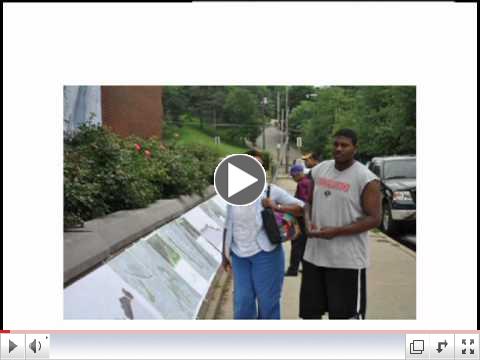
Walter Hood - Find the Rivers
 | | TEDxBerkeley - Walter Hood - Find the Rivers |
Walter Hood talks about the Hill District Greenprint Initiative for Pittsburgh. Hood is also the community designer for Center Street Plaza, Berkeley, CA currently under development with the City of Berkeley and Ecocity Builders.
|


Taking Nature to the City
In "Biophilic Cities: Integrating Nature into Urban Design and Planning," Timothy Beatley, Teresa Heinz Professor of Sustainable Communities at the University of Virginia, argues that planners and landscape architects must design cities so people feel intimately connected with nature. Beatley hopes his book will foster a dialogue about biophilic cities by first defining what these are, offering a set of indicators for measuring biophilic interactions, then imagining how these look at various scales, and finally outlining what institutions and organizations can do to build communities more in tune with nature.
Beatley describes how biophilia, a term coined by famed sociobiologist and conservationist E. O. Wilson, can inform how we plan, design, and manage our cities. Beatley defines a biophilic city as one that puts nature first. "It recognizes the essential need for daily human contact with nature as well as the many environmental and economic values provided by nature and natural systems." He adds that these cities are places where "residents spend time enjoying the biological magic and wonder around them. In biophilic cities, residents care about nature and work on its behalf locally and globally." Throughout, there's a strong case for the psychological benefits of urban nature. E. O. Wilson writes in the foreword: "The evidence is compelling that frequent exposure to the natural world improves mental health, it offers a deep sense of inner peace, and, in many ways we have only begun to understand by scientific reason, it improves the quality of life." Beyond improving humans' well-being though, fostering biophilia among residents can also increase cities' resiliency to future changes. Beatley compiles research and case studies that highlight the environmental, economic, and quality-of-life payoffs of nature in the urban setting. He breaks down several indicators of a biophilic city while acknowledging that urban design and planning is concerned with various scales: regional, community, neighborhood, street, block, and building. "The best biophilic cities are places where these different scales overlap and reinforce biophilic behaviors and lifestyles. Ideally, in a biophilic city these scales work together to deliver a nested nature that is more than the sum of its parts." He explores a number of indicators for determining how well a city creates biophilic connections: Conditions and Infrastructure Beatley covers the growing body of biophilic architecture (see earlier post) and then inspires to translate them to the broad scale. He also argues for improved accessibility to green spaces. At the broad scale, he asks policymakers to consider how well they facilitate access to nature: - What percentage of the population is within 100 meters of a park or greenspace?
- Per capita, how many miles of walking trails exist in the city's borders?
Activities The residents and institutions of a biophilic city celebrate the unique biodiversity of their place and actively enjoy and participate in the nature around them. Beatley writes that cities can encourage us to connect with nature through programs and offering volunteer opportunities. Some questions for the cities trying to measure the biophilic connections created through activities: - What is the percentage of time residents spend outside, understanding that climate must be accounted for?
- What percentage of the population is active in nature or outdoor clubs or organizations? How many of such organizations exist in the city?
Attitudes and Knowledge The metabolism of a sustainable city relies on residents both knowing and caring about its unique nature, natural history, and restoration opportunities. Beatley points to Tadao Ando's "Sea Forest" plan for an 88-hectare parcel in the Tokyo Bay where trees will be planted on landfill, educating all who visit about the benefits of nature. In this area, there are some questions to evaluate how actively residents participate in the natural city: - What percentage of the population can recognize common species of native flora and fauna?
- To what extent are residents curious about the natural work around them?
Institutions and Government To facilitate the growth of biophilic connections, many players must become involved. Most important: there should be education programs to foster connectedness to nature- locally, regionally, and globally. Institutions that could have particularly strong roles include botanical gardens, municipal zoos, natural history museums, and conservation groups.
Beatley writes about Lewis Ginter Botanical Garden of Richmond, Virginia, which grows food for its community. It has five "learning farms" for urban youth to work at and earn an income. To determine whether governments and instutions are doing enough, questions are directed at how well cities are protecting and building their biodiversity and investing in education: - Has the government adopted a local biodiversity action plan or strategy?
- Has priority been given to environmental education?
- Has the government adopted green building and planning codes, grant programs, density bonuses, green space initiatives, dark-sky lighting standards, etc?
Overall, the city should be a place that is deeply connected to nature; it breaks the average urban resident's feeling of alienation from nature. Planners and landscape architects need to mediate and facilitate this process, Beatley argues, so that we envision our cities as a living environment. With many case studies and best practices, the book offers exemplary ideas for professionals to consider as they re-naturalize the urban world. Read the book and learn more about biophilic landscape design. This article first appeared as a guest post on Sustainable Cities Collective by Amanda Rosenberg, 2010 ASLA advocacy and communications intern. Image credit: Timothy Beatley / Island Press |
|
Car Free Journey
By Steve Atlas

Today's car free getaway is Cleveland, Ohio: a transit-friendly area that can be easily reached inexpensively either by bus (www.Megabus.com) or air (Southwest Airlines). Once you arrive, there is so much to do that your only problem is choosing how you will best enjoy your time here. Lexi Robinson-Hotchkiss, from Positively Cleveland (Greater Cleveland's convention and visitors bureau), is our guide.
Visitors who don't drive cars should know that Cleveland is a city that focuses on accessibility.
Visitors coming to and from Cleveland-Hopkins International Airport should use Red Line Rapid, which runs directly inside the airport and connects downtown in Public Square. The cost - just $2.25 each way. And, it runs every 20 minutes.
From the downtown Greyhound Station it's a 10-minute ride to Public Square on the 263 or 51 bus. Or Use the Healthline (heading west), going to Public Square.
The Megabus, one of the hottest forms of transportation these days, provides inexpensive direct service from Pittsburgh (after May 11), Columbus Ohio, and Chicago. The pickup location is on West Huron Avenue, right outside of Tower City Center, which has a front entrance on Public Square. You have a direct connection to just about anywhere in Cleveland once you step off the Megabus.
Read on
|
|
"The problem is the present design of cities only a few stories high, stretching outward in unwieldy sprawl for miles. As a result of their sprawl, they literally transform the earth, turn farms into parking lots and waste enormous amounts of time and energy transporting people, goods and services over their expanses. My solution is urban implosion rather than explosion."
-Paolo Soleri
www.arcosanti.org |
|
ECOCITY WORLD SUMMIT 2011
August 22-26, 2011
Palais des congrès de Montréal, Canada
Hosted by Urban Ecology Montréal, Ecocity World Summit 2011 will build on work of past Ecocity World Summits while adding new conference themes, participatory methods, and projects that will last beyond the life of the conference. Detailed conference content and design will be developed in collaboration with local and international partners, making sure that the particular urban ecological expertise of Montréal is highlighted.
|

illustration by richard register
IF CARS AND CITIES WERE TO EVOLVE TOGETHER
By Richard Register
The following article will be appearing in the upcoming edition of Nissan Technology Magazine
http://www.nissan-global.com/EN/TECHNOLOGY/
I'm the author of books on "ecocities," head of some local ecological restoration projects and a speaker on the international circuit. By ecocities I mean simply cities that are ecologically healthy, that leave the biological world happily buzzing along while we human do whatever we do best in our built environments of cities, towns and villages and in moving about and utilizing the countryside while protecting nature - mostly from us.
I don't have to tell many audiences these days that climate is changing rapidly now and in dangerous directions, that biodiversity is sliding from high to lower every day, that humanity is drawing down resources rapidly in many areas from finite energy stores to digging up, using and losing considerable amounts of finite minerals for our metals, and failing to recycle efficiently.
In thinking of the next twenty-five years for Nissan and its publications' readers, I have to admit, I am not optimistic. The basic ideas I've been advancing for forty years have not yet caught on, have barely started the journey. So instead of trying to predict I'll simply say what I think is the problem and what I would like to see as the solution - and car companies' role in the solution.
It starts with whole systems thinking. Car companies should become whole systems transportation/-infrastructure companies, bifurcating their moveable products into cars so much smaller they become carts - that's right - essentially carts like improved golf carts, on one hand, and train systems large and small plus elevators and conveyor belts sometimes called "people movers" like we see in airports. Transport and city development needs close coordination with architecture, plazas and parks and streets and rails. A small number of what we think of as cars today would still be needed for rural work and living and available as rentals for city and town people wanting to get to places in the country far from small towns with train stations.
The conventional car is about 30 times as heavy as a person, 10 times as fast in optimal operation and takes up about 50 times the volume. To say the
least, it doesn't mix well with pedestrians and bicycles. It demands hundreds of acres per city for parking lots and whole extra buildings called parking structures stuffed into city infrastructures scattering everything farther apart making everything work worse for foot, bike and transit.
Another important point: the presently understood better car actually makes the city worse - and takes the world down with it. The car does not stand alone; it is integral to the buildings and their arrangement and to the street and energy systems. To improve the car simply continues the pattern of sprawling development and all the harms that go with it. If it's energy efficient, it is most efficient in convincing its owner he or she is "green" while perpetuating a disastrous urban form. It would be a sad day for most car companies to wake up to this notion, which I take to be a reality, without realizing that they could become companies to coordinate far better urban development with transport. They could turn out to be thriving and profitable endeavors after all serving society and nature alike, but only if remissioned, retooled and retrained to participate in building ecocities, perhaps even taking the lead. There is no one like the reformed to lead with enthusiasm and effectiveness. The story of their conversion is powerful.
The ecological city, the "ecocity," would be much more compact - think Manhattan, downtown Tokyo, or at the other end of the size scale, compact pedestrian European villages where buildings are no more than five or six stories high. Ecocities are three-dimensional, not essentially flat like most American cities excepting their central business districts. Ecocities are cities primarily for pedestrians, supported by bicycles and transit the best of which would be rail from streetcars to metro systems.
But they would go beyond models we see in the general layout of compact cities of separate buildings, the European old city model, for example, by beginning to stitch the buildings together in whole systems design featuring extreme pedestrian permeability - access three-dimensionally through the city. This means there would be bridges between buildings with rooftop "uses" like shops and restaurants, mini-parks and plazas on rooftops and rooftop gardens for native species of birds, some food gardens, though not high volume production relative to the number of people obviously, but educational for the children - and all this with fantastic views over the city and surrounding landscapes. Systems of bridges for bicycles and monorail-like connections fit too in the larger city context, connecting those rich, verdant pedestrian environments hanging in the sky.
This configuration of the physical structure - clusters of buildings linked on ground level and one or more levels above ground level arranged around streets, parks and plazas uses radically less land, as well as energy, than the car/sprawl/paving infrastructure we see so dominant today and growing rapidly in many countries. Ecocity design means natural landscape and agriculture can come back into close relationship to the city. Just take an elevator - I encourage adventurous glass elevators on the outside of some buildings for pleasure rides - walk a few short blocks and be in the country. Ecocity wholes systems design also applies at all scales.
I've been in some villages in Nepal, Turkey and Northern Italy that are only four or five blocks long and wide and yet have buildings six or seven stories high, infrastructure providing for enough people to have a very lively cultural life, plus hosting a small hotel or two for very personal connection to the outside world. Think in addition to such structures attached solar greenhouses and those bridge linkages and roof and terrace experiences.
So as part of a coordinated enterprise understood by people everywhere, we can well imagine car companies joining, even leading, a larger program of coordinated parts in which the city is stitched together in the ecocity way and a healthy future is launched.
Richard Register is President of Ecocity Builders and the author of several books on ecological cities including Ecocities, Rebuilding Cities in Balance With Nature.
|
JOIN ECOCITY BUILDERS 
Ecocity Builders is dedicated to reshaping cities, towns and villages for long-term health of human and natural systems. Join us and help rebuild cities in balance with nature.
CLICK HERE TO
GET INVOLVED
|
|
|
Learn about the Northern California Bioregion
Join Peter Berg, Director of Planet Drum Foundation, for an inspiring full day workshop on: May 7th or June 4th, 2011 Heron's Head Park EcoCenter in the Bayview/Hunter's Point neighborhood. Anthony Khalil, Heron's Head Park Educator/Ecologist will provide background on the Park as well as information on HHP's new EcoCenter and the wonderful ongoing community outreach work conducted by Literacy for Environment Justice. Call Planet Drum Foundation, (415) 285-6556 or email mail@planetdrum.org today to register and/or learn more details. |
|
|
Principal Features of an Ecocity

|
|
LEAD PARTNER, INTERNATIONAL ECOCITY FRAMEWORK AND STANDARDS

|
|
ECOCITY WORLD SUMMIT 2011 SPONSORS

|
|
|
|
|



