|
|
The LORD Almighty will bless them, saying, "Blessed be Egypt my people,
ISAIAH 19:25
|
|
Greetings!
I was invited to meet with a group of Africa advocacy allies
and faith leaders about a month ago to discuss ways in which we could engage
the faith community on issues pertaining to the Continent. In a follow up
meeting with Maurice Carney, executive director of Friends of the Congo, I was
convinced that the Congo was the nation where I wanted to put my energy.
On a conference call last week the group of Africa advocacy allies and faith
leaders agreed that we should lock arms with the Friends of the Congo, Africa
Action, TransAfrica Forum and other allies to raise awareness about the
Congo.
Sunday, October 18th begins the "Breaking the Silence" Campaign.
This week long campaign will take place across campuses and communities
throughout the United States and around the world. Organizations
will be hosting lectures, films, artistic and spoken word performances, demonstrations and more.
We are asking the faith community to join us in this effort. On October 18th
pray, preach, teach, add fact sheets to your church bulletins or post flyers in your church.
You
already have a sermon topic picked out for that Sunday? Relate your sermon to the Congo and/or work the campaign into
your prayer and announcements. We have provided resources, sermon
templates, responsive reading and a host of materials that will make this easy
for you to join us.
You can also join Africa Advocacy Allies on Kinetics Faith & Justice Network. All justice seeking people are welcomed!
In love and service,
Jamye Wooten
Kinetics
info@kineticnet.orgWHY CONGO WEEK?
The Congo is the greatest humanitarian crisis in the world today where
nearly 6 million people have died since 1996; half of them children under 5 yrs
old and hundreds of thousands of women have been raped all as a result of the
scramble for Congo's wealth. The United Nations said it is the deadliest
conflict in the world since World War Two. However, hardly anything is said
about it in the media. Can you imagine 45,000 people dying each month and
hardly a peep from anyone in the age of the Internet? This is literally what
has happened and continue to happen in the Congo. There is a media blackout
about Congo and no worldwide resolution to end the conflict and carnage there.
|
|
Mineral Wealth of the Congo
 BY: RICHARD Behar BY: RICHARD Behar
FastCompany.com
"If we can take the Congo," Mao said in 1964, "we can have all of Africa." While Mao had revolution on his mind, today's party leaders understand that Congo's soil has every mineral known to man: 10% of the planet's known copper; 30% of its cobalt; 80% of its coltan (used in everything from PlayStations and iPods to magnets, cutting tools, and jet engines); and untold quantities of bauxite and zinc, cadmium and uranium, gold and diamonds. "Geologists just go into raptures about Congo," says Tara O'Connor, founder of Johannesburg's Africa Risk Consulting, one of the continent's leading corporate intelligence agencies. "The copper just bursts through the earth, and geologists wander around in a haze of ecstasy."
Read More
|
George Washington Williams' Open Letter to King Leopold on the Congo, 1890
 Good and Great Friend, Good and Great Friend,
I have the honour to submit for your Majesty's consideration some reflections respecting the Independent State of Congo, based upon a careful study and inspection of the country and character of the personal Government you have established upon the African Continent.
It afforded me great pleasure to avail myself of the opportunity afforded me last year, of visiting your State in Africa; and how thoroughly I have been disenchanted, disappointed and disheartened, it is now my painful duty to make known to your Majesty in plain but respectful language. Every charge which I am about to bring against your Majesty's personal Government in the Congo has been carefully investigated; a list of competent and veracious witnesses, documents, letters, official records and data has been faithfully prepared, which will be deposited with Her Britannic Majesty's Secretary of State for Foreign Affairs, until such time as an International Commission can be created with power to send for persons and papers, to administer oaths, and attest the truth or falsity of these charges.
Read More |
Black man's burden: How Africa subsidises the Westwww.TheEastAfrica.co.ke

Speaking
in advance of US Secretary of State Hillary Clinton's arrival for the
8th Agoa Forum in Nairobi, Kenya's Prime Minister Raila Odinga was
cheered when he declared that we in Africa do not need any lectures
from the West. Of course, lectures are exactly what the African leadership got. Perhaps
the greatest favour that Clinton's visit would do us is if it led our
potentates and their hapless subjects to ask one question: Why is
Africa poor? Our continent's penury has been
proclaimed far and wide. Governments, NGOs, the media and celebrities
alike have taken to the rooftops to proclaim their sorry tale of
Africa's woe. We've all heard the statistics. To quote just a few: More
than 300 million people south of the Sahara have to survive on less
than a dollar a day. Two thirds of the poorest countries in the world are in Africa, as are 34 of the 35 states with the lowest life expectancy. However
this is at best a misrepresentation of the true story and at worst a
deliberate attempt to mask the real and fundamental cause of the
continent's underdevelopment. AFRICA IS
POSSIBLY THE LARGest producer of raw materials in the world. Our
mineral and agricultural resources are what keep the rest of the world
churning. Many of the world's largest corporations make their money on
the backs of African peasants who receive little in return for their
labour. For example, according to the Global Policy
Forum, we (together with our brothers-in-alms in Asia and Latin
America) grow the coffee that drives a $70 billion global business and
accept only $6 billion for our troubles. African
countries harvest about two-thirds of the world's cocoa (the main
ingredient for the $75 billion chocolate industry), mine 21 per cent of
its gold, control nearly 17 per cent of its oil reserves.
Read More
|
|
The Scramble for Africa: Berlin Conference of 1884-1885 to Divide Africa

Meeting at the Berlin residence of Chancellor Otto von Bismarck in 1884, the foreign ministers of fourteen European powers and the United States established ground rules for the future exploitation of the "dark continent." Africans were not invited or made privy to their decisions.
Photo from the book The Horizon: History of Africa, American Heritage Publishing Co., New York, 1971, page 452.
1884-1885 - Berlin West African Conference carves Africa into spheres of control
The Berlin Conference was Africa's undoing in more ways than one. The colonial powers superimposed their domains on the African Continent. By the time Africa regained its independence after the late 1950s, the realm had acquired a legacy of political fragmentation that could neither be eliminated nor made to operate satisfactorily. The African politico-geographical map is thus a permanent liability that resulted from the three months of ignorant, greedy acquisitiveness during a period when Europe's search for minerals and markets had become insatiable.
| |
Resources
Congo Christian Worship Resources
Click here to download (PDF) a
general list of companies involved in the Congo
Militarism in Congo and Africa (PDF) provided
by Resist Africom
Films & Videos
Click here to view Dan Rather Report on Corporate
exploitation of Congo (Select All Mine Title from I-Tunes)
Click here to view list of recommended movies to show
during Congo Week!
|
White King, Red Rubber, Black Death
 The story of King Leopold II of Belgium's brutal colonisation of central Africa, turning it into a vast rubber-harvesting labour camp in which millions died. The story of King Leopold II of Belgium's brutal colonisation of central Africa, turning it into a vast rubber-harvesting labour camp in which millions died.
Watch Video
|
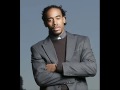
Tom Joyner Morning Show Breaks the Silence on the Congo
|
How to Write about Africa
by Binyavanga Wainaina
Always use
the word 'Africa' or 'Darkness' or 'Safari' in your title. Subtitles may
include the words 'Zanzibar', 'Masai', 'Zulu', 'Zambezi', 'Congo', 'Nile',
'Big', 'Sky', 'Shadow', 'Drum', 'Sun' or 'Bygone'. Also useful are words such
as 'Guerrillas', 'Timeless', 'Primordial' and 'Tribal'. Note that 'People'
means Africans who are not black, while 'The People' means black Africans.
Never
have a picture of a well-adjusted African on the cover of your book, or in it,
unless that African has won the Nobel Prize. An AK-47, prominent ribs, naked
breasts: use these. If you must include an African, make sure you get one in
Masai or Zulu or Dogon dress.
In your
text, treat Africa as if it were one country. It is hot and dusty with rolling
grasslands and huge herds of animals and tall, thin people who are starving. Or
it is hot and steamy with very short people who eat primates. Don't get bogged
down with precise descriptions. Africa is big: fifty-four countries, 900
million people who are too busy starving and dying and warring and emigrating
to read your book. The continent is full of deserts, jungles, highlands, savannahs
and many other things, but your reader doesn't care about all that, so keep
your descriptions romantic and evocative and unparticular. Read More
|
|
About Us

... You will raise up the age-old foundations; And you will be called the repairer of the breach, The restorer of the streets in which to dwell. (Isaiah. 58:12)
Kinetics mission is to disseminate information and develop new ideas that work to strengthen social movements within the African-American community; providing them with the tools and skills to pursue justice and better address the needs of those whom they serve.
Programs
TubmanCityPress
Faith in Life Speaker Series
| |
|
|
|
Join Us

Kinetics Faith & Justice Network mission is to provide the faith community with the tools to advocate and mobilize on local, national, and international issues, to build capacity to solve our own problems, and to use dialogue as a catalyst for social change. Members include clergy, scholars, lawyers, social justice advocates, and nonprofit and business professionals.
| |
|