|
|
|
My people are destroyed for lack of knowledge. Because you have rejected knowledge, I also will reject you from being My priest. Since you have forgotten the law of your God, I also will forget your children.
-Hosea 4:6
| |
Africa: the new frontier for the GE industry
Source: Pambazuka
Mariam Mayet
The Genetic Engineering (GE) industry is facing a shrinking global market as more and more countries adopt biosafety laws and GE labelling regulations. Moreover, as a result of widespread and mounting consumer rejection and the difficulties experienced by Monsanto in obtaining regulatory approval of its GE wheat, it has decided to pull out of the European cereal market.
Africa and Asia are the new frontiers for exploitation by the agro-chemical, seed and GE corporations. The potential for US agri-business to profit from hunger in Africa through, ostensibly the provision of food aid, technical assistance, capital investment, agricultural research and the funding of biosafety initiatives are enormous. The United States' Agency for International Development (USAID) appears to be at the forefront of a US marketing campaign to introduce GE food into the developing world. It has made it clear that it sees its role as having to "integrate biotechnology into local food systems and spread the technology through regions in Africa."[1]
|
 The World According to Monsanto The World According to Monsanto
Monsanto's background
Monsanto was founded in 1901 as a chemical company. Its history is intimately linked to the production and promotion of highly toxic chemicals such as Agent Orange (used as a chemical weapon in the Vietnam war) and PCBs (widespread toxic pollutants). Robin's movie reveals that Monsanto already knew about the "systematic toxic effects" of PCBs for decades, but instructed its salespeople to stay silent because, "we can't afford to lose one dollar."
More recently Monsanto received a bad reputation for the promotion of growth hormones from GE organisms known as rBGH, which the company sells in the US under the brand name Posilac. Monsanto claims that Posilac holds, "benefits to consumers". The reality is that, rBGH growth hormones were banned in Europe and Canada after the authorities found out about the health risks resulting from drinking milk from cows treated with rBGH hormones. Monsanto's way of "addressing" this problem was to sue the Oakhurst dairy company in the state of Maine (US) - attempting to force them, and other dairies, to stop labelling diary products "rBGH-free" and "rBST-free".
|
|
Food Inc.
Food, Inc. exposes America's industrialized food system and its effect on our environment, health, economy and workers' rights. Learn about these issues and take action through the Hungry For Change cafeteria and check out the 10 Simple Tips for making positive changes in your eating habits. Learn more about these issues and how you can take action on Takepart.com.
|
The Dangers of Genetically Modified Food
 This lecture was created by combining the 6 pieces posted on YouTube by The Kick Them All Out Project. http://www.KickThemAllOut.com This project shows you how we can take back control of Congress from the special interests that control it now and put an end to things like GMO foods. This lecture by Jeffrey Smith, author of Seeds of Deception, summarizes the contents of his book, which explains the health dangers of genetically modified foods, and the industry cover-up. This lecture was created by combining the 6 pieces posted on YouTube by The Kick Them All Out Project. http://www.KickThemAllOut.com This project shows you how we can take back control of Congress from the special interests that control it now and put an end to things like GMO foods. This lecture by Jeffrey Smith, author of Seeds of Deception, summarizes the contents of his book, which explains the health dangers of genetically modified foods, and the industry cover-up.
| |
|
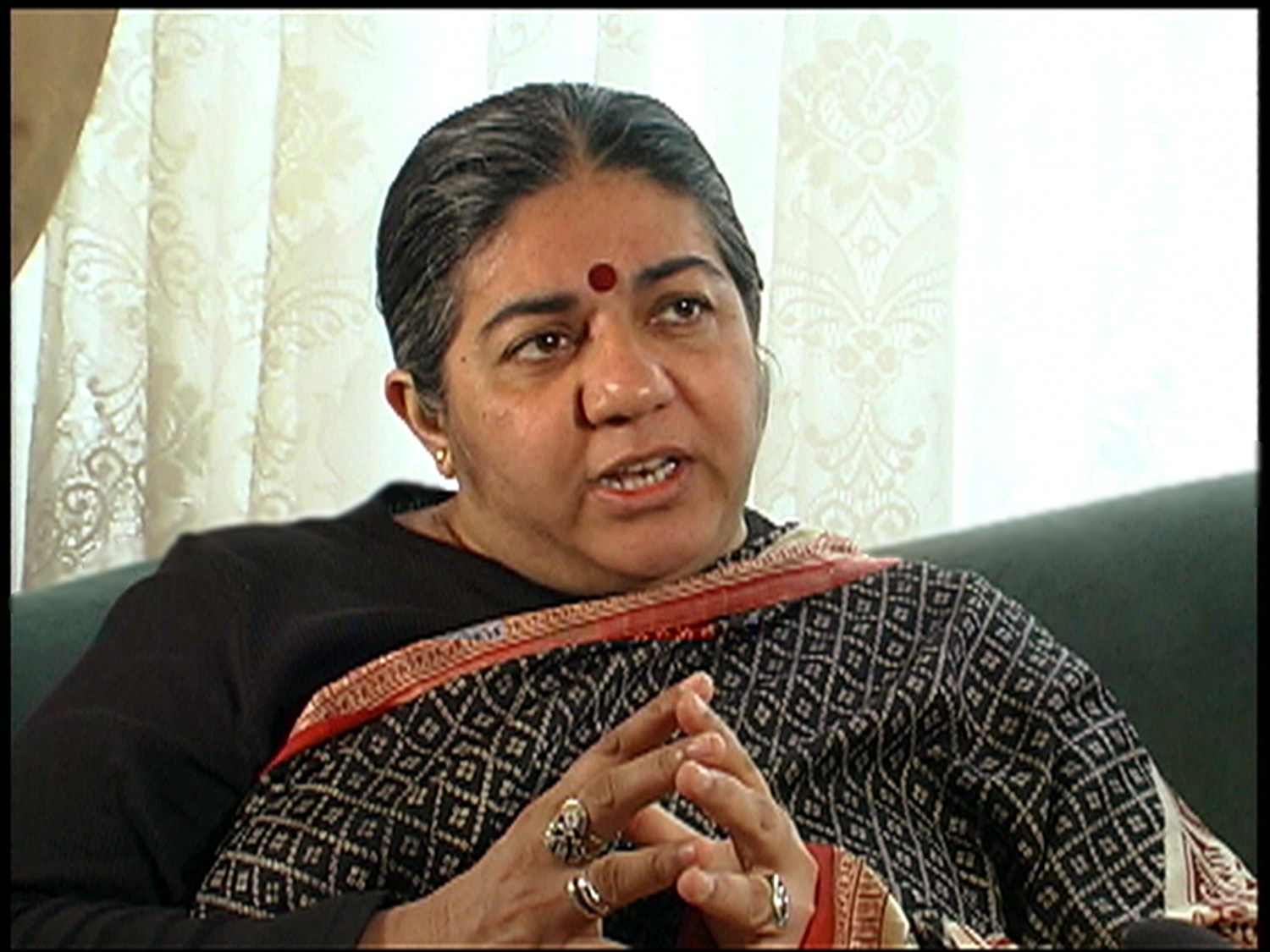
Vandana Shiva - The Future of Food and Seed
Scientist, feminist, ecologist and author, Vandana Shiva, presenting the keynote address at the 2009 Organicology Conference in Portland, Oregon, on February 28, 2009
|
|
A new Philanthro-Capitalist Alliance in Africa?
AGRA-The Return of the Green Revolution
Galés Gabirondo 2008-03-31, Issue 361  Bill Gates has called for "creative capitalism" - that is a philanthropy spurred on by profit. But Galés Gabirondo unmasks creative capitalism to reveal it as philanthro-capitalism. She uses the Bill Gates/Rockeffeler initiative, the Alliance for a Green Revolution in Africa, to show just how devastating it can be when good-will meets a corporate driven and market hungry capitalism
In September 2006, the Bill & Melinda Gates Foundation and the Rockefeller Foundation teamed up to launch "AGRA" a $150 million Alliance for a Green Revolution in Africa. Echoing the claim that Africa's last Green Revolution (originally promoted by Rockefeller) had "bypassed" the continent, Gates and Rockefeller promised that AGRA will improve the lives of the continent's impoverished farmers by investing in appropriate technology, efficient farm practices, and a network of small shopkeepers to sell mini-packets of improved seeds and fertilizers.
Elegantly simple in its proposal and presentation, AGRA is the global face of a renewed international effort to revive Africa's sagging agricultural research institutions and introduce new Green Revolution products across the sub-Sahara. The complex array of institutional and financial interests lining up behind Gates and Rockefeller include multilateral and bilateral aid organizations, national and international research institutes, and the handful of powerful multinational seed, chemical, and fertilizer monopolies upon which the entire financial future of the new Green Revolution ultimately rests. Gates and Rockefeller foundations are betting that AGRA can entice industry, governments and other philanthropies to invest in African agriculture. AGRA is the Green Revolution's new philanthropic flagship leading a global campaign to attract talent, investment and resources for another go at Africa's beleaguered food systems.
Read More
|
|
About Us

... You will raise up the age-old foundations; And you will be called the repairer of the breach, The restorer of the streets in which to dwell. (Isaiah. 58:12)
Kinetics mission is to disseminate information and develop new ideas that work to strengthen social movements within the African-American community; providing them with the tools and skills to pursue justice and better address the needs of those whom they serve.
Programs
Faith in Life Speaker Series
| |
|
|
|
Join Us

Kinetics Faith & Justice Network mission is to provide the faith community with the tools to advocate and mobilize on local, national, and international issues, to build capacity to solve our own problems, and to use dialogue as a catalyst for social change. Members include clergy, scholars, lawyers, social justice advocates, and nonprofit and business professionals.
| |
|