|
Join Us for a Graduate Medical Education Webinar!

April 25th at 4pm (EDT)
Healthcare Communication Across the Lifespan:
A Picker/Gold - IHI Open School Webinar
Picker Institute and the Gold Foundation, in collaboration with the IHI Open School, are proud to present this webinar featuring three 2010/2011 Picker/Gold Graduate Medical Education Challenge Grant Recipients.
Please click here for information on how to join the webinar on
April 25th at 4pm. |
Always EventsSM Challenge Grant Spotlight
|
| |
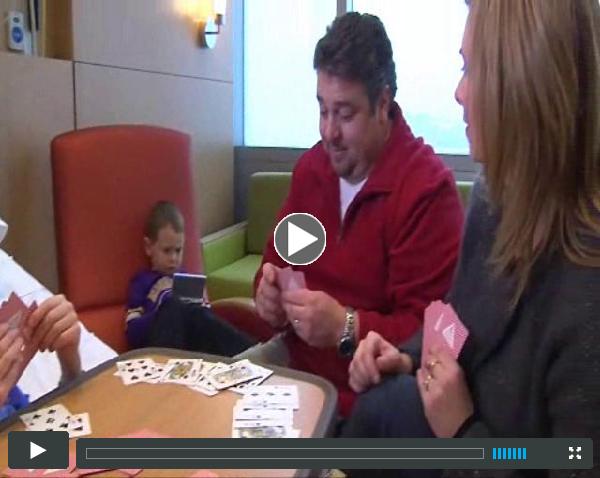
University of Minnesota Amplatz Children's Hospital -- "My Story" |
Always Event: The "story" of each patient will be used as a consistent approach to involving the child in the delivery of patient care.
Click here to learn more about this and other 2011/2012
Always Events Challenge Grant initiatives. |
|
See what Picker Institute is Reading!
Click the icon below to see what Picker Institute is reading.

|
|
The Picker Report on Aging in America with Dr. Bill Thomas
 | |
Dr. Bill Thomas on
Real Care Now |
In 2010, Picker Institute and Dr. Bill Thomas joined forces to launch the "Picker Report on Aging in America," a blog focused on raising public awareness of and build
social networking support for
person-centered approaches to long-term care.
Click here to visit the Picker Report on Aging in America. |
|
View Always Events Discussions!
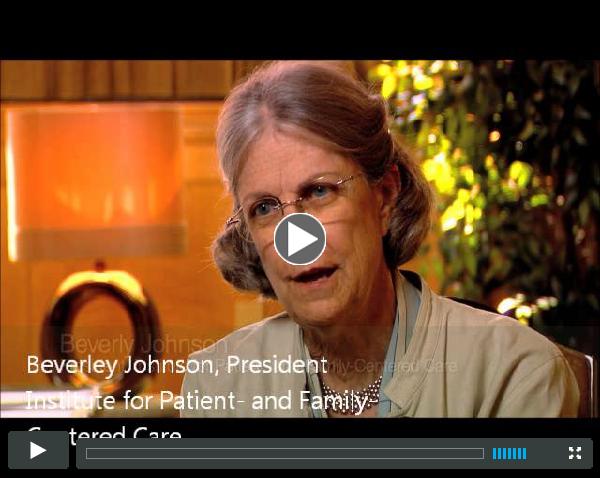 | |
Always Events: Bev Johnson, President IPFCC |
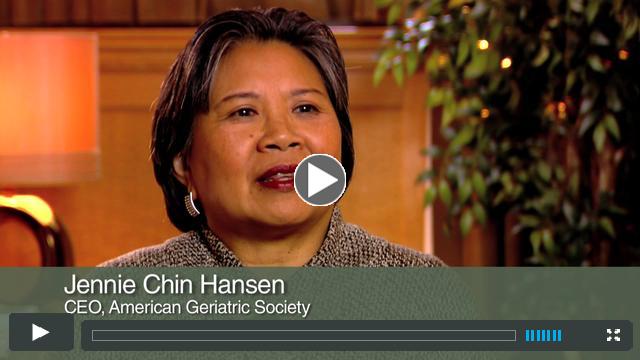 | |
Always Events: Jennie Chin Hansen, CEO, AGS |
Click here to view more
Always Events videos. |
|
|
Welcome, all, to Picker Institute's spring 2011 newsletter! We want to begin with a brief excerpt from the open letter in this year's annual report:
The man who died of pneumonia at the age of 74 after a long and misdiagnosed illness, the man whose dying wife did not receive a drug that would have eased her acute pain, the woman who died of undetected kidney failure because she had no health insurance and no primary care doctor -- not one of these victims was just anyone. How did they become accidental victims of a healthcare system that loudly claims to be the best in the world?
Please click here to read the open letter in its entirety.
We hope you will enjoy this glimpse of what we at Picker Institute are doing to promote patient-centeredness throughout the healthcare spectrum, and we welcome your comments on any of our efforts. |
 Always EventsSM Always EventsSM
Picker Institute is proud to announce the award of Always EventsSM matching grants to 20 healthcare organizations around the country. The grants are being administered under Picker Institute's Always EventsSM/Always ExperiencesSM initiative, which was launched in April 2010.
Click here to view an overview of the 2011/2012
Always Events grant recipients. |
 Conversations with Conversations with Thought Leaders
"Today, patient- and family-centered care is 'busting out all over.' It is what patients and families want. It is also what staff wants --it's why they went into healthcare. National and international interest in the concept is extraordinary, and some of the organizations making the greatest innovations are also newest to the journey. In my state, Massachusetts, as of 2010, every hospital by law must have a patient and family advisory committee reporting directly to the board. That's very exciting."
Jim Conway, MS, FACHE
Senior Fellow, IHI
Click here for the full Conversation with Jim Conway. Click here for more Conversations with Thought Leaders. |
Picker/Gold Graduate Medical Education Challenge Grant Program
 The Picker Institute/Gold Foundation Challenge Grant Program provides annual grants to support the research and development of innovative projects designed to facilitate successful patient-centered care initiatives and best practices in the education of our county's future practicing physicians.
Click the toolbox icon, or here, to view materials produced by past and present grantees.
Click here to learn more about past and present Picker Institute/Gold Foundation Graduate Medical Education Challenge Grants. |
 2011 Picker Award for Excellence® 2011 Picker Award for Excellence® in Long-Term Care
Jennie Chin Hansen, CEO of the American Geriatrics Society, is the winner of the 2011 Picker Award for Excellence in Long-Term Care. Ms. Hansen, who came to the AGS in March 2010, after two years as president of AARP, has been a tireless advocate for elders in her determination to improve the health, independence and quality of life for older people.
Ms. Hansen will accept her award on August 4 at this year's Pioneer Network National Conference, where she will also give the annual Picker Lecture.
The first award in long-term care was to Dr. Bill Thomas in 2009, and the second was to Karen Schoeneman of CMS in 2010.
Click here for a video of Jennie Chin Hansen discussing patient-centered care. |
|
Hebrew SeniorLife/BIDMC: 2010/2011
Graduate Medical Education Grantee
"How do you have the conversation?"
A Curriculum for Residents
Principal Investigator: Jennifer Rhodes-Kropf, MD
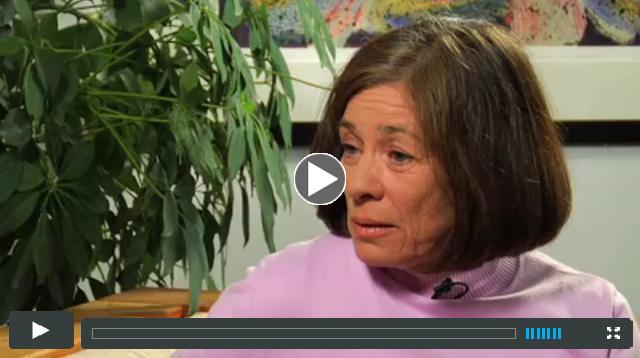 | |
The Conversation Project: A medical student discusses her end of life wishes with her mother. |
Heathcare decisions are especially difficult when the patient suffers from advanced dementia and cannot communicate for him or herself. These decisions are extremely stressful and burdensome for families. These are conversations that should always occur in the setting of advanced dementia and healthcare professionals should always strive to engage in these conversations before moments of crisis.
Click here to learn more about this and other
graduate medical education initiatives. |
Meeting The Leadership Challenge in
Long-Term Care: What You Do Matters
By David Farrell, Cathie Brady and Barbara Frank
 From the publisher: "This book debunks the common attitudes of nursing home administrators, directors of nursing and other leaders in long-term care that they are powerless in the face of regulatory, financial and corporate constraints and that staff turnover is an inevitable cost of doing business...Most notably, [it] demonstrates first-hand the powerful link between staff satisfaction and successful organizational performance that delivers high quality, high census, good surveys and a healthy bottom line." From the publisher: "This book debunks the common attitudes of nursing home administrators, directors of nursing and other leaders in long-term care that they are powerless in the face of regulatory, financial and corporate constraints and that staff turnover is an inevitable cost of doing business...Most notably, [it] demonstrates first-hand the powerful link between staff satisfaction and successful organizational performance that delivers high quality, high census, good surveys and a healthy bottom line."
This book was made possible in part by a grant from Picker Institute's Long-Term Care Program.
Click here to view the Picker Institute Reading List.
|
|








