Greetings!

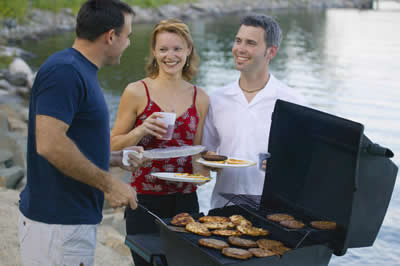
I hope you are staying cool! As the weather heats up and you enjoy the sunshine and backyard barbeques, we included an article about how to safely grill. Enjoy!
James Maust
Owner
540-434-7927
|
In Your Words
|
|

Jim, I just love this porch roof. It is so nice.
It provides shade for the house. It is so nice to sit out here in the evenings.
Or really all day any time of day.
Jonas & Barb - Harrisonburg,
VA
|
BBQ Safety 101
|
|
Enjoying your home to the fullest in
the summertime usually includes a barbecue out on the patio or deck. Barbecuing
has become one of America's favorite summer pastimes and can be a fun and
delicious way to whip up a quick nutritious meal. It's important to remember
some safety precautions to take both with the equipment you use to grill and
the food you are grilling.
1. Maintain
an adequate distance between the grill and the outside wall of the house to
reduce the chance of fire.
Gas and charcoal grills should never be used indoors, in closed garages or on
enclosed patios and balconies. Not only is fire a threat in these areas, the
toxins released by the charcoal can be dangerous.
2. Make
sure the grill is placed on a level floor so it won't tip, and set it away from any potential
flammable objects such as cars, lawn mowers, gas tanks or compost heaps. Always
keep a fire extinguisher handy for any emergencies and keep an eye on children
in the area.
3. Another
barbecuing concern is the preparation of the food, especially the problem bacteria
called E. coli. To avoid contamination, handle raw meat carefully. Keep it
separate from other foods and never reuse a plate on which raw meat has been
placed. Wash your hands in warm, soapy water after handling raw meat and clean
all surfaces and utensils that touch raw meat with hot, soapy water before
using with other food. Meat should be thawed on a plate in the refrigerator or
microwave oven, not out at room temperature.
4. Food
should be cooked to a safe internal temperature - judged by using a food
thermometer - to destroy harmful bacteria. Don't simply judge its doneness by
how brown it is on the outside. According to the U.S. Department of
Agriculture's Meat and Poultry Hotline, whole poultry should reach an internal
temperature of 180 °F; chicken breasts, 170 °F. Hamburgers made of ground beef
should reach 160 °F; ground poultry, 165 °F. Beef, veal and lamb steaks, roasts
and chops can be cooked to 145 °F. All cuts of pork should reach 160 °F.
5. Don't
let food sit out for more than an hour in weather above 90 degrees and promptly refrigerate any
leftovers in shallow containers. Discard any food that has been sitting out for
more than two hours in weather cooler than 90 degrees. For more information,
visit the hotline's website at www.fsis.usda.gov or call 800-535-4555.
6.
After you've grilled the perfect hamburger you'll want to
relax and enjoy eating it. That
means keeping the bugs away. To help lessen insects' intrusion on your picnic,
keep sweets and sodas covered and capped and eat while it is still light to
avoid mosquitoes in the evening. Use spray repellent, mosquito coils or
citronella-laced candles or torches to help keep the pests away. And most
importantly, have a safe and fun barbecue!
adapted from NAHB article Enjoy your summer barbeque
|