MoonDance Dynamic Arts School 

Dance - Celebrate Life!

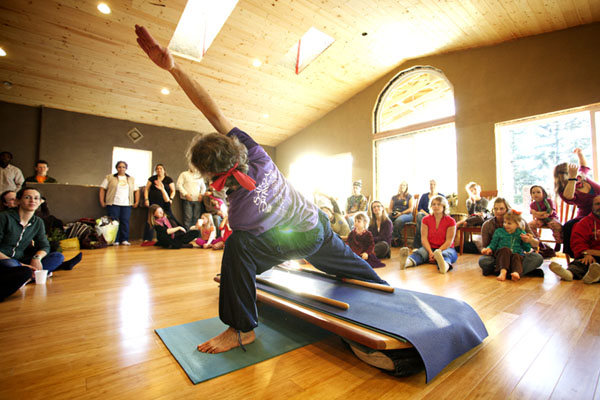
MoonDance dancing man

IN THIS ISSUE
Monthly Challenge
Aboubacar Camara & Doundounba!
2011 A Dance Odessey
Why Dance Matters
Acceptance
JOIN OUR LIST
Join Our Mailing List


Keep in Touch

Read past newsletters online.  Follow the link on the Home Page at
www.MoonDanceArts.ca


Find us on Facebook

Follow us on Twitter


Open House
Thank you to everyone who came to the Open House. 

A special thanks to the amazing instructors who shared their energy and talents with us:

Chris O'Connor
Danny Mosquera
Mariette West
William McKay
Byron Weaver
Josh Nactigal

and to our special guests & volunteers:
Aboubacar Camara
Cheryl Bakke Martin

MATOTO Multicultural Arts Society
Matoto
Get Involved

Whether you have 5 minutes,
5 hours, or 5 years, we have a way for you to get involved.

Life is more fun when you are involved...so go on, find out the
3 things you can do in 3 minutes or less to help us achieve our goal - world peace.
Yes really - peace.


Monthly Challenge
Spices


Global Kitchen...


 Challenge yourself to make food from another country/culture, that you've never made before.


Maybe find some teff flour and make ingira (those of you who have some to the Blue Nile: this is the yummy, fluffy flat bread).


Maybe head to the Burnside Market for some fresh Indian spices.  


Or get some galangal root and lemongrass for a Thai creation.


We of course, can't come close to Mohamed's fabulous Peanut Sauce, but experiment with Guinea-style cooking - - make it bengbe (hot!). 

.  Make it hot!


As Byron likes to point out, this is no small matter: people died for spices!  Find out what all the fuss was about!


ENJOY! 


How did the treats go?  What felt best for you?  Share your findings on the MoonDance FB page.  Click on Discussion.  


Every WOMAN Whistler
every WOMAN
every WOMAN founders, Kerri & Lynn K.
 
May 13 - 15, 2011
Whistler BC

every WOMAN
Inspiring Through Physical Activity

every WOMAN is an interactive and fun health conference to inspire everyday women and to promote the opportunity to try fitness, dance and wellness workshops in a comfortable setting.  


All shapes and sizes welcome. No experience necessary. Humour recommended. Movement guaranteed.


www.everywoman.ca

Use promo code: MoonDance when registering to receive a discount.


What Does DANCE Mean to You?

Share your:
picture, poem, paragraph, photo, collage, painting, video, drawing,
piece of music, etc.
~ whatever represents your best vision of
dance in your life.

Seven selections will be made to share in the MoonDance newsletter, and those seven folks will receive a MoonDance t-shirt or waterbottle!

DANCE inspiration


Pieces may be sent until
February 15th, 2011.


WONTANARA DRUM & DANCE
Wontanara

Now in partnership with MoonDance Dynamic Arts School

www.WontanaraDrumDance.ca


Issue: # 32
              February 2011  


Dance!
Liz Learman (Syracuse Cultural Workers)
I've shared this photo before... I love its message that
everyone can dance, and I also see in it that
we are more balanced when we are together.
 
Please see article below, Why Dance Matters, to explore this further.


 Reminder: Session Break
No classes Feb 7th - 12th.

Jan 4-Apr 18, 2011
No classes week of Feb 7 or week of Mar 21


Lynn Weaver

            Artistic Director        

 
Lynn Weaver
photo: Nik West Photography


Aboubacar Camara & Doundouba!


West African

Drum & Dance

Workshops


Saturday February 12

3:00 - 5:45 pm


Join us for two action packed

workshops with special guests:


Aboubacar Camara (Vancouver)

Mohamed Duranteau (Victoria)

visitng artist: Manimou Camara (Seattle)


DRUM Workshop 3:00 - 4:15 pm

DANCE Workshop 4:30 - 5:45 pm


$15 per workshop or $25 for both
Pre-registration is strongly encouraged.

250 743 5846

moondancearts@yahoo.ca


At the MoonDance Art House:

1756 Wilmot Ave, Shawnigan Lake Village 


Great warm up for the PARTY!  Shake the Winter off.  Warm up with Guinean beats. 


Wontanara Drum & Dance opening for:


 Aboubacar Camara and afro-beat band: Doundounba! 


with cameo appearance by the talented Manimou Camara!


Hailing from Vancouver, Doundounba will help you get your groove on.  Fun, upbeat, totally dance-able!


Cobble Hill Hall: 3550 Watson

Doors at 7pm

Advance tickets $15

Available at:

Sh:ft Natural Fashion, Victoria

Community Farm Store, Duncan

MoonDance Arts House, Shawnigan Lake

*ONLINE*:

click "Register Now" for Shawnigan Lake, and go to "events" tab in the top right


  $20 at the door 

Children 12 & under are free.  


250-743-5846.

 ________________________________________________________


Volunteers needed: 


Help with Hall set-up & decoration: 4:30 - 6:30pm


Staff the DOOR: 7:00pm - 10:00pm (1 hr shifts??)


Help with clean up (I know, sounds fun...you will have our eternal gratitude):

12pm - 1:00am


Contact Lynn: 250 743 5846


Year Ahead: 2011 A Dance Odessey
Journey with us...


Yoga "Out of the Box" workshop Feb 12 1:00 - 3:00pm Art House

Grand Opening Celebration: workshops and performance: Feb 12

Spouses/partners attend free: Feb 14 - 18

Vancouver International Dance Festival: March 1 - 19

Matoto Gala!  March 5

Earth Dance Kids Camp at Lake Cowichan: March 14 - 18

Spring Break Dance + Yoga camp: March 21 - 25

AbunDANCE: April 9

Dress Rehearsal: Wed April 27
Year-End performance! Saturday April 30

Spring/Summer session starts week of May 2

Every WOMAN Whistler: May 13 - 15

Eagle Arts July 3 - 31st

Earth Dance Kids Camp at OUR Eco Village Aug 2 - 5

SLAM Community Creation: Sept 10

Candle Light yoga + ceremony Dec 31


 Art House Updates

 Hands to Heart self-awareness techniques presents
Little Breaths: Kids 4 day workshop focusing on
fun, creative coping tools.

Four Saturdays at the Art House, Shawnigan Lake.  
___________________________________________________

Yin Yoga with Robin

Restorative and gentle, this mid-week class gets you back in balance.  "Hump day"!

Wednesdays 5:15 - 6:15pm Art House
____________________________________________________

Schedule changes: 
some class times have shifted slightly as we seek the ideal time for each class.  Please check the schedule online for current times, or call MoonDance if you're interested in joining or dropping-in on a class.
250 743 5846
______________________________________________________

Afro-Colombian & Latin postponed 
Danny Mosquera and family are travelling to Colombia to visit family and friends.  Classes will resume in a couple of months (exact dates TBA)
_____________________________________________________

Coming soon.... 
Zumba
Hop Hop
______________________________________________________

NEW: Pilates and Pilates Fusion with Sharon McAuley

Sharon brings to fitness what MoonDance brings to dance: a spirit of wellness, of genuine passion and caring.

Join Sharon

Tuesday AMs 9:30 - 10:30 for Pilates (Stott certified)

and Monday nights 8:30 - 9:30pm

(the days are getting longer now!) for a Pilates/yoga fusion.

 
*Pre-registration required, including drop-in* (Sharon comes all the way from Lake Cowichan for us!)
_________________________________________________________ 


Art House classes and Workshops:   


Full class schedule online. 

 
_______________________________________________________________


Art House Workshop Series

March 5

2:00-3:00pm

by donation


One World Vocal Workshop (Laura Carleton):

Learn songs from around the globe in a relaxed, non-formal way -
using harmony and percussion. Learn basic singing skills, the history and context of each song, and enjoy making music in community.
Everyone can sing - everyone is welcome!
No musical experience or sight-reading skills necessary.  
Pre-registration suggested:
email: moondancearts@yahoo.ca

_____________________________________________


FREE Bellyfit classes at the Art House

 
For women's bodies only!  Take your fitness into sacred space.  Find out more: www.bellyfit.ca

Tuesday Feb 15th and Tues Feb 22
10:30 - 11:30am 

250 743 5846
moondancearts@yahoo.ca
for information or to pre-register  


Why dance matters...

By Sangita Shresthova

"We live in a society that mistrusts the body. It doubts the connections between the world of the body and the world of thought. But how can we convince people of those connections? How can movement make people think?" (Jill Sigman)

...THROUGH DANCE!

The value of dance as a crucial form of cultural expression has become increasingly recognized by both academic and public organizations.  


UNESCO's Intangible Heritage Program recognizes dance as an essential source of identity, deeply rooted in the past.  


Unfortunately, the fluid, undocumented form of many traditional dance forms makes them particularly vulnerable in situations of rapid change and socio-political upheaval. It is at these times, that special efforts need to be made to preserve these dance treasures.  

Why dance matters:

Dance, whether social, theatrical, or ritually based, is a form of cultural expression. Like visual art, sculpture or architecture, dance encapsulates, reinforces and transmits cultural traditions and values. While dances tend to be thought of as distinctive movements and steps, every dance exists in a complex network of relationships to other dances and other non-dance ways of using the body.


Whether dance training is formal or informal, the parameters...of movement are directly related to culturally specific norms. By asking: "who dances, when and where, in what ways, with whom and to what end?" (Jane Desmond), we learn not only about the culture that practices the dance form but also about the complex relationships that exist between apparently disparate cultures and societies.


Ways of holding the body, gesturing, moving in relation to time, and using space (taking a lot, using a little, moving with large sweeping motions, or small contained ones) differ across various social and cultural groups and through time. For example the decline, subsequent revival, modification and codification of the dance of the temple dancers in South India (today known as Bharat Natyam) was influenced by, and in turn exerted influence over, post colonial cultural identity debates regarding India. Through dance, culture is learned, communicated and preserved.


A living and practiced art, dance is a fluid, constantly evolving tradition. While dance has historically responded to changing cultural conditions, it has recently been strongly influenced by unprecedented, rapid social, political and economic upheaval in many countries. This has disrupted the continued practice of many ritual, community-based dance forms. Rapid population growth, uneven economic development, urbanization, environmental degradation, and changing labor migration patterns are only some of the factors which have brought practice of certain, especially ancient, dance traditions under threat.

Dance Under Threat

Over the last decades, the rural life patterns of Nepalese villagers have undergone fundamental changes in response to the Maoist insurgency, increased pressure to migrate for work, and changing ecological situations. Even a cursory global overview reveals the dances of the Kalahari Bushmen, Tibetan Buddhists, Vietnamese villagers and Australian Aboriginals to be only a fraction of the traditional movement practices undergoing fundamental, and in many situations highly destructive, change. In some cases, dance forms are not only ceasing to exist as fluid expressions of culture; they are on the verge of ceasing to exist altogether.


Once these largely undocumented dances are no longer practiced, they will cease to exist. In the South Asian and Himalayan context, many dances including those practiced since pre-history in remote Nepal are examples of dance traditions in real existential danger.

Why Dance Should Be Saved

Dance is a continually evolving art form. As communities have disappeared, grown or changed over time, so have their dances. A dance dies along with its last practitioner.  


One of the significant results of colonialism and globalism is often cultural assimilation. This has been continued as explorers and travelers have pushed into ever more remote locations around the globe.  As a result of this integration of cultures traditional art forms, means of expression, and cultural identities are being lost. Overall the world is experiencing an unprecedented decline in diversity; we may be on a steady march towards homogeneity and monoculture.


While dance is an obviously valued component of virtually every society around the world, in the west it is degraded: it is easy to look at it as frivolous, merely a means of entertainment.  


Where in an eastern tradition, dance can be regarded as the apotheosis of human knowledge; in the west it is less than 50 years that dance has been recognized as a serious object of study. When communities around the world are suffering from such horrors as disease, malnutrition, lack of access to clean water, and war, why should anybody care about preservation of traditional dances? In addition, it is easy to dismiss the significance of what will be lost if dance forms practiced by relatively few people die away. If these people can't be bothered to teach their heirs the dances then why should anybody else care?


There are many reasons why dance should be documented and then encouraged within a community. The first and most apparent is the real opportunity for such an endeavor to generate valuable resource materials, media and research documents to be used by dance practitioners, connoisseurs and theorists. The next is strictly academic. The dances have inherent value and deserve to be studied and documented in their own right. In addition to the specific learning related directly to the dance movements, dances can teach us practical knowledge about a culture, such as its agricultural traditions or the historical migrations of the people. With every dance that dies, another source of data about the nature of human communities dies with it. Dance is a lens to reveal much about art, religion and higher consciousness.


The next reason gets to the heart of why anyone should care at all about the loss of dances. We should care for the very same reason that we care when an animal or plant becomes extinct: the diversity of our planet is reduced. In the case of dance it is cultural and intellectual diversity, not biological diversity, but the underlying values and principles are the same. A culture's dances are a living repository for its history, values, struggles, hopes, and aspirations. A community's cultural identity is expressed through its dances.  


A demonstrable path to a peaceful world is the acceptance and encouragement of cultural diversity. Documenting and encouraging traditional dance forms shows respect and acknowledgment of the beating heart of a culture; it promotes awareness of cultural identities

(even to practitioners themselves ), and plays a part in encouraging cultural understanding. The benefits of this cannot be disparaged, especially in the often hostile world in which we currently exist.


Components Necessary for the Revitalization of Dance

For those where revitalization remains a viable option, there are a number of necessary components. First, the culture of which it's a part must have at least a seminal respect for the dance, and its practitioners must have a certain level of prestige within the community; and sufficient skill to build upon. There needs to be funding to enable documentation and analysis of the dance, and ultimately to assist living transmission of the dances.  

In addition, creating opportunities to educate others beyond the community about the dance are important to ensure its survival and galvanize popular awareness.


There are, of course, several inherent challenges in preserving dance: the dynamic nature of dance; finding non-invasive means of documentation; ensuring full credit and benefit is given to local communities; and ensuring that representations of the dances are respectful, authentic and approved by the communities.

Who is helping?

  • Core of Culture, documenting and archiving cultural dance  www.coreofculture.org 
  • UNESCO (see below)
  • communities like MoonDance - propogating traditional dance with cultural "permission"
  • YOU: reading this, learning about dance from other cultures, valuing cultural dance and dance in general


UNESCO's Intangible Cultural Heritage preservation efforts, such as the remarkable restoration of Cambodian classical dance in the past decade, following the destruction of culture by the Khmer Rouge and the diaspora of the so-called 'boat-people'.


UNESCO recognizes that for many population groups, the intangible cultural heritage is the essential source of an identity deeply rooted in the past. Unfortunately, a number of its manifestations, such as traditional and popular music, dance, festivals and know-how for craft production, oral traditions and local languages have already disappeared or are in danger of doing so.


Recent advances in media technologies open up new, unobtrusive opportunities for dance preservation in culturally sensitive settings. Internet helps sustain long-term connections between dancers, institutions and repositories worldwide.


Diversity is not about how we differ. Diversity is about embracing one another's uniqueness.

Ola Joseph


CVAC
An online bulletin board for Arts happenings in the Valley.

Check it out  here...


The Practice of Acceptance
 

Acceptance


Acceptance is embracing life on its own terms. 
We are open to what it is, rather than wishing for something different. 
We face the truth in all circumstances with honesty and courage.

Acceptance allows us to gather the lessons and step forward with new wisdom and awareness.  We affirm others and ourselves for the qualities we embody, and avoid judgement for what we don't have.
Acceptance doesn't mean that we don't try to change or improv ourselves and our world; it is about the intention from which we make those attempts.

Accepting myself allows me to give what I have to world. 

 
"The greatest gift that you can give to others is the gift of unconditional love and acceptance."
 
- Brian Tracey
 

In your day, invite these thoughts:
 
I receive my tests with humour and grace.
I seek the truth in all I experience.
I trust that there is some good in whatever happens.
I accept people as they are.
I trust that I am a person of value.


I am thankful for the gift of Acceptance. 
It brings me freedom.


Adapted from the Virtues Project International.