Greetings!
Greetings from your farm. We've been busy for the last 2 weeks finalizing our seed orders for the summer program. Our initial planning starts pretty much right after the last week of summer deliveries. We start by analyzing yields, crop placement, insect and disease issues, and whether we liked the crop varieties that we chose to grow. The next step is planning cover cropping and crop rotations. Cover cropping helps maintain soli fertility as well as providing protection against erosion. Also, certain crops benefit from the nutrients left behind when the cover crop is tilled under in the spring, so we're also working on crop rotations. Crop rotations help guard against disease and insect infestation. Easy in theory but then consider that we grow over 40 crops in a season. There are 8 major plant families, actually 9 if you consider the "miscellaneous" family. When planning crop rotations we need to consider which families like to follow one another and which don't. The short story is that it get's pretty complicated. We're close to coming up with our final field plan.  Farm Manager, Brian, finalizing our 2012 field plans.
From there we'll be running numbers to determine how many trays of transplants we need to start. By late February we'll be in the greenhouse getting the first round of transplants ready. Spending March and April in the greenhouses is a good way to make the Midwestern winter pass a bit more quickly. |
|
|
Kumquats
 These small citrus fruits can be eaten raw with the rind. The rind is actually sweeter than the flesh and very tender. Kumquats are high in fiber and antioxidants and have respectable amounts of calcium and iron as well. You'll find kumquats typically prepared as marmalade or jelly; or candied. Simple Candied Kumquats Candied kumquats can be served with just about anything. They are great in salads and also a nice addition to grilled meat or fish.
2 cups of roughly chopped kumquats 1/2 cup water 1 cup sugar With a pairing knife roughly chop the kumquats. You can leave any small kumquats whole. Heat the water and sugar over high heat until it comes to a boil. Simmer for 4 minutes, add the kumquats and simmer for 10 minutes. Drain the kumquats through a sieve set over a bowl. Return the syrup to the pan and simmer for 5 minutes to reduce the syrup. Combine the kumquats and 1/4 cup of the syrup together. Serve or store in a jar and refrigerate. Can be stored for up to two weeks. Kumquat Salsa This salsa can be served with chips but is also great with fish or steak tacos. Top with some crumbled queso fresco. 1 C chopped kumquats 2 T finely chopped red onion ¼ C chopped cilantro 2 T olive oil 1 t sea salt ½ avocado, diced Mix all ingredients in a bowl, chill for 30 minutes. Fennel Salad with Kumquat Vinaigrette Pairs well with seared scallops or grilled shrimp. 1 C olive oil 10 kumquats, stemmed, quartered, seeded 3 tablespoons chopped fresh tarragon 1/4 cup white wine vinegar 2 tablespoons frozen orange juice concentrate 1 tablespoon dijon mustard 3 medium fennel bulbs, thinly sliced (about 5 cups) ¼ thinly sliced red onion Puree oil, kumquats, and tarragon in processor. Add vinegar, orange juice concentrate, and mustard; process until just combined. Season vinaigrette with salt and pepper. Can be made 1 day ahead. Cover and refrigerate. Bring to room temperature before continuing. Combine fennel, and red onions in large bowl. Add 3/4 cup vinaigrette; toss to combine. Let salad sit for 15 minutes before serving.
|
|
Red Chard
 Chard is an excellent source of vitamin K, A, C, magnesium, manganese, potassium, iron, vitamin E, and dietary fiber. Both the leaves and stalk of chard are edible, although the stems vary in texture. Our favorite way to enjoy these greens is simply sautéed with olive oil and garlic. The chard will cook in about 5 minutes. Chard is also great raw in a salad or on a sandwich in place of lettuce. Red Chard Risotto 5 cups vegetable or chicken broth 2 tablespoons olive oil 1 medium onion, chopped 1 1/2 cups arborio rice or medium-grain white rice 1 bunch red Swiss chard, chopped 1/2 cup dry white wine 1/2 cup freshly grated Parmesan cheese Additional grated Parmesan cheese Bring broth to simmer in medium saucepan. Cover and keep warm. Heat oil in heavy large Dutch oven over medium heat. Add onion and sauté until translucent, about 5 minutes. Add rice and chard and stir until chard begins to wilt, about 3 minutes. Add wine and simmer until absorbed, stirring occasionally, about 2 minutes. Add 4 1/2 cups hot broth. Simmer until rice is just tender and risotto is creamy, stirring frequently and adding remaining 1/2 cup broth by 1/4 cupfuls if mixture is dry, about 20 minutes. Mix in 1/2 cup Parmesan cheese; season to taste with salt and pepper. Transfer risotto to medium bowl. Serve, passing additional Parmesan separately. Sautéed Swiss chard with lime and coriander (the combination of lime and chard is excellent) 1 bunch chard-cleaned* ½ c vegetable stock, chicken stock or water ¼ c olive oil 2 TBS lime juice 2 tsp crushed coriander seed 1 TBS minced garlic 1TBS minced shallot 1 TBS minced cilantro salt and pepper to taste Steam the chard until wilted but not over cooked-drain, and put in a large serving bowl (if you have a steamer-great, if not, simply add ½" of water to a soup pot, bring to a boil add the chard, cover and cook until wilted (about 5 minutes) drain and reserve). In a sauté pan, add the olive oil, garlic, shallot and coriander seed and cook over medium heat for 5 minutes or until the onion is tender, add the stock and lime juice and adjust seasoning. Pour this warm vinaigrette over the bowl of steamed chard, then garnish with minced cilantro. *cut the leaves from the stalk and roughly chop, peel the stems (like celery) and chop finely
|
|
Broccoli
 Broccoli, a member of the cabbage family provides a range of tastes and textures, from soft and flowery (the floret) to fibrous and crunchy (the stem and stalk). Broccoli is loaded with vitamin A, C, Calcium, Potassium, and Iron. Broccoli has anti-cancer properties due to a special enzyme called sulforaphane.
Soak the broccoli head upside down in cold, salted water to remove any hidden field pests. Broccoli can be eaten raw, chopped into salads, or paired with a dip.
To cook chop and separate florets, steam lightly for 5-7 minutes (a bright green color tells you its done) top steamed broccoli with butter, a squeeze of lemon juice, and or a sprinkle of your favorite grated cheese. Broccoli is best used within a few days. Store in a plastic bag in the hydrator drawer of the refrigerator. For long term storage, broccoli freezes well. Cut into florets and slice stems. Blanch for 3-4 minutes, rinse in cold water to stop the cooking process, drain, let dry, and place in an airtight container or zip-lock freezer bag. Creamy of Broccoli Soup 6 cups broccoli, chopped 7 cups vegetable stock, cold water 1-2 t salt 2 medium potatoes, peeled and cut into chunks 1 red onion, diced
1 clove of garlic, minced 3/4 cup heavy whipping cream freshly ground pepper Set a handful of the broccoli aside, then in a large saucepan place the chopped broccoli, potatoes, onions, and garlic. Add 7 cups of vegetable stock or cold water, season with 1-2 teaspoons of salt. Bring to a boil and if necessary skim the surface of the potato starch. Lower the heat slightly, and simmer uncovered for about 35 minutes. Add the reserved handful of broccoli and simmer for another 10 minutes.
Puree the soup until smooth with an immersion blender, one of our favorite kitchen appliances. Taste the soup, adjust seasonings if needed. If you find the soup is to thick add hot water until you reach your desired consistency. If too thin simply continue cooking the soup uncovered until the liquid is reduced.
Swirl in half of the cream and heat through. Serve immediately. Mini-Frittatas with Broccoli and Three Cheeses You will need a muffin pan with one-cup sized cups to make this recipe. Spray the ceramic pan or muffin cups with non-stick spray. 1 1/2 cups broccoli, cut into small, bite-sized pieces 1/2 cup cheddar cheese 4 heaping t coarsely-grated Parmesan cheese 6 eggs 1/2 cup low-fat cottage cheese, do not drain or rinse freshly ground black pepper and sea salt to taste Preheat oven to 375F. Spray muffin cups with non-stick spray. This recipe yields 4 cups. Cut broccoli into small, bite-sized pieces. Lightly steam broccoli - until just tender. Divide broccoli between the cups. Put about 2 T of cheddar cheese on top of the broccoli, then add a heaping teaspoon of coarsely-grated Parmesan. Break eggs into a measuring cup with a pour spout, and beat with a fork until egg yolks and whites are combined. Add cottage cheese, seasoning and stir to combine. Pour egg mixture over broccoli and cheese, dividing the eggs evenly among the cups. Stir gently with the fork so ingredients are evenly distributed. Bake for about 35 minutes, or until eggs are firm and frittatas are slightly browned on top. Serve hot. Frittatas can be kept in the fridge for several days and microwaved to reheat. Don't microwave for more than 1-2 minutes or the eggs will get rubbery. |
|
Shallots
 This week we have shallots for you, 2 pounds per share. Shallots store well and should keep for at least a month in a cool, well ventilated space, away from direct sunlight. Do not store shallots in a plastic bag as they need good air circulation.They are a member of the onion family and have a sweet flavor and crisp texture. They can be used similarly to onions but they are much more expensive so we don't recommend using them as a substitute.
Shallot Vinaigrette
2 tablespoons red vinegar
2 tablespoons finely chopped shallots
1/2 teaspoon salt
1/4 teaspoon pepper
2 teaspoons Dijon Mustard
6 tablespoons Olive oil
1 tablespoon lemon juice
1 tablespoon heavy cream or yogurt
Using a blender add vinegar, shallots, salt, pepper, and mustard. Combine ingredients and with the blender running, add oil. Continue blending then add lemon juice and cream. |
|
Parsnips

Parsnips are very low in Saturated Fat and Cholesterol. They are a good source of Potassium, Iron, Potassium and a very good source of Dietary Fiber, Vitamin C, Folate and Manganese.
Store raw parsnips in the refrigerator, preferably in a perforated plastic bag. They will keep well up to three weeks.
A few suggestions for preparing parsnips...
Peel a parsnip, shred it, and add it to a salad. Its flavor is very mild and won't over power your greens.
Peel and shred parsnips. Saute in a wok or skillet with a small amount of extra virgin olive oil and a little water until tender, about 7 to 10 minutes.
Dice peeled parsnips and carrots, and saute in a skillet with a little olive oil and water. Add a little lemon juice, wine, and seasonings and enjoy a tasty side dish.
Peel parsnips and slice in half lengthwise. Toss in a little extra virgin olive oil and spread out on a lightly oiled baking pan. Roast in a 400 oven for 25 to 35 minutes, turning frequently to avoid sticking and burning. Season if desired.
Root Vegetable Hash with Poached Eggs and Parsley Pesto Pesto 2 cups fresh Italian parsley leaves 1/4 cup extra-virgin olive oil 2 tablespoons pine nuts, toasted 2 tablespoons fresh lemon juice 2 tablespoons water 1 small garlic clove, peeled
Hash
Nonstick vegetable oil spray 2 1/2 cups peeled Yellow potatoes (about 1lb), diced 2 1/2 cups peeled parsnips, diced 2 cups peeled rutabagas, diced 1 1/2 cups peeled carrots, diced 1/2 cup red bell pepper, diced 2 tablespoons extra-virgin olive oil 3 garlic cloves, minced 4 green onions, sliced 4 large eggs
For pesto:
Blend all ingredients in processor until almost smooth. Season with salt and pepper.
For hash:
Preheat oven to 400°F. Spray large rimmed baking sheet with nonstick spray. Toss potatoes and next 5 ingredients on prepared sheet; spread in single layer. Sprinkle generously with salt and pepper. Roast vegetables until tender, stirring and turning occasionally, about 45 minutes. Stir in garlic; roast 5 minutes longer. Mix in green onions. Fill large skillet halfway with generously salted water; bring to boil. Reduce heat to maintain steady simmer. Crack eggs, 1 at a time, into custard cup, then slide eggs into simmering water. Poach eggs until softly set, about 3 minutes. Divide hash among 4 plates. Using slotted spoon, top each serving with 1 poached egg. Drizzle with pesto.
|
|
Rutabagas
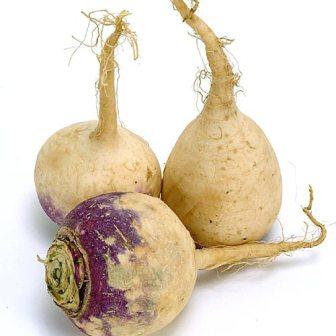
Rutabagas, also known as Swedish turnips are a root vegetable that can be roasted, boiled, fried or mashed. They are a good source of fiber, vitamin B6, calcium, and vitamin C. They have a sweet and peppery flavor very similar to turnips. We recommend very simple prerations. A rutabaga trivia fact; in Ireland and Scotland rutabagas are used as Halloween decorations; similarly to how Americans carve pumpkins.
Mashed Rutabagas
2 pounds rutabagas, peeled and diced in to 1 inch cubes
2 T softened butter
sea salt and pepper
Cook rutabagas in boiling water until tender, about 45 minutes. Drain and let cool slightly. Transfer to food processor and puree, add butter and season with salt and pepper.
Roasted Rutabaga and Parsnips
1 pound rutabaga
1 pound parsnips
2 T olive oil
Fresh herb of your choice, we like chopped tarragon
Preheat oven to 400 degrees. Peel and slice rutabaga and parsnip and cut into 1 inch pieces. Line a baking try with foil. Toss rutabagas and parsnips with olive oil, season with salt and pepper. Bake until tender, about 45 to 50 minutes. Top with fresh chopped herbs.
|
|
Red Onions

Red Onion Marmalade for Grilled Fish, Meat or Tofu
3 tablespoons butter
2 large red onions, sliced
2 tablespoons sugar
3 tablespoons balsamic vinegar
Heat butter in large skillet over medium flame. Stir in onions and sugar and cook, stirring frequently, until onions are caramelized, about 20 minutes. De-glaze the pan, i.e. stir vinegar into pan to release any bits from bottom of pan and then cook until all the vinegar has been absorbed into the onion mix and the flavors come together, about another 7 minutes. This makes a delicious topping for grilled fish, meats, chicken or tofu.
|
|
Garlic
 Roasted Garlic Vinaigrette with Lemon Zest
1/3 cup firmly packed, peeled garlic cloves
2 tsp extra-virgin olive oil
1/4 cup white-wine vinegar
2 Tbsp water
1/2 tsp grated lemon zest
salt and pepper to taste
Preheat oven to 400. Place garlic cloves in a small roasting pan and toss with the olive oil. Roast in oven for 15 minutes, or until garlic cloves start to brown. Cover with foil and roast until garlic cloves are soft, about 10 minutes more. Remove garlic and let cool slightly. Place garlic in a food processor or blender. Add the vinegar, water, lemon zest and puree. If mixture seems too thick add a little more water. Season with salt and pepper to taste. Keep covered in the refrigerator for 1-2 days. |
|
Fennel
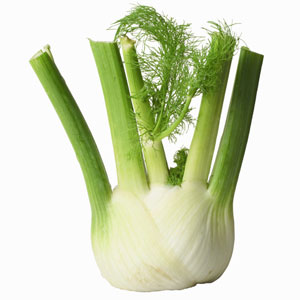 Fennel sometimes called anise is an underused vegetable that crunches like celery and tastes like licorice. Try substituting for celery in most any recipe. Add shaved fennel to salads, or bake, steam or saute fennel for a quick and delicious side. Fennel sometimes called anise is an underused vegetable that crunches like celery and tastes like licorice. Try substituting for celery in most any recipe. Add shaved fennel to salads, or bake, steam or saute fennel for a quick and delicious side.
Store fennel in a plastic bag in the refrigerator for up to 2 weeks.
Roasted Fennel 2 fennel bulbs
2 T of olive oil
Kosher Salt
Freshly ground black pepper Preheat the oven to 375 degrees and position one of the racks in the lower third of the oven. Wash and trim the fennel bulbs, (you can save the stalks and fronds for soup...) and slice the bulbs in half and then again into slices. Line a baking sheet with aluminum foil. Place the fennel slices on the baking sheet and drizzle with the olive oil. Turn the slices to lightly coat them with the oil. Sprinkle the slices with the salt and the pepper. Place on the lower rack in the oven and cook for 15 minutes or until they are beginning to lightly caramelize on the bottom. Turn the slices and cook for another 15 minutes to caramelize the other side. Serve immediately or it can stand for 10 minutes or so while you get the rest of dinner ready.
Fennel and Fig Antipasto
1 medium-size bulb of fennel
1/4 cup olive oil
2 tablespoons red wine vinegar
salt and pepper to taste
12 fresh figs or 12 plump and soft dried figs (don't substitute the hard imported figs)
Trim the stalks, quarter the bulb; cut out and discard the core. Chop the fennel into bite-size pieces.
In a flat vegetable dish, combine the fennel with the oil, vinegar, salt and pepper. Toss well to prevent browning.
Remove the hard stem ends from the figs and cut them in half. Gently toss them with the fennel. Chill until ready to serve. |
|
Potatoes

The potato is a nutritionally rich tuberous root vegetable, and is a good source of starch, vitamins, minerals and dietary fiber. It is one of the most widely grown perennial crops, with over 100 edible varieties.
Exposure to sunlight and excess moisture will cause potatoes to sprout. Potatoes should not be stored in the refrigerator, as their starch content will turn to sugar giving them an undesirable taste. In addition, do not store potatoes near onions, as the gases that they each emit will cause the degradation of one another.
Potato and Rutabaga Gratin 2 cups whipping cream 1 cup half and half 2 shallots, thinly sliced crosswise 1 large garlic clove, minced 1 1/2 teaspoons fresh thyme leaves 1 1/4 teaspoons salt Freshly ground pepper to taste 1 pound russet potatoes, peeled, cut into 1/6-inch-thick slices 1 pound rutabagas, peeled, cut into 1/6-inch-thick slices Preheat oven to 375°F. Combine first 6 ingredients in heavy medium saucepan. Bring to simmer. Remove from heat. Arrange potatoes and turnips in 13x9x2-inch glass baking dish, alternating and overlapping slightly. Pour warm cream mixture over. Sprinkle with pepper. Bake until vegetables are tender and top is golden brown, about 45 minutes. Cool slightly, then serve. |
|
|
|
|
|



