|
|
|
Issue: # 12.0
|
October/2009
|
|
|
|
|
ASC HEALTH & WELLNESS NEWS
Greetings!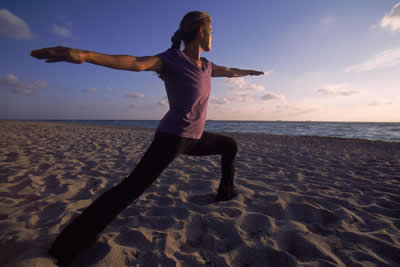
As we turn to the final quarter of the year, don't forget to slow down as the world speeds up! Work, Exercise and Family are certainly important, but when the demands of life start taking a toll, keep in perspective the importance of taking time to care for your own needs. Your body has its own way's of telling you it needs a little extra care- faster fatigue during your workouts, midday yawning and difficulty concentrating, feeling like you always are tired, but can't seem to fall asleep at night, headaches and jaw pain, indigestion, and chronic muscle pain are just a few of them. Taking time for yourself can be done in a healthy way that is NOT that hard to fit in! Take 10 minutes at the end of your day to stretch out. Turn off the TV and read a book that you WANT to read for a few minutes instead. Keep a journal where you can write down your thoughts, anxieties and goals. Think about the simple hobbies that once made you happy, and get back to them. If something that once gave you stress relief is now adding to your stress, it's time to re-think, re-set, and re-juvinate! For a few tips on easy ways to stretch, relax and refresh, read on! Yours in Health & Success, Dr. Katrina  |
|
EXERCISE TIPS: Preventing Forearm and Wrist Pain
Ever get an achey pain around your elbows or wrists after a long day of computer work, writing, tennis, rock climbing or golfing? These all sounds like completely different activities, but the following simple stretch can help to prevent and relieve forearm, elbow and wrist pain that can result from overuse during just about any activity that uses the muscles around them.
Step 1: With your palms down and arms straight out ahead of you, grab the back of your left hand with your right hand and gently pull it toward your body until you feel a gentle stretch along the back of your forearm. Hold this position for a count of 15, then curl your fingers in as if to make a light fist without releasing the initial hold, or bending your elbow. You should now feel the stretch increase.
Step 2: This time, start with your arms out straight but palms facing up toward the ceiling. Place the fingers of your right hand across the palm of your left hand and gently extend your wrist until you feel a stre tch along your wrist, forearm, and more than likely likely, even your inner elbow. tch along your wrist, forearm, and more than likely likely, even your inner elbow.
Reminder: If you are experiencing pain of any kind, be sure to follow up with your healthcare provider. These exercises are provided strictly as a benefit to help you improve your general wellness, and should not be used in place of a proper diagnosis or treatment plan.
|
 Common Kinks & Questions: Sacroiliac Pain Common Kinks & Questions: Sacroiliac Pain
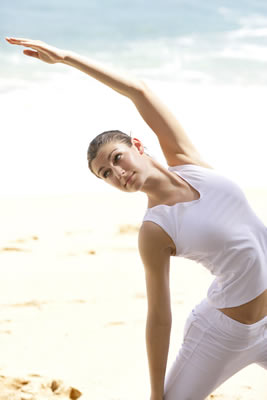
Almost every week, I have at least one patient come to my office with the complaint of "hip pain". However, when they describe their pain, and point to where they feel it, its really not anywhere close to the true hip at all! Almost all of them are actually experiencing pain in the location known as the SI joint.
Pain in and around the sacroiliac joint (SI) is one of the most common causes of low-back pain. With approximately 80% of the population suffering from low-back pain at some point in their lives, the sacroiliac joint dysfunction (SJD) most likely represents about 15-25% of those cases. SJD is a broad term often applied to the pain in the sacroiliac joint region. While SJD can be painful and debilitating, it is rarely life-threatening, nor does it typically require invasive types of treatment like surgery.
What are the sacroiliac joints? The sacroiliac joints are the largest joints in the spine. If you look at your lower back in a mirror, you will usually be able to see and feel these joints as two small dimples on each side of your lower back at the belt line. This is NOT your hips, nor are they a part of it. The joints are found at the base of the spine, between the parts of the pelvis known as the ilium (the large, flat pelvic bone) and the sacrum (the upside-down triangular bone at the base of the spine). Interestingly, during pregnancy, the ligaments of these joints relax to allow the passage of the baby through the birth canal. Rich with nerves and supported by large, broad ligaments, the long, thin, oblique sacroiliac joints provide stability of the pelvis, absorb shock, and allow just enough motion-a combination of gliding, rotation, and tilting to only a few degrees-to help relieve stress on the spine and hips.
What are the symptoms and causes of sacroiliac joint dysfunction (SJD)? Symptoms of SJD include low-back pain, typically at the belt line, and pain radiating into the buttock or thigh. These symptoms can often mimic those from other causes of low-back pain, such as disc herniations and disease of the facet joints. In pregnant women, SJD is likely secondary to the hormone-induced relaxation of the pelvic ligaments during the third trimester. Weight gain and increased curvature of the lumbar spine are also likely to contribute to the pain in these women. SJD is most common in adults. Most often, SJD is caused by trauma, especially rotation of the joint while the lower back is loaded, as might happen when lifting or participating in some vigorous activity. It is thought that such trauma causes tears, most often small ones, in the ligaments surrounding the joint, resulting in pain and dysfunction. The risk of SJD dysfunction is also thought to increase with true and apparent leg-length inequality, abnormalities in gait, and prolonged exercise.
While more serious conditions such as fracture or dislocation, infection, and inflammatory arthritis can cause pain in the sacroiliac joint, minor or repetitive trauma such as running on pavement or lifting with poor ergonomics and core muscle activation are much more common causes.
Because SJD pain resembles other types of low-back pain, it is often difficult to isolate it as the actual cause of pain and disability. While no one test is sufficient to diagnose SJD dysfunction, the most commonly used diagnostic procedures are physical examination and anesthetic blocks of the sacroiliac joint. Once determined, there are a wide variety of methods for treatment including strengthening exercises, pain modification modalities such as neuromuscular stimulation, Chiropractic and Active Release Therapies, supportive belt are common therapies for pain relief. In some severe cases, more invasive forms of therapy are necessary. These include anesthetic corticosteroid injections, radiofrequency denervation, and surgery.
Like almost any types of neuromusculoskeletal dysfunctions and injuries, prevention is key. Regular core strengthening and stretching for total body flexibility are what keeps your pelvis supported and moving smoothly throughout your daily activities. (Sorry, but the occasional triceps stretch, toe touch and neck roll doesn't cut it!) In addition, a healthy diet, maintaining an appropriate weight level, and proper lifting techniques and ergonomics will all help in SI Join Dysfunction. For more information or assistance with SI Joint Pain, contact us today!
(Adapted from the January 2008 issue of Journal of the American Chiropractic Association)
|
 SEASONAL NEWS: Fall Running in Southern Cali SEASONAL NEWS: Fall Running in Southern Cali
October and November are notorious for starting off the season of 5K, 10K, Half Marathons and Trail Running Series throughout California. These events are crowded with the novice runner hoping to fundraise for their favorite charity, and the professional competitor alike. Unfortunately, this can often mean a lot of injuries from both types of runners, as well! No matter what your running experience, I highly suggest that if you feel some sort of pain setting in, get it checked out. Identifying what is going on can mean the elimination of pain and the prevention of a more serious injury. This prevention can mean taking measures as easy as the addition of the correct insoles to identifying the imbalances of your muscles and correcting your stride before and during fatigue. Either way, wouldn't it be worth finding out?
In the meantime, here are a few upcoming events and helpful sites to check out!
World Run Day: November 8th, 2009. A day to celebrate running and charitable giving, virtually.
Live Earth Run For Water FREE 6K Beginner Walking Plan OR 6K Beginner Running Plan
California Beach Camping: Coastal Locations for the Runner and Outdoor Lover
My Favorite Hikes and Running Trails in East San Diego: Fall into Cuyamaca State Park
|
|
|
|
Action Sports Chiropractic & Wellness
is San Diego's premiere location for developing and
maintaining an active lifestyle. Whether you are looking to get
through the
pain and discomfort of a new injury, motor vehicle accident, manage chronic stress and
headaches, or to
improve your strength, fitness and posture, we'll provide a step by
step,
personalized approach to reaching those goals as quickly as possible.
We
believe that an active, science based, holistic, goal oriented approach is the best way reach
your
optimal performance levels. If you've been searching for a place that
understands the demands and needs of an active lifestyle, we're confident
you'll like what you'll find. Come check us out at www.ActionSportsChiropractic.com or call 858.481.0303 to make an appointment and start reaching your goals today!
Sincerely,
Dr. Katrina M. Stopper, DC, ATC, CSCS
Action Sports Chiropractic & Wellness
|
|
|
|
|
|





