|
Quick Links

Classes
Workshops & Seminars Survey
Your Submissions: Submit your questions, stories etc.
We may feature them in our upcoming issue!
We will feature all the topics YOU want in our Monthly eNewsletter!
|
| Interested In Giving or Getting 7Days FREE?
*Must be 18 yrs or older *Must be local resident.
Good for 7 Consecutive Days FREE!
During Staffed Hours
Members Enjoy: 24 Hour Access Secure Facility Personal Attention Meal Planning Personal Training TRX Suspension Training Private Restrooms Private Showers Tanning Cardio Theater Circuit Training Free Weights Friendly Staff Clean Equipment and More!
Wayne's "Quick- Fix" Training Program 3, 1/2hour, focused, sessions each week Only $350 ($29/session!)
Save Time, Save Money, Get Results!
Set Up A FREE Consultation Today! (973) 426-0103 |
|
Greetings!
Spring is right around the corner and I'm sure many of us are ready to start getting active outdoors. Whether you're planning to work outdoors, register for local races/marathons or just walk the dog more; this issue is your guide to the best ways to start conditioning your body now to prevent injuries later! In order to get conditioned and avoid injuries, incorporate the following into your current routine: - Functional Training
- Stretching & Flexibility
- Core Strengthening Exercises
- Balance
- Endurance Training
Being conditioned will aid in the prevention of injuries and ensure that you enjoy your outdoor activities all season! And let's face it, you'll look great doing them ;) |
 |
|
10 Smart Ways to Avoid
Sport & Exercise Injuries
Have a Fitness Assessment:
Know your fitness status so you can workout accordingly. Trainers or coaches can help set the right starting point for your workouts. If you have health conditions; make sure your doctor knows about your plans before you begin. If you have heart disease or other conditions, you should modify your exercise accordingly. Your doctor can let you know what your limits might be and suggest an appropriate amount of exercise for you.
Increase Your Workouts Gradually:
Even if you want to go crazy with your new workout, show some restraint until you adjust to the routine. If you are starting a new workout routine, you may have lots of enthusiasm and exercise too hard, too soon. This will set you up for injuries, so go slow in the first couple of weeks.
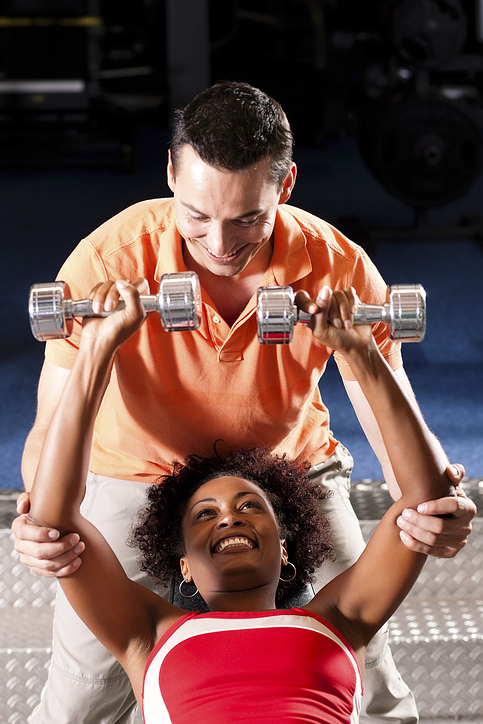
Consider Hiring a Personal Trainer:
If you want to follow a specific, targeted plan to meet your specific goal, consider hiring a trainer. Personal trainers help make your workouts focused and efficient and will provide new tips, techniques and exercises to keep you on track and motivated. A few initial sessions may be all you need to help you achieve your goals!
Always Warm Up Before Exercise:
Many athletes are injured in the first minutes of activity because they jump right in without warming up. Take 5-10 minutes to warm up gradually before going hard, especially before interval training or any high intensity efforts. A simple warm up can consist of walking, jogging or simply doing your sport at a very slow pace to start.
Eat for Exercise:
Eating about 2 hours before exercise helps you get the most out of training, but eating after exercise can help make sure you are fully recovered for the next workout.
Stay Well-Hydrated:
Just a bit of dehydration will decrease your exercise performance, so drink according to the length and intensity of your exercise sessions. It's recommended that you drink about a quart of water within two hours of exercise, and then drink a cup every fifteen minutes during exercise. If you exercise more than 90 minutes, you will need to add some simple carbohydrates (food or sports drinks) to replenish glycogen stores.
Don't Exercise In Pain:
Exercise shouldn't cause pain, so at the first twinge of acute, or sharp pains, stop exercise. Pain is your body's way of saying, "hey, something is wrong." Pushing through acute pain is the fastest way to develop a severe or chronic injury. If you don't feel well, you should take some time off until your body heals.
Rest and Recover:
Athletes need rest, proper nutrition and a good night's sleep to recover for the next big workout. Rest days should be built in to your training schedule. Working out too much for too long can lead to overtraining syndrome and possibly reduce your immunity.
Mix It Up:
Another way to prevent injuries is by cross training. Doing the same routine day after day will set you up for overuse injuries, not to mention boredom. Cross train with other sports, yoga or weight lifting so you can still get a full body workout without over-stressing specific muscle groups.
Wear the Right Safety Gear for Your Sport :
Helmets, protective pads, mouth guards, and other gear is designed to protect against common sports injuries. Smart athletes take advantage of this simple way to prevent the most common injuries. Never play without your safety gear!
|
 |
|
A New Way To Work Out
If you're looking for a fun way to get into a routine or a new way to get more out of your current routine; Functional Training is the perfect fix. Its fun, progressive and there is something for everyone!
Functional training conditions you for the physical demands in your day to day life at home, work and during recreational activities.
Training this way improves strength, balance, and flexibility by moving the body as one integrated unit rather than building strength by isolating one muscle group at a time.
With the help of a trainer you can learn how to implement a progressive program starting at your current fitness level and safely progress towards improved movement that will enhance your daily activities and help you avoid injury.
Advanced forms of functional training do exist and are great for individuals who are already fit and would like to get more out of their workouts and exceed their fitness goals.
"These are a few of our favorite things" - Bosu Ball
- Kettle Bells
- TRX
- Stability Balls
- Medicine Balls
- Resistance Bands
|
|
Races & Marathons
Interested in registering for or organizing your own race or marathon this spring/summer? These helpful links will make it easy for you to find local races and learn how to organize your own race or marathon for charity!
(cycling)
Warrior Dash
Rebel Race
E.How.com
"How To Organize a Charity Walk / Race"
The 24 Hour Gym of Budd Lake is not affiliated with any of these sites or these links. |
|
We Now Offer
TRX Suspension Training®
Born in the Navy SEALs, Suspension Training bodyweight exercise develops strength, balance, flexibility and core stability simultaneously. It requires the use of the TRX® Suspension Trainer™, a highly portable performance training tool that leverages gravity and the user's body weight to enable hundreds of exercises for every fitness goal.
- Get a fast, effective, total body work out.
- Benefits people of all fitness levels (athletes to seniors)
- Can be set up anywhere
We are now offering TRX Suspension Training at The 24 Hour Gym of Budd Lake. We currently have 3mounts and 2 TRX Trainers (straps) available. Straps available during staffed hours only. Mounts available 24/7. Feel free to bring your own TRX brand straps and products!
Click the TRX Logo to explore their web site! |
MORE Kettle Bell!
Kettle bells have been around for centuries and are making their way back into the fitness world. Mainly because of the intense workout you can get and because they are a multi purpose small piece of equipment anyone can use.
You've probably seen them in the gym. Maybe you've seen other people using them. Kettel bells (if used properly) can be a great addition to your routine. They are fun and you can use them so many different ways. Russian Twist The russian twist is a great way to work the core with a dynamic rotation, working the obliques and the small muscles in the core and upper body involved in rotation. Take care with this movement and keep the rotation small and controlled when you first start out. If you have any back problems, you may want to skip this exercise. This exercise is a lot like an upright row, but with the added power of the hips to add a dynamic element to this exercise. The idea is to thrust the hips up as you draw the kettlebell up, keeping it close to your body, using that power to help you lift the weight. If you have shoulder problems, you may want to skip this exercise. - Stand with feetshoulder width apart hold kettle bell with both hands. You can hold either side of the weight (or the "horns"), which is easier, or the handle which adds more momentum.
- Keeping the elbows bent and into the body, contract the abs and rotate the torsoto the right, only rotating as far as you can comfortably, stay focusing on the abs. Keep the lower body stable and the hips square.
- Rotate the torso to the left, again focusing on the obliques.
- If youre comfortable and want more intensity, try swinging the weight as you rotate, cntinuing to focus on keeping the hips square and abs braced. Swinging adds quite a bit of momentum, so use a lighter weight and only try this version if you're very fit and have control of the weight.
Two Arm Pull 
This exercise is a lot like an upright row, but with the added power of the hips to add a dynamic element to this exercise. The idea is to thrust the hips up as you draw the kettlebell up, keeping it close to your body, using that power to help you lift the weight. If you have shoulder problems, you may want to skip this exercise - Hold a medium kettlebell in both hands, feet hip-width apart.
- Squat down, keeping the arms straight, the torso upright and the abs braced.
- Thrust the hips up as stand while drawing the kettelbell up and bringing the elbows up and above the shoulders.
- Keep the weight close to the body and use the power of your hips to pull the weight up, rather than your arms.
- Lower back down and repeat 1-3 sets of 8-16 reps.
Two Arm Swing

Kettlebell swings are an excellent exercise for the entire body, particularly the core and the lower body. The power in your swing actually comes from your hips (in a hip-thrust motion), making this a powerful movement that forces your body to find stability as the weight swings out and up. If you're new to kettlebell training, use a lighter weight for this exercise to get your form down (for example, 10-15 lbs for women or 20-25 lbs for men). You'll find that, the heavier the weight, the more you'll engage the hip-thrust to get the weight up - but don't go too heavy until you feel comfortable and secure in the movement.
- Hold a medium-heavy kettlebell in both hands with legs hip-width apart.
- Begin with some warm up swings to get a feel for the weight and the movement. Start by squatting and taking the weight between the legs (arms should touch the inner thighs). Keep the torso upright and the abs braced.
- At the bottom of the movement shift your weight back and thrust up through the hips to bring the weight up to about hip level.
- After practicing a few swings, continue swinging the weight up higher until you get to shoulder level, squatting down and powering through the hips each time you swing the weight up.
- At the top of the movement, the kettlebell should feel weightless. Use your hips and legs to move the weight, rather than your arms.
- Continue swinging for 1-3 sets of 8-16 reps.
- For added intensity, and if you feel comfortable, you can take the weight all the way up over the head.
Kettel bells will take a tired, old workout and make it fun and functional! There are countless exercises that you can prefom with kettel bells to work every part of the body. If you are interested in learning more contact our team of Personal Trainers.
|
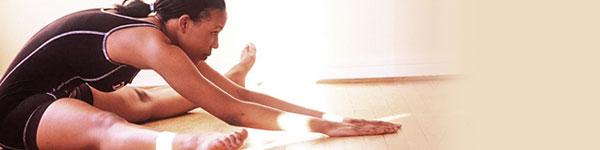 |
| 6 Benefits of Stretching & Flexibility
Just like cardio benefits the heart and lungs and weight training builds endurance and strength a stretching program produces unique benefits including enhancing the of the abilities of the respiratory, circulatory and neuromuscular systems to cope with the stress of our high-pressure world.
- Prevention Of Injuries: Flexibility training strengthens muscles and increases the elasticity of joints. Strong, flexible muscles resist stress better than weak or inflexible ones. Adding flexibility to a training program for sports can reduce the rate of injuries by as much as 75%. In a study of competitive runners, weekly stretching sessions significantly reduced the incidence of lower back pain.
- Relief Of Muscle Strain. Muscles tighten as a result of stress or prolonged sitting. If you study or work in one position for several hours, you'll often feel stiffness in your back or neck. Stretching helps relive this tension and enables you to work more efficiently.
- Relaxation. Flexibility exercises are great stress busters that reduce mental strain, slow the rate of breathing and reduce blood pressure.
- Relief of Soreness After Exercise. Many people develop delayed onset muscle soreness (DOMS) one or two days after they work out. This may be the result of damage to the muscle fibers and connective muscle tissue. Stretching may reduce DOMS in some indiviuals.
- Improved Posture. Bad posture can create tight stressed muscles. If you slump in your chair, for instance, the muscles in your chest may tighten, causing those in the upper spine to overstretch and become loose.
- Better Athletic Performance. Good flexibility allows for more efficient movement and exertion of more of more force through a greater range of motion, a special benefit for any activity from gymnastics to golf where positions beyond the normal range of motion are necessary to preform certain skills.
Flexibility can make everyday tasks like bending over to tie a shoe or reaching up to a high shelf, easier and safer. It can prevent and relive the ankle, knee, back and shoulder pain that many people feel as they get older. If you do other forms of exercise, flexibility lowers your risk of injury and may improve your performance.
Stretching Tip:

Stability Balls are a great piece of equipment to use for stretching! You can perform static and dynamic stretching using the ball. Perform a dynamic stretching routine before your workout. This stimulates neural activity and gets your body prepared for the upcoming activity. Perform static stretching after your activity to relax your body and help alleviate muscle tightness and fatigue.
Information Reference: "Wellness: Concepts and Applications. Fifth Edition" |
|
Available Now!
cPrime Bands
 The technology inside cPRIME consists of a patent-pending antenna array that is designed to absorb, redirect, and balance the electromagnetic energy around the human body. When the electromagnetic field is in proper balance, it supports the functioning of every system in the body. When the field is out of balance, the body cannot function at peak levels. cPRIME is designed to restore balance, enabling peak performance and a subsequent improvement in overall well-being In basic terms, an antenna is an apparatus that receives and redirects signals. cPRIME technology consists of a patent-pending antenna array, designed to both receive and redirect the electromagnetic energy that surrounds the human body. The human body's basic functions generate and are sustained by electric charges. This energy is manifested in electromagnetic fields that surround the entire body. An electrocardiogram (or EKG) is an illustration of the strongest of these fields, generated by the heart. Stress and injury impair the functioning of the body, thus creating imbalance in its electromagnetic field. Beyond these factors, the environment can also play a significant role. High intensity EMF radiation damages basic cell structure. Mounting evidence indicates that low-intensity EMF radiation also has a negative impact on the human body. cPrime Bands Available Now! Stop In and ask for Yours Today! |
|

Nutrition Tip
Since this month's focus is on conditioning and injury avoidance, the most important nutrition tip I can suggest is Drink More WATER! This goes for every person out there (exerciser, athlete or couch potato) Drinking lots of water is a very simple, inexpensive way to avoid some of the most complicated and expensive health problems! potato) Drinking lots of water is a very simple, inexpensive way to avoid some of the most complicated and expensive health problems!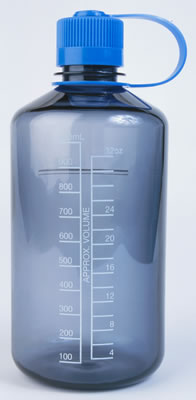 
Water, which we need more than any other nutrient, is even more important during exercise and exertion! Thirst, the body's way of telling you to replace lost fluids, is not a a good way for you to monitor your fluid needs. Rather than waiting until you're already somewhat dehydrated you should be fully hydrated before you begin your activity and depending on the duration and intensity of your workout, continue to replace fluids both during and afterward.
The American Dietetic Association's Guidelines for Fluid Intake for Active Individuals:
- Consume at least two cups (16 to 20 ounces) of water about two hours before endurance exercise.
- Drink another 2 cups of fluid approx. 15 to 20min before endurance exercise
- If the climate is hot and/or humid take small servings (4 to 6 ounces) every 15mins of plain, cool water (40 to 50 degrees) or another rehydration beverage (Think of one ounce as approximately one gulp) Depending on your sport or activity you may need to drink whenever the opportunity arises (during breaks, inbetween sets)
- After an activity drink at least two cups (16 ounces) per pound of body weight lost during the activity. Some exercise physiologists recommend an additional 8 ounces to compensate for urine losses as you rehydrate.
DID YOU KNOW?
Loss of more than 2 percent of your body weight during an activity indicates that you are becoming dehydrated. Any degree of dehydration impairs physical performance; and extreme dehydration can lead to heat exhaustion or heat stroke.
3 Tricks To Help You Get in the Habit of Drinking More Water:
- Always keep extra water around. Keep it in your gym bag and in your car.
- Buy water bottles/jugs in bulk to save money and to ensure you always have enough.
- Put fresh cut fruit or cucumbers in your water to give it some flavor and color and to make it more appealing.
Author: Beth K.
References: "An Invitation to Health" Tenth Edition
|
 |
|