|
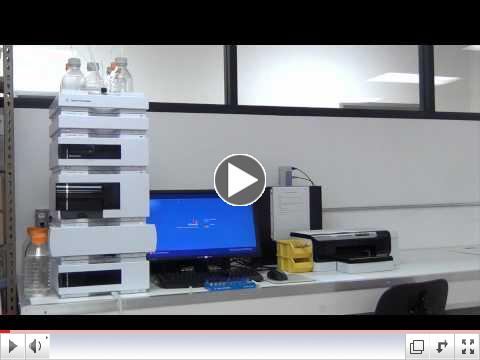
View this video to see Hartley Medical's state-of-the-art compounding facility located in Long Beach, CA.
|
Stay in the know! Follow us online through our social media networking sites.   

 | |
Click on the video above to find out how Hartley Medical's staff undergo rigorous training to prevent potential contamination in compounded sterile products.
|
|
|
IN THE NEWS!
|
Medtronic Foundation Makes Donation to APF in Honor of Global Hero Emily Bredehoft
The Medtronic Foundation recently donated $1,000 to the American Pain Foundation to honor Global Hero Emily Bredehoft. Bredehoft has an implantable spinal cord stimulator (SCS) to treat chronic pain and was chosen by the Medtronic Twin Cities Marathon to be part of its 2011 class of 25 Global Heroes after a worldwide search for runners whose lives have been improved with the help of medical devices.
Bredehoft, of San Jose, Calif., lived in constant pain after a workplace accident that caused a back injury. At first walking and running were part of her rehabilitation, but eventually the pain became debilitating and she was unable to run. Bredehoft was diagnosed with complex regional pain syndrome (CRPS) and received an SCS to manager her pain. Six weeks later she completed a half marathon, and has been running ever since.
Click here to read the full article.
|
LAL Testing for Bacterial Endotoxins
|
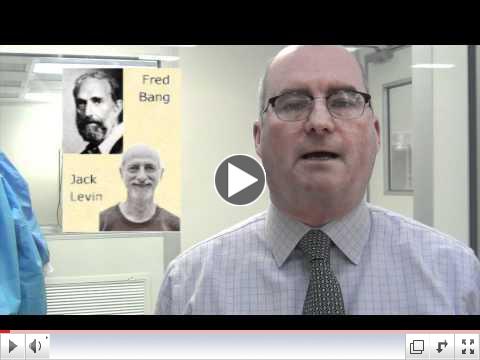
Click the video above to see how the horse shoe crab is used in the detection of bacterial endotoxins, as well as the technology and procedures that Hartley Medical employs to detect these pyrogens in compounded sterile products.
|
|
TOPICAL PHARMACEUTICALS FOR THE TREATMENT OF PAIN
| |  By William Stuart By William Stuart
There are many pain symptoms associated with the treatment of a cancer patient. The origins of pain range from the location of the neoplasm to the site of treatment. This article shall focus on pain secondary to peripheral neuropathy, radiation dermatitis, and arthritic pain. Peripheral neuropathy has clinical manifestations of tingling, or "pins and needles" sensations, that develop in the feet and hands. Pain and weakness can occur in the legs and arms, as well as in the lower back over time. Causative agents attributed with peripheral neuropathies are chemotherapy and anti-viral drugs. Radiation Dermatitis is a condition in which the skin exhibits redness and inflammation resulting from single or multiple exposures to radiotherapy. A study performed showed that 90 percent of women undergoing radiation treatment for breast cancer developed radiation-induced dermatitis. Prolonged cancer conditions, and therefore subsequent treatments, can induce pain in joint tissues - specifically in the hands and feet. Patients with these conditions suffer chronic and debilitating pain symptoms requiring progressive treatment(s). A healthcare practitioner has a significant drug armamentarium to select from when treating various pain conditions. However, often overlooked is the topical approach for the administration of pharmaceuticals. The following agents should be considered, alone or in combination, for topical administration when treating pain conditions. Ketamine is an analgesic with sedative properties. This drug is commonly used in surgery for anesthesia. Ketamine can relieve pain locally, as well as hand and foot joint pain. Gabapentin, originally developed for the treatment of seizures, is highly effective for relieving pain. This drug affects the nerves by decreasing transmissions of pain signals to the brain. Gabapentin is currently administered orally for the treatment of chronic pain. However over the last 5 years, topical Gabapentin has shown promise for patients as it becomes well absorbed into the dermis to provide extended pain relief. Ketoprofen is an analgesic and anti-inflammatory drug, similar to ibuprofen, which is available over the counter. The anti-inflammatory action of ketoprofen is a remarkable feature. It has the ability to reduce inflammation; which in turn reduces certain pain. Ketoprofen is extremely effective in alleviating joint pain. Lidocaine and Tetracaine are classified as anesthetic drugs. Doctors and dentists commonly use Lidocaine or Tetracaine to "numb" an area prior to performing a procedure. Lidocaine is currently available with a prescription in a topical patch formulation. These two drugs, similar to Gabapentin, reduce the sensation of pain nerve fibers. Lidocaine and Tetracaine possess good topical absorption and stay localized into the skin for 1 - 3 hours. Amitriptyline is a drug originally developed for the treatment of depression. This drug affects the reuptake of neurochemicals within the brain, as well as trims down pain nerve conduction - comparable to Gabapentin and Lidocaine. Compounded formulations of these medicines vary based on the patient's conditions. A physician should consider topical preparations to contain concentrations ranging from one to ten percent, with the exception of Lidocaine and Amitriptyline. Due to variances of proper dosing and total surface areas covered of such extemporaneous compounds, limiting the milligrams of these two agents is prudent. Side effects of the mentioned drugs are usually minimal when administered topically in the appropriate dose. Ketamine can produce light-headedness or drowsiness. Topical irritation or allergic response can occur secondary to the chemical itself. In some cases, patients may experience cosmetic objections due the compounded ointment base. In most cases, side effects are limited, of short duration, and rarely cause cessation of therapy. The vehicles for topical administration are gel, ointment, and spray. The pluronic gel is the most common vehicle for drug application. Pluronic gels are suitable for water soluble chemicals and deliver the drug effectively into the skin. Some drugs require an ointment base due to chemical nature. In summary I have observed pharmaceuticals administered topically to be effective and safe. Each patient and prescription should be developed based upon defined clinical assessments and goals. Patients require strict monitoring and possible serum laboratory levels obtained to ascertain drug systemic absorption. The pharmacological actions of the discussed drugs offer therapeutic alternatives to cancer patients suffering form radiation dermatitis, peripheral neuropathy, and joint pain. Contact Hartley Medical to obtain more information as to how we can provide you with non-sterile topical preparations. |
|
IN THE NEWS
|
New treatment for chronic pain after spinal cord injury
New Rochelle, NY, February 8, 2012-Chronic neuropathic pain following a spinal cord injury is common and very difficult to treat, but a new therapeutic strategy requiring a one-time injection into the spinal column has potential to improve patient outcomes. This cutting-edge pain management strategy is described in an article published in Journal of Neurotrauma, a peer-reviewed journal from Mary Ann Liebert, Inc. The article is available free online at www.liebertpub.com/neu, along with a related article on pain following spinal cord injury.A single injection of fibronectin, a glycoprotein produced in the body that helps anchor cells in place, can prevent the development of chronic pain that often develops after a spinal cord injury. Ching-Yi Lin, Yu-Shang Lee, Vernon Lin and Jerry Silver, from the Lerner Research Institute, Cleveland Clinic, and Case Western Reserve University, in Cleveland, OH, describe the successful outcome following injection of a small quantity of fibronectin into the spinal dorsal column of animals immediately after a spinal dorsal column crush injury.Click here to read the full article.
|
A Rise in Customer Service
Irene Domingo - Production Manager
| |
Here at Hartley Medical, we have a desire to achieve and maintain only the highest level of customer service. Therefore, we believe in having an open, ever-evolving customer service department that fosters progression and encourages feedback. And at the heart of this  department is Irene Domingo, Production Manager. department is Irene Domingo, Production Manager.
Yes, you read correctly - Production Manager. Irene, one of Hartley Medical's time-honored and client-praised account representatives, has been promoted to oversee our growing customer service department.
"Problem solving is what customer service is all about. I want our customers to know that we have their back...that we care...that we can help address their needs and make their lives just a little bit easier in the doing."
-Irene Domingo
This "we are here to serve you" attitude is only one of the many reasons that Irene has been selected to oversee Hartley Medical's customer service and production departments.
"Irene seems to have a sixth sense when it comes to customer needs," said William Stuart, RPh - Owner and President of Hartley Medical. "Her uncanny ability to anticipate potential problems, provide pro-active solutions, and deliver optimal service has enabled her to establish a flawless customer service reputation exceeded only by her devout customer loyalty."
Originally from Cebu, Philippines, Irene Domingo has been an integral part of the Hartley Medical team for the past five years. Every order begins and ends with Irene and her team; and her attention to detail, exceptional communication skills, and dedication to superior service has been a driving catalyst in establishing Hartley Medical as the leader in this industry.
In addition to Irene's promotion, Hartley Medical has enhanced its customer service by dedicating a section of our Website solely for the purpose of feedback. Simply go to www.hartleymedical.com/contact.php to find our new "Comments and Feedback" section. Ask a question. Make a comment. Express a concern. All information is optional. Your anonymous feedback is welcome.
Our door is always open. We love hearing from you!
|
|
|
SUNNY PALM SPRINGS, CA
WILLIAM'S NOTATIONS ON AAPM
This was Hartley Medical's second year attending the American Academy of Pain Medicine's Annual Meeting; and what an event it was! Some of the world's greatest minds came together in the continuous effort to foster, grow, and enhance the world of pain medicine. And who wouldn't want to participate in a conference held at a location where the sun shines year-round? And from all the red faces I saw, many people were taking advantage of Palm Springs' pool-side weather. Intriguing. Educational. A fantastic getaway event. the American Academy of Pain Medicine's Annual Meeting; and what an event it was! Some of the world's greatest minds came together in the continuous effort to foster, grow, and enhance the world of pain medicine. And who wouldn't want to participate in a conference held at a location where the sun shines year-round? And from all the red faces I saw, many people were taking advantage of Palm Springs' pool-side weather. Intriguing. Educational. A fantastic getaway event.
My team was able to attend the event Thursday - Saturday, and we had the pleasure of conversing with some exceptional doctors, nurses, and medical staff members.
A notable conversation was one that I had with Dr. Meyer, in which we had a lengthy discussion regarding the treatment of a cancer patient. I encouraged him to reach out to Dr. Stearns, and through both my and Lisa's consultations, he was able to develop an aggressive new treatment regimen.
Another highlight was a dinner opportunity my team had with Dr. Michael Halperin. Wow, what a journey he has had. Not only did the team get the chance to hear stories of both personal and professional ventures that have taken him around the world, but they also had a chance to discuss the drug shortage issues, topics in pain management, and even the future of intrathecal pain pumps. A brilliant man with captivating stories. It was an honor and a privilege to have had this opportunity.
AAPM, like other pain conferences, allows the pain world to interact in ways that promote awareness. But for me, it is so much more. These events give me a chance to have unexpected, yet medically relevant, face-to-face conversations with some of the most brilliant pain professionals. I will continue to support these associations that advance the world of pain medicine.
 
|
|
Safe Practices in Sterile Compounding
| |
In its June 2011 issue, the Institute for Safe Medication Practices (ISMP) discussed Safe Practices in Pharmacy Sterile Compounding Issues. This article stated the results of a five-hospital observational study on the accuracy of preparing small- and large-volume injectables; which determined that almost 1 in 10 products was prepared incorrectly. The article concludes by giving its safe practice recommendations. Though a majority of these suggestions are primarily for hospital pharmacies, I found it necessary to discuss those recommendations that apply to all compounding pharmacies. This directly relates to Hartley Medical's long-standing question of, "Do you know what your sterile compounding pharmacy is doing?"
Recommendation 1: Pharmacist Product Selection. The article recommends that a pharmacist or technician retrieve the necessary ingredients for compounding prior to the preparation of the product and place them in the appropriate work areas and/or bins. The individual(s) compounding should verify the ingredients, and ask questions if they do not match the expectations. Here at Hartley Medical, after the area is sanitized, all compounding ingredients, which are USP or National Formulary (NF) grade quality, are properly laid out in advance. Pharmacists and technicians verify that all materials match the certificate of analysis before compounding any products. Our vials are color coded per both medication and compounding document in order to optimize accuracy and safety. This allows our pharmacists and technicians to efficiently and effectively confirm that all ingredients brought forward into their designated work area are correct, and that they correlate to the compounding document.
Recommendation 2: One Product in the Work Area! ISMP stresses the critical importance of technicians and pharmacists placing only the ingredients for one preparation in the designated work area at a time. This lessens the possibility of error, and eliminates clutter in the work space. Additionally, only one staff member should be working under the hood at any given time. Here at Hartley Medical, only the pertinent ingredients for the product being compounded are brought forward into the pharmacist's or technician's designated work area, and all materials must be removed before the compounding of another product begins. Additionally, only one pharmacist or technician is permitted at a workbench at a time. During pharmacist verification checks, the individual compounding the solution must fully back away from the work area before the pharmacist enters.
Recommendation 3: Orderly and Controlled Checking Area. The article clearly stresses the importance of organization - which everyone agrees is crucial to a successful compounding pharmacy. Therefore, it poses that each prepared product and associated documents should be placed into a single bin for checking. Bins with multiple compartments should be avoided. Here at Hartley Medical, all compounded products are sealed with the labels, attached to the compounding document, and placed in a single bin per client prior to final verification. No multiple compartment bins are used.
Recommendation 4: Standardize and Establish an Effective Checking Process. ISMP recommends that compounding pharmacies establish a standard operating procedure for how pharmacists should verify products prepared in the IV room. Here at Hartley Medical, all compounded sterile products will undergo three specific verifications by the pharmacists and technicians: 1) a pre-check that occurs before the compounding takes place, 2) verification of the prescription and necessary components prior to the actual mixing stage, and 3) a final verification of the compounded sterile product - again by the pharmacist.
This last recommendation is for hospital pharmacies, but it is an important recommendation to be taken into consideration.
Recommendation 5 : Hospitals Should Limit Products. The article suggests that hospital pharmacies should limit their preparations to products that are not commercially available; thus avoiding unnecessary preparation of products and eliminating waste. Additionally, the article states that commonly used products that are prepared in batches should be outsourced to a trusted sterile compounding pharmacy. This reduces the workload on the admixture staff; thus allowing them to focus on individual patient-specific preparations. Could your hospital benefit from outsourcing to a compounding pharmacy such as Hartley Medical?
If you have any questions regarding Hartley Medical's Safe Practices for Compounded Sterile Products, please contact us. We are more than happy to share our policies and procedures with you. More rigorous standards create the highest-quality products. This is the Hartley Standard.
Source: http://www.ismp.org/newsletters/acutecare/articles/20110602.asp
|
MARK YOUR CALENDARS
DON'T FORGET . . .
The 14th Annual Meeting
for the American Society of Interventional Pain Physicians (ASIPP) June 9-10, 2012 at the Crystal Gateway Marriott in Arlington, VA. For more information, or to register for this event, click here .
|
|
Drug Shortage?
Hartley Medical to the Rescue!
| | |

With the increasing number of drug shortages affecting the availability for cancer, pain, and infectious disease medications, sterile compounding pharmacies are being called upon in high demand - and Hartley Medical is one of them.
More than 200 medications are currently in short supply, and many compounding pharmacists are working with physicians and hospitals to alleviate the problems caused by this national healthcare predicament. Why are sterile compounding pharmacies able to provide aid in this situation? It's simple - because compounded sterile products are permissible for commercially unavailable products. We are able to provide substitute products for medications that used to be commercially available, but cannot currently be obtained due to the rise in drug shortages.
Over the past month, Hartley Medical has been compounding medications for a number of physicians and hospitals that have been affected by the situation. We have an unwavering dedication to provide only the highest-quality sterile pharmaceuticals; therefore, we continue to compound these medications only to the highest of quality standards. We think first and foremost about patient safety - and in times like these, we know this is not something that physicians and hospitals should sacrifice.
If Hartley Medical can assist you in any way during these shortages, please contact us. We are here to serve you. Click here to see a list of drugs that are currently in short supply.
|
CONGRATULATIONS!
to Dr. Jose Luis Villarreal and Dr. Jeremy Poulsen
Winners of Hartley Medical's 2012 AAPM Meeting
Wine Raffle
|
|
Ask William!
| | |
Do you have questions for William? Send them to:
questions@hartleymedical.com
You will receive a personal e-mail response addressing your question; which could be featured in Hartley Medical's next edition of The Hartley Standard*.
*If you would like to opt out of having your question published, simply state that in your e-mail! You will still receive a personal response from William.
|
|
About Hartley Medical
|
Hartley Medical is the nation's leading provider of the highest quality sterile pharmaceuticals for intra-spinal, infusion therapy patients. Our world-class pharmacy is exclusively dedicated to the custom compounding of medications for the treatment of pain and movement disorders.
Owned and directed by William A. Stuart, RPh - acknowledged pioneer in the field of pharmaceutical sterile compounding - Hartley, prior to its national expansion, established itself as one of the most successful and professionally distinguished pharmacies in the state of California.
We now serve over 400 leading pain physicians and premier health care institutions across the nation.
Visit our Web site at www.hartleymedical.com
|
|
Disclaimer. The information contained in this publication is provided "as is" and without warranty, expressed or implied. Hartley Medical assumes no responsibility for any damages of any kind resulting from the procedures contained herein.
|
|
IN THE NEWS!
|
Congressional Testimony Reinforces the Mission of PAINWeek
Congress addresses how U.S. healthcare providers have been inadequately educated to properly assess, diagnose, and manage chronic pain. Preparing frontline practitioners to provide more effective pain management is the overarching mission of PAINWeek, now the largest national conference on pain.
Montclair, NJ (PRWEB) February 18, 2012
Expert testimony heard this week during the first congressional hearing ever held on chronic pain and pain management reaffirms the importance of PAINWeek in addressing this critical public health concern.
Sen. Tom Harkin (D-Iowa) chaired the meeting of the Senate Committee on Health, Education, Labor & Pensions to draw attention to what he called an "epidemic" of chronic pain. Harkin stated his belief that the nation's doctors are being poorly prepared to deal with the challenges of treating chronic pain, and asked "How do we educate our doctors to understand this and make the right kind of diagnosis?"
To read the full article, click here.
|
 | CHECK OUT OUR WEBSITE:
WWW.HARTLEYMEDICAL.COM
|
|
|
|
|



