Stay in the know! Follow us online through our social media networking sites.   

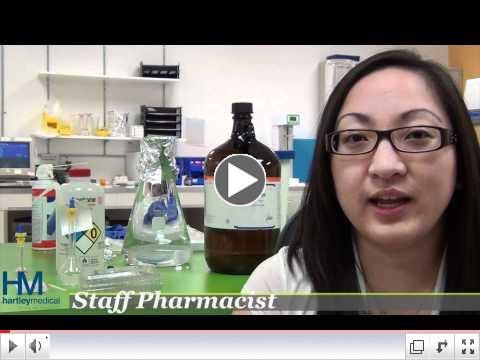 | I am Hartley Medical
Click on the image below to take a Virtual Tour of Hartley Medical's Clean Room.

|
|
Environmental Monitoring - Fingertip Assessment
| 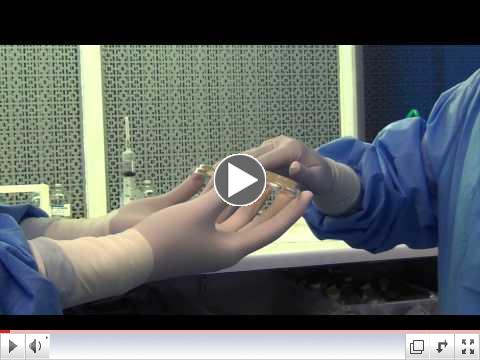
Hartley Medical implements realistic fingertip assessment procedures that assess the aseptic conditions of the clean room's staff. Click the video above to see this process.
|
|
IN THE NEWS!
|
Global Infusion Pumps Market to Reach US$5.5 Billion by 2017, According to a New Report by Global Industry Analysts, Inc.
GIA announces the release of a comprehensive global report on the Infusion Pumps market. The worldwide Infusion Pumps market is anticipated to witness steady growth over the coming years, with sales volume reaching 19.3 million units and annual revenues reaching US$5.5 billion by the year 2017.
The market is largely driven by the rising incidence of chronic diseases such as cancer and diabetes, higher spending in the healthcare sector, and innovations in technology and treatment procedure. Moreover, the demographic shift toward telehealth; treatment at home and alternate healthcare sites; translates into a bright future for the infusion systems market, with emerging economies in Eastern Europe and Asia Pacific leading the way.
Steady growth is expected for the infusion pumps market. Expansion of the fringe end of the market will stem from the continuous introduction of newer and improved devices incorporated with enhanced safety features, and options. Manufacturers are presently focused on boosting equipment reliability through the development of new software incorporated with wireless enhancements, safety alarms, and operating logs that would bring down medication error rates, and would provide improved quality of care to patients. Revenues from implantable infusion pumps, particularly low cost constant-flow pumps; syringe pumps; nerve block pumps, and electronic pain management pumps are expected to increase considerably. Growth in these segments is and will be driven largely by developments in chemotherapy drugs, shift towards alternate care, increased installation base, cost effective devices, and equipment upgradation. To read the full article, click here. |
CONGRATULATIONS!
to Dr. Michael Halperin, Dr. Richard Boortz-Marx,
Dr. Eugene Kaplan, and Dr. Beth Minzter
Winners of Hartley Medical's 2011 NANS Meeting Wine Raffle
|
"The code is more what you'd call 'guidelines' than actual rules."
A discussion regarding the Polyanalgesic Consensus Guidelines.
| |
During the NANS meeting, a physician approached me to discuss the Polyanalgesic Consensus guidelines for intrathecal therapy treatments. His question was, "Who do they serve?" He was concerned about his own treatment regiments, as he seemed to be outside the guidelines in some cases. I stated to him that the guidelines were being re-assessed, and there would be more to come for the 2011/2012 publication. I have been involved in some of the working documents of the new publication, and my advice was sought after regarding compounding pharmacy issues, as well as dosing.
A lot has changed over the years. In the past, clinicians were dosing at higher concentrations and higher daily doses, and these guidelines have been established, in part, to steer people toward more conservative measures to reduce adverse events and optimize patient care. Additionally, they are established to assist and aid individuals who are initially getting into intraspinal infusions. However, there are still situations where more experienced clinicians will treat patients outside those guidelines. The doctor expressed some concern, essentially asking, "Am I exposed?" or "Is there a problem with my treatment of my patients?" And I think all doctors, in all parameters, experience this.
The guidelines, in my opinion, are designed for those with less familiarity; but you have clinicians who have been in the practice for 25-30 years and understand the intrathecal space and the drugs involved for intraspinal infusion. The issue with the guidelines is that they are thinking on behalf of all practitioners. Experienced practitioners have a proven track record, and there are exceptions to the guidelines that they fall outside of.
The doctor posed the question, "How hard and true are these?" I expressed to him that I don't think they are hard and true, but rather to simply guide people. One shoe doesn't fit all - nor does one guideline fit all practices. You have to be aware of the guidelines while simultaneously understanding your treatment programs.
The conversation continued with, "How do doctors decide on dosing?" It's a consensus panel, and these individuals put forth their opinion based on what they are doing to treat patients, but they also understand that what they are stating is there to provide guidance.
During the conversation, we discussed trial dosing. We talked about the polyanalgesic panel meeting that I attended and how, for trial dosing, some panel members recommended a 24-hour hospitalization. However, other panel members said, "I do not always do this." These members expressed that they are comfortable monitoring for a shorter period of time, then sending the patient home - and they have many years of experience with this. So, do they fall outside the guidelines?
These guidelines are conservative, but people with greater experience, those with some latitude in their practice, feel comfortable operating outside the guidelines. Is there a legal component to this? I do not know. This is a difficult conversation. I am trying to convey that these guidelines are good for everyone - both clinicians and patients - but what your practice is, what your experience has been, and what is best for the patient all must be taken into consideration.
I would like to end by referring to the movie Pirates of the Caribbean: The Black Pearl. In the movie, there is a scene where Keira Knightley's character was abducted by pirates, and in order to be brought in front of the ship's captain, Captain Barbosa, she used the pirate's code-word "parlay." After negotiating with the captain - who ultimately breaks his bargain with the young woman - she expresses that he is a pirate and must follow the pirate's code. His response was, "The code is more what you'd call 'guidelines' than actual rules."
|
|
IN THE NEWS!
|
2011 Consensus Panel Issues New Guidelines for Intrathecal Pain Management
Ziconotide recommended as First-Line Treatment for Nociceptive & Neuropathic Chronic Pain
DUBLIN, Dec. 19, 2011 /PRNewswire/ -- A panel of experts has recommended changes to the guidelines used to determine treatment via intrathecal administration for patients suffering from severe chronic pain.
The 2011 Polyanalgesic Consensus Conference (PACC) brought together a group of national leaders in chronic pain management for the purpose of updating their current algorithm to standardize decision-making among providers and improving the technical quality of care in chronic pain.
To read the full article, click here.
|
|
|
WILLIAM'S NOTATIONS
FROM SIN CITY
(WHAT HAPPENS IN VEGAS JUST CANNOT STAY IN VEGAS WHEN AN EVENT IS THIS GOOD!)
 | |
William's Notations from NANS - Part 1
|
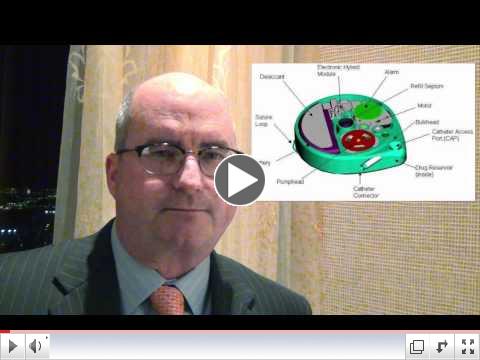 | |
William's Notations from NANS - Part 2
|
The new year is already here, and I hope that everyone had a joyous time during the season's festivities. This year is already shaping up to be a great one, and we
wish everyone a year abounding with health, happiness, and prosperity. But, per the usual, a great start can only be established by a great finish. And 2011 went out with a bang!
Hartley Medical, just like many of you, helped conclude 2011 by attending the 15th Annual North American Neuromodulation Society (NANS) Meeting in Las Vegas. And what an event this was! I had the chance to interact with some of the most prestigious colleagues in the field; many of whom I have had the pleasure to meet and converse with during various meetings in the past, and some that I had the honor of meeting here for the first time. Exhilarating. Stimulating. And, without a doubt, educational.
I had the chance to attend some of the lectures presented this year, and the passion and dedication that these pioneers bring to the world of pain management is beyond admirable. I consider myself blessed to be a part of this world. Some of the most notable, for me, were The CSF Flow Dynamics presented by Jason Pope, MD; Mechanisms of Action of Intrathecal Therapies Drugs by Salim Hayek, MD, PhD; Effects of Intermittent Boluses on the Incidence of Inflammatory Mass in a Canine Model by Linda Page, PharmD; Reducing Morbidity and Mortality with Intrathecal Pumps: What Have We Learned by Joshua Prager, MD; and a lecture on Patient-Controlled Analgesia given by Elias Veizi, MD, PhD. There were many other great lectures presented, and this year especially had key information for the future of intrathecal therapies.
I encourage you to click the video links above, as this year I did something a little different. Rather than writing out my summaries and reviews regarding the lectures, I did a daily video debriefing verbally expressing my thoughts and analyses. Additionally, the videos give a brief visual overview of the NANS meeting; allowing those in attendance to look back on the event, and those who were not able to make it a chance to see how remarkable it was this year.
 
|
|
THE HORSESHOE CRAB:
How nature and science are intertwined to prevent pain and save lives.
| | |

Not too long ago, my wife and I took a vacation to Kiawah Island in South Carolina to celebrate her birthday. Early one morning we took a walk along the beach, and after a few hundred yards I came across numerous horseshoe crab exoskeletons lying in the sand. I immediately recognized the arthropod for its importance in pharmaceutical quality assurance; more specifically for the detection of endotoxins.
Bacterial endotoxins, often called pyrogens, are poisonous substances produced within living cells or organisms. These fever-producing materials most often originate from gram-negative bacterial cell walls, but can also originate as leachates from some chemicals and materials. In pharmaceutical production, especially sterile compounding, it is necessary to reduce traces of endotoxins in drug products as even small amounts will cause illness in humans.
According to USP 797 guidelines, "All high-risk level compounded sterile products (CSPs) ... before they are sterilized shall be tested to ensure that they do not contain excessive bacterial endotoxins."
Here at Hartley Medical, we allocate a substantial annual budget solely to quality assurance testing. We perform both sterility and endotoxin testing per USP requirements.
A very sensitive procedure for detecting the presence of endotoxins in drugs is the Limulus Amebocyte Lysate (LAL) test. The LAL assay utilizes the amoebocytes (blood cells) of a horseshoe crab. The lysate found in the blood binds with the dangerous endotoxins present creating a clot via a cascade of reactions; thus, forming the basis of their detection and quantification.
When it comes to LAL testing for bacterial endotoxins, there are three techniques: 1) the gel-clot technique, which is based on gel formation; 2) the turbidimetric technique, based on the development of turbidity after cleavage (the division or splitting of form) of an endogenous substrate; and 3) chromogenic technique, based on the development of color after cleavage of a synthetic peptide-chromogen complex.[1]
Hartley Medical began endotoxin testing in 1999 utilizing the gel-clot test. In 2003, we advanced our technology to test using the turbidimetric technique; a method we still use today. This is a photometric test to measure the increase in turbidity (the cloudiness or haziness of a fluid caused by individual particles that are generally invisible to the naked eye). More specifically, we utilize kinetic-turbidimetric testing, which measures both the time (onset time) needed for the reaction mixture to reach a predetermined absorbance, and the rate of turbidity development. In the presence of endotoxins, the lysate begins to gel - causing the solution to become turbid. Higher concentrations of endotoxins cause the increase in solution turbidity to occur faster than lower concentrations. A standard curve is always run with each test. The concentration of the unknown is extrapolated from the standard curve. The time required for the appearance of turbidity is inversely proportional to the amount of endotoxins present.[2]
It is fascinating to think of how intertwined nature and science are. Bacteria are everywhere. And, for the most part, bacteria are beneficial as they reduce organic waste and recycle nutrients back into the food chain. Sometimes, however, bacteria cause disease if they enter parts of our body that are usually bacteria-free, such as the bloodstream or the intra-spinal space- causing severe illness (such as sepsis) and/or death. Therefore, pharmaceutical companies, especially sterile compounding pharmacies, must take great care in producing drugs that are free of bacteria and non-pyrogenic. Hartley Medical recognizes the horseshoe crab's contribution to the world of pain management; and we are happy to change and save lives.
[1] "Bacterial Endotoxins." European Pharmacopoeia 5.0. <http://iccvam.niehs.nih.gov/docs/pyrogen/regulatory/20614e.pdf>. 27 Dec. 2011
[2] "Endotoxin Detection: Products and Services." Lonza. 2010 < http://www.biocenter.hu/teszt/pdf/ lalkat10.pdf>. 27 Dec. 2011.
|
MARK YOUR CALENDARS
DON'T FORGET . . .
The 28th Annual American Academy of Pain Medicine (AAPM) Meeting February 23-25, 2012 at the Palm Springs Convention Center and Renaissance Palm Springs Hotel in Palm Springs, CA. For more information, or to register for this event, click here.
|
|
Gabapentin Combination Therapy
| |
Also during the NANS meeting, a client approached me regarding combination therapy of gabapentin. This is a very interesting topic. I have researched gabapentin therapy, and have had discussions with physicians regarding combination therapy. There is very little experience with, as well as studies supporting, combination therapy utilizing gabapentin - whether with opioid or other adjuvant agents. I had a clinician approximately nine months ago ask if it was possible to compound gabapentin with morphine sulfate. We possessed the technology and the staff to investigate this request, so we performed an interim study to investigate compatibility of gabapentin with morphine. There are limited published compatibility studies for various intrathecal drugs. Due to limited public information, we started by stepping back and examining the drugs. Next, we compounded them together, and then performed a quantitative analysis. We found that morphine and gabapentin tested satisfactory with no degradation, precipitation, or alteration of pharmaceutical integrity. Our current pursuit is to examine other drugs and combinations. We have the ability to consider these options, and the capacity to compound them and examine the chemicals within our analytical laboratory. There are many combinations going on, and we are actively pursuing analyses of combination therapy with all pharmaceutical agents that are infused intraspinally. This project will take a few years, and we will share as much information as we can with you over the months and years to come. We look forward to reporting our findings. |
|
Ask William!
| | |
Take advantage of William's vast experience in intrathecal drug therapies!
Just send your question(s) in an e-mail to questions@hartleymedical.comYou will receive a personal e-mail response addressing your question, and your question could be featured in Hartley Medical's next edition of The Hartley Standard*.
*If you would like to opt out of potentially having your question published, simply state that in your e-mail! You will still receive a personal response from William.
|
|
About Hartley Medical
|
Hartley Medical is the nation's leading provider of the highest quality sterile pharmaceuticals for intra-spinal, infusion therapy patients. Our world-class pharmacy is exclusively dedicated to the custom compounding of medications for the treatment of pain and movement disorders.
Owned and directed by William A. Stuart, RPh - acknowledged pioneer in the field of pharmaceutical sterile compounding - Hartley, prior to its national expansion, established itself as one of the most successful and professionally distinguished pharmacies in the state of California.
We now serve over 400 leading pain physicians and premier health care institutions across the nation.
Visit our Web site at www.hartleymedical.com
|
|
Disclaimer. The information contained in this publication is provided "as is" and without warranty, expressed or implied. Hartley Medical assumes no responsibility for any damages of any kind resulting from the procedures contained herein.
|
 | CHECK OUT OUR WEBSITE:
WWW.HARTLEYMEDICAL.COM
|
|
|
|
|



