

|
| |
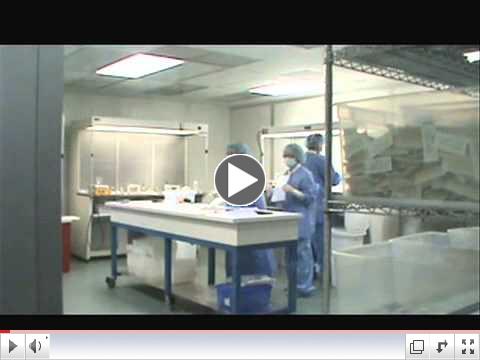
Check out Hartley Medical's facility and staff in our first ever video!
|
|
|
IN THE NEWS
|
|
CMS announces 2012 proposed fee schedule for Physicians, HOPDs & ASCs.
| | |
ASIPP is analyzing the impact of CMS's proposed fee schedules for physicians, hospital outpatient departments and ambulatory surgery centers. A more detailed analysis will be available soon. Below you will find a breakdown and link to each section.
Physician Payment Rates: Under current law, providers would face steep across-the-board reduction in payment rates, based on a formula- the Sustainable Growth Rate (SGR) - that was adopted in the Balanced Budget Act of 1997. If it goes into effect, Medicare payment rates are projected to be reduced by 29.5 percent for services in 2012.
Link for IPM Codes: http://www.asipp.org/documents/Physcians2012Proposed.pdf
HOPD Payments:
The proposed rule projects an outpatient department fee schedule increase factor - more commonly called the "market basket update" - for CY 2012 of 1.5 percent (2.8 percent, based on the projected hospital inpatient market basket percentage increase for inpatient services paid under the Inpatient Prospective Payment System (IPPS) minus an estimated 1.2 percentage points multifactor productivity adjustment minus a 0.1 percentage point adjustment).
Link for IPM Codes: http://www.asipp.org/documents/HOPD2012Proposed.pdf
ASC Payments:
The proposed rule that would update payment policies and payment rates for services furnished to Medicare beneficiaries ambulatory surgical centers (ASCs) beginning Jan. 1, 2012.
Link for IPM Codes: http://www.asipp.org/documents/ASC2012Poposed.pdf
|
|
MARK YOUR CALENDARS
DON'T FORGET . . .
The 18th Annual
Napa Pain Conference
September 16th -18th, 2011
at the Meritage Resort, Napa, CA.
|
|
IN THE NEWS
|
|
Chronic pain costs U.S. $635 billion a year
| | | | |
(Reuters) - Addressing chronic pain, a hard-to-treat yet highly common condition, costs the United States as much as $635 billion a year and requires a much more comprehensive strategy for curbing lost productivity and healthcare expenses, according to a new government report.
At least 116 million U.S. adults -- or about four in 10 -- suffer from chronic pain every year, leading to extra sick days, lost wages and productivity, the Institute of Medicine (IOM) said on Wednesday.
Chronic pain is defined as pain that lasts more than several months. It remains hard for doctors to diagnose, is often self-treated by patients and commonly perceived as less than a legitimate condition.
"Many health care professionals are not adequately prepared to provide the full range of pain care or to guide patients in self-managing chronic pain," IOM researchers wrote in the report mandated by Congress through the 2010 U.S. healthcare overhaul.
The IOM report excluded costs associated with pain in children or members of the U.S. military, making the estimate conservative and yet higher than economic costs of heart disease, cancer and diabetes, according to its researchers.
The federal Medicare program takes the brunt of the medical costs of pain, bearing a quarter of expenditures, the report said.
Chronic pain commonly sets in after other illnesses, injuries and medical treatments. Similar to that, acute pain -- also addressed in the report -- is a sudden, short-lived kind of pain, but can be a recurrent and equally complex problem.
Pain in the lower back is the most commonly reported pain in the United States, followed by knee pain, severe headaches or migraines and neck pain
Read the Full Article Here
|
On the Subject of Stability . . .
| | |
I want to present to you a bit of information in the area of stability studies that I think will add value to your practice. Published in the 2008 issue of Anaesthesia, the Journal of the Anaesthetists of Great Britain and Ireland, the article is entitled "The Stability and Compatibility of Drug Mixtures in Implantable Infusion Systems" and was submitted by F. Bianchi, et al. I have actually forwarded this study to many colleagues and my purpose in sharing it with you is to elicit further review and "spread the word" to those who will benefit from its findings.
Bianchi's study examines the stability and compatibility of mixtures of morphine sulfate; bupivacaine and clonidine; and hydromorphone, bupivacaine, and clonidine when used in a constant flow implantable pump under simulated clinical conditions. Continuous flow pumps were used to study the compatibility and stability of drug mixtures at 37 degrees Celsius for a period of up to 90 days.
The first stability study: morphine sulfate (50 milligrams per ml) with bupivacaine hydrochloride (24 milligrams per ml) and clonidine hydrochloride (2000 micrograms per ml).
The second stability study: hydromorphone hydrochloride (50 milligrams per ml) with bupivacaine (24 milligrams per ml) and clonidine (2000 micrograms per ml).
Notably, the study examined the drugs individually, as well as in combination, within the devices. Drug mixtures were carefully examined - not only in infusion pumps - but also prepared and placed singly into sterile glass vials and analyzed under the same time constraints and temperatures.
It is the method of these particular studies that stands out so singularly. The device used was a Codman Model 3000 Inflow Implantable Pump. Samples analyzed over time at 30-60-90 day intervals utilizing HPLC for drug quantification. The pumps themselves were also analyzed afterward for signs of mechanical degradation or implications for the drugs in contact with the inner workings of the pump. The pumps were actually dismantled in the interest of thoroughness and study integrity.
In conclusion . . . these drugs were found to be very stable.
OF NOTE: This was the second study to review morphine bupivacaine and clonidine in an implantable pump, but the first known study of an implantable infusion devise using hydromorphone and bupivacaine with clonidine.
I encourage you to take a look at it when you get the chance...and please keep this one in your practice files for future reference. Feel free to contact me for more information, additional details, or further discussion.
|
|
|
WILLIAM'S NOTATIONS
AND OBSERVATIONS FROM ACROSS "THE POND"
Attending the recent International Neuromodulation Society Meeting in London was an extraordinary opportunity to seize the moment. I felt compelled to attend and keep in touch with developments and discussions regarding intrathecal drug deliveries. Saw many I knew and many that (gratifyingly) knew me. Fascinating. Stunned at some of the things I witnessed and experienced - catching up on what the professionals on the other side of the pond were engaged in. Great speakers - notable among them were Dr. Eric Buchser on "Mechanism of Drug Distribution in the CSF: How it May Affect Outcome"; Timothy Deer presenting "Algorithms for Patient Selection & Drug Algorithms"; andWilliam Raffaeli on "Italian Registry of Long Term Intrathecal Ziconotide Treatment."
One of the more fascinating lectures presented a case wherein doctors had identified a section of the brain that controls hand movement. The subject for study was a young patient, a quadriplegic with a C2 spinal cord injury. The physicians surgically opened up his brain, placed a unique fingertip sized electrode with many probes in a section, and connected it to a computer.
The computer screen had a red dot in the middle. A cursor point indicated the position of the mouse. The patient was shown to be able to operate the mouse with his brain each time moving the cursor to the red dot on the screen and demonstrating the ability to "catch" the dot when it was moved to a different location. Astounding.
Another amazing case study concerned a female stroke victim with brain damage. Doctors were able to connect a healthy sector of her brain to a robotic arm. This enabled her to reach out, grasp a cup of water, bring the cup to her lips, and drink from it. Worth the trip right there.
I later sat down with Dr. Elliot S. Krames and solicited his take on one of the presentations. He surprised me by stating "I disagreed with him. Told him directly at the meeting."
I found it fascinating that many of the professional people in attendance at the meeting, when in disagreement with certain opinions and findings presented, felt free to voice their disagreement. Egos remained in check . . . and the interchange of ideas, theories and new knowledge prevailed.
Refreshing. Astounding. And, to say the least, liberating.


|
| MORE . . . OR JUST ENOUGH (and is that "just enough" truly "enough"?) | |
Recently returned from Canada and the 5th Annual Meeting of the Canadian Neuromodulation Society in Vancouver, British Columbia (June 10 -12). I was honored to be asked to speak to them regarding sterile compounding and intrathecal medication. It proved a wonderful opportunity for me to hear from physicians in Canada, and an opportunity for them to air their questions and concerns regarding pharmaceutical providers.
The level of interest and interaction was high . . . and I spent some time addressing the topic of what physicians need to be aware of when choosing - or choosing to find out more about - their pharmacists.
At the conclusion of the morning session, I had a woman sit down with me at lunch. She began by looking me straight in the eye and saying, "You scared the s*** out of me."
She subsequently revealed that she had no idea of the complexity and scope involved in ensuring proper sterile compounding of intrathecal medications. Her assumption was that the pharmacist is trained and knows what they are doing and that is enough. Regrettably, there is very little awareness of the importance of microbiological testing, quantitative analysis, environmental monitoring, and employee training and evaluation. The catchphrase at the end . . . you need to perform due diligence.
The burning question that arose from this encounter and subsequent ones was, "How do we get through to our pharmacists and make sure that we're covered?"
The answer is threefold:
1. Have a conversation with your pharmacist. Find out what kind of quality assurance testing they are currently performing.
2. Ask about their employee training, and request a tour (read: inspection) of the work site. Once in view of the work area, ask yourself the questions "Would I eat the food from this kitchen?" and "Are you comfortable prescribing medication that comes from this lab environment?" This is the focus of your visit.
3. While viewing the "kitchen," listen to what your pharmacist tells you about his or her procedures and policies and how he or she explains it to you. If there is obvious hedging or difficulty explaining, in many cases, that will tell you all you need to know.
Bottom Line: Is your provider doing more - or just enough - to get by? Doing everything they should be doing? Know your pharmacist . . . and share the responsibility for the product he or she provides.
|
|
ABOUT HARTLEY MEDICAL
| | |
The national leader in intra-spinal therapy, Hartley Medical specializes in the compounding of quality sterile pharmaceuticals for infusion therapy clients throughout the United States.
Owned and directed by William A. Stuart, RPh - acknowledged pioneer in the field of pharmaceutical sterile compounding - Hartley, prior to its national expansion, established itself as one of the most successful and professionally distinguished pharmacies in the state of California.
We now serve over 400 leading pain physicians and premier health care institutions across the nation.
Visit our web site.
|
|
Disclaimer. The information contained in this publication is provided "as is" and without warranty, expressed or implied. Hartley Medical assumes no responsibility for any damages of any kind resulting from the procedures contained herein.
|
 | CHECK OUT OUR WEBSITE:
WWW.HARTLEYMEDICAL.COM
|
|
|
|
|



