|
|
March 2011
| Volume 3, Issue No. 3
|
|
Greetings!
Spring is creeping closer and closer, and we couldn't be more excited for the warmer weather! We are making preparations for the busy spring season here at LRI, and we hope that this edition of Landformation will give you some ideas on ways to "Think Spring" as well. Check out the articles on how to force bulbs indoors, finish up your winter pruning tasks, or plan an environmentally friendly project into your landscape in the upcoming season. As always, visit our website or check us out on Facebook for more great tips and tricks!
|
|
Plentiful Harvest
Rainwater Harvest & Reuse for Irrigation
 | | This 10,000 gallon storage tank was recently installed at one of our project in St.Paul. Rainwater is captured from the site, held in the storage tank, then reused for irrigation purposes. |
Rainwater harvesting is not a new concept. In fact, it dates back to the earliest civilizations. Recently, the ancient technique has become increasingly popular due, in part, to an increased awareness of the need for water conservation and the increased cost and restrictions of municipal water supplies. Harvested rainwater has many uses in your yard, from irrigation to water features.
While we are fortunate in Minnesota to have an abundance of water in the forms of lakes and rivers, the need to protect these water sources has never been greater. As clean rainwater falls from the sky and onto the ground, it immediately picks up pollutants from pavement, roofs, and turf areas. This pollution is carried down the street, through our storm drains, and eventually ends up in our lakes and rivers or in an expensive treatment facility. "Harvesting" rainwater is collecting rainwater from roof top, turf, or hardscape areas in your yard via gutters, drainboxes, and other drains; and directing it to a storage tank for later use. This greatly reduces the volume and rate of runoff entering our storm sewer systems, and allows us to reuse water on our sites over and over again. Some cities have begun to charge "stormwater fees" associated with stormwater management. These fees can be reduced or even eliminated if stormwater is safely retained on site- a potentially huge cost savings for large home sites and businesses. In certain locations, grants or low interest loans are available to help cover part or all of the costs of installing the rainwater harvesting system.
Read More & Calculate your yard's Rainwater Harvest Potential....
If you would like to learn more about rainwater harvesting or stormwater control, please contact one of our experts at (651) 769-0010 or by email at mail@landscaperenovations.com. |
|
Grant Funds for Stormwater Management
Residents of Woodbury and Oakdale who live near Battle Creek Lake or Tamarack Nature Preserve are being offered grant funds for 75% of the cost of designing and installing raingardens or shoreline buffers, up to $2500.00. Ramsey-Washington Metro Watershed District will provide the funds to residents in high priority areas within the district and those living near Battle Creek Lake or Tamarack Nature Preserve. An informational workshop put on by Blue Thumb is being held Tuesday, March 8, at Woodbury City Hall. Contact us if you are interested in planning a raingarden or shoreline planting or: Click here for workshop registration information |
|
Grow Your Own
Incorporating Edibles into the Landscape
 This summer, why not try incorporating edible plants into your existing landscape? Edible landscapes have been constructed for years. They combine fruit and nut trees, berry bushes, vegetables, herbs, edible flowers, and our common ornamental plants to create a garden that is as useful and productive as it is beautiful. These designs can represent any garden style and incorporate anywhere from 1-100% edible plants. By growing your own edible plants, you will be able to enjoy the freshness and flavor of home-grown, fully-ripened fruits, vegetables, and herbs. One of the largest of the many benefits is the fact that you control the amount, quality, and type of pesticides and fertilizers used on your plants. It is very easy to grow your own natural, organic vegetables in even the smallest places, such as a container on your patio, and many of today's vegetable cultivars are even bred specifically for container growing.
Edibles in the landscapes have a long history, mainly stemming from the basic need to produce food for families. This is a fun, fascinating process that you can get your whole family involved with. Here is some background information on common ways folks have used edibles in the landscape for many years.
Victory Gardens
Victory gardens, or war gardens, were a trend that began during World War I and World War II to reduce the pressure on the public food supply, brought on by the wars. They were planted in both public (similar to today's community gardens) and private spaces to provide fresh produce to families. This trend has made a comeback in recent years to reduce cost of your grocery bill, as well as provide fresh, and often, organically grown food for the home.
Fruits (shrubs & trees)
Fruit and nut trees, beside providing food, have the added bonus of often being specimen plants in the landscape. Showy, fragrant flowers, colorful fruit, and bright fall colors add to the obvious bounty of edible produce.
Herb Gardens
Herbs are very easy to grow and are especially nice when placed near patio areas, either in pots, or directly in the ground. Not only do you benefit from the fresh herbs close by for cooking, but the scent of the herbs can be found wafting through the air in these spaces. |
|
|
|
|
Tips & Tricks Bring Spring Indoors
FORCING SPRING BULBS-Now is the time to pot up your spring bulbs indoors for forcing. Once the bulbs are potted up and begin to grow, they will bloom in 3 to 4 weeks, depending on the species. Time your bulbs for a showy display around Easter.
FORCING FLOWERING TREE & SHRUB STEMS - Forsythia, Crabapple, and Redbud are just three of the early spring flowering shrubs that can be forced to bloom indoors. Cut stems when daytime temps are above freezing. Place them in water and let them soak it up for four to six hours. Then trim the ends again, change the water, and place stems in a sunny location in your home. Watch carefully and change the water often, and soon you'll have beautiful blooms! Visit the new Tips & Tricks page on our website. Check back often for new ideas!

|
|
Congratulations to this month's winner of a $100 Gertens gift card, Sarah M. from Edina, MN
Watch for more contests coming soon on Facebook!!!
 |
|
SHOP TALK
News from Landscape Renovations' Team
Todd Schumacher, Dan Nierenhausen, Pierre Taddeini, and Sarah Hartung attended a workshop on Design & Maintenance of Bioretention Cells and Raingardens, put on by the MNLA February 15.
Scott Frampton participated in MNLA's 2011 Day on the Hill at the Minnesota State Capitol on March 2nd, where green industry professionals meet with government leaders to discuss issues and solutions.
Landscape Renovations' work is featured, albeit snow covered, beginning March 5th during the Parade of Homes Spring Preview. Highmark Builders, Inc, of Burnsville, MN; is featuring a beautiful new home on Prior Lake, #129 on the Parade. The 2011 Parade of Homes runs through April 3.
Scott Frampton accepted an MNLA Award for Specialty Project Installation at the 2011 MNLA Awards Gala, held on March 5.
|
|
Follow-up Links
Living Green Expo 2011
Visit us at the 2011 Living Green Expo, May 7 & 8 at the State Fair Grounds.
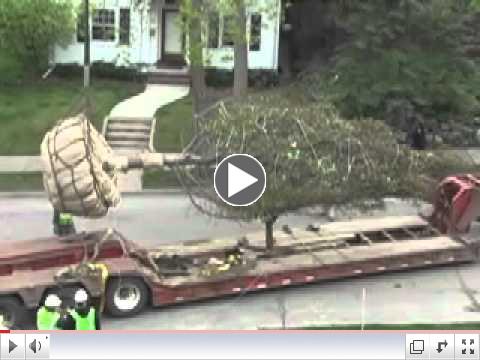 | | Check out this video of Landscape Renovations' crews planting a 35' tree near Lake of the Isles in Minneapolis last summer. |
 |
|
|
|
|
|
PLANT HEALTH
CARE
Landscape
Management

|
Late Winter Pruning 101
What to prune now to enhance flowering and
avoid disease and insect problems
Pruning and shearing shrubs and trees may seem like a complicated and tedious task, however it can truly be an art to healthfully shape our favorite landscape plants. We must prune trees and shrubs for many reasons: to promote plant health, to protect people and structures, to enhance flowering or fruiting, and to maintain size, to name a few. Certain pruning tasks are best done at specific times of the year. Here are a few pruning tips to help you make wise choices as you head out to the yard with a case of spring fever:
- Prune Oaks, Honeylocust, & Crabapples now (late February to early March) to avoid infestation from Oak Wilt (Oak), Stem Cankers (Honeylocust) and Fire Blight (Crabapple). Never prune Oaks during the months of June or July.
- Do not prune spring flowering shrubs and trees until after they have bloomed. Lilac, crabapple, magnolia, and forsythia are just a few of these shrubs and trees that are better pruned in late May or early June, when flowers have fallen. Pruning these plants before they flower is like picking the flower buds off before they bloom.
- Shrubs that are grown primarily for thier foliage including Barberry, Euonymus (Burning Bush), and Dogwood may be pruned in the spring
- Shrubs that bloom primarily on new growth such as Spirea and Endless Summer Hydrangea should be pruned or sheared back to the first set of new buds. Do not prune Endless Summer Hydrangea in the fall- wait until spring when the new buds emerge. This plant only flowers on old wood.
- Less hardy plants such as Roses and Clematis should be pruned down to live wood or the first set of buds.
- Do not remove more than 1/3 of the tree or shrub's canopy at one time. Doing so causes the plant extreme stress that it may never recover from.
- Do not use wound paint on pruning cuts. Trees have their own natural defenses to cope with an open cut, and wound paint may actually trap pathogens close to the live wood, leaving it more susceptable to disease or insect infestation.
- The University of Minnesota Extension service has a great link for more, very detailed pruning information. Check it out HERE or on our website's Tips & Tricks page.
For more information on pruning methods or specific plant questions, contact our Landscape Management Department or call Sarah Hartung at 651-796-8697. Ask us how Landscape Renovations can help with your pruning tasks. |
|
|
Thank you for checking out this edition of our e-newsletter. If you know of someone else who would enjoy receiving this newsletter, please use the "Forward to a Friend" link at the bottom of this page, and they will have the opportunity to opt-in to receive future newsletters. Also, feel free to share this page on your social networking sites.
If you have any questions about Landscape Renovations or the services that we provide, give us a call at our Office (651-769-0010) or email us marketing@landscaperenovations.com.
We are looking forward to serving you in the upcoming season...
Sarah Hartung
Marketing, Landscape Management, & Design
Landscape Renovations
651-769-0010 |
|
|
|
|



