|
Australian Terrier International
Meeting the Needs of Aussie Owners Globally
© 2010 Australian Terrier International
March 2010- Vol 1, Issue 3
|
|
|
|
|
|
DEAR FRIENDS,
|
We continue to grow.
Facebook has over 150 members.
We have now raised almost $3000 for Canine Health Foundation, thanks to your memberships and donations.
Our website has had over 1100 visits with over 2800 page views.
We welcome Germany, Ireland, Italy, Spain and The Netherlands. We are now in 19 countries.
This month I'm excited to tell you I will be visiting Cruft's for my first time. I hope to take some nice photos of our Aussies to share with you.
I'm also excited to meet our friends in the UK. Look for a full report next month.
Pamela Levy
ATI Newsletter Editor
I also want to thank Founder, Dianne Wall, for her brilliant proofreading.
|
EDUCATION NIGHT WITH SUE HOLSINGER
|
This month we will be discussing food.
The call in evening will be Wednesday, March 31st.
The call in will be at:
6PM PACIFIC 7PM MOUNTAIN
8PM CENTRAL 9PM EASTERN
We will be featuring the Raw Food Diet.
Our featured speaker will be Jim Pendergast from Darwin's Raw Food and Dr. Michael Fox.
Dr. Fox is a veterinarian, bioethicist, and syndicated columnist.
http://www.twobitdog.com/DrFox/
Why feed a raw diet? What are its advantages? What are the disadvantages? These are just some of the questions we will be asking.
Is a raw diet right for your dog? Please send your questions to Sue Holsinger at: all4dogs@aol.com
Check out Darwin's Food at:
www.darwinspet.com
Please go to the website for the call in information.
www.AustralianTerrierInternational.org |
|
|
|
PROTECT YOUR AUSSIE AND REST EASY
|
We all know accidents can happen. It can be a doggy mistake on your new carpet or a favorite shoe destroyed by a new puppy.
But, what if that accident includes YOU not coming home to your dog? Do you have a plan? Is your dog included in your will? Do you have a friend or relative that will care for your dog in the event of an emergency? What if you did have that plan, but, your friend moved and you haven't spoken to that friend for years?
What if you have 6 dogs; are you the breeder? Are they going back to the breeder or breeders? Not pleasant thoughts for sure, but if you make a plan you can rest easy.
Remember that state law considers pets as personal property, so think about your Aussies when writing out a will. You may want to name a caretaker and even leave money to your pet's guardian for the animal's future care.
We are here to help you.
Please go to the website to look at a possible codicil you can add to your will to protect your dog or dogs. www.AustralianTerrierInternational.org
What if you are driving and have an accident? We also have a form you can personalize and keep in your car. The goal is to keep your dog out of a shelter and/or find it if you get separated from your dog. www.AustralianTerrierInternational.org
|
PATELLAR LUXATION
Q & A= QUESTIONS AND ANSWERS
|
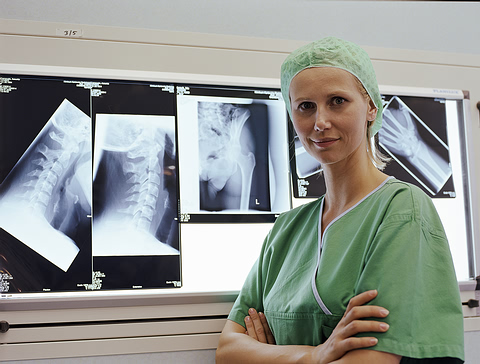
Q: When walking my year old dog, I notice he has a "hitch in his giddy-up." He will kick out his back leg a bit but then after a few steps walks normally. What do you think that could be?
Q: When showing my dog, he will kick out his leg and looks like he skips when doing his down and back. Is it a training issue? Have you seen this before?
A: We can't say for certain and checking with your vet is our best advice. What we can tell you is those could be signs your dog has a luxating patella.
Q: I bought a puppy and learned from the vet it has grade 1 patellas. I'm already in love with her, but should she be returned? Will I end up with large vet bills?
A: Read below, but most dogs at grade 1 and grade 2 are clinically sound and do not have any complications. If a dog was to require surgical intervention it could be costly. (Refer to Jan 2010 issue, Questions to ask your breeder.)
According to the Orthopedic Foundation for Animals, Australian Terriers rank 6th in having Patellar Luxation with almost 12% affected! For those stats click below.
http://www.offa.org/patluxstatbreed.html
For health clinics across the US where you can get your dog OFA tested, click on the link below.
http://www.offa.org/clinics.html
According to Dr Greg Keller of OFA:
What is patellar luxation? The kneecap pops out of place.
Is that painful for the dog? Yes, it can be.
Can it be surgically fixed? Yes, it can if it's bad enough.
Can I breed a dog with luxated patellas? OFA would not recommend that.
Grades 1 and 2 usually the dogs will remain clinically sound.
Grades 3 and 4 will probably need surgical intervention.
Can you breed a dog with grade 1 to a sound dog and get sound patellas? I don't have those statistics but OFA would recommend against it.
How do you diagnose it? Through vet manipulation not by x-ray.
The patella, or kneecap, is part of the stifle joint (knee). In patellar
luxation, the kneecap luxates, or pops out of place, either in a medial
or lateral position.
Bilateral (both sides) involvement is most common,
but unilateral (one side) is not uncommon. Animals can be affected by the time they
are 8 weeks of age. The most notable finding is a knock-knee stance. The patella is usually reducible and laxity of the medial collateral
ligament may be evident. The medial retinacular tissues of the stifle
joint are often thickened and the foot can be seen to twist laterally
as weight is placed on the limb.
Although the luxation may not be present at birth, the anatomical deformities
that cause these luxations are present at that time and are responsible
for subsequent recurrent patellar luxation. Patellar luxation should be
considered an inherited disease.
Clinical Signs
Three classes of patients are identifiable:
Newborns and older puppies often show clinical signs of abnormal hind-leg
carriage and function from the time they start walking; these present
grades 3 and 4 generally.
Young to mature animals with grade 2 to 3 luxations usually have exhibited
abnormal or intermittently abnormal gaits all their lives but are presented
when the problem symptomatically worsens.
Older animals with grade 1 and 2 luxations may exhibit sudden signs
of lameness because of further breakdown of soft tissues as result of
minor trauma or because of worsening of degenerative joint disease pain.
Signs vary dramatically with the degree of luxation.
In grades 1 and
2, lameness is evident only when the patella is in the luxated position.
The leg is carried with the stifle joint flexed but may be touched to
the ground every third or fourth step at fast gaits.
Grade 3 and 4 animals
exhibit a crouching, bowlegged stance with the feet turned
inward and with most of the weight transferred to the front legs.
www.acvs.org provides you with the names of Board certified orthopedic vets in your area.
The term "ACVS Diplomate" refers to a veterinarian who has been board
certified in veterinary surgery. Only veterinarians who have
successfully completed the certification requirements of the ACVS are
Diplomates of the American College of Veterinary Surgeons and have
earned the right to be called specialists in veterinary surgery.
Veterinarians wishing to become board certified must complete a
three-year residency program, meet specific training and caseload
requirements, perform and publish their research. This
process is supervised by current ACVS Diplomates, ensuring consistency
in training and adherence to high standards. Once the residency has
been completed, the resident must sit for and pass a rigorous
examination. Only then does the veterinarian earn the title of ACVS
Diplomate.
Is your vet Board certified? Click below to find out.
http://www.acvs.org/AboutTheACVS/DiplomateDirectory/
|
PATELLA LUXATION CASE STUDY
|
It would be interesting to know if any of our readership has heard or knows of a similar case regarding luxated patellas in an Australian Terrier. The breeder in this case has supplied us with the following information and we are interested to know if any of you have seen or know of something like this as this is the first time that this long time breeder has heard of this cause for patella luxation. If so, please email us at info@AustralianTerrierInternational.org and we can put you in contact with the author.
The puppy mentioned in this case seemed totally normal when sold at 9 weeks. The vet did not notice anything unusual at the health check before sale of the puppy. At 3 months of age the owner told the breeder that the pup looked a bit unstable on its hind legs when moving slowly, but not when running faster. This situation got worse as the puppy grew and the toes of the puppy's rear feet began to turn inwards as did its knees. The owner had a strong feeling something was not right and with the breeder's concurrence, when the puppy was 5 months old it was taken to an Orthopaedic Specialist that happens to practice in their local area.
It was discovered that both the patellas were luxated and placed on the inside of the legs. An operation was needed for correction of the situation and was done on the first knee a couple of weeks later. Upon opening the knee, they discovered that there was nothing wrong with the knee itself and that the patella ridges that are supposed to keep the patellas in place were fine. The problem was that the feet/toes were turning inwards and this was causing the pup's knees to turn inwards too. Thus the pups ligaments could not hold the patella (kneecap) in place and this was causing the patellas to be luxated. The solution was to loosen the ligament that holds the patella and move it to compensate for the twisting of the hind leg, thus allowing the patella to follow in its correct path/configuration.
Both operations were very successful. The dog is now over 10 months and has had both rear legs operated on. The puppy has just been allowed to start playing with the family's other two Aussies a little more freely now that the recovery period has been completed. The puppy is now happy and totally fun loving, filled with energy to catch up on all the playing and exploring it can. The pup's owners can see now, from the difference in pups behaviour that it probably had experienced some pain in the legs before the operation. They had not noticed it at the time, as the puppy was active and playful even though its patellas were luxated. The only thing they did notice before the surgery (along with the physical issues that were growing more evident with normal growth patterns) was that the puppy might become a little snippy toward the other Aussies particularly if the puppy felt challenged. All of that behaviour is totally gone now, since the surgeries have been completed.
According to the Orthopaedic Vet, the pup's knees now will function just like any normal dog so now the pup and the pup's owners can look forward to having a normal dog and the dog can look forward to doing all of the many things Aussies so love to do. The Vet also said that the pup's problem is very unusual and we are interested in learning if any of our readership has heard of a similar type of patella luxation case.
|
FEEDING YOUR AUSSIE
|

Photo Courtesy of Tina Nordgren The results of our Food survey are in. Thank you for your participation. The results are as follows:
We had 90 responses.
Feeding dry food was 91%.
Feeding wet or canned food was 15.6%.
Feeding raw food was 13.3%.
Cooking for their dogs was 13.3%.
Other was 16.7%.
Other included the BARF diet (Bone and Raw Food)
The totals will not add up to 100% because many people feed a combination of the above.
The most common food fed was Royal Canin, 11 people were feeding that brand.
Eukanuba in one form or another, 5 people were feeding that. Other brands fed were: taste of the Wild, Science Diet, canine caviar, Nutro, Hills, Darwins Raw, Canadae, Halo Spots Stew and many more.
For all the results and to see what brands are being fed go to the website:
www.AustralianTerrierInternational.org
Seventy-five percent of the respondents wanted more information on food. First we will discuss raw food and it's benefits. Make sure to call in March 31 for our education night discussing raw food. We will also have a podcast of the conversation on the website.
A few comments from our members:
I have always fed my dogs, also puppies, with home-made food and dry food 50-50. About 3 yrs ago changed cooked meat to raw meat and raw bones. My dogs are never sick and their stomachs can take everything. Have never had any allergies or infection problems. I believe in fresh food. Kirsi Ola
We feed our dogs twice a day using a wide variety of foods. Once a day they have dry kibble that is considered "dry raw" as it contains no grains such as Orijen and Acana, but, offers them a balanced diet. In addition, we feed "raw meat" to our dogs ranging from Red Bird Organic ground chicken, frozen (not canned) green tripe, and/or one of Darwin's pre-packaged raw offerings, canned offerings from EVO or Evanger's and once a week we feed a small portion of chopped fresh beef heart. Cheryl MechalkeI think dogs are like people and I would get bored eating the same thing every day. I never feed the same thing very often. They never get sick either. Right now I'm trying Darwin's raw food. I also feed Halo Spots Stew, wet and dry food. I also cook organically for them, Coleman beef, with Cascadia organic vegetables and Quinoa for the grain and I vary that. Sometimes I use organic buffalo or chicken, etc. They love organic carrots and apples for snacks. Pamela Levy |
BREEDER DISCUSSION-EYES AND EARS
|
This month we will be reviewing the eyes and ears of the Aussie.
The Australian Standard states:
Eyes: The eyes shall be small, oval with keen expression, and of dark brown colour, set well apart and not prominent.
Ears: The ears are small, erect, pointed, well carried, set on moderately wide, free from long hair and sensitive in their use (puppies under six months excepted).
The AKC Standard (USA) states:
Eyes: Small, dark brown to black (the darker the better), keen in expression, set well apart. Rims are black, oval in shape.
Faults: Light colored or protruding eyes.
Ears: Small, erect and pointed; set high on the skull yet well apart, carried erect without any tendency to flare obliquely off the skull.
Pamela McDougall Douglas describes in her book, The Australian Terrier-History and Origins,
"The term, 'full between the eyes', means that the area between the eyes is not depressed but combined with a 'slight but definite stop' to give the desired expression....Without this the dog has a foreign look and usually results in the eyes being set too close together."
"The inside of the eye across the stop to the inside of the other eye should measure at least one eye width."
"The rims are more of an almond shape, but not round which would give an untypical soft expression....The eyes are definitely not prominent. The term to describe this fault is 'poppy eyed.'"
The reason you do not want a prominent eye is to avoid damage in a scuffle with rodents.
Now, you be the Judge...are the eyes below oval/almond but not round? Are they dark brown to black with a keen expression? Do they have black rims?
Let's look at ears. Are they small, erect and pointed? Free from long hair?
Are they set high on the skull, yet well apart?
Are they flaring obliquely (off to the side)? You don't want to see that.
For our guest Judges comments, please go to the website.

ABOVE PHOTO #1

ABOVE PHOTO #2

ABOVE PHOTO #3

ABOVE PHOTO #4
ABOVE PHOTO #5
ABOVE PHOTO #6
|
BRUCELLOSIS- WHAT IS IT? WHY TEST FOR IT?
|

Photo Courtesy of Pamela Levy
Responsible breeders test both the female (bitch) and stud dog before breeding, for brucellosis.
Brucella canis is a bacteria. Currently there isn't a vaccine or effective treatment for canine brucellosis (CB).
It is a sexually transmitted disease and can spread to humans. It has several methods of spreading. "It can spread through mating and nose mouth contact with infected dog's semen, urine, milk, aborted tissue, vaginal discharge while in heat or giving birth. It renders stud dogs sterile and causes infertility and abortions in bitches."
It is dangerous because it spreads quickly and dogs can relapse.
Testing can also give false positives, causing some dogs to be euthanized unnecessarily.
Quarantines and treatment can take months and cost over $500 per dog.
Outbreaks have been documented worldwide and in the USA. The rural Southeast seems to have been hit the hardest. There are many other states, however, that have documented cases such as Washington state and Michigan.
Brucellosis is on the rise but statistics are not kept so no one actually knows the exact number of cases.
It's important to test stud dogs and breeding bitches because they can be asymptomatic. Dogs that test positive are frequently encouraged to be euthanized by their vets and sometimes they treat and isolate the infected dog. Some vets feel neutering the animal, treating and then testing the infected dog again along with all dogs in the home can be successful.
If you are involved in RESCUE, it is advisable to test each dog before bringing it into your home.
It is thought on the high end that 8-10% of all dogs are affected.
Clinical signs include dull haircoat, lethargy, loss of libido, exercise intolerance, testicle atrophy, and enlarged lymph nodes. Pregnant females affected can abort between the 45th and 59th days.
Betty Liddock of Venice, FL wrote a wonderful article, quoted in this article for the AKC Gazette, March 2009.
www.azdhs.gov/phs/oids/vector/brucella/pdf/brucellaQADogOwners.pdf
The Arizona Dept Of Health Services has put together a wonderful article with questions and answers. Please click on the above link for many more answers to your questions.
|
SHIPPING FROZEN SEMEN TO AUSTRALIA
|

Photo Courtesy Of Pamela Levy Emme and 2 Balls
Gillian Barlett's article in the January issue of this newsletter, discussing the Australian Terrier numbers, had several of the US breeders concerned.
How could we help them? Could we collect our dogs and fly the frozen semen to them? Did we need to ship it to them?
I embarked on doing some research and learned some rather interesting and slightly depressing facts.
If you already have collected your dog and were thinking of helping by donating that semen to them, forget it.
For a dog's semen to be allowed into Australia, they recommend you start the process six months before shipping.
The stud dog must go through several tests PRIOR to collection. Those tests include a lepto and brucellosis test. (For more info see the Brucellosis article below.) That blood work must be sent to a National lab and must be fedexed.
The stud dog must have a valid rabies certificate. Rabies vaccine must be given within the last year but not less than 90 days before collection.
The stud dog MUST have a microchip. Australia will not accept a DNA test or a tattoo for identification.
From the date of the blood draw, you have 20 days to collect the semen and it CAN be done on the same day as the blood draw.
Three weeks later the stud dog needs to be reexamined.
Jaime at the Brighton Clinic, in Brighton, CO said, the total cost from collection to the hands of the owner of the Australian female can be $2000 (US).
The US ships from the main clinic in Grass Valley, CA.
The International Canine Semen Bank sends a shipment to Australia every 8 weeks.
If semen gets into the country, say on a private plane and somehow avoids customs, the offspring COULD NOT be registered. The official import papers are required to register a litter.
Bridget Higginbotham RVT
www.iscbgrassvalley.com
Go to their import/export page.
We also have the complete requirements on the website for you to download.
Prices:
Blood draw for lepto/brucellosis including fed ex shipping $100-$150
Semen collection about $300
Export shipping and paperwork About $980 (can be shared by multiple people for additional savings)
Import fees in Australia $600-$700 if all sent to one person and location (additional vials/breedings sent from US will also receive additional savings) |
AUSTRALIA REGISTRATION STATISTICS
|
Photo Courtesy Of Gillian Bartlett
2009-We had 329 Aussies registered.
2008-We had 317 Aussies registered.
2007-We had 383 Aussies registered.
2006-We had 289 Aussies registered.
2005-We had 342 Aussies registered.
2004-We had 378 Aussies registered.
2003-We had 331 Aussies registered.
2002-We had 364 Aussies registered.
2001-We had 394 Aussies registered.
2000-We had 350 Aussies registered.
In 1988 Australia we had 817 Aussies registered.
|
USA (AKC) REGISTRATION STATISTICS
|
Photo Courtesy Of Theresa Goiffon
By way of comparison:
The #1 ranked breed in 2008 was the Labrador Retriever with 35,434 registered.
2009- We ranked 124 out of 158 breeds with 285 Aussies registered.
2008- We ranked 113th with 330 Aussies registered.
2007- We ranked 108 with 404 Aussies registered.
2006 -We ranked 113 with 361 Aussies registered.
I spoke with Rob Garrett of the AKC to get these statistics.
Robert Slack, Founder of the American Rare Breed Association, said they considered a breed not producing more than 800 of that breed a year a rare breed.
So do we call our Aussies a Rare Breed here in the USA? What about the world?
|
UNITED KINGDOM REGISTRATION STATISTICS
|
Photo Courtesy of Lynne Jennings
2009-We had 57 Aussies registered.
2008-We had 55 Aussies registered.
2007-We had 38 Aussies registered.
2006-We had 62 Aussies registered.
2005-We had 60 Aussies registered.
2004-We had 60 Aussies registered.
2003-We had 38 Aussies registered.
2002-We had 34 Aussies registered.
2001-We had 47 Aussies registered.
2000-We had 46 Aussies registered.
Therefore, a total of 497 Australian Terrier puppies were registered in the UK over a period of ten years! I did say to you before we are very much a minority breed in this country and those figures prove it.
|
SWEDEN REGISTRATION STATISTICS
|
Photo Courtesy of Tina Nordgren
Oh yes, in the latest number of our Kennel Clubs magazine there was a registration list/statistics of all breeds registrations for the last 8 years, so here comes for Australian Terrier:
2009- We had 167 Aussies registered.
2008 -We had 182 Aussies registered.
2007- We had 176 Aussies registered.
2006- We had 167 Aussies registered.
2005- We had 138 Aussies registered.
2004 -We had 153 Aussies registered.
2003 -We had 131 Aussies registered.
2002 -We had 146 Aussies registered.
All puppies are registered with our Kennel Club. As a breeder and member of the Kennel Club you have to stick to certain rules, and one is to register your whole litter of puppies, both pets and show dogs.
|
FINLAND REGISTRATION STATISTICS
|
Photo Courtesy of Orvokki Lamsa
In 2009, Finland had 61 litters registered and a total of 297 puppies.
_______________________________________________________________________________
The total of the 2009 registrations for Australia, USA, Finland, Sweden and UK is 1135 dogs.
|
FAMOUS AUSSIES
|

Photo Courtesy of Marjii Straight
This is the story about, Sheila Straight who received an AKC Award for Canine Excellence for saving her human dad, Bill.
This story was sent to us from the owner Bill Straight.
I have a story to share with you about these wonderful Australian
Terriers. In June 2007, I made a trip to Lake Powell with friends and Sheila went
along. About two days into the trip Sheila and I got up early and went for
a hike. The lake is gorgeous early in the morning and very quiet. On the way back I lost my footing on a slick rock and slid about 40 feet and fell into a crevice 8 feet deep and a 1 foot wide.
It was starting to get very hot and I knew I had to get out of the
crack or die. I tried to lift myself up with my right arm but my right
elbow was dislocated. My right heal was shattered so I only had two knees and
one arm to get myself out. I finally did get out and crawled 100 yards to get
under some brush for shade.
When I got out Sheila was right there keeping watch over me. She went
upon the side of a rocky hill side and laid there for 5 hours in the heat,
with out water until she saw the people from the boat looking for me. She
ran to them and then led them back to me and climbed under the brush with me.
If it had not been for her I don't think the searchers would have found me in
time. Unknown to me when my heal bone shattered it cut an artery in my foot
and I was slowly bleeding to death. The medivac chopper came and flew me to
a hospital in Grand Junction, CO.
Sheila did not get home for another day. She was in rough shape. The
folks that brought her back said "she would hardly eat or drink." It was the
same here at home, Marjie said. Anyway my beautiful wife talked the hospital
into letting her bring Sheila in to see me. When we saw each other, we were both very happy. When she got back home she promptly ate 2 bowls of food and a bowl of water. She didn't want to eat until she knew I was alive and OK.
Needless to say, she was upgraded to ankle dog while I healed. She was very good about not being walked and was happy to just sit beside me in my chair.
I wrote my story to Pamela Levy, who had helped me find Sheila. She published my story when she was writing the Colorado Newsletter. Eva Campbell sent the story to AKC and Sheila received the award (in the picture above) for Canine Excellence.
I love these Aussies and Sheila is one of the greatest of all.
_______________________________________________________________________________
Has your Aussie done something amazing that you would like to share with us? Please email me at: pamelalevy@aol.com
|
JUNIORS PROGRAM BY THERESA GOIFFON
|

Let's face it. Many of our young people currently involved in the Junior Showmanship program will take over our roles some day as dog handlers, trainers, educators and breeders. Whether you currently participate in Obedience, Agility, Conformation, Rally, Earth Dog events, or as a spectator, Juniors are the future.
If we agree this is true, how do we prepare our Juniors for this future responsibility? What are we doing today to prepare the next generation for this breed? How do we teach them properly not only to continue our efforts in the breed, but to exceed our efforts? What are we doing to ensure the Australian Terrier breed will thrive for many years to come?
These are questions I ask myself and discuss with my own two daughters who are actively showing, training and assisting me with our Australian Terrier breeding program.
Our personal journey began in 2007 when our girls started out in Junior Showmanship. It was not easy as we were new to this sport and we didn't know where to begin.
Almost three years later our girls have come a long way with the help of our Aussie friends, as well as, conformation training classes, our local kennel club and information from the website Bestjunior.com. It's a fun family activity!
What are other countries doing for their Junior Showman who participate in showing and competing with Australian Terriers? Perhaps we can learn from each other.
Here in the US we have a great website dedicated to our Junior Showman called Bestjunior. They provide a resource to all interested in the AKC Junior program and track our AKC Junior Showman results. They have links to many aspects of Junior Showmanship, including the rules, Code of Sportsmanship, Qualifications, Dog Eligibility and how to enter your dog at a show. It's a great place to begin your journey in Junior Showmanship.
Bestjunior is a not-for-profit website providing AKC statistics for the Junior Showmanship exhibitor and their parents. Their goal is to help juniors connect with each other to express and exchange ideas. It's also a useful resource for Juniors. If you are not aware of this organization you can visit their website.
The Top 10 Australian Terrier Junior Handlers here in the US are in their ranking as follows:
Devon Kipp, Samantha Gray, Eleanor (Ellie) Goiffon, Logan Huebing, Mackenzie Alonso, Kristina Rock, Lydia Goiffon, Ansley Sims, Teresa Rost and Samantha Osper.
(Records in the US for 2009 Junior Showmanship results are posted on www.Bestjunior.com)
Several clubs and associations involved in the sport of purebred dogs offer various scholarship opportunities to our juniors. These programs are identified on the Bestjunior website as well.
I will be writing a monthly column on Juniors. We want to learn about the Juniors program in your country. Please contact me through: info@AustralianTerrierInternational.org
Are you a former Junior Handler? Do you have advice for our Junior Handlers of today? I'd love to hear from you and learn from your experiences.
Please tell me if you are or have ever been a junior handler in your country. What was your experience like?
I will also interview several of the Aussie Junior handlers both past and present to find out what they enjoyed about handling Aussies. Did they stay with Aussies as they got older? If not did they handle any other breed?
Until next month...Blessings from my corner of the globe to yours!
|
PHOTOS PHOTOS PHOTOS
|
 Photo Courtesy of Monica Nero Alice, all dressed up for birthday dinner  Photo Courtesy of Cheryl Mechalke Luna exploring the Colorado tundra  Photo Courtesy of Janet Maas After the snow, how about a little "Sizzle"  Photo Courtesy of Norma Rowley Rocky enjoying his nap  Photo Courtesy Of Kim Floyd Sammi going for the gold They are competing in Terrier Racing. Just as in lure coursing, they are chasing a lure. The muzzle is to protect the dogs in the event that there is some posturing over the lure. It also protects the "catcher's" from an over anxious dog trying to get to the lure at the end of the race. The race course is 200' long. At one end are the start boxes - one dog per hole. The other end (the finish line) is a padded "wall" with a hole at the bottom like an over sized mouse hole. The first dog through the hole wins the race. Quite often a dog will be in the lead all the way to the finish but won't go through the hole or will hesitate allowing another dog to go through the hole first. Some dogs love to run; others could care less. Some are too protective of the lure and if they are aggressive towards another dog they are DQ'd. RosieRoo (Akiba's I've Got A Secret) has earned her United Flat Racer and United Steeple Racer and Moonie (CH Akiba's Southern Exposure) has earned the United Steeple Racer along with Grand Champion in Conformation, United Weight Pull Versatile, United Weight Pull Champion, and several Total Dog Awards at the UKC Premiere Invitational Show. To earn the Total Dog Award a dog must win Best Male/Female, or Best of Breed or Variety, or a Group Placement over competition AND on the same day have a qualifying score/run/pull in a performance event. The last three years Moonie has had a qualifying weight pull (10x his body weight) and a Terrier Group Placement. The UKC Premiere is equivalent to the AKC Eukanuba Championship show. Here is the link to the rules and regulations at the UKC site: http://www.ukcdogs.com/WebSite.nsf/RulesIndex?OpenView&group=DE This is the rules page for all of the events. Scroll down to find the section on Terrier Races. You can also see the rules for weight pull as well as Agility and Rally. They are slightly different than AKC. |
BEWARE-DANGER OF NEW DRUG REACTION
|

TOLTRAZURIL, aka Baycox, given for coccidia recently caused a terrible reaction in a Westie.
Following two doses of this medication, he went off his food for a few days, then started sneezing, became very fluid/nasal sounding and by day 3 had a fever just over 103. He was taken to the emergency hospital and we found he had ulcerations on his tongue. He was put on Benadryl and antibiotics...this was Sunday. By Tuesday he was getting worse so we made another trip to the emergency hospital where we found a few tiny spots on his skin. It was recommended to drive home as soon as possible to see our own vet and arrange biopsies.
By Wednesday night when we got home, "Party" was breaking out all over his head and neck with red sores, some crusting, some spots were actually raw. The areas were growing very rapidly and were symmetrical...almost identical on both sides of his body.
We had a Vet appointment on Thursday and biopsies on Friday morning. By Friday night he was having difficulty breathing and my kennel manager took him to the University of Guelp emergency clinic. Meanwhile, I was on my email from Thursday night contacting the head dermatologist at the University. Dr Yu went in on Friday night just to see Party. While this was happening my own dermatologist was at my home and spent hours at my computer investigating the drugs.
If anyone would like more information, I have pictures and copy of the biopsy
results, which I am willing to share. Please contact me privately.
Lindy Barrow
Lindy@Skyehigh.ca |
FREE NEWSLETTERS AND WHAT WE ARE READING
|
Photo Courtesy of Julie Kirkpatrick "Teaser" and "Colbie"
When we aren't resting or working on this newsletter, here is what we are reading:
http://www.aahanet.org/
|
FINLAND BY MINNA KAARTINEN
|
 Photo Courtesy Of Minna taken by Jaana Nurro.
Due to our harsh winters that can even go down to -40 C, it's difficult to find places for dog shows during the long winter months. We also have a lack of available facilities for Dog shows/ Dog training during the winter months, as some shows are held in Sport Halls and due allergic people and the associated cleaning costs after dog shows, these halls can be difficult to find/rent, and there aren't many halls here, that allow dog shows/ training during the winter months due these reasons. Some shows are even held outside during the winter here and those dogs shown at these shows are of the Arctic breeds like our national breeds Carelian Hound and Finnish Spitzes which have coats and conditioning to handle the deep cold in here in Northern Finland. Many of the dog owners/handlers in Finland are women and the majority of our shows are held during the spring and summer when the dogs can be shown out of doors on a grass.
Nevertheless, the Finnish are eager hobbyist's despite of months of cold, ice, snow, sleet and short days. During the winter we only see the sun for couple of hours or less here in Northern Finland. I live in Kuusamo where we can see the beginning of Finnish Lapland. Imagine my friends and I going to our main show of a year in Helsinki Fair Center in mid- December. It is a lovely place with little restaurants and lovely carpets on the floor, excellent rest rooms and show facilities, and to attend this show we have to travel 800 kilometers over icy snow covered roads, most of the travel time in is the dark due to the time of year as it is before the Winter Solstice. We departed with a bus loaded with dog fanciers, leaving Kuusamo at 19:00 PM, drove straight through to Helsinki so we would arrive there at 6:00 AM! I changed my clothes in the bus's tiny "restroom" before I left the coach to show " Harald" my dog. Harald & Minna at show Helsinki Fair Center - taken by Onkamo 12.12.2009 HELSINKI
"FINNISH WINNER 2009"
australianterrieri -Australian Terrier (37)
Tuomari - Judge: Dodo Sandahl
ROP - BOB
Bluepepper's Funny-Bunny (Tervonen Paavo & Okkonen Erika & Ahola Marjo, Kalliosuo )
VSP - BOS
Bluepepper's Smile (Ahola Marjo & Pietikäinen Maritsa & Saarinen Päivi, Sotkamo)
Juniorivoittaja - Junior Winner uros - dog
Benayr Mr Goodwill (Toivonen Satu & Mustonen Anne, Rauma )
Juniorivoittaja - Junior Winner narttu - bitch
Bluepepper's Devil's Choise (Sormunen Anu & Ahola Marjo, Palokka )
CACIB uros - dog
Bluepepper's Smile (Ahola Marjo & Pietikäinen Maritsa & Saarinen Päivi, Sotkamo)
CACIB narttu - bitch
Bluepepper's Funny-Bunny (Tervonen Paavo & Okkonen Erika & Ahola Marjo, Kalliosuo )
SERT - CC uros - dog
Bluepepper's Rules The Ring (Saloniemi Jaana & Ahola Marjo & Steele Eve, Tuusula )
SERT - CC narttu - bitch
Ryba's Orange Blossom Express (Ola Kirsi, Sipoo )
ROP - BOB Kasvattaja - Breeder
Kennel Reimin (Riihelä Krista, Luhtikylä )
13.12. HELSINKI,
NORDIC WINNER 2009
australianterrieri -Australian Terrier (42)
Tuomari - Judge: Jeff Luscott
ROP - BOB
Bluepepper's Funny-Bunny (Tervonen Paavo & Okkonen Erika & Ahola Marjo, Kalliosuo )
VSP - BOS
Bluepepper's Smile (Ahola Marjo & Pietikäinen Maritsa & Saarinen Päivi, Sotkamo)
Juniorivoittaja - Junior Winner uros - dog
Bluepepper's Flying-Fox (Ahola Marjo & Leinonen Marja, Sotkamo )
Juniorivoittaja - Junior Winner narttu - bitch
Reimin Seventh Sign (Nuutinen-Mäntylä Anne & Riihelä Krista, Espoo )
CACIB uros - dog
Bluepepper's Smile (Ahola Marjo & Pietikäinen Maritsa & Saarinen Päivi, Sotkamo)
CACIB narttu - bitch
Bluepepper's Funny-Bunny (Tervonen Paavo & Okkonen Erika & Ahola Marjo, Kalliosuo )
SERT - CC uros - dog
Bluepepper's Flying-Fox (Ahola Marjo & Leinonen Marja, Sotkamo )
SERT - CC narttu - bitch
Bluepepper's Ring (Ahola Marjo & Viivi & Steele Eve, Sotkamo )
ROP - BOB Veteraani - Veteran
Bluepepper's Golden Cap (Ahola Marjo & Jääskeläinen Maire, Sotkamo )
ROP - BOB Kasvattaja - Breeder
Kennel Bluepepper's (Ahola Marjo, Sotkamo )
|
CRUFT'S DOG SHOW IN BIRMINGHAM, ENGLAND
|
March 12, 2010

Miss Sheila Stoddart and 2009 Cruft's BOB CH. Millvalley Diva
~ AUSTRALIAN TERRIER ~
Judge: Miss S.G. Stoddart
Kennel Club Challenge Certificate - Dog
793. Veteran Dog
794. Special Puppy Dog
795. Special Junior Dog
796.Post Graduate Dog
797. Limit Dog
798. Open Dog
799. Good Citizen Dog Scheme Dog
Kennel Club Challenge Certificate - Bitch
800. Veteran Bitch
801.Special Puppy Bitch
802.Special Junior Bitch
803. Post Graduate Bitch
804. Limit Bitch
805. Open Bitch
806.Good Citizen Dog Scheme Bitch
|
UK - EXPLANATION OF CRUFT'S JUDGING BY BRENDA BROWN
|
UPDATE: 2010 RESULTS AND PHOTOS WILL BE IN APRIL NEWSLETTER.
Just to give you some more info about Crufts. There are 34 Aussies entered. There are 9 dogs (males) entered and 25 bitches (females) entered. We never know how many are in each class until we get to the show and get the catalogue. In fact, this is the first time we've been told the total number of entries. We will learn the class numbers when we get there.
To be eligible to be shown at Crufts every dog entered must qualify in very specific ways. The usual way is a dog must qualify at a Championship show in the UK by being placed 1st, 2nd or 3rd in the following classes: Minor Puppy, Puppy, Junior, Post Graduate, Limit, Open, Veteran. Champions qualify for life as do dogs (and bitches) who have a KC Stud Book number - i.e. they have won 1st in Open at a Ch show where CCs were on offer. They can also qualify by winning the CC or Res CC (explanation below) or, in very recent times, by winning Best in Show, Reserve Best in Show or Best Puppy at an all-breeds or Group Open Show. That doesn't happen too often with an Aussie.
Open Shows make up the vast majority of the UK dog show scene. No CCs are on offer at Open shows but, even so, competition can still be tough at Open Shows. We only have ten Championship shows for Aussies in a year here in the UK and we only normally show at Crufts, The Scottish Kennel Club, the ATCGB and Driffield as we always have a Committee Meeting there for the final time in the year.
As far as Aussies are concerned we start off in early April and the Ch shows for us end in early October and it's at those shows we can qualify for the next year's Crufts.
The classification at The Scottish Kennel Club Championship show is different and more limited than usual as only Puppy, Junior, Limit and Open are scheduled. It's a big leap from Junior to Limit. It is the one and only Championship show for us in Scotland, a year; all the rest involve hundreds of miles of traveling, which makes it a very expensive hobby, unfortunately.
The normal classification at Ch shows includes the classes that qualify dogs for Crufts. They are:
Minor Puppy is for 6 - 9 months on the first day of the show.
Puppy is for 6 - 12 months on the first day of the show.
Junior is for 6 - 18 months on the first day of the show.
Post Graduate is for dogs which have not won a Challenge Certificate or 5 or more First Prizes at Ch shows in Post Graduate, Minor Limit, Mid Limit, Limit, Open whether restricted (as to colour, etc) or not, at shows where Challenge Certificates were offered for the breed.
Limit is for dogs which have not become show Champion under KC Regulations or under the rules of any governing body recognized by The KC or who have won 7 or more First Prizes in all at Ch shows in Limit and Open classes, confined to the breed, whether restricted or not, at shows where Challenge Certificates were offered for the breed.
Open is for all dogs of the breed for which the class is provided and eligible for entry at the show.
Veteran is for dogs who are over 7 years of age on the first day of the show.
As far as neutered and spayed dogs/bitches are concerned, here in the UK it is extremely rare for a neutered/spayed dog to be shown. If a person decides to do so, they must apply to The Kennel Club for special permission to show the dog/bitch and if they are granted that special permission, then the fact the dog is neutered must be included after their registered name in the show catalogue.
There are other classes that can be, and quite often are, included at Ch shows but they do not qualify a dog for entry at Crufts. One is an age class - Special Yearling which is for dogs of 12 - 24 months - and the other classes go on the number of First Prize wins.
As far as Crufts is concerned things are very different regarding the classification!
Post Graduate, Limit, Open and Veteran are the same as every other Ch show but the age classes are very different. No dog/bitch under the age of 8 months can be shown at Crufts.
Special Puppy is for dogs of 8 and not exceeding 14 calendar months on the first day of the show.
Special Junior is for dogs of 8 and not exceeding 18 calendar months on the first day of the show.
Good Citizen Dog Scheme is for dogs which achieved their Good Citizen (a KC initiative where dogs are tested in various ways for good behaviour and, depending on how they do, they are awarded a Gold, Silver or Bronze award, or they do not get a pass at all!) Dog Scheme Bronze Award Certificate or above. Certificates must be available if asked for. Dogs entered in this class must also qualify for entry in the usual way. (This class is only scheduled at Crufts).
Overseas exhibitors must qualify at certain very specified shows in their home country.
After the males are all judged, the class winners will be called back in by the ring steward. The Judge this year, Sheila Stoddard, will decide on the overall winner whom she will award the Challenge Certificate (known as the CC or often referred to as "the ticket") and she will then decide which is to be her runner-up whom she will award the Res (Reserve) CC. The Res CC can be awarded to the dog who was placed 2nd to the CC winner as the judge might decide it is the second-best of its sex at the show. Exactly the same procedure applies to the bitches and after she has awarded her Bitch CC and the Res Bitch CC and they have done their lap of honour, her two "ticket" winners will come back into the ring to compete for Best of Breed and the same applies to Best Puppy.
To become a Ch in this country requires a dog/bitch to be awarded three CCs from three different judges.
Oh, and just to let you know, Reserve can be confusing as the 4th placed dog in each class wins a Reserve prize card!
I hope this lets you know how the show system works over here. Brenda Brown
|
PHOTOS PHOTOS PHOTOS
|

Photo Courtesy of Janet Maas "Rosie" owned by Orvokki Lamsa

Photo Courtesy of Missy Magner "Marlie"

Photo above Courtesy of Michael & Regina Swygert-Smith "Roxy"
Photo below is Courtesy of Beverly DeBrujin Sharaz living the good life as a Boatdog
 |
OVER THE RAINBOW BRIDGE
|
ATI would like to send our deepest condolences for the passing of George Mutch's beloved friend and companion for 15 years, "Woody". "Woody" joins his best friend "Syd" over the Rainbow Bridge.

Woody and Syd
Woody was 15 and Sydney was 12 when we lost her. Woody came from the UK and Sydney came from Denmark. They traveled a lot the first 6 years of their lives; both the dogs were back and forth across the Atlantic five or six times for long vacations with us. They were feisty and lovable and people stopped to admire them on a regular basis but mostly they were loving and loved and will be missed in ways that will be difficult to imagine. They are no longer suffering and are free to romp. They can play and chase their squeaky toys until they want to lie in the grass on their bellies and then wait for the next toss of the toy. We love you Woody and Syd. George Mutch
__________________________________________________________________
ATI would also like to send our deepest sympathy to Marge Reignier, whose sweet Emma passed having spent 15 years of her life as friend and companion to Marge.
Crestwoods Celebration -- Emma was 15 1/2 when we had to let her go. Emma was a really good girl...very gentle and loving. Emma hated dog shows. She was perky and happy until we went in the ring. Then her tail went down, and she looked very unhappy. She did win a major, though, but then would not cooperate for her picture. I remember holding her for the picture.
Even though Emma was gentle, she would not let another dog get "in her face." She never had a dog fight, but would push them away or stare at them and they left her (and her food) alone. Emma liked to mark things like a male dog...anything new in the house (even a grocery bag placed on the floor!)
Emma was an elegant girl! I will miss her so much. Marge
__________________________________________________________________
ATI would also like to send our deepest sympathy to Janet Maas and the Beckner family for the loss of "Corky".
Ch Akiba's Perfect Alibi "Corky"
Bred by: Janet Maas Lovingly Owned by Jenny & Gary Beckner
Corky was one of the first champions I produced. He was my first
Breeder/Owner/Handled multiple group placer and was the sire of champions
and is behind many of my dogs today. He retired from the show ring to go
live in the loving home of Jenny and Gary. There he received the most
excellent of care. He was a character often jumping into the shower with
them in the morning or the hot tub! As a senior dog when he began having
problems walking they traveled to the University of TN Veterinary school
only to learn the devastating news that he had developed a tumor on his
spine. They did not give up on him though! Gary & Jenny purchased him a
cart and he was able to get around quite nicely till he passed away.
Photo Courtesy of Janet Maas
"Corky" with his cart.
__________________________________________________________________
Rest well sweet angels.
 Photo Courtesy of Rick Crandall
Just this
side of heaven is a place called Rainbow Bridge.
When an animal dies that has been
especially close to someone here, that pet goes to Rainbow Bridge. There are
meadows and hills for all of our special friends so they can run and play
together. There is plenty of food, water and sunshine, and our friends are warm
and comfortable.
All the
animals who had been ill and old are restored to health and vigor. Those who
were hurt or maimed are made whole and strong again, just as we remember them
in our dreams of days and times gone by. The animals are happy and content,
except for one small thing; they each miss someone very special to them, who
had to be left behind.
They all run and play together, but
the day comes when one suddenly stops and looks into the distance. His bright
eyes are intent. His eager body quivers. Suddenly he begins to run from the
group, flying over the green grass, his legs carrying him faster and
faster.
You have been spotted, and when you
and your special friend finally meet, you cling together in joyous reunion,
never to be parted again. The happy kisses rain upon your face; your hands
again caress the beloved head, and you look once more into the trusting eyes of
your pet, so long gone from your life but never absent from your heart.
Then you cross Rainbow Bridge
together....
Author unknown...
|
Rally with Ruthann McCaulley
|
Rally Around the World - Outside of the United States
Ruthann McCaulley
This is the first article highlighting Rally around the world. Last month I touched on the four venues of organizations that offered Rally Obedience in the United States. Here is a brief overview of Rally in the rest of the world.
Rally in Canada
Canadian Kennel Club (CKC) has offered Rally for about 3 years now. They use basically the AKC rules (pre 2008 revision) and signs with a few variations.
For more information: http://www.ckc.ca/en/Default.aspx?tabid=201&NewsID=125&prevID=202
The Canadian Association of Rally Obedience (CARO) was established in 2002 so that dogs could earn titles in Rally O in Canada. It is open to all dogs and handlers, including mixed breeds and dogs that are physically challenged. Their rules describe CARO rally: Rally Obedience goes beyond basic heeling by interspersing over forty obedience movements with the sits, turns and paces of traditional heeling. It also requires a brisk pace, positive attitude and happy demeanor.
For more information: http://www.canadianrallyo.ca/
Rally in Mexico
I haven't been able to find any information on what is going on in Mexico now but do know it has been introduced (unofficially at least) and even received a set of signs from an exhibitor. I also had a report from someone on the Rally Obedience list that they had earned two legs toward their title, although this was unofficial and through a group promoting Rally and not an official kennel club.
Rally in the Netherlands
I have been e-mailing and sharing videos with Anja from the Netherlands whose husband is in the process of learning about Rally and becoming a judge. She reports:
Lots of schools/clubs are having Rally classes but it is still not an official sport here in Holland ...... Most of them follow the AKC rules but also use signs of APDT and CARO.... I hope we can get it official this year and rules will be AKC.
Rally in New Zealand
Thanks to a contact from the Rally Obedience list I gathered this information about what is going on in New Zealand:
Currently there are two similar forms of Rally in New Zealand. The New Zealand Kennel Club endorses the Southern Region Rally guidelines (can be found at this website http://homepages.woosh.co.nz/deansoloandniko/) and this is code that I follow. There is also another Rally organization in NZ called NZARO - their website is http://www.nzaro.webs.com/ . This organization is apparently considering association with the NZKC.
Further information came from Arend van den Bos: In brief, we have two organizations. One (currently called Southern Region Rally) fully affiliated and sanctioned by the NZKC, and another private organization, who is attempting to create a Rally niche for themselves nationally. This second group, unsurprisingly, has no recognition at present by the NZKC
Because NZARO began in the Central Region, they have established themselves as the predominant influence there (albeit with a number of dissenting members), whilst the Northern Region has largely remained on the sideline at this stage, but with an equal interest to remain NZKC loyal as well. www.nzkc.org.nz.
Because Rally is still very new in New Zealand and as yet not an official code (also under discussion this weekend), Rally Titles are awarded only in accordance with whichever organization is responsible for overseeing the event. That is, NZARO offer their own titles, and the Southern Region do the same.
Because it is not an official NZKC Code, titles cannot be entered after a dogs name on official NZKC entries. However, after this weekend, it is hoped that for those who have earned titles in Southern Region events, that this might become possible.
As in the United States, a person must have three qualifying certificates in one level prior to receiving a Title Certificate. Perhaps the greatest difference being that a qualifying score for the Southern Region is 90 (and we get plenty of them).
The Rally signs we use are the same as used by the American Kennel Club.
Rally in Australia
I know that Rally groups are active in Australia, but have been unable to connect with anyone training there. (I have some contacts but have not received replies to my inquiries.)
http://www.tdtc.org.au/content/what-rally-o is the site of the Tasmanian Dog Training Club. Their website states: No marching around in silence.
Many dogs enjoy this change from the usual silent heeling of traditional obedience as their handlers can clap hands, talk, whistle (even sing!) to them throughout the entire course without penalty. Those who participate in agility trials will recognize the pre-class "walk-throughs" and the challenge of working with their dog partners in an almost dance-like flow from one station to another. Rally-O combines characteristics of sports car racing, dog agility, and traditional obedience into a new fun sport. It is yet to be fully recognized by the Australian canine body, but given its adoption in a number of Countries, Australia is sure to follow.
Rally in the UK
More information from a Rally Obedience list contact, Angela Lucas. I'm a fairly new Rally fan in the UK. I live on the south east coast of England called Eastbourne, county of East Sussex.The APDT UK branch started introducing Rally from their headquarters, but I really have spent more time learning on my own from books and downloads off the websites.
I also draw on my experience of obedience training to base the motivation training and encouragement.
Here in the UK, I think there have only been 1 or 2 trials held - we are very much in the early stages of learning it. It is also getting a little confusing because someone got fed up with waiting for APDT to organize trials and are doing their own group. They are called Talking Dogs http://www.talkingdogs.org.uk/Talking_Dogs_org/Welcome.html and I must admit they are much more proactive at planning workshops and getting the message out. Here, I have been practicing with a small group over the winter. I have also held some introductory workshops based on APDT lines for now, and hope that before the year is out, there will be a chance to enter competition for the first time.
Next month we will start our exercises.
|
CRAFT CORNER BY CHERYL MECHALKE
|
Photo Courtesy of Cheryl Mechalke
Cozy Travel Cushion for Pets
Tools and Materials:
Sewing machine
2 matching towels
1/2-inch-thick polyester batting
Large sewing needle
Embroidery floss
Step 1
Cut 2 pieces of batting 1 inch shorter and 1 inch narrower than towels.
Step 2
Insert the 2 layers of batting into open end of towels and sew up the last side.
Step 3
Stitch tufts in towels 6 to 8 inches apart. Using a large sewing needle and a double strand of embroidery floss, stitch down through all layers and then back up about 1/8 inch from entry point. Trim the floss and tie ends. Repeat to make additional tufts.
Copyright 2010 Martha Stewart Living Omnimedia, Inc. All rights reserved.
http://www.marthastewart.com/how-to/cozy-travel-cushion-for-pets

Photo Courtesy of Cheryl Mechalke
|
PHOTOS PHOTOS PHOTOS
|

Photo Courtesy of Cheryl Mechalke Zippy enjoying his new toy box  Photo Courtesy of Bill Straight Sheila who saved Bill's life  Photo Courtesy of Irma Harden  Photo Courtesy of Mari Winqvist Juho and Kiti made a snowman and Kiti stole that carrot nose |
ASK THE VET
|
Question:
I noticed my spayed female has black on the end of her nipples. Do you think she may have frostbite?
Answer:
Carolyn Arrott DVM said, "I can't actually see it, so I would always recommend you consult with your own vet."
Frostbite and black means tissue death. Therefore, with frostbite I would expect to see the black area growing larger, hardening and becoming painful. You may also see redness around the outside of the black area. I have actually never seen a case of nipple frostbite here in Aspen.
More commonly we see pigment changes in the nipple of a spayed female and that is perfectly normal.
If you see nipple redness, enlargement, or the area of concern expands, you should have that looked at.
Hard lumps in the mammary chain also need to be looked at. They might not be right on the nipple. They can start out pea size. Your vet needs to remove that and biopsy that right away to find out what that is. We do see a significant amount of carcinomas in the older bitch (female) that was spayed late. Caroline Arrott DVM Aspen Veterinary Clinic, Aspen, CO
|
BARK OUT
|

Ozzie Wall
Since I was unable to call-in Wednesday night for the session on vaccinations, I logged-in to hear the recorded program. Thank you to everyone involved for putting together not only an excellent program, but for putting forth the effort to achieve one of the main missions of the club. Dr. Schultz and Dr. Dodds did a great job of educating us about vaccinations, prompted by a list of excellent questions. Since I have already started the vaccination protocol for canine influenza for Ozzie and his sidekick, Cricket, I was relieved to hear that they agreed that this is a good vaccination to give.
Thanks again to all who had a hand in pulling this program together and for making it available on the web site; I hope we can have similar programs in the future. Thank you, also, to Dr. Schultz and Dr.Dodds for giving their time to help educate us in the best way to care for our beloved dogs.
Best Regards, Dianne Wall
(Editor note: You can hear the Vaccination Call-In on the website.)
_______________________________________________________________________________  Sheila Straight Sheila Straight
Dear ATI,
What a HUGE undertaking! But you are doing beautifully. We were truly impressed by the newsletter. We sent the $20 today to join and we wish you great success!
Thank you for all you have done for us and for the beautiful Australian Terrier breed and their humans.
Bill and Marjie Straight______________________________________________________________________________  Cartoon Petry Dear ATI, Cartoon Petry Dear ATI,
What an interesting February Newsletter with nice photos too. I read it just like a novel. I was captured by all the articles; moreover, I have learned a lot.
Thanks to you, everyone feels free to ask questions. Some are introducing their countries. Thanks to Cheryl I have a new recipe for (dog) biscuits.
I do hope that more and more Australian Terrier lovers will join A.T.I., which will become soon a reference in our Breed. Your dedication deserve to be rewarded.
Marie-Francis Petry (Belgium) P.S. I am sure to read the newsletter over and over again._______________________________________________________________________________ Dear ATI,
Thank you for sending this to me. It was very informative and fun seeing all the dogs and puppies.
Joan McFadden
_______________________________________________________________________________  Ch Maila Kalib Ch Maila Kalib
The latest Newsletter was superb. This one along with the first will go in my files. So much information and wonderful pictures. Just overwhelming to say the least. The time and effort taken to compile these newsletters show a dedication to the breed.
Jennie Worthing_______________________________________________________________________________  Colbie Kirkpatrick Colbie Kirkpatrick
Enjoyed the ATI newsletter. I Liked the education on muzzle and skulls, along with the standard. That is key. I also liked the history of Sweden and the report from Sweden. Loved all the pictures. I want to know how Cheryl can get her Aussies so perfectly posed in pictures. The best pictures that I can get are when my Aussies are asleep. Need a faster camera and slower Aussies.
Julie Kirkpatrick _______________________________________________________________________________  Whitney Gilli Whitney Gilli
Thank you ATI for creating a place for a newbie to gain insight and information.
I am sending in my application. I started my puppy in classes and hope to do rally with her by the summer. She has fear issues in the ring so we are going to try and socialize her more. (Any helpful ideas for that from Ruthann?)
Vivien Gilli
|
JOIN ATI
|
If you have a friend who has an Aussie or may be interested in getting an Aussie, we would greatly appreciate your referral. If you have not joined yet, please click below, to go to the page to join.
All funds go to Canine Health Foundation. If you wish to be a Founder please send $100.00.
Regular membership is $20.00.
You can use paypal or send checks written out to Canine Health Foundation:
Pamela Levy
150 Larson Drive
Aspen, CO 81611
Thank you.http://www.australianterrierinternational.com/#/loginjoin-page/4537945878JOIN US ON FACEBOOK GROUP-AUSTRALIAN TERRIER INTERNATIONAL WE APPRECIATE YOUR COMMENTS, WE LOVE YOUR ARTICLES AND YOUR PHOTOS.
ATI, IS FOR EVERYBODY. THANK YOU, TO THE INTERNATIONAL WORLD YOU ARE MAKING THIS SUCH A SUCCESS. EVERYONE IS INVITED TO SEND PHOTOS AND ARTICLES.
Eyes and Ears Just for Fun Unofficial Judging Results
Two of us working on the newsletter wrote down our independent selections judging pic #2-6.
Our order was #2 we liked the eyes and ears overall the best followed by
#6, #4, #3, and #5.
We are not judges so you will have to go the website for their views.
|
IN NEXT MONTH'S ISSUE
|
What's Happening in Germany
What's Happening in Norway
What's Happening in Canada
Caring for Your Senior Dog
Breeder's Series Part 1- The Female
Cruft's Results and Photos From the Show
Agility with Ruthann
More of Your Favorite Columns
Photos
|
|

Photos Courtesy of Cheryl Mechalke
Happy St. Patrick's Day!
Did you know this?
St. Patrick's Day is observed on March 17 because that is the feast day of St. Patrick, the patron saint of Ireland. It is believed that he died on March 17 in the year 461 AD. It is also a worldwide celebration of Irish culture and history. St. Patrick's Day is a national holiday in Ireland and a provincial holiday in the Canadian province of Newfoundland and Labrador.
Legend says that each leaf of the clover means something: the first is for hope, the second for faith, the third for love and the fourth for luck.
The harp is the symbol of Ireland. The color green is also commonly associated with Ireland, also known as "the Emerald Isle." |
|
|
|
|