|
Submit your project story!
 Our applications are some of the great project stories that our clients have shared with us over the years. There are many amazing stories in many venues across the USA and all over the world. Have your project story added to our database by sending TOA your experience using and installing TOA products. Please complete the form to have someone contact you, or email your story and photos to marketing@toaelectronics.com. The form is always available from the homepage of our website, www.toaelectronics.com. Our applications are some of the great project stories that our clients have shared with us over the years. There are many amazing stories in many venues across the USA and all over the world. Have your project story added to our database by sending TOA your experience using and installing TOA products. Please complete the form to have someone contact you, or email your story and photos to marketing@toaelectronics.com. The form is always available from the homepage of our website, www.toaelectronics.com. |
|
TOA Trivia
 We would like to express our hardy congratulations to Nick Angelo at A.A. & V.S. for being the winner of our TOA Trivia Challenge last month. Our question for this month is: We would like to express our hardy congratulations to Nick Angelo at A.A. & V.S. for being the winner of our TOA Trivia Challenge last month. Our question for this month is:
Name one of the two noticeable physical differences (not software or function) between the 1st generation 9000 & 9000M2.
All correct answers will be entered to win a pair of TOA BS-1030 music/paging speakers.
|
|
Ad For The Month Of February
 An ad focusing on the Educational market will be run this February. The 'Best In Class' ad will be run in Tech & Learning magazine. An ad focusing on the Educational market will be run this February. The 'Best In Class' ad will be run in Tech & Learning magazine.
|
|
Product Spotlight:
TOA M-633D Digital Mixer
 In the digital age technology seems to be making devices more and more complex every day. This means that features and functions that previously required a full 8' tall rack of equipment now only take a few rack units to accomplish via programming. As wonderful as this can be for the technicians and designers, this can sometimes create problems for the end user because controlling the system becomes either extremely complicated or extremely expensive. This is where a product like the TOA M-633D Digital Mixer provides a wonderful solution for the uninitiated sound technician that needs simple and affordable control. In the digital age technology seems to be making devices more and more complex every day. This means that features and functions that previously required a full 8' tall rack of equipment now only take a few rack units to accomplish via programming. As wonderful as this can be for the technicians and designers, this can sometimes create problems for the end user because controlling the system becomes either extremely complicated or extremely expensive. This is where a product like the TOA M-633D Digital Mixer provides a wonderful solution for the uninitiated sound technician that needs simple and affordable control.
The M-633D is a single rack space mixer that provides 6 mic/line inputs, 3 Stereo RCA inputs, 3 outputs (1 stereo, 2 mono), and an additional record stereo output. Each of the inputs can be routed to any combination of the 3 outputs giving you full matrixing capabilities. All of the mic/line inputs have their own independent feedback suppressor that is switch selectable on the front panel of the unit allowing the end user to set the desired levels for their microphones and not worry about feedback as a wireless mic maneuvers the stage.
The output processing built into the M-633D is specifically designed for highly reverberant spaces as each output has the proprietary TOA ARC processor providing auto-resonance control. This processing is easy to set up as it utilizes a microphone connected to Input 1 and placed in the center of the audience area to process pink noise and frequency sweeps to determine which frequencies are most resonant in the room and then applies attenuation via 12 possible EQ filters.
Note that there has not been a single mention of GUI software for the M-633D. All of the controls for the M-633D are on the front or rear panel allowing for quick installation and easy set up without having to worry if any of settings in programming were changed or lost. Simple examination of the front panel will tell you or your client what signals are turned up and how much.
For more information on the TOA M-633D mixer, please consult our website. To see some of the ways the M-633D is already being used, please visit our applications page on our website. If you would like information on pricing or attaining a demo unit, please contact your local sales representative.
|
|
TOA Tech Tip: Understanding IP Ratings for Exterior Speakers
 By: Josh Srago, CTS By: Josh Srago, CTS
Speaker selection for projects can be difficult enough without having to consider how the speaker will react to the elements when it is outside. Will it withstand dust and debris? Will it withstand snow and rain? Many times you will see a speaker that classifies itself as "Weather-Proof" or "Weather-Resistant" but how do you determine just how weather proof or resistant that speaker is? The easiest way to understand that is by referencing the speaker's IP Rating on the spec sheet.
The IP rating is dictated by a 2 digit code. The first digit will tell you how resistant the speaker is to dust and debris, with a rating of 0 having no protection and a rating of 6 giving you total protection against dust and debris. The second digit will tell you how resistant the speaker will be to moisture, with a rating of 0 having no protection and a rating of 8 meaning that the speaker could be immersed under water.
So how does this apply to some of the TOA speakers? Taking a look at the HX-5B-WP, which carries an IP rating of IP-X4, we can see that it carries no protection against dust and debris, but if the speaker were angled downward, it would be "protected against sprays from all sides", meaning it would be able to handle rain without a problem.
Another example would be the TOA H-2WP speaker which carries an IP rating of IP-64 giving it the same protection against moisture as the HX-5B-WP but adds a total protection against dust.
Finally, we can look at the SC Series Paging Horns which all carry an IP rating of IP-65, making them one of the most resistant speakers to elements in our product line being completely dust resistant and able to withstand intermittent low-pressure jets of moisture.
If you have any further questions about TOA weather resistant speakers and which would be best for your application, you can see the full line up on our website or you can call our TOA Product Support group at 800-733-4748. |
|
TOA Calendar
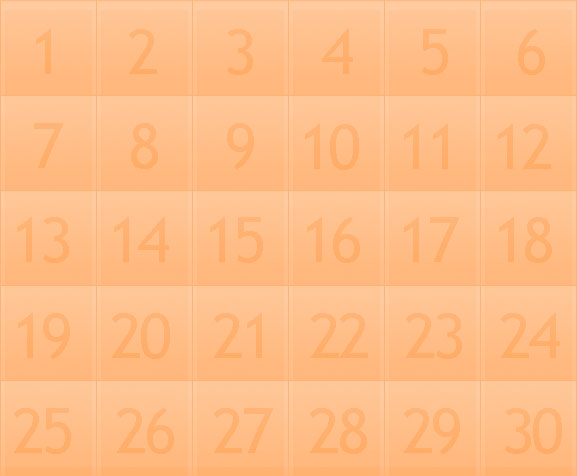
Our offices will be closed on Monday, February 20th in observance of President's Day. |



