|
|
Santa Fe Leadership Center
Monthly Newsletter March, 2012
|
|
Greetings!
On a recent trip to Austin,TX, I took a side trip the Texas hill country to visit Lyndon Johnson's Ranch, known during his presidency as "The Texas White House." I have always been fascinated by LBJ and his somewhat tragic political career, and I was excited to see the house where he spent nearly 25% of his time in office. What I wasn't expecting to see was something that became abundantly clear from the moment we stepped foot into the room that had served as his office - Johnson was a complete techie, a real gadget guy. As we moved through the office, our tour guide motioned around the room. "Johnson loved the newest, state-of-the- art technology and he wanted to be the first to have it." The guide pointed to the TV installed high above Johnson's desk. "Remote control. One of the earliest." Throughout the ranch there was evidence of all of the technologies that Johnson adored - an early mobile phone, muzak radio installed in every room - including bathrooms, an amphibious car, three side-by-side televisions in many rooms (one for each network), and telephones. Lots and lots of telephones. "How many?" I asked. "At one time, Johnson had 72 phones on the ranch," the tour guide replied. The guide pointed to the TV installed high above Johnson's desk. "Remote control. One of the earliest." Throughout the ranch there was evidence of all of the technologies that Johnson adored - an early mobile phone, muzak radio installed in every room - including bathrooms, an amphibious car, three side-by-side televisions in many rooms (one for each network), and telephones. Lots and lots of telephones. "How many?" I asked. "At one time, Johnson had 72 phones on the ranch," the tour guide replied.
From what little I know about LBJ, the fact that Johnson was what we now call an "early adopter" makes good sense. His almost  obsessive desire to have all the latest technologies seems to go hand in hand with the kind of leader he was, one who also felt quite comfortable with significant and disruptive change - whether that was change in technology and industry or whether it was massive social change. Before his presidency sunk into the quagmire of the Vietnam War, Johnson took up one of the greatest social revolutions in American History - the Civil Rights movement. Copes of the legislation that Johnson signed into law during his presidency covers an entire wall of the LBJ library, and includes the Voting Rights Act and the Civil Rights Act, not to mention all of the legislation from the Great Society, including Medicare and Medicaid, the Wilderness Act and major education reform legislation. Johnson took a look at a world that was poised for disruptive change and social innovation and he used his immense political capital to ensure it happened. We just might call him an innovative leader. obsessive desire to have all the latest technologies seems to go hand in hand with the kind of leader he was, one who also felt quite comfortable with significant and disruptive change - whether that was change in technology and industry or whether it was massive social change. Before his presidency sunk into the quagmire of the Vietnam War, Johnson took up one of the greatest social revolutions in American History - the Civil Rights movement. Copes of the legislation that Johnson signed into law during his presidency covers an entire wall of the LBJ library, and includes the Voting Rights Act and the Civil Rights Act, not to mention all of the legislation from the Great Society, including Medicare and Medicaid, the Wilderness Act and major education reform legislation. Johnson took a look at a world that was poised for disruptive change and social innovation and he used his immense political capital to ensure it happened. We just might call him an innovative leader.
This intersection of innovation and leadership and the ways technology can support change was at the center of the NAIS conference last month, starting with keynoter Bill Gates and playing out in sessions on e-learning, flipped classrooms, design thinking, Makers Labs, and rethinking space in schools. Education is on the verge of a revolution, and we need innovative leaders to lead it. And while technology will not alone change the way students are educated, it seems there is a correlation between those who embrace it and adopt it, with those who are at the front of the revolution.
Writing on this very topic of educational revolution, Richard Kassissieh, Director of Technology and Education Innovation at Catlin Gabel School shares strategies for implementing and sustaining successful innovations in schools. Also in the the newsletter this month is an article by Greg Bamford of Recharge on the beneficial impact of Serious Play in stimulating creativity and solving complex problems. I am so pleased that both Richard and Greg will be facilitators at this summer's seminar, Innovative Leadership. In the spirit of Serious Play, I review Patricia Ryan Madson's book Improv Wisdom, which connects improv with so many of the qualities innovative leaders demonstrate. Patricia Madson will lead a session on improv at this summer's seminar. Finally, Kevin Ruth, CEO of the eSchool Network shares a sneak preview of a new model for strategic planning grounded in design thinking. Check it out!
Now back to LBJ - Do you think that had he been alive today, he would have been at the front of the line at the Apple store when the very first iPhone arrived? One can only imagine.
Happy March!
Carla Silver
Executive Director, Santa Fe Leadership Center
Registration is now open for Innovative Leadership , July 15-19, at Hillbrook School, Los Gatos, CA.
|
|
|
| |

Join us on Facebook

And Linked In
And. . .
|
The 2012 Leadership Seminar Schedule 
Leadership Unplugged: The Inner Work of School Leaders, April 22-25, 2012, Santa Fe, NM Innovative Leadership: July 15-19, 2012Hillbrook School, Los Gatos, CA, Registration coming soon for: October: The Art and Experience of Leadership, American School in London, October 7-10, 2012. November: The Art and Experience of Leadership, Santa Fe, November 11-14. Visit the Santa Fe Leadership Center Website for more information or contact Carla Silver with any questions. |
SFLC Advisors
"Los Sabios"
Rick Ackerly,
Consultant and Author
Peter Branch,
Head Emeritus, Georgetown Day School, Executive Director, Washington Ballet
Paula Carreiro,
Head of School, Beauvoir
Peter Cheney,
Former Executive Director of NAES
Norm Colb,
Head of School, Menlo School
Lisa Darling,
President, United World College-USA
Phil Deely,
Consultant, Philip Sedgwick Deely and Associates &
Interim Head, The Roeper School
Sandy Drew,
Senior Development Consultant
Richard Kassissieh,
IT Director, Catlin Gabel School
Tony Gerlicz,
Director, American School of Warsaw
Coreen Hester,
Head of School, American School of London
Greg Papay,
Partner, Lake Flato Architects
Mark Silver,
Head of School, Hillbrook School
David Streight
Executive Director,
Council for Spiritual and Ethical Education (CSEE)
|
|
|
|
|
|
You Say You Want A Revolution?
by Richard Kassissieh
Richard Kassissieh is the Director of Technology and Education Innovation at Catlin Gabel School in Portland Oregon. He is a member of Los Sabios, the SFLC advisory board, and will be a facilitator at the Innovative Leadership Seminar, Summer 2012.
I returned from last week's NAIS Annual Conference abuzz with a sense of potential and possibility for substantial educational change. If you did not attend, innovation was the conference theme, and presenters from across the country shared many projects that featured student-centered instruction and 21st century learning. I felt more momentum for significant change in classroom instruction than ever before. Have independent schools begun a wholesale shift toward new models of teaching and learning? you did not attend, innovation was the conference theme, and presenters from across the country shared many projects that featured student-centered instruction and 21st century learning. I felt more momentum for significant change in classroom instruction than ever before. Have independent schools begun a wholesale shift toward new models of teaching and learning?
In the same week, an article titled "Twilight of the Lecture" ran as the feature in Harvard Magazine (Lambert, 2012). In the article, a Harvard physics professor described his discovery that student independent and group work promotes learning better than lecture. For those interested in innovation and teaching and learning, this news may be discouraging. How can we be in the midst of a revolution in instruction if college instructors are just now considering an alternative to the lecture?
We have seen a parade of impressive, though small-scale, educational initiatives over the decades, such as global programs and Maker's labs. However, over the same period of time, these changes have lived on the periphery of the instructional program at most institutions, while the core instructional model, informed by persistent educational beliefs, has remained unchanged. If a high school educator from 1950 were suddenly transported to the present, he would find today's typical classroom very familiar. Can we do anything to give the latest wave of school program innovations more staying power, a greater chance to become part of the fabric of the school program?
Innovative practice necessarily starts small, as the most innovative teachers try out new ideas, take risks, and make mistakes. How does an institution scale the ideas generated by a small group of pioneers up to a whole school program? First, we must recognize that the exploratory spirit of the pioneers is either diminished or completely lost when others are asked to implement an idea they did not invent. The remainder of the faculty is unlikely to find the new ideas as inspirational and self-evident as do the pioneers who adopted them.
In one implementation strategy, the pioneers spread out to the departments and programs responsible for implementing the innovation (Carrigg, Honey, and Thorpe, 2005). These individuals may be able to sustain some of the pioneering spirit and original purposes of the innovation as widening circles of people implement the ideas.
Adopting a new form of teaching requires an experienced practitioner to feel like a beginner again. Some of the most critical thinkers in one's faculty will be willing to become beginners if the new program is thoughtfully constructed, carefully explained, and critically evaluated. Providing substantial time for discussion and preparation will also help thoughtful practitioners feel ready for these new experiments. Teachers may also appreciate the flexibility to modify aspects of the new program to be responsive to their local context.
Second, we must organize other parts of the school to support the initiative. How many good ideas have we seen fail for lack of space, time, funds, professional development, parent communication, or teacher evaluation? The less-than-glamorous work of organizing support programs behind an innovation must be completed with careful attention. Support activities may include funding sources, classroom modifications, technology systems, and professional development days.
Third, attention to the innovative practice must be maintained to ensure a long life for the initiative. An official curriculum can lose much of its original design as it passes through the "multilayered curriculum" (Cuban, 2012). Teachers determine what is actually taught, students determine what is actually learned, and assessments determine how the effectiveness of the curriculum is measured. This requires the instructional leadership of the school, the pioneer group, and all of the teachers to continue to design, share, and assess their work on the initiative over the span of years.
Schools may make a strategic effort to sustain the most effective innovative projects. Teacher support, program alignment, and long-term attention can transform pilot projects into permanent programs.
Further reading:
Carrigg, Fred, Margaret Honey, and Ron Thorpe (2005). Moving From Successful Local Practice to Effective State Policy. Scaling Up Success: Lessons From Technology-Based Educational Improvement. 1-26.
Cuban, Larry (2012). The Multi-layered Curriculum: Why Change Is often Confused with Reform.
Kassissieh, Julia and Rhonda Barton (2009). The Top Priority: Teacher Learning.Principal Leadership.
Lambert, Craig (2012). Twilight of the Lecture. Harvard Magazine
|
Announcing A New Leadership Seminar:
Innovative Leadership
July 15-19, Hillbrook School, Los Gatos, CA
Registration is now open
Join the Santa Fe Leadership Center and Hillbrook School for  an exploration of innovation in school leadership. This highly interactive seminar is designed for school leaders who want to delve deeper into the concept of innovation, who want to increase their capacity to bring innovative practices to their schools, and who want to foster a culture of innovation and creativity in their communities. an exploration of innovation in school leadership. This highly interactive seminar is designed for school leaders who want to delve deeper into the concept of innovation, who want to increase their capacity to bring innovative practices to their schools, and who want to foster a culture of innovation and creativity in their communities.
Today, schools are challenged to prepare students for a rapidly changing world which requires rethinking and re-imagining school - from instruction, to physical space, to time, and spirit. To meet this challenge, school leaders must adapt ahead of the curve. They must be innovative.
As a school leader, are you prepared to meet the changing needs of your school and your students? What does it mean to be innovative? What conditions must exist to foster a culture of innovation your school community?
Who should attend? Leaders at all points in their careers and serving in all different capacities are encourage to attend.
Enrollment is limited to 40 school leaders.
|
Serious Play: Why The Best School Teams Play More
Greg Bamford, Vice-President, Experience Design RechargeGreg Bamford has thirteen years of experience designing experiences to help people develop new ideas, directions, and plans for improvement. He has served as a program director and department chair in independent schools. He lives in Seattle, WA and will be a guest facilitator at the Innovative Leadership Seminar, Summer 2012
Schools should be more aware than anyone about the connections between play, creativity, and new thinking. After all, if you spend time with young children, you know how much they learn through play, and how naturally it comes. For young children, imaginative play is i nnately serious. Adults tend to separate the two as a strict dichotomy. nnately serious. Adults tend to separate the two as a strict dichotomy. Perhaps that's why kindergartners routinely outpace adults in tests of creative thinking. (Google "The Marshmallow Challenge" for one example.) Adults do learn differently than young children. But what adults share with children is the ability to learn, stretch, and innovate through playful activities directed at serious topics.
The implication for school leaders is clear: your school can innovate and make better decisions if you can learn to play better games. Here's an example:
A small independent school was successfully growing into adolescence. As it did so, it needed to revisit its old mission and vision, while developing the capacities of a board that had spent most of its time as a de facto parent's association. But as they worked to clarify their mission, they got mired in wordsmithing and, eventually, deadlocked.
Is this a situation that can be solved by more talking around a table?
Working with their board leadership, I designed a game at the center of their board retreat. Board members would form teams and face a series of challenges. In one corner: a prospective parent at an Open House. In another: a current parent, grouchy about tuition hikes, cornering them at a school event. Lastly: a potential donor with deep pockets. (Good improv actors assumed each role.)
At each station, the board members stepped up, practiced their roles as ambassadors of their school, and tried to articulate what made the school great (and worth investing in.) More importantly, other board members had to take notes on the action: what succeeded at communicating what's central about the school, and what differentiates it? What points did they keep coming back to?
With that clarified, the work was simplified. Board members saw the value of crisp differentiation and the intersection between the mission and their work as a Board. As a result, they came to rapid consensus on the key points, and a new mission and vision was ratified that day.
Games have three parts: a goal, a set of rules, and freedom within those constraints. The rules are not a limitation on the game; rather, they are essential to its success. With serious play, the constraints are real world context, and the goal is some form of work-ready output. But the freedom within those constraints can help you achieve breakthrough insights and new understanding of the road ahead. (The book Gamestorming has quick ideas that can help you set up simple games with boards and admin teams.)
But that freedom is at odds with what our cultures see as "work behaviors" - departmental silos, long hours sitting in rows or at conference tables, a barrage of PowerPoint presentations, data-driven argumentation. Great school teams have always have room for data, but the way school teams often interact can make less room for new ideas.
The next time you need to make a key decision or develop a new solution, don't have your team work the same way. Find ways to harness the power of play. Seriously.
|
Whose Line is it, Anyway?
Carla Silver, Executive Director,
Santa Fe Leadership Center
This winter I discovered a lively book called Improv Wisdom: Don't  Prepare, Just Show Up, by Stanford professor Patricia Ryan Madson. The book had been presented as a 70th birthday gift to my mother in law, Holly, from a lifelong friend. A little context: Holly is a legendary planner - usually to the benefit of her family and her many friends. She plans things weeks, months and years in advance. She lives in a state of perpetually planning - a benefit event, her "massage bridge" group schedule, a road trip with friends, or a family vacation. We often tease Holly that she never actually takes the time to enjoy her current activity because she is already planning the next one. In fact, when she received the book, we were enjoying her birthday in Maui - a trip she had planned for ten years - and yes, she was already plotting what we would do for her 75th! Do you wonder if the book on improv might have been a subtle message to Holly? Prepare, Just Show Up, by Stanford professor Patricia Ryan Madson. The book had been presented as a 70th birthday gift to my mother in law, Holly, from a lifelong friend. A little context: Holly is a legendary planner - usually to the benefit of her family and her many friends. She plans things weeks, months and years in advance. She lives in a state of perpetually planning - a benefit event, her "massage bridge" group schedule, a road trip with friends, or a family vacation. We often tease Holly that she never actually takes the time to enjoy her current activity because she is already planning the next one. In fact, when she received the book, we were enjoying her birthday in Maui - a trip she had planned for ten years - and yes, she was already plotting what we would do for her 75th! Do you wonder if the book on improv might have been a subtle message to Holly?
Coincidentally, at the same time Holly received this gem of a book, I was wondering how the SFLC might incorporate a session on improv during our summer seminar, Innovative Leadership. Improv, after all, is a fundamentally creative activity, but the practice of improv supports many of the skills necessary for successful innovation and leadership. Improv requires taking risks, embracing mistakes, listening closely, taking action, and maintaining a good sense of humor. In addition, improvisers must be flexible, collaborative, and rely on their intuition. Sound familiar?
Since then, I have read Improv Wisdom cover to cover -- twice -- and have come to recognize that the benefits of improv are even greater and more relevant to the work of leaders and innovators than I had first imagined. Madson offers readers13 maxims that she has learned from over three decades of teaching, including "Just Show Up," "Be Average," "Say Yes," and "Make Mistakes, Please." With each chapter, she makes a compelling case for improv as a life practice and way of being that supports leading and innovating.
Many of us in leadership roles have achieved a level of success through hard work, setting and achieving ambitious goals and careful planning. It seems almost counter-intuitive to let go and slip into a state of improvisation where we lack control and give up a level of predictability. Yet, through all of our achievements, are we still connected to our authentic selves? Can we respond to challenges intuitively, or as Edwin Friedman might say, as self-differentiated leaders? I believe through our efforts to control and plan and ensure success, we give up a considerable part of ourselves - a part that can only be recovered with practices that include intentional reflection, spirited inquiry, and, yes, improv.
I am thrilled to announce that Patricia Madson will be joining us this summer as a guest presenter and sharing her own improv wisdom the 40 fortunate fellows who will participate in the Innovative Leadership Seminar, July 15-19 at Hillbrook School Los Gatos, CA.
|
Design Thinking at the Strategic Planning Level
Kevin J. RuthKevin J. Ruth, Ph.D., is CEO of eSchool Network, Inc., a non-profit corporation that promotes digital teaching and learning in K-12 education. Kevin lives in Wilmington, DE where he also teaches Latin at Tower Hill School.
What comes to mind when you hear the words strategic planning? If you're like most school leaders, you imagine work that is helpful in outlining a school's action steps over the next few years, but you also imagine multiple committees, associated politics, death-by-meeting, and other factors that tend to make the experience less than exciting, to varying degrees.
Some nine or ten months ago, SFLC executive director Carla Silver and I began a research project that centered on strategic planning in independent schools. Being adherents of design thinking, we designed our process to take advantage of those particular methods. We began interviews with heads of school, non-profit executive directors, and for-profit CEOs in the United States and abroad in the early fall and continued through early November. We reached the prototype stage in late November, and, being an iterative process, we arrived at a user-reviewed and finalized product in early January.
We believe that our model serves as a true refresher for strategic planning, compared with what has become (too frequently) an over-simplified process that results in template-based planning, rather than an organizational design that is intentional about keeping the user at the center and allowing for iteration/flexibility.
If you or someone you love is about to embark on a strategic plan, tell them to check out our video before starting. Friends don't let friends do template planning! Check our out teaser video below.
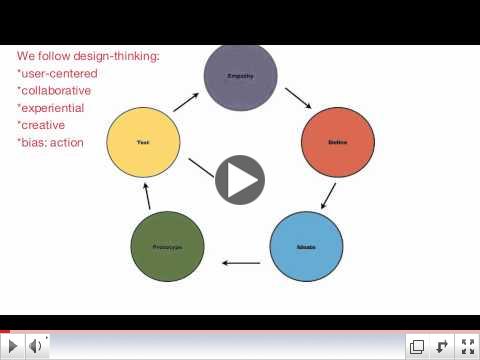 | | Strategic Design: An Introduction |
|
|
|
|
|
About Us
We are excited to meet you. We are the Santa Fe Leadership Center team, Gary Gruber, Tim McIntire and Carla Silver. Click here to read more about our careers and leadership experiences.
Please visit the Santa Fe Leadership Center to learn more about our programs and our other leadership services and opportunities.
Santa Fe Leadership Center
17 Camino Redondo, Placitas, NM 87043
|
|
|
|
|


