|
|
Santa Fe Leadership Center
Monthly Newsletter January, 2012
|
|
Greetings!
It was one of the greatest ad campaigns of all time. Black and white photographs of the most creative thinkers, change agents and innovators, with the simple and provocative phrase, "Think Different." At first glance, grammarians across America balked, wanting desperately to add "ly" - until it became clear that this slogan was not about changing the way one thinks, but how one approaches the status quo. The television ad, narrated by Richard Dryfus, included the following text: "Here's to the crazy ones. The misfits. The rebels. The troublemakers. The round pegs in the square holes. The ones who see things differently. They're not fond of rules. And they have no respect for the status quo. You can quote them, disagree with them, glorify or vilify them. About the only thing you can't do is ignore them. Because they change things. They push the human race forward. While some may see them as the crazy ones, we see genius. Because the people who are crazy enough to think they can change the world, are the ones who do." The television ad, narrated by Richard Dryfus, included the following text: "Here's to the crazy ones. The misfits. The rebels. The troublemakers. The round pegs in the square holes. The ones who see things differently. They're not fond of rules. And they have no respect for the status quo. You can quote them, disagree with them, glorify or vilify them. About the only thing you can't do is ignore them. Because they change things. They push the human race forward. While some may see them as the crazy ones, we see genius. Because the people who are crazy enough to think they can change the world, are the ones who do."Walter Isacson, in his new biography, Steve Job, writes at length about this campaign and how it captured more than just a product but rather epitomized the philosophy of the man behind Apple. Whether you love him or hate him, and regardless of the technology you use, Steve Jobs unquestionably put a "ding" in the universe and transformed the way we learn, teach and live. As school leaders, it is our job to prepare students for the future and in the 21st Century, this means preparing students to innovate, to take risks, to experience failure, to demonstrate resilience, to pursue their passions, and to always think different. Happy 2012! May your year be full of disruptive innovations and effective planned change.
Sincerely,
Carla Silver Gary Gruber Timothy McIntire
|
|
|
| |

Join us on Facebook

And Linked In
And. . .
|
The 2011-2012 Leadership Seminar Schedule 
Interim Headship: Design and Implementation in Real Time, March 3, 2012, Seattle following NAIS Teacher as Leader: Learning Effective Leadership,March 8-12, 2012 Santa Fe, NM WITH GUEST FACULTY: Stanford University Senior Scholar, Ann Lieberman Leadership Unplugged: The Inner Work of School Leaders, April 22-25, 2012, Santa Fe, NM Registration coming soon for: July:Innovative Leadership: Hillbrook School, Los Gatos, CA (registration opens February 1, 2012)
October: The Art and Experience of Leadership, American School in London
November: The Art and Experience of Leadership, Santa Fe Visit the Santa Fe Leadership Center Website for more information or contact Carla Silver with any questions. |
SFLC Advisors
"Los Sabios"
Rick Ackerly,
Consultant and Author
Peter Branch,
Head Emeritus, Georgetown Day School, Executive Director, Washington Ballet
Paula Carreiro,
Head of School, Beauvoir
Peter Cheney,
Former Executive Director of NAES
Norm Colb,
Head of School, Menlo School
Lisa Darling,
President, United World College-USA
Phil Deely,
Consultant, Philip Sedgwick Deely and Associates &
Interim Head, The Roeper School
Sandy Drew,
Senior Development Consultant
Richard Kassissieh,
IT Director, Catlin Gabel School
Tony Gerlicz,
Director, American School of Warsaw
Coreen Hester,
Head of School, American School of London
Greg Papay,
Partner, Lake Flato Architects
Mark Silver,
Head of School, Hillbrook School
David Streight
Executive Director,
Council for Spiritual and Ethical Education (CSEE)
|
|
|
|
|
|
Learn Different: A Book Review
21st Century Skills, Rethinking How Students Learn, James Bellanca and Ron Brandt, Editors
by Tony Gerlicz Is talking about, thinking about and implementing 21st century skills really thinking about education any differently than usual? If the ancient Greeks were walking the Earth and were confronted with the concept and nomenclature of "21st Century Skills", would they find it a departure from what they philosophized? What are 21st Century Skills and why the hype about them? Why now and how should they be incorporated into our schools? Are they really that different from what good teaching has always been? What would John Dewey say about them? One excellent source to help us understand how to frame the  21st Century Skills discussion is found in the book, 21st Century Skills, Rethinking How Students Learn, James Bellanca and Ron Brandt, Editors. This is a collection of articles from some of the finest thinkers today in the field of education, Linda Darling-Hammond, Howard Gardner, Rick and Becky DuFour, Doug Fisher, Alan November, Bob Pearlman, Doug Reeves, John Barell and more who address why we use this language and how we implement these skills. The authors embrace the Framework for 21st Century Learning, which was developed by the Partnership for 21st Century Skills(2009). The Partnership for 21st Century Skills is a national organization that advocates for 21st Century readiness for every student. It was formed in 2002 with founding partners the US Department of Education, AOL Time Warner Foundation, Apple, Cisco Systems, Dell, Cable in the Classroom, Microsoft, SAP and which now includes such organizations as the Knowledge Works Foundation, the NEA, Walt Disney, LEGO Education and many more. The Mission of the Partnership is: "To serve as a catalyst to position 21st century readiness at the center of US K-12 education by building collaborative partnerships among education, business, community and government leaders." A quick look at the founding partners reveals a distinctive higher-tech slant to the concern that American youth need much more than a heavily tested curriculum focusing on basic skills and factual memorization. And it is not only high-tech firms that echo the innovation refrain so often lacking in traditional educational systems. In his excellent 2002 book, The Rise of the Creative Class, Professor Richard Florida argues that it is indeed those communities that are able to harness the "creative economy" or "innovation economy" that will be winners in the future. These are places where the creative ethos is increasingly dominant. Long ago, John Dewey stated in Democracy and Education, "students will thrive in an environment where they are allowed to experience and interact with the curriculum" implying ownership and engagement, the very building blocks of innovation. Socrates believed the purpose of education was to not only know oneself, but to use knowledge acquisition to be happy and virtuous and to think deeply about thinking and abstracting. So what is so different about the current clamor and call for 21st Century Skills? "There is nothing new under the sun", a quote attributed to King Solomon and used throughout the ages. "Yes, I know he said that" replied Will Rogers, America's great humorist, "but I wasn't listening very well the first time." And so it is. Old, good ideas get re-packaged and molded for our times. The need to inculcate 21st Century Skills in today's young people reminds us of the folly of thinking that high stakes testing will restore America's prominence on the world's educational stage. It reminds us how easily our profession falls into the either/or trap. We think it is either basic skills or problem solving, critical thinking, creativity, innovation, etc. It is either paper, pencil tests or performance assessments. Why it is so difficult to think both-and, remains an enigma of human nature. Bellanca and Brandt have done a terrific job of compiling excellent writing and even better thinking, of which any one chapter stands out as exemplary. Here we read Gardner's Five Minds of the Future whose articulated skills dovetail so wonderfully well with Daniel Pink's seminal Whole New Mind and Drive. Here we read Bob Pearlman write about designing new learning environments to support 21st Century skills. Here we read Alan November visiting incredibly resource rich schools who are clueless about using those resources to provide the breakthroughs in pedagogy that he advocates. John Barell, who works with International Baccalaureate Schools and has had a long career fostering problem-based learning, write compellingly about how PBL is ideal in developing these skills. The beauty of the Framework for 21st Century Skills, and of this compendium, is the lack of dogma and the multiple perspectives the authors take to inculcating these skills for the future. We know information and media literacy are now basic skills, we know flexibility, adaptability, initiative, creativity, communication are moving from the fringes of learning to occupy the central core of knowledge. We know competencies such as problem finding then problem solving, collaborative skills, cross-cultural skills, multilingualism, and the ability to discriminate information are rapidly becoming basic skills. And we know it is not an either / or proposition but rather all - and. And as Young Zhao (2009) points out, Asian competitors are already moving far faster in these dimensions that the United States. They have learned the value of marrying traditional rigor with 21st Century competencies. There is an inherent disconnect between our schools and the world of work. I encourage all educators to do the following exercise with the parents in their schools. When all the parents are assembled together, ask them to list on an index card placed on their chair, the skills they use daily to be successful in their work. When I did this exercise recently at the American School of Warsaw, whose parents are 95% of the professional class including ambassadors, financiers, CEOs, line workers, and entrepreneurs in the global economy, then looked at the compilation of skills identified, then asked the faculty where and how often we teach love of learning, problem finding, ability to give and take, listening, original thinking, conflict resolution, perseverance, initiative, etc. The world of work already knows these are success skills for the future. How we identify, develop, deliver and measure the acquisition of these skills will be the fundamental challenge of American education moving forward. This book will go a long way to helping students, teachers, administrators, legislators, parents, universities and employers of all stripes understanding the nomenclature and the concept, why these skills are in such high demand and how we go about institutionalizing them in our educational systems. Yet there is one set of skills consistently lacking in this compilation as well as other analyses involved in the discussion of 21st Century skills and that is the ability to be well grounded in who one is, to find happiness in life, to find joy in improving the lot of humankind, to use our unique talents and abilities to improve the lot of humankind. We all want to work with people who are centered, at peace with themselves and who continuously learn as well as are competent. Criticism aside, this is must reading for anyone interested in and involved in education's continual evolution.
|
Work Different: Productivity in the Age of Email and Social Media
by Carla Silver
One of the greatest challenges of working in the 21st century is, and will continue to be, staying focused in order to be truly productive. And when I say productive, I mean getting tasks accomplished, solving problems, executing, and yes, producing something of value. But I also mean making authentic connections with others, practicing mindfulness, and living a rich and balanced life.
We have all read the articles about how we are creating a new generation of multi-taskering millenials who can, during the course of a important conference call, answer their emails, update their Facebook status, tweet about the article they are reading, and cook a gourmet five-course meal one-handed.
I simply don't believe it.
I might not be a millennial, but I have always been an extreme multi-tasker, aided by the latest technology of the day. Even as teenager, the phone, computer and television were almost always simultaneously employed during the homework hours. "One appliance at a time," my mother would holler. As an adult, I embrace the social media movement whole-heartedly. While Facebook is still my social media of choice, I Tweet and Link-in on a daily basis. Google + and Skype are always near at hand, taking the beloved but rather primitive phone calls of my teen years to a more personal level. And yes, I do cook a meal every night for my family, usually while playing Words with Friends and watching a TED talk.
But as I neared the end of 2011, I felt myself dwindling in all areas of productivity and had a serious Koyannisquatsi
 | | Koyannisquatsi: How I Worked in 2011 |
moment. Responding to Facebook posts, Linked-in messages, tweets, texts, and what I would call, ongoing email exchanges became all I did, and I felt myself becoming incapable of getting the basic tasks accomplished, much less solve a complex problem or tackle a major project. I felt exhausted all the time, had trouble sleeping, and became increasingly impatient. I was not enjoying time with my children because I was completely unable to detach from work left undone at the end of the day. This was truly "life out of balance."
One of my commitments to myself and to my family and colleagues this year is to "think different" about the way I work, and to redesign a more disciplined approach to productivity. If we are going to teach our students one skill for the 21st century, it has to be about clearing through the clutter of cyberspace slowing down our pace in order to focus and truly be productive - in the fullest definition of the word. As teachers and leaders in our school communities, we need to model this behavior. This year, I am looking very closely at the way I spend my time during the work day, to make priorities, and to draw very clear boundaries for myself and others. Here are just a few changes I have made since January 1.
1)Tackling Email:
Thanks to one of our seminar fellows, Andrew Davis (Middle School Head, Crystal Springs Uplands School), I have become an "Inbox Zero" convert. If you want to know more about Inbox Zero, watch video of Merlin Mann presenting to
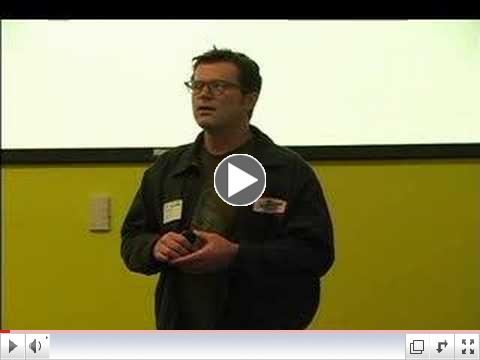 | | Merlin Mann Explains Inbox Zero |
Google employees. I did and have wasted no time getting on board. This might have been one of the best investments of one hour I have made in years. Since January 1, I have ended each day with zero emails in my inbox and I am no longer using my email as a to-do list. More importantly, I am working hours at a time with my email turned off and carving out time to meet with people face to face or on the phone or tackle big projects uninterrupted, to write, or think creatively about new projects. I check every hour or two and then take the necessary time to address anything essential or add less urgent tasks to the to-do list.
Sanebox has also helped to manage email clutter. Eric Niles (Head of School at Athenian School) introduced me to this online tool which helps to train your emails to go into specific folders in more user friendly way that smart mailboxes and creating email rules. You can train emails to be automatically sent to your inbox, to be saved for later or to be archived or deleted.
2) Time Management:
The second thing I have done is to review my calendar and my to-do list to see how they align. Inspired by the Getting Things Done (GTD) philosophy of David Allen, I design my day based on the tasks that need to be accomplished within the open time on my calendar. The tasks that are relatively easy to take off the list get scheduled to be done in the shorter available intervals of 15 and 30 minutes in between meetings and phone calls, while I clear hour and two hour blocks of time for the projects that need it. And I commit to those large blocks of time except in rare cases.
I am learning to be protective of the "unscheduled" time on my calendar because it really isn't "free" time, it is work time. Setting these boundaries also means holding others to starting and finishing on time. A late phone call or meeting can start to back everything up, and sometimes, when there is big block open time on one side of a late call, it is tempting to let the call creep into that time, but is that productive? Of course each incident requires a judgement call, but if the time set aside for important projects gets taken away, will the project get completed? Will it be done with quality and thoughtfully? This change in boundaries might take some training of others to get to meetings on time and to end them on time too, but as Merlin Mann points out in his Inbox Zero talk, aren't we always renegotiating with our colleagues (and even our families) about how we work and live together and share the same space. Just because we have been operating with certain behaviors doesn't mean that they are the best practices or that they can't change to be better and more efficient.
And if you don't have any "unscheduled" time on your calendar, it is your responsibility to make that time. Gary Gruber as a Head of School made a regular practice of blocking off time for thinking and writing and being creative and productive. When a meeting or phone call began to creep into that time, he would say, "Excuse me, but I have another appointment." It didn't matter that the appointment was with himself and the projects he needed to accomplish. This is not selfish behavior, this is productive behavior.
3) Self Discipline:
So what about all of my beloved social media applications? Has it meant breaking up with Twitter and foregoing Facebook? Never! But is has required a new level of self-discipline around engaging in social media. I personally find Twitter to be a terrific source of articles and videos on education, innovation, and a rich opportunity for professional networking. So I start each work morning with 15 minutes on Twitter or Facebook, sometimes finding an inspiring or provocative article to carry me through my morning. But then I hit the ground running.
Let's face it. Becoming more productive is entirely about self-discipline. There is no one perfect way or methodology to getting things done, accomplishing tasks or finding balance. Franklin Covey, GTD, Inbox Zero, 4 Hour Work-Week, these are all the same at the most basic level because they require self discipline. It isn't about working harder, but rather working smarter and working different.
The other day I asked Jonathan Martin, Head of St. Gregory's and prolific blogger, how he had time to write so much. His blog is a constant source of fascinating articles about education, technology and innovation. I know the HOS job is a time consuming one, and Jonathan has a family with young children. Where did he find the time? He responded by saying that it was a bit like working out and getting in shape. The more he did it, the easier it was. It requires discipline to stick with it, and he has to carve time, but then at a certain point it becomes a healthy habit and a necessary routine.
We would love to know how you address productivity in your work. Comment here:
|
 Lead Different: Santa Fe Leadership Center Learning Opportunites Lead Different: Santa Fe Leadership Center Learning Opportunites
If you want to think differently about your leadership in 2012, then join the SFLC for a professional development opportunity.
You owe it to yourself to take the time away from the busyness of school and refocus on your personal and professional priorities, your core values, and examine the "whys" of your experience as an educational leader. The SFLC Leadership Seminars provide school leaders with incomparable professional growth experiences. Visit www.santafelead.org for a full list of our 2011-2012 school year seminars. At no time in school leadership are opportunity and danger so significant as the term of an interim head. Because the occasion for an interim is yoked with transition, change, and often grieving, it takes skill, foresight, and failure-proof performance in order to cultivate a community of hope for what lies ahead.
Who should attend? - Any head or chief school leader who would be willing to take on an interim role now or in the future
- School leaders who have served as Interims Trustees, Board Chairs, or Search Chairs who will appoint an Interim
- Other school leaders who may be called upon to serve as Interim at the division, department, or group level internally in the school
Please join us for three days of conversation, reflection, and community during which we will explore the transformational possibilities of teacher leadership in our schools. We will discuss the many ways that teacher leadership can take shape in a school - from instructional leadership to department and team leadership to research leadership, among others. Our work together will range from reflective exploration of who we are and want to become as educational leaders to the practical, daily challenges of working as passionate leaders in our schools. Who should attend?
Teachers in all stages of their careers. Whether you are a young teacher energized to lead and create change or an experienced teacher who has worn many leadership hats throughout your career - including department chairs, program directors, class deans, mentor teachers and more. In your role as a school leader, it is critical to develop the inner resources that allow you to manage the many external challenges and demands of your job. On-going personal reflection, open dialogue with like-minded and trusted colleagues, and intentional time away from the busy-ness of school-life are essential practices that reinvigorate and sustain your passion and joy for your work. This seminar, held in the ideal setting of Santa Fe, NM, explores the inner work of the school leader and provides participants time and space to examine and recommit to the core values that shape their leadership practices. Participants will write, talk, reflect, and creatively approach challenges individually and in groups. Time will also be provided for exploring Santa Fe and enjoying the landscape for both reflection and play. Who should attend? School leaders at all points in their careers who are looking to deepen their understanding of their personal leadership. Innovative Leadership, July 15-19, Los Gatos, CA (Registration Opens February 1, 2012) In the 21st Century, schools are being challenged to change the status quo model of education and redesign school. The impact of technology, globalization, brain research and the changing expectations and skills required to succeed have transformed the way we know students learn and the way schools should be designed. To meet this challenge, school leaders must adapt ahead of the curve. They must be innovative. Thinking innovatively requires changing behaviors. According to Clayton Christensen Jeff Dyer and Hal Gregersen in their book The Innovator's DNA, "one's ability to generate innovative ideas is not merely a function of the mind, but also a function of behaviors. This is good news for us all because it means that if we change our behaviors we can improve our creative impact." This highly interactive seminar is designed for school leaders who are striving to bring innovative practices to their schools and who want to foster a culture of innovation and creativity in their communities. What is innovation? What roles do creativity, entrepreneurship, and invention play innovation? Why is innovation important to school leaders? How can we both develop as innovative leaders and foster a culture of innovation at our schools? Who should attend? Leaders at all points in their careers and serving in all different capacities are encourage to attend. Enrollment is limited to 40 school leaders. |
Spread the Word About Your Leadership Positions
The SFLC is connected to a broad network of school leaders,  many of whom are qualified candidates for leadership positions or who are tremendous resources for prospective candidates. Through our seminar program, we work with talented, ambitious school leaders, and we often know of individuals who are looking to take a next step or who might pursue the right opportunity. many of whom are qualified candidates for leadership positions or who are tremendous resources for prospective candidates. Through our seminar program, we work with talented, ambitious school leaders, and we often know of individuals who are looking to take a next step or who might pursue the right opportunity.
Positions that a school might list here include:
Head of School
Assistant Head
Division Director
Dean of Students, Academic Dean, Dean of Studies
Director of Admissions
Director of Development
CFO/Business Manager
Program Directors including: Technology, Athletic, Multicultural, Outreach
High School/College Counselor
Department Chairs/Grade Level Coordinators
Click here to learn more or post a job. All new positions listed within in the current month will be featured in the Monthly Newsletter (see sidebar). |
|
|
|
|
About Us
We are excited to meet you. We are the Santa Fe Leadership Center team, Gary Gruber, Tim McIntire and Carla Silver. Click here to read more about our careers and leadership experiences.
Please visit the Santa Fe Leadership Center to learn more about our programs and our other leadership services and opportunities.
Santa Fe Leadership Center
17 Camino Redondo, Placitas, NM 87043
|
|
|
|
|


