|
Aloha!

This week's issue presents Islam in East Asia which consists of China/Taiwan, Japan, Korea and Tibet. By current estimates, there are about 20 million Muslims in China/Taiwan, around 144,000 in South Korea, about 100,000 in Japan, and some 25,000 in Tibet.
 | | Islam in East Asia |
Journey with us for some very interesting glimpses of Muslim societies in this region. Plus we bring you our regular feature of online resources, call for papers, employment opportunities, fellowships, events and other announcements.
Mahalo,
Program Coordinators
Muslim Societies in Asia and the Pacific
|
Islam in East Asia South Korea  | | Seoul Central Mosque |
In South Korea, the Muslim population has been steadily increasing since the introduction of the Islamic faith shortly after the Korean War. The Muslim community (both Korean and foreign born) is centered around Seoul. The Seoul Central mosque was the first large 20th-century mosque built in 1976 using funds from the Malaysian Islamic Mission and other Islamic countries. Most Muslims living in Korea think that the public's understanding about Islam improved a lot after the September 11 (911) attacks. Since then so many Koreans have visited the Seoul Central mosque to satisfy their curiosity about Islam (Sohn). Every Friday, about 800 Muslims gather together to pray, most of whom are foreign Muslims working as diplomats, businessmen, migrant workers or students. It is regular time for Muslims to gather for a weekly meeting. It is perceived that the current growth of Islam in Korea has become an opportunity for people to understand this religion. Given a 50-year history of Islam in Korea, it is estimated that there are some 140,000 Muslims living there, and about 70 to 80 percent are foreigners. More info here. Japan  | | Islam in Japan |
Islam was thought to have first come to Japan in the early 1900s when Muslim Tatars were escaping Russian expansionism. The Muslim community in Japan has a history of over 100 years, although some sources say its much earlier. In 1909 it was documented by historian Caeser E. Farah that Abdul-Rashid Ibrahim was the first Muslim who successfully converted the first ethnic Japanese, and in 1935 Kobe Mosque - Japan's first Islamic building - was constructed. Many of the ethnic Japanese during the economic boom of the 1980s converted when large swathes of immigrants from Asia came and integrated with local population.
Islam remains a minority religion in Japan, and there is no evidence as to whether or not Islam is growing. Conversion is more prominent among young ethnic Japanese married women, as documented by the Japan Times as early as the 1990s. Keiko Sakurai (2003) had estimated the number of ethnic Japanese Muslims in Japan at 63,552, and around 70,000 - 100,000 foreign Muslims residing in the country. Penn (2006) states that 90% of Muslims are foreign and about 10% are ethnic, but the actual figure is unknown and this is just a mere estimate because the Japanese government does not take religion into account as part of the demographic concern under religious freedom. More info here.
References:
- Michael Penn, "Islam in Japan: Adversity and Diversity," Harvard Asia Quarterly, Vol. 10, No. 1, Winter 2006.
- Keiko Sakurai, Nihon no Musurimu Shakai (Japan's Muslim Society), Chikuma Shobo, 2003.
China

Since religious freedom was declared in 1978, the Chinese Muslims have optimized opportunities to express their faith. There are now some 28,000 mosques in the entire People's Republic of China, with 12,000 in the province of Xinjiang. In addition, there is a large number of imams available to lead the Muslim community (in Xinjiang alone there are over 2,800). There has been an upsurge in Islamic expression in China, and many nationwide Islamic associations have been organized to coordinate inter-ethnic activities among Muslims. Today, the Muslims of China have grown to some 20 million, according to unofficial counts. (The actual government census of 1982, have estimated about 15 million.) These Muslims represent ten distinct ethnic groups. The largest are the Chinese Hui, who comprise over half of China's Muslim population and are scattered throughout all of China. There is also a high concentration of Hui in the province of Ningsha in the north. After the Hui, the remainder of the Muslim population belong to Turkic language groups and are racially Turks (except for the Mongol Salars and Aryan Tajiks). The latter is further divided between the Uygurs, Uzbeks, Kazakhs, Kirgiz, Tatars and Dongshiang. Most of the Turkic Muslims are found in the western provinces of Kansu and Xinjiang. The largest of these Muslim groups are the Uygurs. More info here. 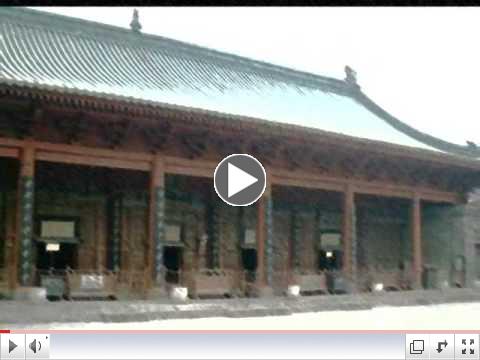 | | Islam in China |
|
|
Events in Honolulu

Islam Day at UH
23 September 2011
Campus Center Ballroom, UH Manoa
more info

Sufi Soul: The Mystic Music of Islam
For hundreds of millions of Sufi followers worldwide, music is at the heart of their tradition and a way to get closer to God. From the Whirling Dervishes of Turkey to the qawwali music of Pakistan, Sufism has produced some of the world's most spectacular music celebrated by Muslims and non-Muslims alike. Traveling through Turkey, Pakistan, Morocco and Syria, TV documentary maker and music journalist Simon Broughton traces the shared roots of Christianity and Islam in the Middle East. He discovers Sufism to be a peaceful, tolerant, and pluralistic bastion against fundamentalism, and features the brilliance and diversity of Sufi music through performances by various Sufi musical artists.
 | | Sufi Soul: The Mystic Music Of Islam |
Showtimes:
23 September 2011 / 1:00 & 7:30 PM
Location:
Doris Duke Theatre, Honolulu Academy of Arts
more info
Illustrated Talk:
S. Ann Dunham:
An American Soul Forged
In Indonesia
6 November, 2011 2-3pm
East West Center Gallery, Burns Hall
Honolulu, Hawaii
more info Ka Leo Arts Festival 20 October 2011 4-10pm
McCarthy Mall, UH Manoa
|
|
Employment Opportunities
Academic Assistant/Full Professor (tenure-track)
Department of Sociology
Stanford University, California, USA
Closing date: 1 November 2011
Lecturer Contemporary Indian History and Politics Australian National University
Sydney, Australia Closing date: 3 October 2011 Teaching Fellow Chinese Studies (including Linguistics, Literature, History, Cultural Studies) Australian National University
Sydney, Australia Closing date: 31 October 2011
Associate Director East Asian Studies Center Indiana University - Bloomington
Indiana, USA Closing date: 19 December 2011 |
|
Conferences
7th Annual Southeast Asian Cinemas
19 - 22 June 2012 Singapore
Abstract deadline: 30 November 2011
Hawaii Emerging Leaders Program
Model APEC Conference
(Climate Change in APEC Countries)
4 November 2011
Hawaii State Capitol
Email mchibana@hawaii.edu for info
11th Annual International Graduate Student Conference on the Asia Pacific Region
16 - 18 February 2012
Honolulu, Hawaii, USA
Abstract deadline: 7 October 2011
"On Cosmopolitanism and Southeast Asia: imaginings, mediation and movement"
Island Southeast Asia Centre
School of Culture, Language and History
Australian National University
Abstract deadline: 30 September 2011
2nd International Conference on Islamic Education 2011 (ICIEd2011)
12 to 14 December 2011
Bangi-Putrajaya, Malaysia
Full Paper Submission: 5 October 2011 Islamic Tourism Conference & Travel Mart
13 - 14 October 2011
Kuala Lumpur, Malaysia
International Conference on Imam Shafi'i: Reformation of Islamic Thought
1 - 2 November 2011
Bandar Sri Begawan, Brunei Darussalam
2nd International Conference On Islam and Higher Education
14 -15 November 2011
Pahang, Malaysia
Law and Religious Pluralism in
Contemporary Asia
17 - 18 November 2011
National University of Singapore, Singapore
|
|
Grants/Fellowships
Indonesian Writing Contest Theme: Its Beauty, Diversity and Challenges Administered by the Embassy of Indonesia and Center for Southeast Asian Studies, University of Michigan Deadline: 31 October 2011
Prize: One week vacation in Indonesia Truman-Kaufmann Fellowships Scholarships on economic development, revitalization and modernization in areas of the globe shattered by war and/or natural disasters. Deadline: 1 November 2011 Postdoctoral Fellowship for Transregional Research: Inter-Asian Contexts and Connections Social Science Research Council
Preliminary proposal deadline: 21 October 2011 PhD Scholarship in History
University of Canterbury, New Zealand
Deadline: 1 November 2011
Post doctoral fellowship in East Asian Studies
Princeton Society of Fellows
Princeton University
Deadline: 30 September 2011
Ford Foundation Pre-Doctororal Fellowships
Deadline: 14 November 2011
|
|






