Dear Subscriber;
|
Along with an article on our newly patent pending leadless device rework process as well as an update on the solder "rinsing" technique, we have included a fun reference on building a "blender defender". The building blocks of this wacky device can be used to not only deter pets from going where you do not want them to but it can rid of "varmits" and unwanted visitors from certain areas. Check this out!
We were pleased to recently host 15+ engineers during our APEX teaching seminar on reballing.
We are also proud that BEST staff has won for the 4th year in a row the Circuits Assembly "Service Excellence" award.

As we have said now for 100+ years-GO CUBS!

Bob Wettermann
President, BEST Inc
|
New Method for Reworking QFNs and Leadless Devices

"Bumped" Leadless Device
A stay-in-place stencil bump QFN rework process developed by BEST called "StencilMate" eliminates many of
the concerns and drawbacks of other methods. This stay-in-place
bump method uses polyimide stencils, one temporary stencil to
match the component and in some cases to match the substrate. Stencils are placed
over the land patterns of the device and or the PCB,
controlling the solder print area. Component prep comprises cleaning
pads of any residues with solder wick and isopropyl alcohol. A
precision polyimide stencil is aligned and applied to the bottom of the
component. Solder paste is applied with a manual squeegee.
The component is then reflowed according to the paste and component
manufacturer's profile. Post-reflow, the polyimide stencil is removed
from the component, leaving solder bumps instead of paste deposits or
flat pads. Align and place the semi-permanent
polyimide stencil to the substrate. Roll the solder paste through the
apertures of the stencil and wipe any excess paste from the stencil
surface with a lint-free cloth. Manually place the QFN into the
solder-pasted apertures on the substrate stencil. As the solder bumps
on the QFN align with the apertures, you will be able
to "feel" the solder bumps on the device slide into the wells of the
stencil apertures. Reflow the component according to the appropriate
profile. After reflow, clean and inspect the assembly as usual.
More on this new process here.
|
|
"Rinsing" of Lead from Lead Free Assembly
|

Are tight controls necessary for soldering iron tips when switcing between leaded and non-leaded solder?
BEST has developed a "rinsing" technique for eliminating lead from a soldering
iron tip. Results of independent laboratories have shown that this technique is
effective in allowing you to "switch" solder materials by using this "rinse"
method on the same soldering iron and tip without a risk of lead contamination
of the solder joint. This technique, when used properly, will allow you to
switch alloys without switching soldering tips.
See the study in support of this technique.
A video on the technique is found here.
|
|
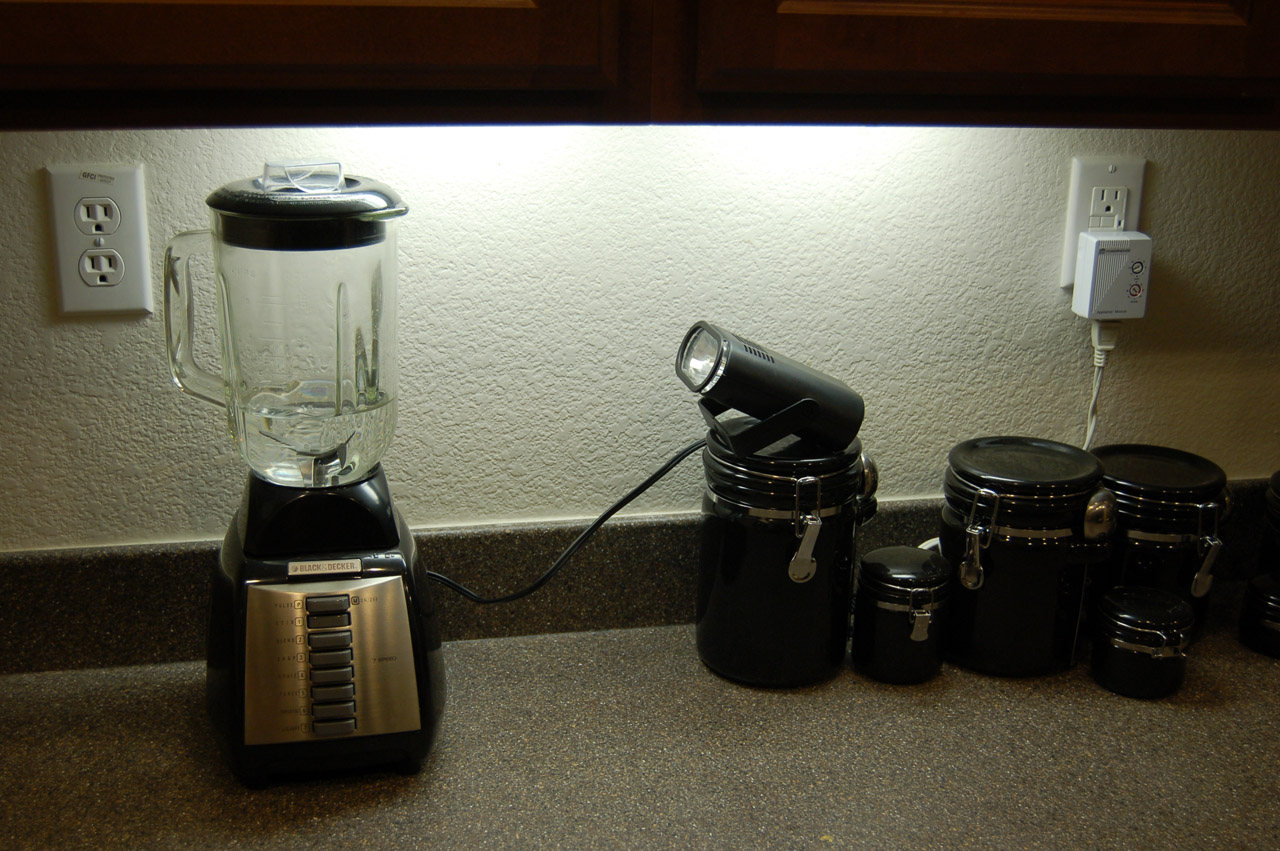
Blender Defender for that Annoying Pet/Person
Have a cat or person that won't stay off your counters? This guy finally got fed up with it
enough to do something about it: He scares the "SA%#@#%" out of the pet/intruder with a motion-detecting blender
(while recording the results for his own amusement).
If you were to walk in his house, you may see something you don't normally see in a kitchen. On the wall,
to the left of his sink is a webcam . It is plugged into the network jack and screwed into
the wall plate cover, supporting itself.
The camera is being monitored for motion by his computer remotely.
All the details here.
|







 BEST INDUSTRY FORUMS
