Congressional
Climate Bill Tracking
|
|
Video Of The Day
|
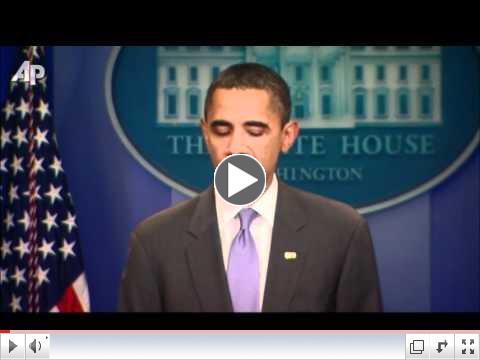 | |
Obama, Congress Reach a Debt Deal
|
|
|
Greetings!
Please enjoy today's issue of the Congressional Climate newsletter, brought to you by Lobbyit.com!
|
|
Today's Hill Action:
THE SENATE:
The Senate will convene at 10:30 a.m. to convene and resume consideration of the motion to concur in the House message to accompany S.627, the legislative vehicle for the debt limit increase.
SENATE COMMITTEES:
No meetings scheduled for today.
The House will meet at a time TBA.
HOUSE COMMITTEES:
House Judiciary (10:00 a.m.): Hearing to conduct markup of pending legislation. 2141 RHOB.
|
| Obama, lawmakers reach deal

President Obama and congressional leaders announced an agreement Sunday
night to raise the debt limit by up to $2.4 trillion, ending a long, partisan stalemate that threatened to send the nation into default.
The announcement caps a weekend of frantic negotiations as both parties worked to beat Tuesday's deadline for a default.
The bipartisan deal is not final until rank-and-file members from both parties give it a green light, but Republican leaders expressed confidence their side would approve it.
The final holdout was House Speaker John Boehner (R-Ohio), who tried on Saturday afternoon to walk back cuts slated for defense spending, according to several congressional sources.
A senior Democrat aide said the deal finally came together Sunday when Boehner "blinked" and gave up his final demands to exempt the Pentagon from cuts next year.
Obama, in short, televised remarks late Sunday evening, announced that Republican and Democratic leaders had signed off on the deal.
"The leaders of both parties in both chambers have reached an agreement that will reduce the deficit and avoid default, a default that would have had a devastating effect on our economy," he said.
The president announced the first part of the agreement would cut nearly $1 trillion in spending over the next 10 years, including many of the spending cuts a group led by Vice President Biden put together earlier in the year.
Obama said annual domestic discretionary spending would reach its lowest level since Dwight Eisenhower was president. He said the cuts are phased in over time to minimize their impact on the fragile economy.
The deal would set up a select 12-member bicameral committee to put together another $1.5 trillion deficit-reduction package that must be reported to Congress by Thanksgiving and which Congress must approve by Christmas.
Committee deadlock or congressional failure to act on the recommendations would trigger $1.2 trillion, across-the-board spending cuts divided evenly between defense and non-defense spending.
The automatic spending cuts would apply to Medicare but not Social Security, Medicaid, veterans or civil and military pay, according to a summary provided by Boehner's office.
A congressional aide familiar with the deal said the Medicare cuts would not affect beneficiaries. Healthcare providers and insurance companies, however, would see a reduction in payments. Cuts to Medicare would be limited to 2 percent of the program's cost, according to a Democratic fact sheet.
Total discretionary spending in fiscal year 2012 and 2013 would be reduced by $7 billion and $3 billion, respectively, compared to current levels, according to a Democratic summary. National security cuts would account for half of those savings.
The deal would immediately raise the debt ceiling by $400 billion, giving the Treasury Department enough money to fund the nation's obligations through September.
A second debt-limit increase of $500 billion would be subject to resolutions of disapproval in Congress, but Obama could veto these measures, which would then require two-thirds majorities in both the Senate and House to override him.
If Congress were to enact the special committee's $1.5 trillion deficit-reduction package or if Congress were to pass a balanced-budget amendment, Obama would be authorized to raise the debt limit by another $1.5 trillion.
If the committee failed to act, Obama would be authorized to request only $1.2 trillion increase in the debt limit, according to Boehner's summary. That amount would have to be matched by automatic across-the-board cuts. The triggered cuts would apply to mandatory and discretionary programs over fiscal 2013 through 2021.
The deal would require both chambers of Congress to vote on a balanced-budget amendment between Oct. 1 and year's end.
Boehner urged his House GOP colleagues to support the deal in a conference call Sunday evening. He said he would not give final approval until they endorsed it.
"I'm gonna tell you, this has been a long battle - we've fought valiantly - and frankly we've done it by listening to the American people," Boehner said on the call, according to an excerpt of the call released by his office.
"And as a result, our framework is now on the table that will end this crisis in a manner that meets our principles of smaller government," he said.
"Now listen, this isn't the greatest deal in the world. But it shows how much we've changed the terms of the debate in this town," he added.
Boehner apologized to colleagues for the short time to review the plan, likely violating the House Republican's rule of giving lawmakers three days to inspect legislation after it has been filed and before voting on it.
"My hope would be to file it and have it on the floor as soon as possible. I realize that's not ideal, and I apologize for it. But after I go through it, you'll realize it's pretty much the framework we've been operating in," Boehner said on the call.
Senate Majority Leader Harry Reid (D-Nev.) and Republican Leader Mitch McConnell (R-Ky.) praised the agreement on the Senate floor and said the threat of a default had been averted.
"I am relieved to say that leaders from both parties have come together for the sake of our economy to reach historic, bipartisan compromise that ends this dangerous standoff," Reid said.
McConnell noted: "At this point I think I can say with a high degree of confidence that there is now a framework to review that will ensure significant cuts in Washington spending,"
"And we can assure the American people tonight that the United States of America will not for the first time in our history default on its obligations."
Reid and McConnell said they will withhold final consent until their rank-and-file colleagues also have a chance to review the deal.
Senate Democrats and Republicans have both scheduled caucus meetings for 11 a.m. Monday to discuss the proposal.
House Democratic Leader Nancy Pelosi (Calif.) did not endorse the deal in a statement released after Obama's speech but said she would review the agreement with her caucus Monday.
Of the top four Democratic and Republican leaders in Congress, she seemed the least enthusiastic about the pending agreement.
"I have to meet with my caucus tomorrow to see how they wish to proceed," Pelosi told reporters. "We all may not be able to support it, or none of us may be able to support it.
But we'll wait and see."
House liberals have already bashed the deal.
Rep. Raul Grijalva (D-Ariz.), co-chairman of the Congressional Progressive Caucus, said in a statement released Sunday that liberal lawmakers and working families "were thrown under the bus" by a deal that "trades peoples' [sic] livelihoods for the votes of a few unappeasable right-wing radicals."
He said the result is as bad for the Democratic Party as it is for the country.
Members of the Senate Democratic caucus also voiced misgivings.
Sen. Bernie Sanders (Vt.), an independent who caucuses with Democrats, voted earlier in the day to block legislation crafted by Reid that included many of the same spending cuts as Sunday night's bipartisan deal.
"I cannot support legislation like the Reid proposal which balances the budget on the backs of struggling Americans while not requiring one penny of sacrifice from the wealthiest people in our country. That is not only grotesquely immoral, it is bad economic policy," Sanders said.
Sen. Joe Lieberman (Conn.), another Independent in the Democratic caucus, balked at the prospect of steep defense cuts if the special committee set up by the deal deadlocks over future recommendations to reduce the deficit.
Lieberman's spokesman, Marshall Wittmann, said his boss "strongly believes that protecting the security of the American people is the first responsibility of American government, and that means that any cuts to defense must be fair, limited, and mindful of the fact that we live in a very dangerous world."
Some Wall Street analysts say news of the deal may reverse the stock market slide of last week, which caused the Dow Jones industrial average to drop more than 500 points.
"If Friday's trading is a lesson, bonds will actually sell off a bit and the stock market may break its losing streak. All of this is occurring, however, amidst some very troubling macroeconomic fundamentals so any rally in stocks, and sell off in Treasuries, will be muted and likely short lived," said Daniel Alpert, managing partner of Westwood Capital LLC. |
|
New Map Sets Off California Scramble

The California Citizens Redistricting Commission approved new district lines Friday, setting off what is expected to be more competitive Congressional races than the state has seen in decades.
The final draft of the new Congressional map shuffles the delegation's lineup by moving incumbents into new districts and, in at least three cases, forcing Members to run against each other.
Republicans feel the map has improved for them since the first draft was released June 10, but Democrats stand to pick up two to four seats under the new map, with some experienced Democratic analysts predicting that gains of five to six seats are possible.
The 14-member commission approved the final plan Friday but must vote again Aug. 15 after a two-week public review period. Although the plan still awaits final adoption and there are likely legal challenges that could complicate the process, state legislators and other elected officials have already announced Congressional bids and Members are already staking out their turf.
According to a newsletter from Democratic redistricting expert Paul Mitchell, who breaks down the data on his Redistricting Partners website, "A preliminary look at the data ... will show some fun potential pairings and political drama."
Rep. Janice Hahn (D), who won a special election just this month, was drawn into the new Compton-based 44th district that Rep. Laura Richardson (D) has said she will run in. Richardson lives in the neighboring Long Beach-based new 47th district, but her current district was split between the two, and she's chosen to run in the one with higher African-American and Democratic voting age populations.
A big chunk of Hahn's current district was drawn into the district of 19-term Rep. Henry Waxman (D), whose Westside Los Angeles district was stretched to the south along the coast to pick up the Beach Cities and the Palos Verdes Peninsula.
To the east in Orange County, Republican Reps. Ed Royce and Gary Miller were drawn into the 39th district, and GOP strategists expect the two to face off next year. Royce has more money - $2.8 million in the bank to Miller's $1 million - and insiders said he is the early favorite.
In northern LA, Democratic Reps. Howard Berman and Brad Sherman were drawn into the same San Fernando Valley district. This was expected, though Democrats had hoped to avoid a Berman-Sherman showdown and neither has indicated he will back down. The other valley district is heavily Latino, and Los Angeles City Councilman Tony Cárdenas (D) has already announced he is running there.
Those incumbent battles will highlight the new California Congressional landscape, but there is plenty more movement happening among the state's 53 districts. Rep. David Dreier (R) has been drawn into a heavily Democratic district, while both parties have their fair share of competitive districts to defend.
How big of an advantage Democrats receive from the new map will depend on the outcome of races that already look to be tossups based on past presidential performance. The open 21st district in the Central Valley, where Rep. Jim Costa (D) could run, is one example. Costa resides in the redrawn 16th district with Reps. Dennis Cardoza (D) and freshman Rep. Jeff Denham (R), though Denham will likely run to the north in the open 10th district, which leans Republican.
Cardoza's district could be competitive as well. However, if he decides to retire, as has been rumored, Costa would likely choose to run in the 16th district.
Other incumbents facing potentially competitive elections include Rep. John Garamendi (D) in the Sacramento-area 3rd district, Rep. Brian Bilbray (R) in the open 52nd district, Rep. Elton Gallegly (R) in the open 26th district, Rep. Joe Baca (D) in the 31st district and Rep. Lois Capps (D) in the coastal 24th district, which now includes the wine country featured in the movie "Sideways." Capps is expected to face a tough challenge against former Lt. Gov. Abel Maldonado (R).
Several Members were drawn into districts in which they are not expected to run. Rep. Jerry Lewis (R) was drawn into Baca's district but could run in the open 8th district, which heavily favors Republicans. After being drawn into the 15th district with Rep. Pete Stark (D), Rep. Jerry McNerney (D) has said he will run in the open San Joaquin Valley-based 9th district, where a Republican could give him a tough race.
"After spending so much time in San Joaquin County, it truly is my home," McNerney said in a statement. "That's why I'm planning to move my residence to San Joaquin County and put down even more roots in this community."
Republican Reps. Dan Lungren and Tom McClintock were both drawn into the new Sacramento-area 7th district, but McClintock told Roll Call on Friday that he will run in the 4th district, which has a strong Republican lean and includes most of his old district. Lungren's district is competitive, and he already has at least one Democratic challenger in Ami Bera, who took on Lungren last year as well.
GOP Reps. Buck McKeon and Gallegly were drawn into the 25th district, but Gallegly can run to the west in the open 26th district, a moderate district that could be competitive.
Capping off the puzzle that is the new Congressional map is the situation with Democratic Reps. Linda Sánchez and Grace Napolitano. Both were drawn into the 38th district, so one is expected to move to a neighboring district. But which one? Napolitano could run in Dreier's 32nd district, or Sanchez could run in the Long Beach-based 47th district.
|

On "Fox News
Sunday,"
Weekly
Standard
editor
Bill Kristol reiterated his
support for a Paul Ryan-Marco Rubio presidential dream ticket.
"I think it should be Ryan-Rubio, but if Paul Ryan is a little hesitant to seize the moment, I think Marco Rubio has to do it and make Paul Ryan his vice president," Kristol said. "But Ryan-Rubio or Rubio-Ryan would be a very strong ticket. These are two pretty spectacular speeches given on the floor of the House Thursday night, then on the floor of the Senate by Rubio yesterday."
While such a ticket between the House Budget chairman and the freshman Florida senator seems unlikely at this stage in the electoral game, Kristol explained how the drama over raising the debt ceiling has made the ticket more plausible.
"Yes, because the presidential candidates - Michele Bachmann is against any deal, Jon Huntsman's for any deal," he said. "The rest of them have been ducking or as we say in the Obama era, 'Leading from behind.' I think Republican primary voters would welcome a Ryan-Rubio ticket."
Later in the show's online segment, Kristol continued to make his case for the Ryan-Rubio ticket by citing recent history.
"A freshman senator named Barack Obama, if I recall, ran against Hillary Clinton and the Democratic establishment in 2007-2008," Kristol said. "He did pretty well and Paul Ryan has been in Congress a lot longer than Barack Obama. And Marco Rubio has about the same amount of experience as a whole as Barack Obama. He was speaker of the Florida House. I think Ryan-Rubio would be a terrific young Republican ticket, a little bit of a change from the Bushes and the Doles."
|
|
|
Until tomorrow,
Lobbyit.com |
|
|