Congressional
Climate Bill Tracking
|
|
Video Of The Day
|
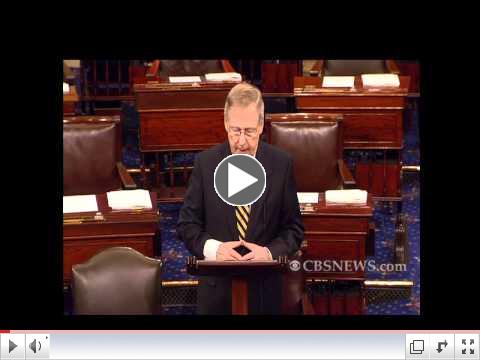 | |
McConnell: Obama worried about 2012
|
|
|
Greetings!
Please enjoy today's issue of the Congressional Climate newsletter, brought to you by Lobbyit.com!
|
|
sss Today's Hill Action:
THE SENATE:
The Senate will convene at 9:30 a.m. to convene and begin a period of morning business.
SENATE COMMITTEES:
Senate Appropriations (10:00 a.m.): Subcommittee on Depts. of Labor, Health, & Human Services, & Education, & Related Agencies - Hearings to examine proposed budget estimates for fiscal year 2012 for the Dept. of Education. SD-124.
Senate Finance (10:00 a.m.): Hearings to examine chief executive officer (CEO) perspectives on how the tax code affects hiring, businesses, and economic growth. SD-215.
Senate Homeland Security & Governmental Affairs (10:00 a.m.): Hearings to examine ten years after 9/11, focusing on emergency communications. SD-342.
Senate Judiciary (10:00 a.m.): Hearings to examine fulfilling our treaty obligations and protecting Americans abroad. SD-226.
Senate Veterans' Affairs (10:00 a.m.): Hearings to examine the lifetime costs of supporting the newest generation of veterans. SD-562.
Senate Joint Economic Committee (10:00 a.m.): Hearings to examine maximizing America's prosperity, focusing on how fiscal rules can restrain Federal overspending. SH-216.
Senate Commerce, Science, & Transportation (10:30 a.m.): Subcommittee on Oceans, Atmosphere, Fisheries, & Coast Guard - Hearings to examine defending United States economic interests in the changing arctic, focusing on if there is a strategy. SR-253.
Senate Armed Services (2:00 p.m.): Subcommittee on Readiness & Management Support - Hearings to examine financial management and business transformation at the Dept. of Defense. SR-232A.
Senate Commerce, Science, & Transportation (2:30 p.m.): Subcommittee on Consumer Protection, Product Safety, & Insurance - Hearings to examine improving highway and vehicle safety, focusing on reauthorization of the National Highway Traffic Safety Administration. SR-253.
Senate Judiciary (2:30 p.m.): Hearings to examine the nominations of Edgardo Ramos, of Connecticut, Andrew L. Carter, Jr., and Jesse M. Furman, all to be a United States District Judge for the Southern District of New York, James Rodney Gilstrap, to be United States District Judge for the Eastern District of Texas, and Jennifer Guerin Zipps, to be United States District Judge for the District of Arizona. SD-226.
The House will meet at 10:00 a.m.
HOUSE COMMITTEES:
House Transportation & Infrastructure (9:00 a.m.): Aviation Subcommittee - Hearing to examine the European Union's emissions trading and international law issues. 2167 RHOB.
House Energy & Commerce (9:30 a.m.): Energy & Power Subcommittee - Hearing to conduct a markup of discussion draft of Pipeline Infrastructure and Community Protection Act, and H.R. 2054 - Energy and Revenue Enrichment Act. 2123 RHOB.
House Judiciary (9:30 a.m.): Courts, Commercial, & Administrative Law Subcommittee - Hearing to examine Chapter 7 bankruptcy trustee responsibilities and renumeration. 2141 RHOB.
House Oversight & Government Reform (9:30 a.m.): Hearing to examine proposals for federal property disposal. 2154 RHOB.
House Agriculture (10:00 a.m.): General Farm Commodities & Risk Management Subcommittee - Hearing to review an audit of the Dept. of Agriculture's implementation of Title I commodity programs and the Supplemental Revenue Assistance Payments program. 1300 LHOB.
House Appropriations (10:00 a.m.): State & Foreign Operations Subcommittee - Hearing to conduct markup of H.R. __ - State and Foreign Operations Appropriations Act for fiscal year 2012. H-140 Capitol.
House Armed Services (10:00 a.m.): Hearing to examine the outlook of military engagement in Afghanistan. 2118 RHOB.
House Education & The Workforce (10:00 a.m.): Hearing to examine teacher quality initiatives. 2175 RHOB.
House Financial Services (10:00 a.m.): Oversight & Investigations Subcommittee - Hearing to conduct oversight of the credit rating agencies. 2128 RHOB.
House Homeland Security (10:00 a.m.): Hearing to examine Islamic radicalization in the United States focusing on recruitment within the Muslim American Community and the threat to the homeland. 311 CHOB.
House Natural Resources (10:00 a.m.): Hearing to examine state perspectives to offshore revenue sharing. 1324 LHOB.
House Transportation & Infrastructure (10:30 a.m.): Economic Development, Public Buildings, & Emergency Management Subcommittee - Hearing to explore how to improve the Economic Development Administration. 2253 RHOB.
House Judiciary (11:15 a.m.): Hearing to conduct markup of pending legislation. 2141 RHOB.
House Small Business (1:00 p.m.): Hearing to examine bureaucratic obstacles for small exporters. 2360 RHOB.
House Armed Services (1:30 p.m.): Military Personnel Subcommittee - Hearing to examine potential legislative and policy changes to military reserve components. 2212 RHOB.
House Oversight & Government Reform (1:30 p.m.): Federal Workforce, U.S. Postal Service, & Labor Policy Subcommittee - Hearing to conduct an overview of the federal employee's Thrift Savings Plan. 2154 RHOB.
House Financial Services (2:00 p.m.): International Monetary Policy & Trade Subcommittee - Hearing to examine the impact of the World Bank and multi-lateral development banks on national security and U.S. job creation. 2128 RHOB.
House Foreign Affairs (2:00 p.m.): Middle East & South Asia Subcommittee - Hearing to examine the U.S.human rights policy toward Iran and Syria. 2172 RHOB.
House Armed Services (3:00 p.m.): Strategic Forces Subcommittee - Hearing to examine sustaining nuclear deterrence after the new Strategic Arms Reduction Treaty. 2118 RHOB.
House Select Intelligence (3:00 p.m.): Terrorism, Human Intelligence, Analysis, & Counterintelligence Subcommittee - Hearing to examine efforts to prevent violent extremism in the United States. B-318 RHOB.
|
| Mitch McConnell: Forget perfect, make deal

Markets slid Tuesday after a White House veto threat and embarrassed House Republicans had to pull back their debt ceiling bill after new cost estimates showed the measure fell well short of its promised savings.
Speaker John Boehner hopes to rebound still with a floor vote Thursday, but his strong ally, Senate Minority Leader Mitch McConnell, warned that it is time for leaders of both parties to "get back together" and be prepared to accept a solution to the debt crisis that's "less than perfect, because perfect is not achievable."
Wall Street clearly is beginning to pay more attention to Washington's turmoil as evidenced by the reaction to the veto threat, just days away from the risk of default. But the bigger worry for Boehner is his old tormentor, the Congressional Budget Office, which gave his bill a low enough score Tuesday that he will have to now go back and rewrite portions to better conform with his deficit-reduction goals.
The speaker's standard has been that any increase in Treasury's borrowing authority should be matched by savings at least as large. And in this case, his bill provides for a $900 billion debt ceiling increase that would be paired with 10-year caps on annual appropriations bills.
Leadership staff had been confident that caps would produce more than $1 trillion in savings, but a CBO report late Tuesday shows that the 10-year deficit impact is closer to $850 billion when measured against the agency's most current projections.
At one level, Boehner is a victim of his own success, since the CBO baseline is lower now by about $122 billion over 10 years because of the very same cuts the speaker won in April during a standoff with Obama over the 2011 budget.
Indeed, the CBO's numbers suggest that all those months of struggle - during which the government was forced to operate on ever lower stopgap spending bills before a deal was reached - contributed another $57 billion in long-term savings on top of the $122 billion. White House Budget Director Jack Lew even jumped in with a sympathetic blog posting - albeit adding that he still opposes the Boehner bill.
Boehner's tea party conservatives, who were never satisfied with the April deal either, will be less kind.
Already Tuesday night, the tables were the fodder for conservative ridicule. On a year-by-year basis, the amount of projected outlay savings from the discretionary caps is as little as $5 billion in 2012, and when other costs are counted, the net deficit reduction is just $1 billion.
McConnell has worked closely with Boehner in drafting and pressing for action on the House bill. But his comments Tuesday suggest he already recognizes the stalemate ahead, given that the House measure almost guarantees more conflict in six months and is so strongly opposed by the White House and Senate Democrats.
The administration is predicting that the Boehner bill will never reach the president's desk, and if it is now at risk of not passing the House, that only adds to McConnell's worries. And he appears to be casting about for new alliances to cope with the crisis.
"We're going to have to get back together and get a solution here. We cannot get a perfect solution, from my point of view, controlling only the House of Representatives," McConnell told reporters after his party's weekly luncheon. "So I'm prepared to accept something less than perfect, because perfect is not achievable.
"We are trying to get a result here, and we know we can't get a result without something that can pass a Republican House, a Democratic Senate and be signed by a Democratic president."
Even before the CBO numbers were released Tuesday, Boehner had nagging problems on the right. And having alienated Democrats by twice walking away from talks with Obama, the speaker faces a tough narrow partisan vote in which he can't afford many defections in his party.
"This is a unique opportunity in time. It's a choke point if you will," said Rep. Phil Gingrey (R-Ga.), who will oppose Boehner. "It's a leverage opportunity. I would even go on and quote [former White House chief of staff, now Chicago mayor] Rahm Emanuel. It's a time to not waste a crisis."
Given this dissent, there has been an orchestrated effort to tap outside Republican allies. The U.S. Chamber of Commerce weighed in behind Boehner, and the speaker was back on Rush Limbaugh's broadcast, promising that taxes will not be part of the deficit-reduction equation.
"It's coming," he told POLITICO of support for the bill.
When the CBO numbers hit, Boehner's office was aggressive in promising to go back and fix the problem. "We're here to change Washington - no more smoke and mirrors," said a press aide. "Congressional staff are looking at options to rewrite the legislation to meet our pledge."
That won't be a simple matter because of how the underlying bill is structured.
The $900 billion increase is only the first installment of two - the second, about $1.6 trillion, is anticipated to be needed early next year to carry the Treasury into 2013 and beyond the 2012 elections.
If Boehner were to pare the $900 billion to conform with the CBO numbers, that would mean the second increase would be needed much sooner.
That in turn disrupts all of his plans for a new 12-person joint congressional committee to report in late November on a $1.8 trillion deficit-reduction package to be enacted by Congress in December.
The other option is to cut more from appropriations, but that could be a steep climb for Boehner, given his strict standards to date.
For example, just Monday, the leadership was dismissive of counting any of the interest savings attributed to the caps. But if that same standard is applied now, the CBO's numbers show that the real outlay cut from the caps is only $710 billion, and the higher $850 billion score is only reached by counting interest savings on the deficit.
The reality is that Treasury has only kept the government afloat for months now by taking "extraordinary measures" to move money around. And much of any new debt increase will be needed to set these books straight - not for new borrowing.
"I would note that the speaker of the House in his address last night that followed the president's never mentioned the word compromise, and yet, that is the only alternative," said Obama's press secretary Jay Carney. "We have a divided government. We have a two-party system. No party controls every branch of government. Compromise is the only option, and we will hopefully get there."
|
|
U.S. lawmaker vows look at China trade "abuses"

A top Republican lawmaker Wednesday said he planned to turn up the pressure on China over a long list of trade "abuses" after Congress returns from its upcoming August recess.
"China ... flagrantly disregards its international obligations and seeks to impede fair commerce at every opportunity," House of Representatives Ways and Means Committee Chairman Dave Camp said in a speech.
Camp told reporters he was concerned about Beijing's currency practices, which many U.S. lawmakers and economists believe gives Chinese companies an unfair advantage.
But he said Congress had made a mistake in the past by focusing exclusively on that issue when there were "far larger" concerns. He promised a broad hearing on China trade concerns before deciding if legislation was needed.
"China blatantly steals the intellectual property of American businesses and grossly subsidizes domestic industries -- and its list of trade abuses goes on and on," he said.
Shortly after Camp's speech, the Senate unanimously approved outgoing Commerce Secretary Gary Locke to be the next U.S. ambassador to China.
Locke, a former Washington state governor, has pledged to press China to open its market to more U.S. goods and services, move to a more flexible currency exchange rate and increase action against counterfeiting of American products.
The U.S.-China Business Council, which represents roughly 240 American companies that do business in China, said it looked forward to working with Locke to increase sales to the fast-growing China market.
But the group, which fought efforts last year in the House to pass legislation aimed at Beijing's currency practice, also noted China is already the United States's third-largest export market, with sales projected to top $100 billion this year.
"Add in our exports to Hong Kong and sales of products and services made by American companies with operations on the ground, China is probably getting close to a $200 billion market for U.S. companies. Those are numbers that matter to American jobs and economic growth," the group said.
Camp also criticized the White House for delaying work on a Bilateral Investment Treaty (BIT) with China because administration officials "can't decide how to treat labor issues" that would arise in the talks.
The administration of former President George W. Bush, a Republican, began negotiations with China on a BIT. But those have been on hold since shortly after Obama, a Democrat, took office in January 2009 to review concerns raised by the AFL-CIO labor federation and other groups that criticized Bush's approach.
As a result, "we are sitting on the sidelines while our trading partners are aggressively moving forward," Camp said.
Many have already signed investment agreements with China that give their investors more rights in China than U.S. investors have, while others like the European Union have announced plans to begin talks with Beijing, he said.
|

Rep. Luis Gutierrez (D-Ill.) was arrested Tuesday outside the White House, during a protest against immigrant deportation, a spokesman confirmed.
Gutierrez spokesman Douglas Rivlin said the congressman was arrested with other pro-immigration advocates after a Lafayette Square rally to protest deportations.
Sgt. David Schlosser, U.S. public information officer for the D.C. Park Police, said 11 people were arrested for "violating regulations for demonstrations in front of the White House," and for "disobeying an official to come in compliance," but would not confirm that Gutierrez was among those detained.
According to Rivlin, the protesters were arrested after they sat down in front of the White House fence and refused orders by park police to leave.
At press time those arrested had not yet been identified by police.
Gutierrez also was arrested in May 2010 during a similar protest outside the White House gates. He had announced that he would not move until he was arrested or until comprehensive immigration reform had become law. He paid a $100 fine afterward, Rivlin said.
Those arrested Tuesday were handcuffed and taken to a van to transport them to the Park Police headquarters in Anacostia Park, Rivlin said. The protesters included representatives from the Center for Community Change and Casa de Maryland.
"The president says that Republicans in Congress are blocking immigration reform, but that doesn't let him off the hook," Rivlin said. "That's the point of this event, and the point made yesterday when protesters interrupted Obama's speech [at the conference of the National Council of La Raza]."
The National Council of La Raza, a Hispanic rights organization, is holding its annual conference this week.
|
|
|
Until tomorrow,
Lobbyit.com |
|
|