Congressional
Climate Bill Tracking
|
|
Video Of The Day
|
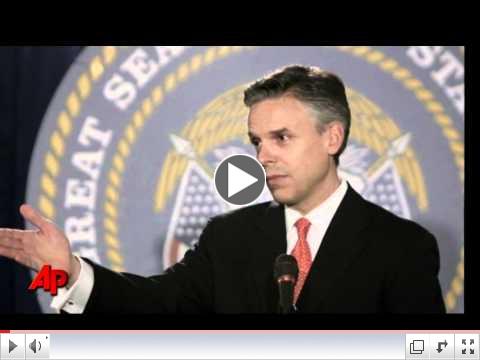 | |
Obama Ambassador May Be GOP Wild Card in 2012
|
|
|
Greetings!
Please enjoy today's issue of the Congressional Climate newsletter, brought to you by Lobbyit.com!
|
|
Today's Hill Action:
THE SENATE:
The Senate will meet at 10:00 a.m. for morning business. Thereafter, they will proceed to Executive Session to consider the nomination of Michael H. Simon, of Oregon, to be United States District Judge for the District of Oregon.
SENATE COMMITTEES:
Senate Banking, Housing, & Urban Affairs (10:00 a.m.): Hearings to examine cybersecurity and data protection in the financial sector. SD-538.
Senate Foreign Relations (10:00 a.m.): Hearings to examine the nominations of Anne W. Patterson, of Virginia, to be Ambassador to the Arab Republic of Egypt, Michael H. Corbin, of California, to be Ambassador to the United Arab Emirates, Matthew H. Tueller, of Utah, to be Ambassador to the State of Kuwait, Kenneth J. Fairfax, of Kentucky, to be Ambassador to the Republic of Kazakhstan, and Susan Laila Ziadeh, of Washington, to be Ambassador to the State of Qatar, all of the Department of State. SD-419. Senate Health, Education, Labor, & Pensions (10:00 a.m.): Subcommittee on Primary Health & Aging - Hearings to examine senior hunger and the "Older Americans Act". SD-430. Senate Joint Economic Committee (2:00 p.m.): Hearings to examine spending less, owing less, growing the economy. LHOB-1100. Senate Commerce, Science, & Transportation (2:30 p.m.): Hearings to examine the nominations of John Bryson, to be Secretary, and Terry D. Garcia, of Florida, to be Deputy Secretary, both of the Dept. of Commerce. SR-253. Senate Homeland Security & Governmental Affairs (2:30 p.m.): Subcommittee on Oversight of Government Management, the Federal Workforce, & the District of Columbia - Hearings to examine inspiring students to Federal service. SD-342. Senate Judiciary (2:30 p.m.): Subcommittee on Crime & Terrorism - Hearings to examine cybersecurity, focusing on evaluating the Administration's proposals. SD-226. Senate Intelligence (2:30 p.m.): Closed hearings to examine certain intelligence matters. SH-219.
The House will meet at 12:00 p.m.
HOUSE COMMITTEES:
House Energy & Commerce (2:00 p.m.): Health Subcommittee - Hearing to examine understanding Medicare and Medicaid dual eligibles and examining how to improve their care. 2322 RHOB.
House Oversight & Government Reform (3:00 p.m.): Hearing to examine reviewing the Hatch Act. 2154 RHOB.
House Energy & Commerce (4:00 p.m.): Environment & the Economy Subcommittee - Hearing to conduct markup of H.R. 1391 - Recycling Coal Combustion Residuals Accessibility Act. 2123 RHOB. House Rules (5:00 p.m.): Hearing to examine H.R. 1249 - America Invents Act, and H.R. 2021 - Jobs and Energy Permitting Act. H-313 Capitol.
|
|
John McCain, Lindsey Graham fade on defense

Even within their own party, Republican Sens. John McCain and Lindsey Graham now have to shout to be heard.
It's a stunning change for two men who have been the leading voices for their party's interventionist vision on foreign policy and now find themselves on the periphery of a debate over the conflict in Libya that is reshaping the GOP's stance on war and executive branch power.
Their staunch support of the effort conflicts with a chorus of leading Republicans: House Speaker John Boehner has threatened to pull funding for the Libya effort, Republican presidential hopefuls dug in during the national debate last week and several House Republicans even joined Democrats in filing a lawsuit against President Barack Obama for his decision to use force.
"In the foreign policy debate, realists are becoming a part of the Republican mainstream, and that makes Sen. McCain and Sen. Graham more than a little apprehensive," said Dimitri Simes, president and chief executive of the Washington, D.C.-based think tank Center for the National Interest.
McCain and Graham's new role as outsiders on Libya shows how their influence over the party's once-defining stance on foreign policy - held for the past two decades - is slipping away as the Republican Party zeros in on spending and a public grows weary of the mounting death toll from a decade at war.
But McCain and Graham aren't being co-opted. "Sen. Graham is speaking out. He's going to continue to be who he is," his spokesman, Kevin Bishop, said Monday.
Both senators took to the Sunday talk shows and issued apocalyptic warnings, saying the party's turn to "isolationism" - a derogatory and disingenuous term in the eyes of tea party types - could lead to more terrorist attacks against the U.S., the mass murder of innocent civilians and even a spike in oil prices.
"If you don't think [Libyan strongman Muammar] Qadhafi surviving doesn't affect American national security interests, we're just on different planets," Graham (R-S.C.) said on NBC's "Meet the Press." "If this guy survives, it's the end of NATO, our standing in the world goes down, Egypt gets overrun by refugees, and the mad dog of the Mideast, Qadhafi, is out of his cage, and you will see oil prices double."
In a separate appearance on ABC's "This Week," McCain repeatedly dismissed as "isolationist" the recent retreat by top Republicans from a more muscular foreign policy.
"We cannot repeat the lessons of the 1930s when the United States of America stood by while bad things happened in the world," the Arizona Republican said. "We are the lead nation in the world and America matters and we must lead, and sometimes that leadership entails sacrifice, sadly."
The Sunday shows may be a public pulpit, but they don't offer much insider sway.
As the top Republican on the Senate Armed Services Committee, McCain still wields some power when it comes to the Libya conflict. Minority Leader Mitch McConnell (R-Ky.) has deferred to McCain on questions about Libya. And McCain and Foreign Relations Committee Chairman John Kerry (D-Mass.) have spent weeks fine-tuning a Senate resolution that would back Obama's use of force in the region.
"As we continue to bleed blood and treasure from three wars, the Rand Paul arm of the Republican Party is on the upswing and the Graham-McCain crusading is less in favor," said Gene Healy, vice president of the libertarian think tank the Cato Institute, who blogged Monday about the GOP's foreign-policy divide.
Boehner (R-Ohio) has threatened to cut funding for the Libya effort over a legal dispute with the White House over whether Obama requires congressional approval to continue limited U.S. operations under the War Powers Resolution. Votes could be held in the House this week.
And at last week's debate in New Hampshire, GOP candidates seeking to replace Obama went further, questioning why America is involved in that nation's civil war.
Rep. Michele Bachmann (R-Minn.), head of the House Tea Party Caucus who serves on the chamber's intelligence committee, pointed out that America was not attacked by Libya and therefore is of "no vital national interest." Businessman Herman Cain called the conflict in North Africa "an absolute mess." And former House Speaker Newt Gingrich called for a "totally new strategy for the region."
Meanwhile, front-runner Mitt Romney set his sights on Afghanistan, arguing that "it's time to bring the troops home" and that the lesson from the decade-old conflict is that "Americans cannot fight another nation's war of independence."
Those comments elicited a swift response from Graham, who warned last week that Republicans risk looking more like Jimmy Carter than Ronald Reagan on national security. On Sunday, McCain suggested that the Gipper - whose legacy is often invoked by candidates on the campaign trail - would be rolling in his grave if he heard the foreign policy views espoused by some in his party.
"I wonder what Ronald Reagan would be saying today?" McCain asked during an appearance on ABC's "This Week." "He would be saying that is not the Republican Party of the 20th century, and now the 21st century. That is not the Republican Party that has been willing to stand up for freedom for people all over the world, whether it be in Grenada or whether it be in our enduring commitment in countering the Soviet Union."
Invoking Reagan to take a swipe at other Republicans struck some GOP observers.
"I remember Ronald Reagan saying not to speak ill of a fellow Republican," said Simes, whose group was founded by President Richard Nixon. "The fact that Graham is using this strident language is quite remarkable. Either he does not care about the fortunes of the Republican candidates or you have to believe he is becoming quite emotional and a little desperate. I don't see any other explanation."
It's not only Graham and McCain who are taking seriously GOP threats to American interventionism.
The neoconservative Foreign Policy Initiative on Monday released a letter signed by nearly 40 former government officials and foreign policy experts urging Congress not to reduce or cut funding for NATO-led U.S. military operations in Libya, which include intelligence, predator drones and refueling but no ground troops.
"The United States should be leading in this effort, not trailing behind our allies," the group wrote.
And when it comes to foreign policy, freshman Sen. Marco Rubio (R-Fla.) is swimming against the tea party currents that helped elect him last fall. Like McCain and Graham, he views the conflict in Libya as a question of national security rather than constitutionality.
"For me, the equation is pretty straightforward. Muammar Qadhafi's hands are dripping in American blood. His own people want to get rid of him," Rubio told reporters last week. "To the extent we can help them do that, we should within the limitations that we have and in the national interest."
Realists, however, point to recent polling that suggests Boehner, Romney and other mainstream Republicans may be onto something. A Pew Research Center survey released last month found that 55 percent of conservative Republicans believe the U.S. "should pay less attention to problems overseas and concentrate on problems here at home." That's up from 36 percent in 2004, in the midst of the Iraq and Afghanistan wars.
"We ran that experiment, and after spending $1 trillion and 6,000 American deaths abroad, there is increasing mistrust of foreign interventionism among the public at large and within the Republican Party," Healy said. "When you have Newt Gingrich, who sees threats everywhere he looks, striking a note of restraint at the debate, you know something's going on. Boehner has a newfound affection for the War Powers Act because he can read the tea leaves."
|
|
Mueller's extension moves to Senate floor
 Members of the Senate Judiciary Committee engaged in a heated exchange on Thursday as they debated and ultimately approved a bill extending Robert Mueller's term as director of the FBI for another two years. The bill now goes to the Senate floor for a vote by the full chamber. There has been no congressional opposition to Mueller taking an additional two years at the helm of the agency since President Obama asked him to stay last month. Mueller's 10-year appointment is set to expire in August. But on Thursday, Sen. Tom Coburn (R-Okla.) objected to the bill put forward by committee Chairman Sen. Patrick Leahy (D-Vt.). Coburn said it could violate the presidential appointment clause in the Constitution, which he said could limit or even jeopardize Mueller's efficacy as the department's head. Last week, University of Virginia law professor John Harrison told members of the panel that Leahy's bill "would be inconsistent with the Constitution because it would seek to exercise through legislation the power to appoint an officer of the United States, a power that may be exercised only by the president, a head of department, or a court of law." Coburn said Mueller could be forced to execute orders through a subordinate, in order to avoid having his authority challenged. "The worry, expressed by Dr. Harrison, as well as others including Director Mueller as well when I asked him about that, is that somebody could challenge on the basis of a violation of the appointments clause any action we would take," said Coburn. Instead, Coburn proposed re-nominating Mueller for a two-year term, which would honor the president's constitutional authority to appoint him. In return, Coburn said Republicans would agree to fast-track the bill through the committee. But Democrats worry a Republican not on the committee could easily hold up such a nomination if they used Coburn's approach. Leahy pointed to the committee's ranking member, Sen. Chuck Grassley (R-Iowa), who has put a hold on Obama's nomination for deputy attorney general. Grassley has said he will continue to do so until he gets documents related to a controversial gun-tracking program that was run by the Bureau of Alcohol, Tobacco, Firearms and Explosives (ATF). Under Leahy's bill, though, there are concerns about how it will fare in a deeply divided House; only a simple majority is needed for it to pass in the Senate, making it a much easier task. Majority Whip Dick Durbin (D-Ill.) stressed his support for Leahy's bill, saying it does not violate the Constitution and that a strong enough atmosphere of trust does not exist in the upper chamber for him to believe a Republican would not try to hold up Mueller's re-nomination. "Were we in a different Senate with more cooperation, on - particularly - elements of national security, I would say then it's harmless to go through your process, but as we know, one senator can stop the train indefinitely," said Durbin. "We just run the risk of this sitting on the calendar, like so many nominees have sat for month after weary month while someone bargains for something totally unrelated by holding up this nomination. That is what this Senate has unfortunately deteriorated to," Durbin said. |
 Sen. Roy Blunt (R-Mo.) hopes a new foundation can raise $10 million in private donations to help rebuild the tornado-ravaged town of Joplin, Mo. Sen. Roy Blunt (R-Mo.) hopes a new foundation can raise $10 million in private donations to help rebuild the tornado-ravaged town of Joplin, Mo.
The Joplin Tomorrow Foundation will offer low- or no-interest loans to businesses that want to build in the area for the first time or expand existing operations in Joplin, where 154 people were killed when a twister hit on May 22. A local board will handle the details of applications.
Blunt tussled with House Majority Leader Eric Cantor over federal aid in the immediate aftermath of the disaster, when Cantor said the emergency spending needed to be offset elsewhere in the budget. Blunt suggested Cantor should find the offsets, if he wants them.
Blunt spokeswoman Amber Marchand said the foundation will not seek federal funds for the project. The Missouri Chamber of Commerce and Industry has given the foundation a $25,000 grant and the Danforth Foundation pledged $500,000 - the last donation the 84-year-old group will make before shutting down, said the foundation board chairman, Dwight Douglas.
Blunt announced the initiative Monday in Joplin with former Sen. John Danforth (R-Mo.)
"I've said many times that in Joplin, neighbors were each other's first responders, and they will be the last responders too," Blunt said in a statement. "Southwest Missourians are resilient, and I'm confident Joplin Tomorrow will help restore the business community and attract new private sector job creators as we work to rebuild."
|
|
|
Until tomorrow,
Lobbyit.com |
|
|