Congressional
Climate Bill Tracking
|
|
Video Of The Day
|
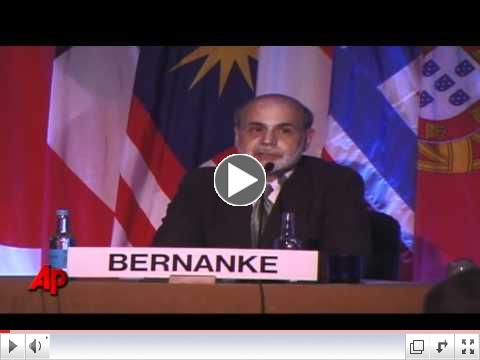 | |
Bernanke Sees Faster Growth Ahead for Economy
|
|
|
Greetings!
Please enjoy today's issue of the Congressional Climate newsletter, brought to you by Lobbyit.com!
|
|
Today's Hill Action:
THE SENATE:
The Senate will meet at 9:30 a.m. for morning business. Thereafter, they will resume consideration of S.782, the Economic Development Revitalization Act of 2011.
SENATE COMMITTEES:
Senate Foreign Relations (9:30 a.m.): Hearings to examine the nomination of Ryan C. Crocker, of Washington, to be Ambassador to the Islamic Republic of Afghanistan, Dept. of State. SD-419.
Senate Veterans' Affairs (9:30 a.m.): Hearings to examine pending calendar business. SR-418.
Senate Commerce, Science, & Transportation (10:00 a.m.): Business meeting to consider pending calendar business. SR-253. Senate Environment & Public Works (10:00 a.m.): Subcommittee on Clean Air & Nuclear Safety & Subcommittee on Children's Health & Environmental Responsibility - Joint hearings to examine air quality and children's health. SD-406. Senate Judiciary (10:00 a.m.): Hearings to examine the President's request to extend the service of Director Robert Mueller of the Federal Bureau of Investigation until 2013. SD-226.
Senate Appropriations (10:30 a.m.): Subcommittee on Financial Service & General Government - Hearings to examine proposed budget estimates for fiscal year 2012 for the Internal Revenue Service. SD-138.
Senate Foreign Relations (2:30 p.m.): Hearings to examine the nominations of D. Brent Hardt, of Florida, to be Ambassador to the Co-operative Republic of Guyana, James Harold Thessin, of Virginia, to be Ambassador to the Republic of Paraguay, Jonathan Don Farrar, of California, to be Ambassador to the Republic of Nicaragua, and Lisa J. Kubiske, of Virginia, to be Ambassador to the Republic of Honduras, all of the Dept. of State. SD-419.
Senate Judiciary (2:30 p.m.): Hearings to examine the nominations of Stephen A. Higginson, of Louisiana, to be United States Circuit Judge for the Fifth Circuit, Jane Margaret Triche-Milazzo, to be United States District Judge for the Eastern District of Louisiana, Alison J. Nathan, and Katherine B. Forrest, both to be United States District Judge for the Southern District of New York, and Susan Owens Hickey, to be United States District Judge for the Western District of Arkansas. SD-226.
Senate Appropriations (2:45 p.m.): Subcommittee on Dept. of Homeland Security - Hearings to examine a review of the status of emergency management in the United States, including the important role communications systems play during a disaster. SD-138.
No meeting scheduled for today.
HOUSE COMMITTEES:
No meetings scheduled for today.
|
|
Republican freshmen spend big bucks on cars, PR

They rode into Washington on an anti-spending wave, but some House Republican freshmen are already enjoying one of the perks of incumbency, spending their office budgets on everything from $1,000-a-month car leases to pricey online advertising contracts.
At least 15 GOP freshmen have shelled out tens of thousands of dollars of taxpayer money on mass communication - or franking - designed to boost their exposure back home, even as they call for budget cuts and pared-back government spending, according to quarterly disbursement reports released by the House.
The biggest newly elected spender in this realm is Illinois Rep. Adam Kinzinger, who authorized spending $78,518 in taxpayer money on "mass mailings and communications" - just under $900 for every day he was in office during the first three months of his congressional career. Kinzinger sent a pamphlet to his constituents explaining "some of the ways we can help" in interactions with the government. Kinzinger also advertised the "state-of-the-art multimedia section" on his website.
His office told POLITICO in a statement that it has no more plans for franked mail after it sent a mailing to 217,000 houses across the district.
"Because many constituents were unaware of the assistance a congressional office can provide, the mailer our office sent informs residents that their congressional office is here to serve as a valuable resource for them on issues ranging from Medicare and Social Security to veterans' benefits and immigration. Constituent services are our office's top priority," said Brook Hougesen, Kinzinger's spokeswoman.
But the spending doesn't stop at constituent communication - GOP freshmen have also spent big money on car leases and consultants.
Texas Rep. Francisco Canseco spent $75,000 on a one-year contract with CampaignGrid LLC, a company that describes itself as "the online advertising platform for candidates and causes." Canseco's staff said the costly expenditure is meant to advertise town halls and telephone town halls and has served to publicize the congressional art competition for the West Texas lawmaker.
"This service allows Congressman Canseco to communicate with his constituents," said Valentina Weis, a spokeswoman for Canseco. "We have been able to inform constituents of services offered by the office like help with federal agencies, [the] time and location of events such as town halls and how government legislation will affect them."
Minnesota Rep. Chip Cravaack, who unseated longtime Iron Range Democratic Rep. Jim Oberstar, spent $1,700 on an automobile lease in March. His office said the price tag is inflated because of initial purchasing costs, but the 2011 Chevrolet Equinox AWD will cost taxpayers "roughly $1,000 [per month] for the remainder of the lease."
Congressional car leases have been a significant source of controversy in the past - Rep. Charles Rangel (D-N.Y.) faced criticism for a $777 a month Cadillac lease a few years ago - but Cravaack's office said he needs the car because of the size and climate of the district, frequent trips home and "an extensive mobile office constituent outreach program."
The spending habits of freshmen like Kinzinger contrast with those of other high-profile rookie members who spent nothing on congressional franking during the first quarter, including Republican Reps. Allen West and Sandy Adams of Florida, Rick Berg of North Dakota and Larry Bucshon of Indiana. Some Republican frosh have so far decided against leasing cars on the taxpayer dime as well. Many lawmakers don't send mailings in the first quarter, insiders say.
The office spending by some of these freshmen shows that, despite their rhetoric -Republicans are talking about cutting trillions of dollars from the federal budget - some are already enjoying the perks of their congressional office budget early in their term.
To be clear, all of these expenditures - especially mailings and car leases - have a long history in Congress. Franking is a privilege of congressional lawmakers dating back to 1775 and the Continental Congress. Members are permitted to use government resources to communicate with their constituents on policy but are prohibited from using the mail for campaign or partisan purposes. Communication must be approved by a bipartisan panel. Members receive upward of $1 million in taxpayer money to operate their offices at home and in Washington. It goes to staff salaries and overhead costs, including flights back to the district, among other things.
But the spending, in some cases, opens the freshmen - who vowed to shake up Washington and slash spending - to criticism.
And it's not only freshmen who are spending big bucks on constituent communication. So far, the king of franking in 2011 is Florida Rep. Vern Buchanan. He doled out $142,198 in taxpayer money in the first three months of 2011 - equal to over $1,000 every day.
One "veterans update" Buchanan sent out asked, "in the aftermath of the shooting in Tucson, Arizona" - which left Democratic Rep. Gabrielle Giffords with severe injuries and six others dead - "should Congress approve new gun control measures?" On another mailing targeted to seniors, he asked whether Social Security and Medicare should be "exempted from spending cuts aimed at reducing the deficit."
Max Goodman, his spokesman, said, "We really make it a priority ... to listen to people and stay in touch."
Freshman Rep. Richard Nugent, another Florida Republican who represents a senior-heavy district, has spent $64,292 since Jan. 3. Records indicate Nugent, who didn't respond for comment, sent out 12,768,697 pieces of communication - among the highest amounts last quarter.
But it's not limited to Republicans. In the same time period, New Jersey Democratic Rep. Rush Holt spent $79,795, and veteran Rep. Pete Stark (D-Calif.) spent $60,766.
New York Rep. Thomas Reed wasn't far from the lead for GOP freshmen, spending $69,439 in the first three months of 2011, according to disbursement reports filed with the House.
"We were sort of in an unusual situation because the seat was vacant for nine months before Tom took office," said Tim Kolpien, Reed's spokesman. Reed replaced Democratic Rep. Eric Massa, who resigned because of a sex scandal in March 2010. "So when Tom took office, we did a massive mail piece ... that basically let people know they did have a representative in the House again." Kolpien said that "one mailing was responsible for the overwhelming majority of the amount of franking that we have done."
Rep. Steve Stivers (R-Ohio), who spent $51,506 on mass communication, printed a pamphlet that explains "How a House Bill Becomes a Law," illustrating in flow-chart fashion how legislation snakes through Congress - just one of his pieces of communication.
Courtney Whetstone, a spokeswoman for Stivers, said that "constituent service is a priority for our office, and teletowns, e-newsletters and survey mailers are all great ways for our office to have an open dialog with the citizens of Ohio's 15th Congressional District. We have a responsible office budget and are on track to return a significant portion of those funds at the end of this year."
Republican Rep. Richard Hanna, who spent $60,585 last quarter, told his constituents in upstate New York that he "cut $100 billion in government spending." Hanna also said he "voted to reform the health care law to make it more affordable and accessible." House Republicans, in fact, missed the mark to cut $100 billion in spending. Hanna's office did not reply to requests for comment.
In his mailings, Rep. Lou Barletta (R-Pa.) wanted to know how his constituents rank issues such as national security, abortion, illegal immigration, crime and jobs and the economy.
He also asked 11th District residents whether they would "like to receive periodic email updates so we can communicate without spending money on printing and postage," adding that he "voted to eliminate a law that required all laws to be printed, saving taxpayers $7 million per year."
He didn't mention the $18,358 he spent on mailings last quarter.
|
|
Democrats Want Weiner to Go
 While House Minority Leader Nancy Pelosi stopped short of calling for Rep. Anthony Weiner to resign, her demand for an ethics investigation into his online affairs clearly signaled that her Caucus thinks it's time for him to go. Democrats said Pelosi's unprecedented decision to swiftly call for an ethics investigation - and her harsh words for the New York Democrat - has sent a not-so-subtle sign that leadership does not want to see a protracted scandal at a time when Democrats are battling for control of the House. "From a leadership standpoint, they've got to show they forced his hand," one Democratic consultant said. "It's so blatant. They don't want to see something drawn out, and it's not going to be the majority's position to resolve this quickly." Although Pelosi's office declined to comment on the matter, Democrats close to the Minority Leader said that when it became clear Weiner had lied not only to his family and the media but also to the entire Democratic Caucus, Pelosi was not going to let him off the hook. "She wasn't going to give him a break. There's just no question about that," a Democratic source close to Pelosi said. "We've lost some time" in the party's efforts to hammer Republicans over Medicare, the source added. Pelosi's handling of Weiner's scandal - which centers on a series of online affairs and lewd pictures of himself that he sent to women via Twitter, Facebook and text message - is strikingly different from how she has handled previous instances of Democrats having ethical woes. Weiner admitted Monday that he had inappropriate online relationships with at least six women over three years. Pelosi on Tuesday officially asked the Ethics Committee to launch an investigation into Weiner's actions, saying that because the New York Democrat "disclosed conduct which he described as inappropriate ... an investigation by the Ethics Committee to determine whether the Rules of the House of Representatives have been violated is warranted." Although Pelosi has sent similar letters to the committee in the past regarding Republicans - most notably asking for an investigation into former Majority Leader Tom DeLay (Texas) - she has never sent such a request when a Democrat is at the center of the scandal. In previous scandals, Pelosi has tried to protect Members she is close with including then-Ways and Means Chairman Charlie Rangel (D-N.Y.) and her strong ally the late Rep. John Murtha (D-Pa.). With Weiner, however, Pelosi called for an ethics investigation within an hour of his Monday press conference. In the case of Rangel, Pelosi had a long personal and political relationship with the New York icon, which in part led to her hesitancy to quickly condemn him over charges of corruption. But more significantly, Pelosi ultimately decided to back Rangel in response to internal political pressures within the Democratic fold, particularly from the Congressional Black Caucus. CBC members - as well as other Democrats - were unhappy with how Pelosi had handled the scandal surrounding former Rep. William Jefferson (D-La.), who was accused of taking bribes. She forced him to step down from his seat on the powerful Ways and Means Committee while he was still under investigation. Additionally, several members of the CBC were also under investigation for a Caribbean trip they took, and the group was feeling besieged by the Ethics panel. "There were absolutely CBC politics in play. You had a lot of CBC members who were really standing up for the chairman," a Democratic lobbyist said of the Rangel imbroglio. Similarly, Pelosi strongly backed Murtha throughout his ethics woes over earmarks. She went so far as to back him over Rep. Steny Hoyer (Md.) for the Majority Leader post in 2006 - even as many in her Caucus were distancing themselves from him. Those close to Pelosi said her support for Murtha was based in large part on simple loyalty. Murtha was one of the key architects behind Pelosi's rise in leadership and one of her most trusted lieutenants. Throughout multiple investigations regarding earmarks for companies in his district, Murtha maintained his innocence, and Pelosi chose to back him rather than isolate him. But Weiner is not particularly close to the California Democrat, nor much of the Caucus. "He's an independent operator," a senior Democratic aide said, noting that Weiner has never fallen into either Pelosi's or Hoyer's spheres of influence. "He kind of does his own thing," one Democratic strategist agreed. "I think it is one of the reasons why he is in this predicament. He doesn't listen to many of his colleagues, and he doesn't listen to staff." Even in the case of former Rep. Eric Massa (D-N.Y.) - who was brought down by allegations of sexual harassment - Pelosi opted to take a decidedly hands-off approach. While she was apprised of his inappropriate conduct with male staff, she ultimately left the handling of the scandal to Hoyer. Massa resigned several days later. To be sure, Democrats have not always used kid gloves when it comes to those accused of ethics missteps. Democrats in the past have made it a practice to strip committee assignments from Members under federal investigation, but when Pelosi was Speaker, she seemed to struggle to force lawmakers to resign from their seats. Still, Democrats said they are pleased with how Pelosi has dealt with the Weiner situation. "I think she's handled this very well," Democratic lobbyist John Michael Gonzalez said. "Other than wagging her finger, I don't know what else she could do." "In the minority, we just can't let these kind of issues weigh us down," one Democratic lobbyist said. "We've got to act quickly." Pelosi may be taking a lesson from Speaker John Boehner. The Ohio Republican has had little patience for ethical missteps in his rank and file. Rep. Chris Lee (R-N.Y.), for instance, resigned within hours after shirtless photos that he sent to a woman he met on Craigslist were uncovered in February. While Boehner has said that he did not speak to Lee, it is an example of how GOP lawmakers have moved to try to get away from the "culture of corruption" reputation they gained during DeLay's tenure. Boehner hasn't ousted everyone with ethical problems, however. He did allow freshman Rep. David Rivera (Fla.) to maintain his position as he faced charges of personal and campaign corruption. Pelosi's action may be for naught. Weiner has continued to maintain that he will not resign, and ethics experts are undecided over whether his behavior would rise to expulsion from the House. "It's going to be a letter of admonition unless they find out more," said Melanie Sloan of Citizens for Responsibility and Ethics in Washington. "I think they're going to be stretching. ... Every time a staffer picks up a phone to make weekend plans, you can't have that as a misuse of official resources." Additionally, Sloan said it could be "risky" to go after general sexual inappropriateness since there have been allegations against other Members in the past. Still, ethics lawyer Stefan Passantino noted that the ethics process is political, which could work against Weiner. "Even if it's shown that there wasn't another violation, the mere discredit he's brought to the House is enough to be a violation," McKenna Long & Aldridge's Passantino said. "At the end of the day, the Members tend to look at the public mood and there is a long process gauging how much or how little the public will tolerate depending on who is controlling the House." |

In a heavily lobbied fight pitting financial institutions against merchants, supporters of the nation's banks pushed Tuesday toward a Senate vote aimed at blocking a government plan to cap the fees that stores must pay banks whenever a customer swipes a debit card.
Both sides claimed to represent consumers' interests in the high-stakes battle over the $16 billion yearly that the Federal Reserve says stores give banks in those fees. Merchants say the fees force them to charge higher prices and thwart their efforts to grow and add jobs. Banks say the fees are too low because they don't consider all of their costs in administering debit card programs, and say they'd have to raise other charges - such as for checking accounts - if the swipe fees are reduced.
A showdown vote was set for Wednesday. If successful, the provision would block a Fed proposal that would cap the so-called interchange fees at 12 cents per swipe. That's down from the current average of 44 cents, the result of fees that average between 1 percent and 2 percent per transaction.
Last year's financial overhaul legislation ordered the Fed to issue a proposal and for a final rule to take effect on July 21. The proposal debated by the Senate would delay the regulations for a year and order the Fed and three other federal agencies to study whether the proposal is fair - and rewrite it if at least two agencies decide it is not.
With merchants and bankers important constituencies and contributors to both Democrats and Republicans, lawmakers' views on the effort crossed party lines. Sen. Jon Tester, D-Mont., a first-term lawmaker facing re-election in a GOP-leaning state next year, was a leader of the effort to block the cap on fees, while Sen. Richard Durbin of Illinois, the Senate's No. 2 Democratic leader, was its leading foe.
Durbin, author of the provision in last year's law that paved the way for the Fed's plan, said the fight offered senators a clear choice.
"They're either going to be on the side of the banks and credit card companies, or be on the side of consumers and businesses across the America to give them a fighting chance," Durbin said.
Tester said he was not fighting for the nation's largest banks, saying, "They have plenty of sources of revenue. No one needs to shed a tear for them."
Rather, he said, he was on the side of small financial institutions that dot his rural state, which he said would be in danger of disappearing if their revenues collapsed.
"Fewer banking options in rural America is a death-knell for rural America," Tester said. "But that is where we are headed."
Using Senate procedures, Durbin was forcing Tester to win votes from 60 of the 100 senators to prevail, a tough hurdle. Both sides conceded that Tester could be close to a victory, though it could be difficult for him to overcome the experienced and powerful Durbin in the behind-the-scenes struggle for the decisive votes.
Tester and Sen. Bob Corker, R-Tenn., another leader in the effort to block the Fed, said their proposal was a compromise. Initially they sought a two-year delay, and their new plan had a shorter window and conceded that debit card fees would be regulated - it was just a matter of when and how.
Durbin said the effort was not a compromise because he and the merchants he is backing opposed it and had no input. Recalling the 2008 taxpayer bailout of faltering financial institutions, he said, "Are we going to be shaken down a second time? That's what this debate is all about."
The swipe fee fight is an issue that many lawmakers would prefer to not have to vote on because it forces them to choose between two groups that few members of Congress are eager to provoke - especially with a third of the Senate and the entire House up for re-election next year.
"It sort of pits senators between retailers and bankers. And I understand that. And people really just don't like being in that position," Corker said.
Financial institutions and merchants spend millions of dollars a year lobbying on Capitol Hill, and their attempts to sway the vote are far from over.
A radio ad in Montana, sponsored by the National Retail Federation and the Montana Retail Association, took direct aim at Tester.
"He's helping the big banks delay debit card swipe fee reform," the announcer says. "Sen. Tester says he's for the consumer, but Tester lets the big banks swipe our money."
Ads from the other side make similar claims. In one radio commercial that ran recently in Idaho, an announcer says of the Fed proposal, "This government regulation will hurt our local community banks and credit unions and could force you to pick up the tab for giant retailers," a reference to the big-box retail behemoths that banks and credit unions say would be the biggest beneficiaries if the fees are reduced.
Underscoring the unlikely coalitions the battle was spawning, Tester's proposal was being supported by the conservative Americans for Tax Reform on the ground that the Fed proposal would impose price controls. Supporting Durbin was the Armed Forces Marketing Council, whose members operate exchanges on military bases and which argued that the fees hurt military families.
|
|
|
Until tomorrow,
Lobbyit.com |
|
|