Congressional
Climate Bill Tracking
|
|
Video Of The Day
|
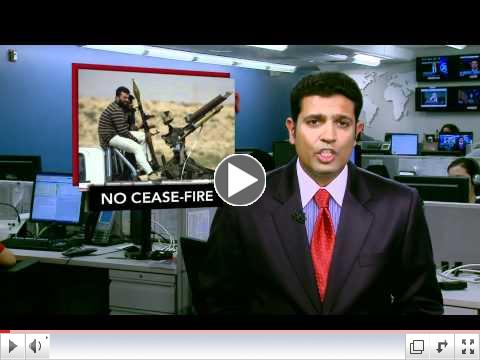 | |
News Wrap: Romney Officially Seeks 2012 GOP Bid; Gbagbo Captured
|
|
|
Greetings!
Please enjoy today's issue of the Congressional Climate newsletter, brought to you by Lobbyit.com!
|
|
Today's Hill Action:
THE SENATE:
The Senate will convene at 10:00 a.m. for morning business. Thereafter, they will proceed to Executive Session to consider the nominations of Vincent Briccetti to be U.S. District Judge for the Southern District of New York and of John Kronstadt to be U.S. District Judge for the Central District of California.
SENATE COMMITTEES:
Senate Appropriations (10:00 a.m.): Subcommittee on State, Foreign Operations, & Related Programs - Hearings to examine proposed budget estimates for fiscal year 2012 for the U.S. Agency for International Development. SD-138.
Senate Armed Services (10:00 a.m.): Hearings to examine U.S. Pacific Command and U.S. Forces Korea in review of the Defense Authorization request for fiscal year 2012 and the Future Years Defense Program; with the possibility of a closed session in SH-219 following the open session. SD-106.
Senate Energy & Natural Resources (10:00 a.m.): Business meeting to consider S.99, to promote the production of molybdenum-99 in the United States for medical isotope production, and to condition and phase out the export of highly enriched uranium for the production of medical isotopes, S.398, to amend the Energy Policy and Conservation Act to improve energy efficiency of certain appliances and equipment, S.629, to improve hydropower, S.630, to promote marine and hydrokinetic renewable energy research and development, an original hydropower bill, and the nomination of Peter Bruce Lyons, of New Mexico, to be an Assistant Secretary of Energy (Nuclear Energy). SD-366. Senate Environment & Public Works (10:00 a.m.): Subcommittee on Water & Wildlife - Joint hearings to examine natural gas drilling, focusing on public health and environmental impacts. SD-406. Senate Finance (10:00 a.m.): Hearings to examine the best practices in tax administration, focusing on a look across the globe. SD-215. Senate Judiciary (10:00 a.m.): Subcommittee on Constitution - Hearings to examine the 'Fair Elections Now' Act, focusing on a comprehensive response to Citizens United. SD-226. Senate Homeland Security & Government Affairs (10:30 a.m.): Subcommittee on Federal Financial Management, Government Information, Federal Services, & International Security - Hearings to examine the President's plan for eliminating wasteful spending in information technology. SD-342. Senate Foreign Relations (2:15 p.m.): Business meeting to consider S.Res.109, honoring and supporting women in North Africa and the Middle East whose bravery, compassion, and commitment to putting the wellbeing of others before their own have proven that courage can be contagious, and the nominations of Nils Maarten Parin Daulaire, of Virginia, to be Representative of the United States on the Executive Board of the World Health Organization, Joseph M. Torsella, of Pennsylvania, to be Representative of the United States of America to the United Nations for U.N. Management and Reform, with the rank of Ambassador, and to be Alternate Representative of the United States of America to the Sessions of the General Assembly of the United Nations, during his tenure of service as Representative of the United States of America to the United Nations for U.N. Management and Reform, Suzan D. Johnson Cook, of New York, to be Ambassador at Large for International Religious Freedom, Robert Patterson, of New York, to be Ambassador to Turkmenistan, Jonathan Scott Gration, of New Jersey, to be Ambassador to the Republic of Kenya, Michelle D. Gavin, of the District of Columbia, to be Ambassador to the Republic of Botswana, David Bruce Shear, of New York, to be Ambassador to the Socialist Republic of Vietnam, and Kurt Walter Tong, of Maryland, for the rank of Ambassador during his tenure of service as United States Senior Official for the Asia-Pacific Economic Cooperation (APEC) Forum, all of the Department of State, and Ben S. Bernanke, of New Jersey, to be United States Alternate Governor of the International Monetary Fund. S-116. Senate Armed Services (2:30 p.m.): Subcommittee on Emerging Threats & Capabilities - Hearings to examine Dept. of Defense plans and programs relating to counterterrorism, counternarcotics, and building partnership capacity; with the possibility of a closed session in SVC-217 following the open session. SR-232A. Senate Homeland Security & Governmental Affairs (2:30 p.m.): Subcommittee on Oversight of Government Management, the Federal Workforce, & the District of Columbia - Hearings to examine financial literacy, focusing on empowering Americans to make informed financial decisions. SD-628. Senate Judiciary (2:30 p.m.): Subcommittee on Crime & Drugs - Hearings to examine cyber security, focusing on responding to the threat of cyber crime and terrorism. SD-226. Senate Banking, Housing, & Urban Affairs (2:45 p.m.): Business meeting to consider the nominations of Katharine G. Abraham, of Iowa, and Carl Shapiro, of California, both to be a Member of the Council of Economic Advisers, Executive Office of the President, and Eric L. Hirschhorn, of Maryland, to be Under Secretary of Commerce for Export Administration; to be immediately followed by a hearing to examine building the new derivatives regulatory framework, focusing on oversight of Title VII of the 'Dodd-Frank Act'. SD-538. Senate Environment & Public Works (2:45 p.m.): Subcommittee on Clean Air & Nuclear Safety - Joint hearings to examine a review of the nuclear emergency in Japan and implications for the U.S. SD-406.
The House will meet at 12:00 p.m.
HOUSE COMMITTEES:
House Energy & Commerce (1:30 p.m.): Communications & Technology Subcommittee - Hearing on broadcast system. 2123 RHOB. House Transportation & Infrastructure (3:00 p.m.): Railroads, Pipelines, & Hazardous Materials Subcommittee - Hearing to examine hazardous material regulations. 2167 RHOB.
House Judiciary (4:00 p.m.): Constitution Subcommittee - Hearing on H.R. 1433 - Private Property Rights Protection Act. 2141 RHOB. House Rules (5:00 p.m.): Hearing to examine H.R. 1217 - To repeal the Prevention and Public Health Fund. H-313 Capitol.
|
|
Boehner: Deal is a 'first step'

Fresh off a deal with President Barack Obama to avert a government shutdown, House Speaker John Boehner is spoiling for a bigger fight to cut trillions of dollars in "autopilot spending" in fiscal 2012 and beyond.
In an op-ed published in Monday's USA Today, the Ohio Republican makes his case for "The Path to Prosperity," the budget plan introduced last week by House Budget Committee Chairman Paul Ryan (R-Wis.).
"Republicans control only one-half of one branch of the federal government, but we are committed to using our limited power to maximum effect in the effort to end the uncertainty facing job creators and put our economy back on a path to job creation and prosperity," Boehner writes.
Boehner has acknowledged that not raising the debt limit could bring about "financial disaster," but he said he won't agree to a "clean" up-or-down vote on the increase. Instead, he will use the vote that many economists consider essential as leverage for big spending cuts laid out in Ryan's budget plan.
The budget plan, Boehner argues in the op-ed, "is a powerful blueprint for economic growth and fiscal responsibility that will help our economy get back to creating jobs, stop Washington from spending money we don't have, and lift the crushing burden of debt that threatens our children and grandchildren."
Citing his own experience in small business before he was elected to Congress, Boehner says that employers are reluctant to hire workers as long as "government engages in policies that rattle confidence or decrease predictability," but that the GOP budget plan will "end much of that uncertainty."
Boehner also describes Obama's proposed 2012 budget as "irresponsible," raising taxes and adding trillions to the national debt.
Boehner said he hopes the president will agree to a budget that makes big cuts but maintains important programs like Medicare and Medicaid. The president is set to lay out his budget plan in a speech on Wednesday.
"More of the same spending, taxing and borrowing will not make our economy stronger or our future brighter," Boehner writes. "This is why the spending cut agreement is important. While not nearly enough, these cuts represent a first step in taking our nation off the path to national bankruptcy, to giving employers the confidence they need to expand their businesses, and to sparing our children of lives indebted to foreign countries such as China."
|
|
Lisa Murkowski: Smaller steps mean bigger strides on energy

Alaska Sen. Lisa Murkowski thinks Congress will have more success taking a "graduated" approach to energy legislation while keeping up the pressure to respond to last year's Gulf of Mexico spill.
While the Senate Energy and Natural Resources Committee, in which Murkowski is the top Republican, approved separate strategies last Congress addressing the historic oil spill and broader energy problems, the full Senate and Congress more generally did not follow suit.
"So more of a graduated approach to an energy policy, and I happen to believe that we will have greater likelihood of success in advancing something like that through the committee and getting it through the floor of the Senate and the House as well," Murkowski told POLITICO in the video series "Powering America's Future."
Murkowski cited legislation increasing hydropower and addressing small-modular nuclear reactors as examples. There is "probably much greater likelihood" of something like the latter bill moving "than a full-on expanded nuclear piece, particularly in view of just the uncertainty that we're seeing after the earthquake in Japan."
Senate Energy and Natural Resources Committee Chairman Jeff Bingaman (D-N.M.) will start marking up energy measures Tuesday, with additional measures coming before Memorial Day.
In order to spur floor action in this Congress, Bingaman has said he hopes to pass everything out of committee by early summer, including legislation designed to ensure the Interior Department "has the authority and resources they need to maintain proper regulation of oil and gas drilling on the outer continental shelf," he said at a March 30 POLITICO Pro event.
As the first anniversary of the April 20 explosion of the Deepwater Horizon rig that led to the biggest oil spill in history approaches, lawmakers also face a public both skittish on nuclear power after the damage to Japan's Fukushima Daiichi reactor and frustrated by the rise of gas prices.
Some of the ideas Murkowski thinks the energy panel will take up may not sound like headline-grabbing proposals that would restore public confidence in how Capitol Hill is responding to their concerns.
"I wouldn't suggest it's kind of nibbling around the edges," Murkowski said. "I would suggest to you that what we're doing is being more focused in terms of those areas where we feel that we can reach consensus on some energy issues, work to utilize the committee process to build good, solid legislation in these areas, advance them through."
She added, "It is a broader, more comprehensive" plan than just focusing on something like hydropower specifically. "But we haven't gone about it in the same manner that we did in the last Congress. We took the 'full-meal deal' approach, and we weren't able to sell it."
The panel also wasn't able to fully sell the strategy it passed last June to quickly respond to the Gulf spill, getting caught in the politics in the broader Senate on raising the per-spill liability limit for companies and cutting tax incentives for the oil industry.
At the time, "the explosion, the deaths, just the real tragedy that went on with that, the nation was fixated on what was happening in the Gulf of Mexico as we watched on our TVs, as we read about the efforts to plug that hole," Murkowski said. "And then they find success and they plug the well and the cleanup continues, and no longer is this incident in the news. And then, it seems like the pressure is off of us here in the Congress to act legislatively.
"We shouldn't allow the timing and the circumstances of what has happened down there to remove us from the responsibility of addressing the reforms that need to be made," she added.
Last year's failure of Congress to produce a spill-response bill showed "even if we were successful in building a bipartisan product, there's no guarantee that it then becomes a priority," she said, adding that Senate Majority Leader Harry Reid should make it a priority as well. "It needs to be made a priority by the administration, to say we need to have these structural reforms."
The Interior Department has started separating safety and environmental oversight from approval of offshore drilling leases and collection of royalty relief.
Interior Secretary Ken Salazar "has done some things internally. But quite honestly, a lot of the fixes require a legislative fix," Murkowski said.
One of those is largely out of the hands of Murkowski and the Senate energy panel.
Sens. Mary Landrieu (D-La.), Mark Begich (D-Alaska) and Bob Menendez (D-N.J.) are trying to find a compromise to raising the two-decade-old $75 million-per-spill liability cap for companies.
Landrieu and Begich are meeting first to develop an idea that would need to pass muster with those like Menendez, who is one of the leading offshore drilling critics. "We've told our staffs to get back at it," Begich told POLITICO. He met briefly with Landrieu to talk about it. "We both feel it's time to re-engage."
Murkowski said that's going to have to happen.
"One of the things that held us up ... was what happens with the liability issue and the cap," she said. "And so, maybe what you do [is] take people like Bob Menendez, who was leading on that issue, [Sen.] Frank Lautenberg [D-N.J.], and team them up with Mary Landrieu, myself, some of the others to make sure the commitment to fixing the systems is made while at the same time we can address the liability issue."
Meanwhile, Murkowski and Bingaman are also working on President Barack Obama's "clean energy standard," which promotes renewable power, nuclear sources and cleaner use of coal. She and Bingaman last month solicited public input on what a standard should entail. Responses are due Monday.
"There are those who suggested that a clean energy standard, in fact, may be nothing more than, you know, cap and trade under a different name," Murkowski said. "I don't think that that is the case, but if that is the case, then CES is not going to happen if that's how it is viewed. So ... we're looking to see just what is the temperature out there for an approach that would mandate a clean standard."
|

The shifting 2012 Senate landscape and lack of candidates in two states have prompted Roll Call Politics to change two race ratings. One adjustment is good news for Democrats, while the other favors the Republicans who are attempting to win back Senate control.
With no top Republican candidates stepping up yet to take on Sen. Joe Manchin (D), Roll Call Politics has moved the West Virginia Senate race from Tossup to Leans Democratic.
Although the state is Republican-leaning, with no apparent GOP opponent, Manchin is currently favored to win re-election.
According to state GOP Executive Director Chad Holland, potential candidates are likely waiting on Rep. Shelley Moore Capito to announce whether she is running. "Everyone's waiting for her to make a call. If she were to run, she would easily win the Republican primary," Holland said.
Her entrance would also make this a competitive race. The six-term Congresswoman has said that all options remain on the table, and sources close to her say that is still the case. Several more potential candidates are tied up in the special gubernatorial election - the GOP primary will be held May 14, and the general is Oct. 4.
Manchin, then a highly popular governor, won the special election last year to replace the late Sen. Robert Byrd (D) for the remaining two years of his term. He defeated wealthy businessman John Raese (R) by 11 points.
In North Dakota, the Democratic seat is looking more likely to shift to the GOP.
After Sen. Kent Conrad (D) announced his retirement earlier this year, Democrats started looking for a potential successor to the three-term Senator. Roll Call initially rated the race as Leans Republican, a big shift from when Conrad was favored to keep it for the party.
But a few months after Conrad's announcement, there's still not a single Democratic candidate publicly looking at the race. Former Rep. Earl Pomeroy (D-N.D.) has dismissed speculation that he could succeed his longtime friend and colleague, instead telling reporters that he's looking at a bid for governor.
Given the dearth of Democratic candidates and the state's overwhelming track record of voting for Republicans in recent cycles, Roll Call now rates this race as a Likely Republican pickup.
Although no well-known Republicans have jumped into the race yet, several elected officials are publicly considering bids and are expected to make a decision once the state legislative session is over in the next few weeks. Republican Rep. Rick Berg, state Sen. Tony Grindberg, state Treasurer Kelly Schmidt and other statewide officeholders are just a few names on a long list of potential GOP candidates looking at running for Conrad's seat.
|
|
|
Until tomorrow,
Lobbyit.com |
|
|