Congressional
Climate Bill Tracking
|
|
Video Of The Day
|
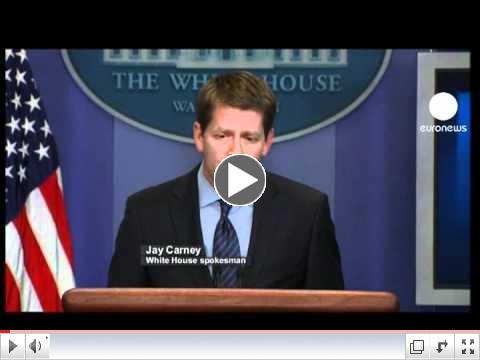 | |
9/11 accused to be tried at Guantanamo
|
|
|
Greetings!
Please enjoy today's issue of the Congressional Climate newsletter, brought to you by Lobbyit.com!
|
|
Today's Hill Action:
THE SENATE:
The Senate will convene at 10:00 a.m. for morning business. Thereafter, they will begin consideration of H.R.4, the 1099 repeal bill.
SENATE COMMITTEES:
Senate Budget (TBA): Business meeting to consider the nomination of Heather A. Higginbottom, of the District of Columbia, to be Deputy Director of the Office of Management and Budget, Executive Office of the President. S-219.
Senate Environment & Public Works (TBA): Business meeting to consider the nomination of Daniel M. Ashe, of Maryland, to be Director of the United States Fish and Wildlife Service, Dept. of the Interior. S-216. Senate Armed Services (9:30 a.m.): Hearings to examine U.S. Northern Command and U.S. Southern Command in review of the Defense Authorization request for fiscal year 2012 and the Future Years Defense Program; with the possibility of a closed session in SVC-217 following the open session. SD-G50. Senate Appropriations (10:00 a.m.): Subcommittee on Financial Service & General Government - Hearing to examine proposed budget estimates for fiscal year 2012 and oversight of prior year funding for the Dept. of the Treasury. SD-138. Senate Commerce, Science & Transportation (10:00 a.m.): Subcommittee on Competitiveness, Innovation, & Export Promotion - Hearing to examine tourism in America, focusing on removing barriers and promoting growth. SR-253. Senate Foreign Relations (10:15 a.m.): Hearings to examine the nominations of Mara E. Rudman, of Massachusetts, to be an Assistant Administrator of the United States Agency for International Development, and Robert Patterson, of New York, to be Ambassador to Turkmenistan, Dept. of State. SD-419.
Senate Armed Services (2:30 p.m.): Subcommittee on Airland - Hearings to examine Army modernization in review of the Defense Authorization Request for fiscal year 2012 and the Future Years Defense Program. SR-232A. Senate Commerce, Science & Transportation (2:30 p.m.): Hearings to examine closing the digital divide, focusing on connecting native nations and communities to the 21st century. SR-253.
Senate Foreign Relations (2:30 p.m.): Hearings to examine the nominations of Jonathan Scott Gration, of New Jersey, to be Ambassador to the Republic of Kenya, and Michelle D. Gavin, of the District of Columbia, to be Ambassador to the Republic of Botswana, both of the Dept. of State. SD-419. Senate Intelligence (2:30 p.m.): Closed hearings to examine certain intelligence matters. SH-219.
The House will meet today at 10:00 a.m.
HOUSE COMMITTEES:
House Oversight & Government Reform (9:45 a.m.): Hearing to examine U.S. Postal Service compensation issues. 2154 RHOB.
House Appropriations (10:00 a.m.):
Agriculture, Rural Development, & FDA Subcommittee - Hearing to examine the fiscal year 2012 budget request from the USDA's natural resources and environment programs. 2362-A RHOB.
House Appropriations (10:00 a.m.): Financial Services & General Government Subcommittee - Hearing to examine the fiscal year 2012 budget request from the General Services Administration. Martha Johnson, Administrator of the GSA, will be present. B-308 RHOB.
House Energy & Commerce (10:00 a.m.): Hearing to conduct markup of H.R. ____ - To Clarify NTIA and RUS Authority to Return Reclaimed Stimulus Funds to the U.S. Treasury, H.R. 1217 - To Repeal the Prevention and Public Health Care Fund, and other pending legislation. 2123 RHOB.
House Financial Services (10:00 a.m.): Capital Markets Government Sponsored Enterprises Subcommittee - Hearing to conduct markup of H.R. 31 - Fannie Mae and Freddie Mac Accountability and Transparency for Taxpayers Act, and other pending legislation. 2128 RHOB. House Foreign Affairs (10:00 a.m.): Hearing to examine the need for systematic reforms and independence of the State Dept. Inspector General. 2172 RHOB.
House Homeland Security (10:00 a.m.): Border & Maritime Security Subcommittee - Hearing to assess resources for border security. 311 CHOB.
House Judiciary (10:00 a.m.): Crime, Terrorism, & Homeland Security Subcommittee - Hearing on using military commissions to try the 9/11 conspirators. 2141 RHOB.
House Natural Resources (10:00 a.m.): Hearing to examine the fiscal year 2012 budget request from the Bureau of Land Management and the U.S. Forest Service's energy and mineral programs. 1324 LHOB.
House Select Intelligence (10:00 a.m. - Ex.): Hearing to examine the fiscal year 2012 budget request for the CIA. HVC-304 Capitol.
House Transportation & Infrastructure (10:00 a.m.): Highways & Transit Subcommittee - Hearing to examine policy proposals from members of Congress to reform the nation's surface transportation programs. 2167 RHOB.
House Veterans' Affairs (10:30 a.m.): Hearing to examine the Dept. of Veterans' Affairs construction planning. 344 CHOB.
House Natural Resources (11:00 a.m.): Indian & Alaska Native Affairs Subcommittee - Hearing to examine H.R. 887 - To direct the Secretary of the Interior to submit a report on Indian land fractionation. 1334 LHOB.
House Armed Services (11:30 a.m.): Strategic Forces Subcommittee - Hearing to examine the fiscal year 2012 budget requests from the Dept. of Energy's atomic energy defense activities and the Dept. of Defense's nuclear forces programs. 2212 RHOB.
House Judiciary (1:30 p.m.): Immigration Policy & Enforcement Subcommittee - Hearing to examine H.R. 704 - The Security and Fairness Enhancement for America Act. 2141 RHOB.
House Oversight & Government Reform (1:30 p.m.): Health Care, District of Columbia, Census, & National Archives Subcommittee - Hearing to examine waste and abuse issues in government health care. 2154 RHOB.
House Appropriations (2:00 p.m. - Ex.): Homeland Security Subcommittee - Hearing to review weapons of mass destruction countermeasures focusing on threats, programs, and funding. H-140 Capitol. House Appropriations (2:00 p.m.): Military Construction & Veterans Affairs Subcommittee - Hearing to examine the fiscal year 2012 budget request from the United States Court of Appeals for Veterans Claims. HT-2 Capitol. House Armed Services (2:00 p.m.): Hearing to examine the fiscal year 2012 budget requests from the U.S. Transportation Command and the U.S. Africa Command. 2118 RHOB.
House Foreign Affairs (2:00 p.m.): Middle East & South Asia Subcommittee - Hearing to assess U.S. foreign policy priorities and needs amidst economic challenges in South Asia. 2172 RHOB.
House Natural Resources (2:00 p.m.): Water & Power Subcommittee - Hearing to examine creating abundant water and power supplies and job growth by restoring common sense to federal regulations. 1324 LHOB.
House Ways & Means (2:00 p.m.): Human Resources Subcommittee - Hearing to examine a GAO report on duplication of government programs focusing on welfare and related programs. B-318 RHOB.
House Appropriations (3:00 p.m.): Military Construction & Veterans Affairs Subcommittee - Hearing to examine the fiscal year 2012 budget request from the Armed Forces Retirement Home. HT-2 Capitol. House Rules (3:00 p.m.): Hearing to examine H.R. 910 - Energy Tax Prevention Act. H-313 Capitol.
|
|
House GOP to distribute shutdown plan

Republican leaders are preparing the House for a government shutdown, as they plan to distribute a pamphlet about the mechanics of a partial congressional work-stoppage to all lawmakers' offices Tuesday morning, according to several senior House aides.
It's the strongest signal yet that House Speaker John Boehner believes the White House and Congress could fail to strike a deal on a long-term funding bill before the government's authority to spend money runs out on Friday. Talks came to a standstill Monday, amid amplified partisan recriminations.
To illustrate just how tense the situation has become, Boehner (R-Ohio) did not initially commit to a meeting President Barack Obama plans to host at the White House on Tuesday - the same day House Republicans plan to release their entitlement-slashing budget plan for the fiscal year that begins Oct. 1. Boehner's office confirmed late Monday that he will attend but arrive after it starts.
With that as a backdrop, House Administration Committee Chairman Dan Lungren (R-Calif.) has been tasked with compiling and distributing the pamphlet. It is designed to give guidance on which employees are considered essential and which are not allowed to work during a shutdown, advise congressional staff about the status of their benefits during a shutdown and outline which House services will continue to operate.
Democrats pounced on the news.
"The Republican leadership is preparing for a shutdown. Instead of coming to the table to work with Democrats and the White House, who have offered $33 billion in cuts, Speaker Boehner is taking his marching orders from the Tea Party, who want to 'cut it or shut it,'" said a House Democratic leadership aide.
"Republicans are the only ones who are talking about a shutdown and it has never been more clear that Boehner has lost control of his conference."
Both sides have been talking about a shutdown - typically couched as a desire to avoid one in the face of intransigent adversaries on the other side.
Boehner was meeting with his Republican Conference on Monday night to discuss the status of the long-term spending bill.
Several Republican aides declined to comment on the record about the pamphlet, but it was described as mechanical rather than partisan.
Under the plan, "essential" staffers - those whose work must be done to keep Congress operating - would continue to work, while others would be furloughed and prohibited from working or talking to "essential" staff with government-issued BlackBerrys and cell phones, according to one source who had been apprised of the guidelines. The distinction is up to each member's discretion, and "essential" and "non-essential" employees could be rotated if a shutdown lingers.
Health coverage would continue for for up to a year, and some employees may be eligible for unemployment benefits. But staffers enrolled in the student loan repayment program would lose that benefit during a shutdown.
The staff gym and Capitol Visitor Center would be closed, the source said.
A spokeswoman for Lungren could not be reached before publication of this story.
|
|
Senators debate Libya resolution

Four powerful senators of both parties are in talks over whether they need to satisfy the War Powers Act and approve President Barack Obama's use of force in Libya, a sign that the Senate takes the military action seriously and isn't eager to cede power to the executive branch.
The staffs of Senate Armed Services Committee Chairman Carl Levin (D-Mich.), Foreign Relations Committee Chairman John Kerry (D-Mass.), Homeland Security Committee Chairman Joe Lieberman (I-Conn.) and Sen. John McCain (R-Ariz) met Friday to discuss a potential authorizing resolution, two of the senators confirmed Monday to POLITICO.
The senators haven't agreed on a draft proposal, or even if a resolution is necessary. But with the Hill embroiled in a make-or-break debate over the budget, the ongoing talks underscore the gravity with which lawmakers view engaging the U.S. military in a third Muslim nation.
Obama briefed members of Congress before launching attacks by air and sea on the North African nation, but did not seek their approval. The War Powers Act allows the president to use military force for 60 days without congressional approval, setting a theoretical deadline of May 20 before he must seek the blessing of Congress.
Secretary of Defense Robert Gates told Congress last week that the Obama administration would "welcome" a show of support, but he did not suggest the White House would seek it.
Nonetheless, McCain said he will continue talks with Kerry, Lieberman and Minority Leader Mitch McConnell Tuesday.
"I don't think a firm, final decision has been made yet as to whether we actually need the resolution. I think that has to be discussed some more. And then, what form that would be," McCain said Monday evening.
McCain said late last week that negotiations had begun between the high-profile senators, saying Thursday that the group had taken the first steps toward drafting "language that could get the overwhelming support of the Senate."
But Monday, when asked what shape that language would have to take to win over many of his colleagues, the top Republican on the Armed Services Committee seemed more skeptical that whatever product the group might produce could achieve that stated goal.
"Obviously, it would not be consensus," McCain said.
Levin said Monday the leading role of NATO allies complicates the need for a resolution going forward and a retroactive resolution is problematic. Like McCain, Levin indicated agreement on what forces should do moving forward would be difficult to find.
"The circumstances have changed now. We're not in the lead, NATO's in the lead," Levin told POLITICO Monday. "I have no problem with a resolution supporting, but I'm not so sure we can get everyone together [on something] that just simply says we support what was done without having some things in there, which raise questions of where we go from here."
Levin added that some people "are going to want to say that we ought to provide certain kinds of equipment for the air strikes," alluding to statements made last week by McCain in an Armed Services Committee hearing in which the Vietnam veteran told Gates and Joint Chief Chairman Michael Mullen he was "disappointed" the U.S. "effectively stopped our strike missions altogether without having achieved our goal."
"It's not an easy thing," Levin said.
On the question of whether Congress must move a bill under the War Powers Act, Levin said that in practice, a privileged motion of disapproval would be necessary to cease action, but at this point, Congress "doesn't need a motion approving it."
Gates told senators last week, that though he and Secretary of State Hillary Clinton "welcomed" Congressional action, a motion of disapproval "would obviously send an extraordinarily negative signal to our allies. It would certainly be encouraging to Gadhafi."
Gates also told the panel of lawmakers that U.S. combat planes are on "stand-by," should NATO not succeed - another factor that might give senators impetus to move forward with some form of legislation.
After a pair of classified briefings last Wednesday in the Capitol, many lawmakers seemed more frustrated with how the president took action in Libya, without seeking their approval, than they were with the actual mission, which many also believe is too vague.
In particular, politicians on the Hill questioned proposals for a retroactive authorization, worrying about the signal it might send to this president or those who come after him.
"Should there be a resolution saying, 'we now authorize it retroactively,' I'm not sure about that," Rep. Jerold Nadler (D-N.Y.) told reporters after the briefing. "It would be nice Constitutionally, but I'm not sure that a retroactive Constitutional authorization doesn't just say to the next president, 'Don't bother asking in advance.'"
|

Gov. Brian Sandoval and other senior Nevada Republicans are directing a wholesale overhaul of the state party as the GOP moves to organize an advanced voter-turnout operation capable of reclaiming the Silver State from President Barack Obama in 2012.
That effort begins with preparation for Nevada's Feb. 18, 2012, Republican presidential nominating caucuses, with the first test coming in late October, when the state GOP will host the Western Republican Leadership Conference in Las Vegas. High-ranking Nevada Republicans are pushing the state party to mimic state Democrats and adopt same-day voter registration for the caucuses, and they view the WRLC as a trial run for its ground-game operation.
"I believe that Republicans have a lot of momentum," Sandoval told Roll Call in a telephone interview from Carson City. "We all agree that it's incredibly important that Republicans in Nevada do well in terms of showing that they can match or exceed what the Democrats have done in the past. It's self-evident that it is going to be an extremely hard-fought campaign."
Nevada Republicans were outhustled at all levels in 2008, when the Democrats carried the state for the first time since 1996. Democrats repeated the feat in 2010, when - despite some success on the midterm ballot for the GOP - Senate Majority Leader Harry Reid overcame long odds to win re-election.
In the other marquee race this cycle, Rep. Dean Heller (R) is hoping to benefit in his run for the open Senate seat.
Obama won Nevada with 55 percent of the vote in 2008, topping the 2004 performance of Sen. John Kerry (D-Mass.) by 7 points, improving on President George W. Bush's total by 5 and beating President Bill Clinton's 1996 finish by 11. Last November, Sandoval won in a landslide, and now-Rep. Joe Heck (R) narrowly ousted then-Rep. Dina Titus (D). But Reid won with 50.3 percent, which Republicans attribute to a superior ground game and a better-functioning state party.
Nevada Republicans say they have made strides toward being competitive in 2012. Compared with spring 2007, when the party had only a few thousand dollars in its federal account - and the aftermath of the 2008 elections, when it employed just two clerical workers - the organization currently features five full-time political staff and has $335,000 in the bank to use for federal activities. But Sandoval and others say their party's resurgence begins with the presidential caucuses.
Nevada Republicans only began planning for the 2008 caucuses in October 2007. Preparation for the 2012 caucuses began in 2010. To encourage the full field of GOP presidential candidates to turn Nevada into a regular early-state campaign stop on par with Iowa, Florida, New Hampshire and South Carolina - and generate the grass-roots enthusiasm that could follow - the rules have been changed from the 2008 winner-take-all system to the proportional awarding of delegates.
Heller said that whether the state GOP would be stronger in 2012 was a part of his calculus in deciding whether to run for Senate. Given what is expected to be a muscular and technologically advanced Obama ground game - the president announced for re-election Monday with a video that featured a Nevada family - Heller wanted to know that his campaign would have support. The Reno-area Congressman's optimism is based partly on his expectation for a successful caucus.
"The most important thing is, we've already started. We didn't get started very early last time," said Heller, the former three-term Nevada secretary of state who is seeking the seat being vacated by scandal-plagued Sen. John Ensign (R). "If we do all the right things, I think we'll see a very good turnout."
Ed Espinoza, a Washington, D.C.-based Democratic operative with extensive Nevada experience, argued that the Republican effort would face numerous obstacles and that success could prove elusive.
"Nevada is an incredibly difficult state to organize in. If you haven't been successful before, the learning curve you're going to have in 2012 is going to be quite steep," said Espinoza, who ran Bill Richardson's Nevada caucuses campaign in 2008 and directed Reid's Latino outreach program in 2010. "The machine that Democrats have built wasn't built overnight. It was built over many years with the best political operatives in America."
The Obama team believes it will win Nevada again in 2012, thanks in part to its work with Hispanic voters.
But Sandoval, having already been visited by three likely GOP presidential candidates - Mississippi Gov. Haley Barbour, former Minnesota Gov. Tim Pawlenty and 2008 caucuses winner and ex-Massachusetts Gov. Mitt Romney - believes that the strategy of using the caucuses to generate attention from White House hopefuls is already working. Still unclear is whether the format will engender the enthusiasm and volunteer get-out-the-vote army needed to beat Obama and whip up a downballot tail wind.
The Western Republican Leadership Conference, which has received the blessing of the Republican National Committee, is viewed as a key component of the Nevada GOP's plans to transform its caucuses in an effort to make the state more prominent and to gather a grass-roots army for the 2012 campaign. Though attributed partly to Bush fatigue, in 2008 more than 100,000 Nevadans participated in the Democratic presidential caucuses, compared with 44,324 who attended the Republican caucuses.
The presidential candidates will be invited to speak at the WRLC, and Nevada Republicans also hope to host a televised debate. The state party plans to use the conference to gauge the enthusiasm of its activist base and test its voter-turnout abilities by seeing how many attendees it can draw. The event will feature seminars on how the caucus works, offer classes on political organizing and contribute to the party's major priority of registering voters.
"We've had a major disadvantage when it comes to voter registration," said Cory Adair, executive director of the Nevada Republican Party who arrived from Mississippi in March 2010. "Our focus in 2012 is going to be on creating opportunities to close the gap."
Planning is under way to compete with the Democratic political machine. Senior Nevada Republicans say their goal is to improve the sophistication and effectiveness of the state GOP's ground operations, with a new focus on door-knocking over phone calls, better penetration in GOP-leaning communities and enhanced micro-targeting.
The key, argue some Nevada Republicans, is Sandoval's interest in accomplishing this and the leadership that he has exhibited in just a few months in office. The fact the GOP was purged of its scandal-tainted members - Ensign and former Nevada Gov. Jim Gibbons - helps as well. Gibbons ignored the state GOP, and it atrophied under his watch.
National and state Republicans had been hoping Heller would be their Senate candidate. He is close with Sandoval - a popular Latino conservative who has a good relationship with tea party activists and has prioritized helping his party succeed politically. Sandoval was the top vote-getter on the 2010 ballot, even carrying Democratic-leaning Clark County, which includes Las Vegas.
"Sandoval changes the game completely," said strategist Mike Slanker, a top political adviser to both the governor and Heller. "He understands that he has to be a player in this and provides a new brand of leadership."
|
|
|
Until tomorrow,
Lobbyit.com |
|
|