Kidnexions Connection
 
August 2010
Greetings!
 
Welcome to the August edition of the Kidnexions Connection.  Our goal is to provide you with useful information about kids and money with an emphasis on making connections between what kids learn and their every day lives.
 
In This Issue
Teaching Kids Money
Teachable Money Moments
August Connection: Trust
Teaching Kids Money 
  
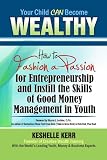
Your Child Can Be Wealthy: How to Fashion a Passion for Entrepreneurship & Instill the Skills of Good Money Management in Youth 
by Keshelle Kerr
 
Hot off the press!  Keshell Kerr of Creative Wealth Training has just released her book giving insight to parents and kids on raising financially savvy kids.  I am honored to be included as a guest writer along with Sharon Lechter (co-author of Rich Dad, Poor Dad), John Hope Bryant (Vice Chairman of the President's Advisory Council on Financial Literacy), Cameron Johnson (child entrepreneur and millionaire), and many others.   Check it Out
 
 
Find us on Facebook
 For on-going, quick kids and money tips, join me on my Raised for Richness Facebook page.
 
Book Signing:  I'll be doing a Raised for Richness book signing for you local Sacramento folk on Sunday, August 22.  For more information, click here.
 
Teachable Money Moment 
 
The best way to teach kids financial literacy is in the context of their everyday lives. Here's this month's teachable money moment:
 
Back-to-School season offers a great opportunity to teach a few lessons before a single textbook gets opened.  Here are three:
 
Lesson #1:  It's hip to be frugal.  Who says you have to buy brand new stuff for school?  With the help of your child, go through last year's school supplies and determine what can be re-used...pens, pencils, binder, backpack, spiral notebook with only two used pages.  Then, to get in the school spirit, try this analogy:   Left-over pizza is to your tastebuds as left-over highlighter pens are to your _______.  answer:  wallet!
 
Lesson #2:  Never leave home without The List.  Want your kids to spend less money when shopping?  It's as simple as writing everything down.  Have your kids create a back-to-school shopping list then stick to it as you shop for the items.   If your child sees something that he has to have that is not on the list, let him spend his own money on it.
 
Lesson #3:  Savvy shoppers love to compare.  Using newspaper circulars or even the Internet, teach your child how to find the best deals on supplies and clothing.  And to cut down on store-hopping, show your child how you can use a coupon or circular from one store and receive the discount for the same item at the store you're currently in!
August Connection: Trust
 
Trust...the ultimate confidence builder in kids.  It requires that we let go and shift control into their hands, but the result is the development of self-esteem, competency, and independence.
 
Giving your 3-year old a sponge so that she can help wipe up the kitchen table, and then allowing her to do the task according to her abilities, lets her know that you think she is capable. 
 
Similarly, having your teen print the What to Bring to Summer Camp list and letting him take charge of packing his own duffel bag (without your interference from start to finish) shows that you believe he can accomplish the task.
 
Of course, there will be minor mess-ups like spilled milk or your teen forgetting to pack the quarters he needs to use the showers (!), but, in a safe and caring environment, those turn into great learning opportunities.
 
And the best part?  Not only does trusting your kids to do for themselves help build self-esteem and confidence, but it also helps strengthen your personal relationship with them.
 
The Money Connection:  As we raise our kids, one of our expectations should be that they will grow up with the skills necessary to be responsible with money.  This happens when we put our kids in charge of managing money, their money, and trust them to make decisions about how to save, spend, share, and invest it wisely. 
 
They'll need your guidance, of course, but the final decision should rest with them.  Accepting their decision means you trust them to behave in a responsible way.  Trust me, :-) this does not go unnoticed by them.  As always, they will make mistakes.  But your confidence in their ability to learn from their mistakes helps solidify the trust you are establishing.
 
Don't want your kids living with you when they're 30?  Then trust them now to learn how to make financially responsible decisions.  You may find yourself pleasantly surprised at just how savvy they can be.
Kids$ave Blog Vignettes
Why read the vignettes?  Because the vignettes offer examples of doing money in real life settings.  And it's when you can "see" money in action that teaching it takes on a whole new meaning.
 
ATTITUDES:  Money Reflections
 
 
 As always, we love hearing from you.  Feel free to contact us with comments and suggestions!
 
Wishing you continued success as you teach your children to be saving savvy and money smart.

John and Karyn Hodgens
Kidnexions co-founders
 
Instruction does much, but encouragement does everything.  - Johann Wolfgang von Goethe
 
Karyn Hodgens has a BA in Child Development, a Masters of Arts in Education with a Specialization in Elementary Mathematics, and a multiple subjects teaching credential.  Her passion is designing real-world lessons that resonate with kids and their interests.  Karyn is currently teaching kids how to prepare for their financial future in addition to writing about kids and money issues.    Contact Karyn at karyn@kidnexions.com
 
John Hodgens has a BS in Electrical Engineering.  He is currently a software engineer committed to designing software applications that help make teaching science and math concepts easier.   Contact John at john@kidnexions.com
 
  LinkedIn:  Join our group Conversations about Kids and Money.