|
|
Henry Liu, from the Design MBA program at California College of the Arts, commented about our ASAE article in his blog. An excerpt:
"If you're like me, you've probably sat in countless meetings listening to your boss make statement after statement while you offer continuous affirmation to every request and whim.
As you glance around the room, you may even notice your peers doing the exact same thing. What the meeting really needs is the presence of a corporate jester to challenge the leader's unilaterally accepted dispositions."
To read the rest of Henry's blog entry, click here.
To view the original Corporate Jester article as it appeared in the online version of ASAE's Associations Now Magazine, click here. |
|
|
|
The Jester's Bookshelf |
|
We have created a special area of the our website designed to share recommendations of the best books on subjects ranging from Leadership to Creativity to Change Management.
To visit the Bookshelf, click here. |
|
|
|
|
Welcome New Subscribers!
We encourage you to learn more about Corporate Jester by using any of the following links:
Click here to listen to Dave explain the concept of Jestership
We also invite you to forward this newsletter to any colleagues that may be interested in Corporate Jestership. We would love to have them!
To do so, click on the "Forward email" link at the bottom of this newsletter.
Thanks for joining us!
|
Our Primary Web Presence:
|
We are Proud Members of:

| |
|
|
|
|
Greetings!
Welcome to the January 2009 issue of the Corporate Jester Newsletter. This publication is one aspect of our commitment to help individuals and organizations create maximum results leveraging the concepts and philosophy from the business book The Secret Life of the Corporate Jester: A Fresh Perspective on Organizational Leadership, Culture and Behavior.
If you are a new reader, see the welcome article on the bottom left. |
 |
|
Earlier this month we invited some readers to take part in an experiment based on the 1960s popular US television quiz show "Let's Make a Deal". In that show, the program's host, Monty Hall, would present the contestant with three doors. Behind one door was a substantial prize; behind the others there was nothing.
If you haven't yet participated in the short experiment, feel free to click here to do so before reading any further.
In our experiment, we asked you to imagine playing a seven door version of the game. You get to initially choose three doors. After making your choice, Monty (who knows where the prize is) opens three of the remaining doors to show you that the prize was not behind any of them. He then says, "Would you like to stick with the three doors you originally picked, or would you prefer to swap them for the one other door I have not opened?" We then asked you two questions:
Question 1: Should you stick with your original three doors or make the swap Monty is offering, etc?
Question 2: How confident are you with your answer to question 1?
At the time we sent this newsletter out, the majority of you, 79%, said you would keep your original three doors and 13% said it didn't matter if you switched or not - a total of 92%.
In addition, 81% of those same people responded that they felt "Confident. It would be difficult to talk me into changing my answer" or "Extremely confident. I don't believe I could be talked into changing my answer."
As you may have gathered, those among the 92% were completely incorrect. The correct answer is to switch doors, even though it doesn't make intuitive sense for most people. To understand why, click on the link at the end of this article.
What we find interesting about this experiment is not necessarily the confidence people had in their initial answers but the confidence they had in judging that it would be difficult to be talked into changing that answer - before being presented with any alternative perspectives!
Our favorite open response comment was from the participant who wrote "I cannot think of an argument that would convince me to change" and indicated they were extremely confident.
Of course a person who is extremely confident can't think of an argument that would convince them to change their position or they wouldn't be that confident! The real issue is whether, in the real world, that level of confidence stops people from actively searching for potential perspectives that, if found and reflected upon, might convince one to change their position.
We think the experiment illustrates something interesting happening in many organizations. Leaders at all levels sometimes make decisions or hold assumptions without weighing them against alternative viewpoints because they have already reached a conclusion about the validity of those alternative viewpoints - without knowing anything about them.
Under that paradigm, leaders often cease to actively look for perspectives that are contrary to those they are most confident in - creating huge potential for ongoing blind spots.
A Jester's work is critical because it is the most confidently held viewpoints, conclusions or paradigms (potentially harboring unilluminated blind spots) that most easily can become the unexamined status quo.
If you are one of the 91% shaking your head wondering how you could have possibly been wrong (and maybe still thinking that we are wrong), click here for an explanation of why it is in your interest to trade your three doors for the one door. The article addresses a more simple 3 door problem but the insight will easily transfer to our seven door version.
By the way, if you thought we were crazy before you read the explanation, you are not alone. When a version of this problem and the solution appeared in Parade, approximately 10,000 readers, including nearly 1,000 with Ph.D.s, wrote to the magazine claiming the published solution was wrong.
We would love to hear your comments about this. Click here to respond (but wait a couple minutes if you are currently having an amygdala hijack - see below). |
 |
|
|
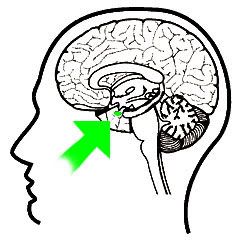
We have talked in the past about the need to be conscious of when to step into the role of a Jester. Timing is critical, especially in the current climate of extra economic pressure. Trying to illuminate blind spots when you or other people are in a stressful moment can be disastrous. To understand why, let's talk about the human brain. On both sides of our brains, not far from the ears, lies a small almond shaped structure called the amygdala. This part of our brain plays a critical role in how we behave in high stress situations.
When the brain becomes overwhelmed with stimuli, its "traffic director" (the thalamus), redirects sensory signals from where they are usually processed (the cortex), to the amygdala. When this happens, the amygdala dictates the body's reactions based on the immediate flood of emotional stimuli it is receiving, instead of the cortex analyzing these signals and acting rationally. In emotional intelligence terms, this is called an amygdala hijack.
How can you tell if you've been the victim of an amygdala hijacking? If you've ever looked back at your behavior after a intense situation with shame or regret there is a good chance that your brain became overwhelmed with emotions and your amygdala took control bypassing the cortex. Classic examples include sending a scathing email before thinking it through or becoming highly defensive when faced with negative feedback.
So what is a Jester to do? First, avoid trying to step into the role of Jester in the midst of a stressful situation - it just won't work. Remember, when the amygdala takes control of the brain its purpose is to bring about a rapid response (fight or flight), not a thoughtful analysis of information or insight. Make note of your thoughts and share them at a more appropriate time.
If you find yourself having an amygdala hijack, don't take any action immediately. Thankfully, the amygdala only takes charge for short periods of time, typically not more than 10 seconds. Go take a walk, go for lunch, or even take a deep breath and count to 10. A few deep breaths will give the thalamus time to get its bearings and start sending sensory signals back to the cortex where more rational decision making can be made.
Being aware of how people respond to stressful, emotionally charged situations is critical in understanding when to fully step into the role of a Jester.
|
 |
|
- Check out the new BUZZ section of the Corporate Jester website by clicking here.
- If you have an internal newsletter and would like to mention Corporate Jestership we would be glad to support you with permission to use excerpts from the book, graphics, etc. Just let us know what you need!
- We are still looking for positive amazon.com reviews from those who have enjoyed the book and are willing to share their comments with others. To read what others have said, or to leave your own short review, click here. | |
|
One quick request from the editorial team. Each month we try to put together a newsletter that is fun, informative and has a little something for everyone. How are we doing?
Could you take a moment to drop us a line to tell us what you have enjoyed most in past editions? What would you like to see more of? We want to continue to bring you a newsletter you look forward to opening each month!
Thanks for being a part of Corporate Jester.
Sincerely,
The Newsletter Team
Corporate Jester
phone: 408-454-6650, toll free: 866-896-8948
| |
|
|