Preparing for Earthquakes and Remembering a Firestorm in Oakland
|
Just in time for the largest earthquake drill in US history, we're taking a look at how you can still join the 8.2 million people participating in ShakeOut on Thursday, October 20th at 10:20 a.m.
Also, twenty years later, we're featuring some candid stories from those on the front lines of the devastating Oakland hills fire.
We would also like to take this time to thank all our partners around the state that participated in our National Preparedness Month activities. September 2011's preparedness activities were all great successes and encouraged the public and businesses to consider their emergency readiness a top priority in their planning for the future.
We encourage you to share this newsletter with your colleagues. Click "Send to a Colleague" below and send them a courtesy copy. They can join our mailing list with a simple click!
Have a suggestion for a future story? Send our editor, Brad Alexander, a note. Articles selected for statewide publication are edited to 250 words and photos and helpful web links make the stories even better.
|
Are you Ready for ShakeOut 2011?
Largest Statewide Exercise Hits Oct. 20 |
 | |
Firefighters and CERT team members practice evacuating a student from a school during the 2010 ShakeOut drill in Burbank, California.
|
On Oct. 20, 2011, at 10:20 a.m. more than 8 million Golden State residents will participate in the large emergency preparedness exercise in the United States. The Great California ShakeOut tests the earthquake disaster readiness of businesses, schools, government agencies and first responders on a massive scale.
Staff members from the Cal EMA Earthquake and Tsunami Program (ETP), managed by Jim Goltz, Ph.D, from Pasadena, provides planning and technical assistance for many natural disaster preparedness exercises such as ShakeOut.
 | |
A student from Providence High School in Burbank participates in last year's ShakeOut drill.
|
"Our team works year round to enhance California's earthquake readiness and ShakeOut is one of the most effective methods of public education that we participate in," Goltz said.
ETP staff members work with local and regional governments, businesses, hospitals, schools, human service agencies, neighborhood and community organizations to address disaster readiness, hazard mitigation, emergency response and business continuity planning strategies, as well as post-earthquake shelter and housing.
Lucy Jones, the chief scientist for the US Geological Survey, said this year's drill continues the mission of the public safety community to keep Californians safer and more educated for the next disaster.
"The USGS is proud to see Californians continue to take the earthquake science found in the ShakeOut Scenario and apply it to the statewide ShakeOut drill this year," Jones said.
"We look to the State of California and Cal EMA to lead the nation in preparing for natural disasters like earthquakes, that are an inevitable part of modern life in the US," Jones said. "We see across the nation and around the world the impacts of natural disasters on communities that have prepared and those that have not -- I'm glad California is taking the steps to be prepared."
A similar exercise will be taking place in the greater British Columbia (BC) area in Canada, Guam, Idaho, Nevada and Oregon at the exact same time and day as the California exercise. The BC-area exercise has registered nearly a quarter of a million participants already.

Several states in the central United States are participating in a ShakeOut on February 7, 2012 and Utah will have its own on April 17, 2012.
To register for The Great ShakeOut or for more information on the exercise, visit ShakeOut.org or DropCoverHoldOn.org. Click here to see a list of all the nearly 8 million people already signed up for The Great ShakeOut.
To see pictures from last year's California ShakeOut, visit Cal EMA's Flickr page.
Along with Cal EMA, sponsors for the statewide exercise include: American Red Cross, Southern California Earthquake Center, U.S. Geological Survey, California Earthquake Authority, Earthquake Country Alliance, California Institute of Technology, State Farm Insurance and California Department of Education.
|
|
East Bay Hills Fire Reaches 20th Anniversary
Video: Veteran Cal EMA Employees Share Memories
|
 | |
A firefighter combats a blaze that has overtaken a neighborhood during the 1991 Easy Bay Hills fire.
|
This month will mark the 20th anniversary of one of California's most tragic fires in modern history. Cal EMA, then called the Governor's Office of Emergency Services, was on the scene and assisted local fire crews with the response and recovery efforts.
In the early fall of 1991, hot weather continued to pour into the East Bay. Temperatures regularly carried over 80 degrees. Brush was dried out from the scorching summer months. During mid-morning of October 20, 1991, winds were howling through the hills and shrubs east of Berkeley. Two engine companies were sent to a burn area and detected hot spots from a five-alarm fire the previous night. "It had to be a line of fire engines a mile long on the freeway," said Bob Eplett, Cal EMA photographer, of the scene just a few hours into the response. "You could tell this was big." 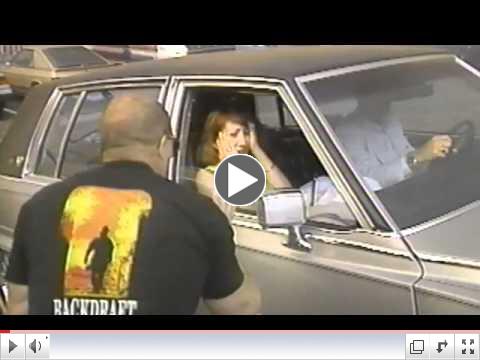 | |
Click video above: Remembering Oakland Hills 20 Years Later
|
One strong gust carried embers into a fuel-rich area. At 10:58 a.m. the officer-in-charge reported burning in vegetation areas. The ridge tops of Claremont, Grizzly and Swainland/Horse ridges trapped much of the strong onshore winds blowing through the canyon of the East Bay, feeding the ember to a furious blaze quicker than firefighting resources could be tasked in Contra Costa and Alameda Counties. "There had been fires in the Oakland Hills in the early 20's, but...there were 25 lives lost during the Oakland Hills fire including one police officer and one battalion chief with the Oakland city fire department," said Cal EMA's Fire and Rescue Division Chief Kim Zagaris. Chief Zagaris was an assistance fire chief in Region 4 and 5 in 1991.  | |
East Bay Hills Fire as seen from space. Source: NASA/Cal FIRE
|
As the fire grew, the upper air temperatures skyrocketed and a thermal inversion layer created an invisible lid over the canyon, further drying surrounding fuels, such as coyote brush for the fire to consume. More onshore Diablo wind gusts blowing into the canyon swirled the fire into near tornado-like columns, treating homes as fodder. "Who would have ever thought that they would have that kind of devastating fire near the bay of San Francisco and Oakland," said Cal EMA's Deputy Chief of Law Enforcement Division Robert Gerber. "That stands out as one of the unique disasters that I have responded to in my 28 years here with this agency. Ignited airborne fuels spread the fire across eight-lane Highway 24, and soon more than 50 homes were ablaze. Nearly 800 homes burned within the first hour. At peak, one home was destroyed every 11 seconds. Most accounts of the fire attribute ending the blaze to the winds subsiding or winds changed dire ction to fold the fire back over burned areas. Prior to this incident, there had been three significant fires in this area: September 16, 1923; September 22, 1970; an d December 10, 1980. d December 10, 1980. Related Links:
|
Cal EMA's Victim Witness Section Assists in Community Recovery After Fatal Shooting
Video below: What Cal EMA staff experienced
|
The small, tight-knit community of Carson City, Nevada was shocked when 32-year-old Eduardo Sencion used an AK-47 to kill five people, including himself. Sencion walked inside the local IHOP and appeared to randomly fire upon the patrons, which included National Guardsmen, women and children.
 | |
The Sept. 6, 2011 Carson City shooting shocked the local community. Cal EMA's Victim Witness Section assisted in the recovery process (picture from Tahoe Mountain News September 2011).
|
Through the National Organization of Victim Assistance (NOVA), Carson City requested assistance from the Victim Witness Section of the California Emergency Management Agency. A Cal EMA team was dispatched to Carson City on September 16 and 17 to provide crisis intervention and post-trauma counseling needs for city employees and the surrounding community.
"We respond to victims of man-made crime, human crime and great events," Sally Hencken, chief of the Victim Witness Section for Cal EMA. "It is working with individuals in a state of crisis."

The team included Shelby Worley, Sally Hencken, Alan Logan, Helen Alexander, Laura Criss, Regina Anderson and Susan Williams. An initial briefing was given to the Cal EMA team on the morning of September 16. Leaders from the first responder community were present to given input and identifying special needs of victims.
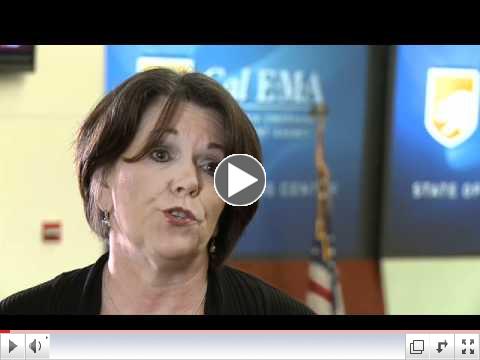 | |
Click video above: Victim Witness Section Chief Sally Hencken details Cal EMA's role in a tragic event like the Carson City shooting.
|
Later in the morning, the team visited the parking lot and IHOP restaurant for a detailed overview of the incident with Carson City Chief Deputy Ray Saylo and lead investigator Craig Lowe.
"Families, communities, and the entire nation have been affected by what happened here," Carson City sheriff Ken Furlong told the media. "We're a resilient society. We rebuild, but we don't forget."
The Carson City Community Center was made available for Group Intervention Sessions (GIS) for survivors, city employees and community members. GISs are similar to group therapy sessions, used as a form of validation, ventilation and education for those affected by tragedy. By early afternoon on September 16, the Cal EMA team was hosting the first of several GISs.
"Our staff that responded from Public Safety and Victim Services Branch have learned something. How this truly is an important program," Hencken said. "We are stronger as a section, as a unit, as a division, in our shared experience."
Related Links:
|
|
Cal EMA Honors Assistant Chief David Powell, Fallen California Firefighters
| 
After an exemplary career in firefighting and many years of dedicated and compassionate leadership throughout the state, California Emergency Management Agency's Assistant Fire Chief David Powell was posthumously honored during the annual California Firefighters Memorial Service at the State Capitol."It is my honor to join our agency's firefighter family at the ceremony to ensure that Chief Powell's service and sacrifice is remembered and memorialized along with all those who gave their lives to protect their fellow Californians," said Mike Dayton, Acting Secretary of the California Emergency Management Agency. "Our thoughts and prayers continue to go out to Chief Powell's family, and we can't thank them enough for allowing him to serve the public in such an honorable profession." On October 1, 2011, hundreds of firefighters and family members gathered at the California Firefighters Memorial in Sacramento at noon to honor 30 individuals who made the ultimate sacrifice to keep our communities safe. Assistant Fire Chief David Powell served at the California Emergency Management Agency's Fire & Rescue Branch for several years, and prior to that he served as the Fire Chief for the City of Reedley. He lost his battle with cancer on May 29, 2011, at his home in El Dorado Hills with his family by his side. Assistant Chief Powell was born March 27, 1959, in Fresno and resided in Reedley until 2007. Assistant Chief Powell is survived by his mother, Lee Powell; wife Karen Powell; children, Dustin and Stephanie Powell, Melissa and Bobby Doherty; grandchildren Finn, Noah, Luke and Olivia; brother Scott Powell and his wife Kathleen; sister Janice Rhodes and her husband David. For more images from the 2011 California Firefighters Memorial Service, visit our Flickr Photo Page. |
Get Ready for the National EAS Test
What You Need to Know and Do |
 | | Source: fcc.gov |
In coordination with the Federal Emergency Management Agency, the Federal Communications Commission, and the National Oceanic and Atmospheric Administration, Cal EMA will be participating in a nation wide test of the Emergency Alert System (EAS) on November 9 at approximately 11 a.m. PST.
FEMA will transmit an EAS code for national level emergencies to Primary Entry Point (PEP) stations. The PEP stations will then rebroadcast the alert to the general public in their normal broadcast areas. All of the EAS participants will report back to the FCC on the results of their test, including sending and receiving message statistics and ability to rebroadcast the message. FEMA and the FCC study these reports for issues within the national notification system.
"The readiness of the EAS is paramount for ensuring the communities we serve receive timely alerts and warnings before, during and after a national emergency," Regional Administrator for FEMA Region IX Nancy Ward said in a formal letter to Governor Jerry Brown's office.
During the test, viewers and listeners will hear and see a message indicating this is test alert. This message will look similar to typical regional EAS tests, but with some minor differences. Some viewers may see an image in the background to indicate the test alert, other viewers may not, depending on the region's testing procedure. The test should last approximately three minutes, but unlike state and local EAS tests, there is no time limit for a national level test.
FEMA and the FCC chose the November 9 date as a sufficient test date because it is near the end of hurricane season and before the severe winter storm season begins to build strength. 11 a.m. PST time should also limit the amount of commuter disruption from coast-to-coast.
For more information on the EAS system visit the FCC's Public Safety and Homeland Security Bureau website at http://www.fcc.gov/pshs/. For specific details on the test, click here.
|
|
Cal EMA Launches Updated Guide
and Checklist for School Safety
|
 | |
Cal EMA Acting Secretary Mike Dayton participates in a presentation with Los Angeles Unified School District officials on earthquake preparedness.
|
Cal EMA Acting Secretary Mike Dayton joined Los Angeles Unified School District officials September 30, 2011, at Valley Region High School, Teacher Prep Academy in San Fernando to launch the updated Guide and Checklist for Nonstructural Earthquake Hazards in California Schools.
Originally released in 2003 by order of the California Emergency Services Act, the revised Guide and Checklist provides further direction for creating safer educational facilities. The guide gives school district officials concrete examples and recommendations to reduce the potential of seismically related hazards associated with nonstructural components in schools, including mechanical systems, ceiling systems, light fixtures and furnishings.
"I am pleased to offer the Guide and Checklist to California school officials to assist in their efforts to mitigate injury and damage in the event of an earthquake," said Secretary Dayton. "Something as simple as using a metal clip to secure a bookcase can prevent injury to students and staff. Los Angeles Unified School District has done a commendable job at using the document to its fullest potential to not only protect students and staff but to mitigate the damage to school property and the potential for further economic impact."
In light of recent seismic events, both in the nation and globally, the timely Guide and Checklist uses common, non-technical descriptions and easy to understand graphics as a practical approach to help school staff undertake these important safety measures. The revised edition maintains this easy-to-follow format, but incorporates newer equipment items now more common in schools, such as flat screen televisions.
In addition to Cal EMA, other partners in the document included the Department of General Services (DGS), Division of the State Architect, the Alfred E. Alquist Seismic Safety Commission and the California Department of Education. Mike Gardner, Chair of the Seismic Safety Commission, commented, "The Commission is proud to have participated in the development of this important report. While California school buildings are among the most earthquake resistant anywhere, the building contents may not be well secured and can cause injury and death in a major earthquake. The Guide and Checklist will aid school districts, teachers, and parents in taking low cost, highly effective, steps to ensure that things like light fixtures, books and ordinary classroom items are secured or stored in ways that reduce the chance they will fall during an earthquake."
The guide makes recommendations to maintain safe and clear exits for evacuation and access for first responders, and to prevent chemical spills, fires and gas leaks. It is applicable to school districts across the state and in other states susceptible to seismic activity. Valley Region High School, Teacher Prep Academy, in the Los Angeles Unified School District is an example of the recommendations from the Guide and Checklist coming to fruition. LAUSD has used the Guide and Checklist as part of an overall emergency preparedness strategy. "I'm very proud of the efforts we've undertaken at new schools such as VRHS to keep our students as safe as possible in the event of an earthquake or other natural disaster," said Board Member Nury Martinez. "It is absolutely essential that parents know that their children are attending classes in buildings that are structurally sound."
"There's nothing more paramount to us than the safety of our students and staff," added LAUSD Chief Facilities Executive Kelly J. Schmader. "New schools are being built, and existing schools modernized, to the highest safety standards -- they not only comply with the structural and fire-life safety requirements of the Field Act, but are also designed to reduce potential seismic hazards associated with nonstructural components. Thank you Cal EMA, DSA, DOE and CSSC for providing us with the Guide and Checklist for Nonstructural Earthquake Hazards in California Schools and for recognizing our commitment to the recommended safety standards."
|
|
National Preparedness Month Outreach
|  While the message of preparedness is a yearlong effort for Cal EMA, September and National Preparedness Month has come and gone. Cal EMA co-sponsored and co-hosted three major events around the state, one for each of the key regions of the state: northern, southern and Bay Area. Be Prepared Events Galleries: 
  
|
|
FEMA Announces
First National Preparedness Goal
|  On October 7, 2011, the Department of Homeland Security announced the release of the United States' first National Preparedness Goal. The goal establishes specific visions for nationwide preparedness and identifies core capabilities and targets necessary to achieve preparedness across five areas laid out under Presidential Policy Directive (PPD) 8: prevention, protection, mitigation, response and recovery. "As we work to build a more prepared nation, we must work with the entire community--the public and private sectors, faith-based and non-profit organizations, and most importantly the public," said FEMA Administrator Craig Fugate. "This goal recognizes that reality, and we will continue to work with our stakeholders to implement PPD 8 and build a more prepared and resilient nation." Fugate announced the release of the goal at the annual National Emergency Managers Association (NEMA) Conference in Austin, Texas. The full goal can be found online here PPD 8called for the development and maintenance of a National Preparedness Goal to define the core capabilities necessary to prepare for the specific types of incidents positing the greatest risk of security to the nation. This goal builds extensively on prior work of various stakeholder groups from around the nation, draws upon lessons learned from large-scale and catastrophic events and represent input from all stakeholders.
As directed by PPD 8, this goal will be reviewed regularly to ensure consistency with applicable policies, evolving conditions and the National Incident Management System.
For more information about PPD 8 and its implementation, visit |
|

The California Emergency Management Agency was created by legislation in 2008 merging the Governor's Office of Emergency Services (OES) and Office
of Homeland Security (OHS) into a single, streamlined cabinet-level
agency. The men and women of this agency are responsible for overseeing and coordinating emergency preparedness, response, recovery
and
homeland security activities throughout California. For more information visit www.calema.ca.gov. |
|
|
Where to Find Us
| | There's much more available online - including photos, videos and our news releases.


|
Secretary's Message |

| Mike Dayton,
Acting Secretary |
This year's Great California ShakeOut earthquake drill is expected to bigger than ever this year with 8.2 million registered participants statewide. From the Oregon border to Imperial County, people will be taking part in the largest earthquake readiness drill in the United States. So should you.
Why should I participate, you ask? Scientists tell us that there is a 50 percent chance that a magnitude 7.5 or greater could strike somewhere in California in the next 30 years.
Major earthquakes happen where people work, live, or travel in California. When each second counts, immediate quake-safe actions will save lives and minimize injuries. What's at stake is the ability for you and your family to survive and recover quickly from the effects of one of nature's most powerful and destructive forces.
If you're still skeptical, you need to watch a compelling video that gives you the best sense of what scientists expect to happen in Southern California and inspires you to prepare and mitigate for a faster recovery. An underlying purpose of the film is, through the use of art design, to bridge the divide between scientific understanding about damaging quakes and the ability of the public to feel empowered to change their behavior towards preparedness. The film is now available for viewing on YouTube or for download at: http://bit.ly/shakeout-film.
Many organizations will do much more than just the drop, cover, and hold on drill, and have more extensive tests of their emergency plans. Go to www.ShakeOut.org/howtoparticipate for more ideas.
I encourage every reader of this message to go to www.ShakeOut.org, if you have not already, to register for this year's drill and take some simple steps to better prepare yourself, your family and pets for the next big earthquake in California. |
Register for ShakeOut 2011
|  | |
October is Earthquake Preparedness Month!
Register now for The 2011 Great California ShakeOut at 10:20 a.m. on Oct. 20, 2011. More than 7 million Californians have already registered to participate in the world's largest earthquake drill. This event is one of the largest public education efforts to help individuals learn how to protect themselves during an earthquake. For more information on the Great California ShakeOut, visit www.shakeout.org.
|
Contact Us
| This newsletter is published by the Office of Media Relations
& Public Information
(916) 845-8456
Kelly B. Huston Assistant Secretary Public & Crisis Communication Tina Walker Chief of Media Relations and Public Information Greg Renick Information Officer Lori Newquist Information Officer Jordan Scott Information Officer Brad Alexander Media Outreach Coordinator Editor |
|
Comments or Corrections
| | We welcome a heads up about any errors we may have made in our stories. We also encourage your suggestions you may have about our publication. E-mail a message to media@calema.ca.gov or by calling the office of media relations and public information at (916) 845-8456.
|

Visit our Flickr for more amazing shots from the East Bay Hills fire |
|
|