
Vision
Racine County is a place where youth assets are increasing and all youth are healthy, involved and successful members of the community.
Mission
The Racine County Youth Coalition engages agencies, business partners, communities, families and schools, to promote and foster positive change in community practices, public policy, and youth programming in order to build assets and reduce risk behaviors including substance abuse among all Racine County young people.
Interested in joining the RCYC?
Contact Seth Kuranz at Focus on Community for more information.
(262) 632-6200
rcyc@focusracine.org
|
|
|
|
 12 County Businesses Fail Alcohol Compliance ChecksDuring the fall of 2010, volunteers between the ages of 18-20 participated in the Racine County Alcohol Compliance Check Program. Volunteers were trained by Focus on Community and the Racine County Youth Coalition. Law enforcement officers accompanied volunteers on all Compliance Checks. Local law enforcement agencies that conducted the checks include the Racine County Sheriff's Dept., Village of Sturtevant Police Dept., City of Burlington Police Dept., and Town of Burlington Police Dept. The Racine County Sheriff's Department completed two rounds of checks between August 30, 2010 and September 22, 2010. Out of the 85 stores checked, the following five stores failed. 12 County Businesses Fail Alcohol Compliance ChecksDuring the fall of 2010, volunteers between the ages of 18-20 participated in the Racine County Alcohol Compliance Check Program. Volunteers were trained by Focus on Community and the Racine County Youth Coalition. Law enforcement officers accompanied volunteers on all Compliance Checks. Local law enforcement agencies that conducted the checks include the Racine County Sheriff's Dept., Village of Sturtevant Police Dept., City of Burlington Police Dept., and Town of Burlington Police Dept. The Racine County Sheriff's Department completed two rounds of checks between August 30, 2010 and September 22, 2010. Out of the 85 stores checked, the following five stores failed.- Dover Food Mart, 2010 N. Raynor St., Dover
- Pick n' Save, 5111 Douglas Ave., Caledonia
- Raceway Mart, 1645 Main St., Union Grove
- Raceway Food Mart, 22930 Durand Ave., Kansasville
- Seven Mile Station, 911 27th St., Caledonia
The City of Burlington completed one round of checks during the fall of 2010. Of the 10 stores checked, the following five stores sold.- Quick mart, 656 McHenry St., Burlington
- Gooseberries, 690 W. State St., Burlington
- Burlington Food & Fuel, 416 Milwaukee Ave., Burlington
- Rice's Liquor, 681 Milwaukee Ave., Burlington
- Super Macado, 116 W. Chestnut St., Burlington
The Town of Burlington completed one round of checks during the fall of 2010. Of the three stores checked, the following two stores sold.- Beachview Grocery Store, 33225 S. Lakeshore Dr., Burlington
- Al's Little Country Store, 30411 Durand Ave., Burlington
The Village of Sturtevant checked five stores during the fall 2010 and had no stores sell to the volunteer. |
|
The American Probation and Parole Association (APPA) Develops a New Guide about Underage Drinking for Probation Officers
Great progress has been made in reducing underage drinking and its many serious and sometimes tragic consequences. Community supervision professionals, particularly probation and diversion workers, can play an important role in maintaining and advancing this progress.
With funding and support from the Office of Juvenile Justice and Delinquency Prevention (OJJDP), the American Probation and Parole Association (APPA) has collaborated with the Pacific Institute for Research and Evaluation (PIRE) to develop a publication titled Underage Drinking: Intervention Principles and Practice Guidelines for Community Corrections, which will be released to the field in early 2011.
To read more about APPA's new guidelines document click on http://www.udetc.org/documents/judicial/0910enews/appa.pdf or copy and paste the link to your internet browser.
|
Pink Ribbon Hypocrisy
It's no surprise that companies jump on breast cancer awareness month with a pink-infused fervor. Over 200,000 women are diagnosed with breast cancer each year. Add to that the thousands of cancer survivors and friends and families affected by the disease, and companies see consumers. A lot of them. Thus, the pink ribbon is everywhere. NFL players have pink ribbons on their helmets. The cosmetic counter is awash in pink lipsticks. Bars offer Drink for Pink nights. You can even purpotedly support breast cancer with your Facebook update.
Alcohol is a known risk factor for breast cancer, and according to the National Cancer Institute, its risk follows a dose-dependent fashion, meaning the more alcohol a woman consumes, the greater her risk.
Yet it hasn't stopped Mike's Hard Lemonade from selling a pink-ribbon drink. And Chambord, which has an ad stating that saying that "by adding a splash of Chambord to any cocktail, you're supporting breast cancer awareness year-round."
Some companies, like SUPPORT HER VODKA, just straight up lie: "All women are at risk for breast cancer. Women 50 and older are at a greater risk. By purchasing SUPPORT HER VODKA, you can help in the prevention of breast cancer."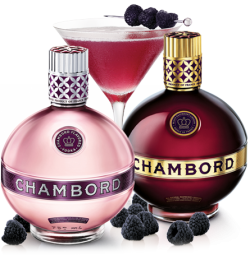
No, prevention doesn't mean drinking more vodka. But that hasn't stopped two new brands, Pinky vodka and P.I.N.K., from releasing their female-friendly products.
|
SAMHSA releases the latest National Survey on Drug Use and Health Results
The recently released National Survey on Drug Use and Health (NSDUH) conducted by the Substance Abuse and Mental Health Services Administration (SAMHSA) shows that underage drinking rates have remained relatively steady from 2008 to 2009.
The 2009 survey identified several usage rates related to underage alcohol use and compared them to the 2008 findings. Below are several of these findings:
- Rate of current alcohol use among youths aged 12 to 17 was 14.7 percent in 2009, which is similar to the 2008 rate (14.6 percent). Youth binge and heavy drinking rates in 2009 (8.8 and 2.1 percent) were also similar to rates in 2008 (8.8 and 2.0 percent).
- Past month and binge drinking rates among underage persons (aged 12 to 20) declined between 2002 and 2008, but then remained unchanged between 2008 (26.4 and 17.4 percent) and 2009 (27.2 and 18.1 percent).
- Among persons aged 12 to 20, past month alcohol use rates in 2009 were 16.1 percent among Asians, 20.4 percent among blacks, 22.0 percent among American Indians or Alaska Natives, 25.1 percent among Hispanics, 27.5 percent among those reporting two or more races, and 30.4 percent among whites.
- In 2009, 55.9 percent of current drinkers aged 12 to 20 reported that their last use of alcohol in the past month occurred in someone else's home, and 29.2 percent reported that it had occurred in their own home. About one third (30.3 percent) paid for the alcohol the last time they drank, including 9.0 percent who purchased the alcohol themselves and 21.3 percent who gave money to someone else to purchase it.
The full study results can be found here: http://oas.samhsa.gov/nsduhLatest.htm
|
Doctors Say Alcoholic Energy Drinks Dangerous
Some doctors say drinks that combine alcohol with caffeine should be banned because they're dangerous, ABC News reported Oct. 20.
Marketed in large, colorful cans under names like Four Loko, Joose, and Torque, the drinks are popular among college students. The 23.5-ounce canned drinks can contain 12 percent alcohol and 156 milligrams of caffeine, and have encountered increasing criticism. Attorneys general in more than one state are concerned that they're being marketed to minors, a New Jersey college banned them, and the Food and Drug Administration (FDA) is deciding whether or not the drinks are legal.
Dr. Robert McNamara, who directs the emergency medicine department at Temple University, recently encountered his first-ever case of a healthy 19-year-old whose heart attack seemed to be linked to consuming alcoholic energy drinks. "This is a dangerous product from what we've seen," McNamara said, who said other doctors had told him about similar cases. "It doesn't have to be chronic use. I think it could happen to somebody on a first time use."
To read more about this story, visit JoinTogether.org by clicking here. Four Loko is 'Blackout in a Can' for College Students
Jack and coke. Red bull and vodka. Kahlua and coffee. There's nothing new about mixing alcohol and caffeine. But combining the extremes of both substances -- malt liquor and energy drinks -- has resulted in a toxic concoction that has sent college students to the hospital, sickened dozens and was the suspected cause of a heart attack in a 19-year old.
To read more about this story, visit Change.org by clicking here.
|
Plain Packaging Snuffs Out Cigarette 'Cool' Factor for Teens
A New Zealand study found removing enticing logos and colors from cigarette packages significantly reduced their appeal among teens, the Australian Associated Press reported Oct. 7.
"Quite a few of the young people identified that the behaviour won't look cool anymore," said Webb. "[The students] knew that cigarette smoking, and the brands that you smoke, said something about you," she said. "Getting rid of that got rid of the purpose of smoking."
According to Ian Olver, chief executive for Cancer Council Australia, the tobacco industry is likely to challenge the Australian legislation in court since the packaging is used to attract new smokers.
"They have been doing it for quite some time," said Olver. "And [the package restrictions] would take away their ability to do that.... There won't be any prestige to a pack."
To read more about this story, visit JoinTogether.org by clicking here.
|
Big Alcohol Opposes Graphic Health Warnings for Thai Alcohol
Alcohol makers worldwide don't want Thailand to set a precedent by requiring large, graphic warning labels on all wine, beer, and liquor sold there, the Wall Street Journal (subscription required) reported Sept. 27.
If the Thai government approves the plan, 30 percent of every alcohol bottle's surface would be covered by a label warning about health impacts. Pictures of diseased livers, a bloody traffic accident, a suicide, and a man hitting his wife have been proposed, along with text such as, "Alcohol consumption could harm yourself, children and family."
[View the images: The graphic alcohol label warnings appear on Eurocare, the European Alcohol Policy Alliance, website. Viewer discretion recommended.]
The labels first attracted attention when Thailand alerted other governments about them under a requirement of the World Trade Organization (WTO). Alcohol makers lobbied other governments to object, and Argentina, Australia, the European Union, and the United States, among others, did so at meetings of the WTO in March and June.
To read more about this story, visit JoinTogether.org by clicking here.
|
|
|
|
|
|
|






