|

FOR FICTION WRITERS
BY MIKE KLAASSEN
|  October 2010 October 2010
Volume II, Issue 4
Published monthly
ISSN: 1948-7150 You are receiving this email either because someone forwarded it to you or you joined our mailing list. To change your subscription, see the links at the bottom of this email. Please add mike@klaassen.kscoxmail.com to your whitelist or the address book in your email program so you have no trouble receiving future issues. You are welcome to forward this email to your writing friends. |
|
Greetings!
Last week I nearly had a heart attack. From our kitchen window I noticed an 7-inch goldfish lying on a rock bordering our garden pond and figured it had jumped out and got stranded. I couldn't see it moving but decided I would toss it back into the water and hope it survived.
I hurried out to the pond and around the Mugo pine at the back. I leaned over to grab the fish, but when my hand was inches from the fish I froze. The fish hadn't flipped itself out of the water; it had been dragged out. Staring up at me with lifeless eyes and its mouth stretched wide over the face of the goldfish was a snake.
That's when I nearly had a heart attack. After I settled down, I ran inside to get my camera. The snake was amazingly patient (or hungry) and let me take a lot of pictures. As you can see from the photos at the bottom of this newsletter, the snake didn't lack ambition. Maybe it was going for one last feast before hibernation. Garter snakes are common in our backyard, but we haven't identified this one.
After I finished taking as many photos as I wanted, the snake slipped back into the pond, dropped the fish, and disappeared. Amazingly, the goldfish lived. But Carol and I tread more carefully in our garden now.
This month's feature article is the first in a series of three about sensation as a fiction-writing mode.
Happy Fiction Writing,
Mike |
|
|
FEATURE ARTICLE: SENSATION: How to Portray Your Character's Perception of the Senses (Part 1 of 3)
By Mike Klaassen
Sensation is the fiction-writing mode for portraying a character's perception of the senses. Authors are often encouraged to incorporate the five (or maybe even six) senses into their stories. Despite all the emphasis on utilizing the senses, sensation is not widely recognized as a distinct fiction-writing mode. Unfortunately, failure to treat sensation as a fiction-writing mode:
- Downplays the contribution sensation makes to stories.
- Diminishes the likelihood that sensation will be fully analyzed and understood by students of fiction.
- Reduces the likelihood that sensation will be utilized skillfully and to its full potential.
Some writing coaches lump thinking, emotion, and sensation into one category. Certainly, each of these is linked to the mind of the character, but thinking, emotion, and sensation are also quite different, in real life and in fiction. Given their importance and the differences in how they are conveyed, each warrants its own analysis and treatment.
Sometimes sensation is included in broader categories, such as narration, description, or summarization. Of course, sensation may be considered a subset of each of these writing modes under their broadest definitions. But lumping sensation into such wide topics does little to clarify its use; in fact, it adds to the confusion.
Fiction writers aren't limited to sight, hearing, touch, smell, and taste. In Description & Setting, Ron Rozelle describes a sixth sense--where a character suspects something, or senses that something is wrong, as in an intuition or a premonition.
ELEMENTS OF FICTION. Sensation contributes to each of the five fundamental elements of fiction: character, plot, setting, theme, and style. The most obvious role of sensation is in setting. According to Jessica Page Morrell in Between the Lines, "Writers create intricate settings because readers rely on visual and sensory references. . . . You breathe life into fiction by translating the senses onto the page, producing stories rooted in the physical world . . . that creates a tapestry, a galaxy of interwoven sensory ingredients." Also, as characters move about within the story, "using sensory clues in the new locale, especially sights and smells, will help readers adjust as they move . . . into new territory."
Regarding plot, sensation provides the vivid detail that helps bring action to life, creating verisimilitude. Morrell describes it as a "sensory surround," which when "coupled with drama tugs the reader into [the] story and forces him to keep reading." The old adage "Show, don't tell" means that you ". . . place [the reader] in the midst of the experience with unfolding action." "Showing requires that the writing be solid, not abstract, and this means that at least one of the senses must be involved to show a specific reality."
Sensation can also be a powerful tool for character development, especially regarding a character's reaction to particular sensations. In fact, sensation may directly stimulate an emotional response. For example, the sight of a puppy may generate a feeling of happiness, while the sight of a maggot or the touch of a spider may stimulate fear or revulsion. Sensation can encourage recollection, which may be useful as a trigger in transitioning to backstory for character development or for stimulating emotion indirectly.
Likewise, a character's reaction to sensations may provide a common thread for the development of one or more of a story's themes. And, of course, how and when sensation is utilized throughout a story and the skill with which sensation is presented are important aspects of an author's unique writing style.
CONVEYING SENSATION. According to Ron Rozelle, "The sensation of what something feels like is used to describe everything from sensual pleasure to pain and torture. It's a wide range, and your readers have actually experienced only some of those feelings. So your job is to either make them recall exactly what it feels like when something occurs in your story or, if they haven't experienced it, what it would feel like if they did."
How do fiction-writers do that? A quick review of dictionary definitions of sensation reveals a mixed bag of terms and phrases such as consciousness, stimulation of the body, mental functioning, bodily feeling, reaction, and perception. Not surprisingly then, the mechanics of effectively conveying sensation are also multifaceted. The variables include:
- Verbs of sensation
- Action verbs
- Modifiers
- Onomatopoeia
- Other word choices
- Comparison
- Symbolism
- Clichés
- Intensity
- Character emotion
- Reader emotion
- Physical reaction
- Hierarchy of senses
- Choice of sensation
- Narrative distance
(To be continued)
WANT TO USE THIS ARTICLE IN YOUR E-ZINE OR WEBSITE? You may, as long as you include this complete blurb with it: Author Mike Klaassen publishes "For Fiction Writers," a free monthly e-zine. |
|
ABOUT MIKE
Mike Klaassen is an author devoted to writing novels and to helping others understand the craft of writing fiction.
"My goal as a novelist," says Klaassen, "is to write fiction that even the most reluctant readers will enjoy. My goal as a nonfiction author is to help fiction writers achieve the cutting edge in fiction-writing technique. The objective in each of my articles is to present the most comprehensive analysis of the subject matter available anywhere."
Mike and his wife, Carol, live just outside Wichita with two one-of-a-kind skunk dogs, a sassy kitten, and a pond full of gold fish. You can learn more about Mike and his novels at www.mikeklaassen.com Mike Klaassen
P.O.Box 4781
Wichita, KS 67204-0781
(316) 744-4325
|
|
BOOKS BY MIKE
THE BRUTE, by Mike Klaasssen
When a tornado tears through their campsite in the Flint Hills of Kansas, sixteen-year-old Fortney Curtis must fend for six younger scouts while fighting his own explosive temper.
RATED TEEN
- Fist fights
- Boy Scouts
- Broken bones
- Cowgirl
- Kansas
- Cow chips
REVIEWS:
"The Brute could become a classic."
Lillian Phillips Stinnett, The Oklahoman
"Readers who enjoyed Hatchet, by Gary Paulsen, will also enjoy The Brute!"
Judith Nasse, Children's Book Reviews
"Klaassen succeeds in his attempt to pull young readers into his story . . . . Teenagers should identify with the stuggles faced by its protagonist."
Nancy Mehl, The Wichita Eagle
Order your copy of The Brute right now.
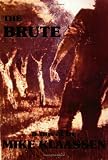
The Brute
by Mike Klaassen by Blue Works
Paperback ~ Release Date: 2005-06-01 
List Price: $14.99
Our Price: $14.69 Buy Now
|
 | | Yikes! |

|
SUBSCRIBE NOW
If you have enjoyed this newsletter and are not already receiving it automatically each month, you are welcome to a free subscription. Just click on the "Join Our Mailing List" button at the top of this page (also available at www.mikeklaassen.com). Or if you prefer, send an email to mike@klaassen.kscoxmail.com and ask to be added to Mike's ezine list.
For a limited time only (subject to cancellation without prior notice), subscribers to the ezine are entitled to Mike's Special Report: "Secrets to Enhancing Emotion in Fiction."
You are welcome to forward this ezine to your fiction-writing friends. See "Forward email" below. |
ARCHIVESYou may view copies of previous issues of For Fiction Writers at the following link:
|
|
|
|
|
Copyright 2010 Michael John Klaassen. All rights reserved |
|
|
|
|
|

