|

FOR FICTION WRITERS
BY MIKE KLAASSEN
| 
July 2010
Volume II, Issue 1
Published monthly
ISSN: 1948-7150
You are receiving this newsletter either because someone forwarded it to you or you joined our mailing list. To change your subscription, see the links at the bottom of this email.
Please add mike@klaassen.kscoxmail.com to your whitelist or the address book in your email program, so you have no trouble receiving future issues. You are welcome to forward this email to your fiction-writing friends. |
|
| Greetings!
It's hard for me to believe, but this month marks the first anniversary of For Fiction Writers. Yep, it's been a whole year since the first issue. I've been very pleased with the response from fellow writers, and the mailing list grows monthly. Thank you all for your kind words of encouragement.
On the home front, Carol and I have a new kitten--Missy. We were advised to adopt a feral kitten with enough skills and instinct to survive our "wild" environment (fox, coyote, and bobcat). Missy was certainly shy when Carol first brought her home. Now she rules the house and has our two mutts buffaloed.
This issue will be the first of Volume II and features action as a fiction-writing mode.
Encourage your writing friends to subscribe so they automatically get their own copies.
Happy Fiction Writing, Mike |
|
FEATURE ARTICLE: Action as a Fiction-Writing Mode
As described by Evan Marshall in The Marshall Plan for Novel Writing, action is the mode fiction writers
use to show what is happening at any given moment in the story.
Action is important in each of the five elements of fiction. PLOT is the "what happens"
in a story, and action is the backbone of plot. Action is the
fiction-writing mode for portraying a CHARACTER in motion, and nothing
reveals more about a character than his actions. SETTING is the stage upon
which action occurs. The manner in which actions affect other characters may determine the story's THEME. How action is used in a
story is an important aspect of each writer's STYLE.
The strength of action as a fiction-writing mode is that it
can make writing exciting and realistic. Action is at the heart of showing versus telling. According to Jordan E. Rosenfeld, in Make a Scene, action scenes help the ".
. . reader to feel he is participating in the events. . . ."
On the other hand, action has its drawbacks: it can take up
a lot of space, and it can be time-consuming to write. Too much action at one time can wear out
the reader.
The concept of action as a fiction-writing mode is fairly
simple, but its effective presentation involves numerous issues:
· Active vs. passive voice
· Real time
· Details
· Chronological order
· Stimulus-response order
· Response-stimulus order
· Incidental action
· Scenes and sequels
ACTIVE VS. PASSIVE VOICE
The use of active voice (instead of passive voice) is
essential in the action mode. As
explained by Gary Lutz and Diane Stevenson in The Writer's Digest Grammar Desk Reference, voice is a
characteristic of verbs referring to the agent of action within a sentence. A verb is said to be active if the subject of
the sentence performs the action. The
use of passive voice isn't incorrect, "but it creates a strange and unnecessary
sense of disembodied action." Examples
provided by Lutz and Stevenson include:
John hit the ball. (Active
voice)
The ball was hit by John.
(Passive voice)
The action mode is all about showing, not telling, and the
last thing the writer wants is to "disembody" action, creating distance between
the action, the character, and the reader.
REAL TIME
In a story, action occurs in the "present" of the story, the
story's "now," its "real time," as opposed to backstory, future story, or a
summarized account of the event. As
stated by Evan Marshall, "In action mode, you show events . . . as they occur .
. . ." According to Jordan E. Rosenfeld,
in Make a Scene, ". . . the reader
will feel like he is participating in action because the events unfold in 'real
time' . . . ."
DETAILS.
As Marshall explains in The
Marshall Plan for Getting Your Novel Published, "When you are in the action
writing mode, don't accidentally slip into the summary writing mode. In the action writing mode, everything--even
seemingly unimportant details--gets shown." Vivid details help the reader to be there--to experience the moment, the
drama.
CHRONOLOGICAL ORDER
In the action mode, events are presented in strict
chronological order as they occur.
According to Evan Marshall, "In real life, things are always
happening at the same time. It's a
chaotic world. Not so in the fictional
world. In the fictional world, things
happen one at a time, and that's how you show them."
Marshall advises writers to "Present all events one at a
time, not simultaneously. Writing so
that one action happens after another makes for smoother, more natural, more
professional-reading text. Even a
complicated battle is rendered action-by-action by an accomplished novelist."
This advice may seem obvious, but presenting events
simultaneously is an easy trap to fall into, especially when starting sentences
with phrases that begin with time-sensitive prepositions or words ending with -ing. The unintended result may be subtle glitches in timing or outright
physical impossibilities. As observed by
Evan Marshall, "In action writing, the word as
is your enemy. So are while and at same time that."
Renni Browne and Dave King, in Self-Editing for Fiction Writers note that sentences beginning with
-ing, or as may be grammatically correct and express the action clearly and
unambiguously, but they also tend to place some of your action at one remove
from your reader, to make actions seem incidental, unimportant. According to Browne and King, "If you use
these constructions often, you weaken your writing."
Also observe Browne and King, "Another reason to avoid the as and -ing constructions is that they can give rise to physical
impossibilities." For example, 'Disappearing into my tent, I changed into fresh
jeans.' The -ing construction forced simultaneity on two actions that can't be
simultaneous."
"We're not suggesting that you avoid these phrases
altogether," state Browne and King. "There
are going to be times when you want to write about two actions that are
actually simultaneous and/or genuinely incidental-actions that deserve no more
than a dependent clause."
The warning is clear. In the action mode, be careful when beginning sentences with a time-sensitive
preposition or a word ending with -ing.
STIMULUS-RESPONSE ORDER
The action mode is all about things happening, but not just
any old thing. Action must make
sense. Someone or something does
something for a reason, and then someone or something responds. Action meets resistance, and then there is
reaction. The logic of action-mode
writing is cause and effect.
According to Evan Marshall, "Present action in action-result
order. She looks-and sees. He bites-and tastes. She asks-he answers. The arrow hits him-he cries out."
In the vast majority of action writing, stimulus precedes
response. For example:
Someone shouted a warning. Cisco ducked and drew his revolver.
RESPONSE-STIMULUS ORDER
Most action writing works best if the response follows the
corresponding stimulus. But there is an
important exception. In Tip # 51 of The Marshall Plan for Getting Your Novel Published,
Evan Marshall states that "To show a character's reaction to something
shocking, break the action/result rule and show the reaction before describing
what is being reacted to." In these situations, ". . . you'll create a more
dramatic effect if you have your character react first, then describe what it
is he has seen."
As explained by Marshall, "This technique works for a couple
of reasons. First, a tiny moment of
suspense is created between the horrified reaction and the description of
what's being seen; . . . . Second, a
truly awful spectacle will most likely require a good amount of
description. If you describe the
spectacle at length, then show your character's reaction, there's the danger of
creating an odd, delayed-reaction effect that is not desirable."
Example of action in response-stimulus order:
Cisco froze. Black Bart had drawn his pistol.
INCIDENTAL ACTION
Action is frequently presented in tiny portions, sometimes
called beats. These small bits of
activity may be revealing. According to
Sandra Scofield, in The Scene Book,
"The incidental movements and activities of characters help to define them . .
. ." and also ". . . what [characters] do in response to events can be external
signs of what they are feeling."
Even when bits of action and reaction are not revealing,
they may be weaved into other fiction-writing modes to help set rhythm and
pace.
SCENES AND SEQUELS
A scene is a unit of drama, where a character attempts
(often unsuccessfully) to achieve a goal. A sequel is what follows a scene. While action is the backbone of scenes, action is usually incidental in
sequels.
Action-writing is sometimes referred to as writing in "scene,"
(as in "You write either in scene or you write in summary.") This is an outdated use of the term, and misrepresents
both the concept of scene in fiction and the concept of action as a
fiction-writing mode. A scene consists
of much more than just the action writing mode. And action may be present in either scenes or sequels.
Action is not the most widely recognized of the fiction-writing
modes, but few would question the importance of action in fiction. Writers interested in improving the
effectiveness of the action in their writing would do well to study the
mechanics of its effective use.
WANT TO USE THIS ARTICLE IN YOUR E-ZINE OR WEBSITE? You may, as long as you include this complete blurb with it: Author Mike Klaassen publishes "For Fiction Writers," a monthly e-zine. |
|
ABOUT MIKE
Mike Klaassen is an author devoted to writing novels and to helping others understand the craft of writing fiction.
"My goal as a novelist," says Klaassen, "is to write fiction that even the most reluctant readers will enjoy. My goal as a nonfiction author is to help fiction writers achieve the cutting edge in fiction-writing technique. The objective in each of my articles is to present the most comprehensive analysis of the subject matter available anywhere."
Mike and his wife, Carol, live in Valley Center, Kansas (just north of Wichita) with two one-of-a-kind skunk dogs, a kitten, and a pond full of goldfish.
Mike Klaassen
P.O.Box 4781
Wichita, KS 67204-0781
(316) 744-4325
|
|
BOOKS BY MIKE
CRACKS, by Mike Klaassen
When the New Madrid Fault rocks the Ozarks of Arkansas, five troubled teens struggle to survive cave-ins, rock slides, wild animals -- and each other.
Rated Teen+
- Drugs
- Wild boars
- Murder
- Maggots
- Swearing
- Knife fights
Reviews:
"Two messages are brought clearly to the reader's attention in Mike Klaassen's second novel, CRACKS: Crime doesn't pay, but genuine love of family does . . . . This young adolescent's book provides hook after hook to keep teens reading . . . ."
Donna Rothgeb, Teacher
"Combine Holes with Lord of the Flies and Deliverance and you have an appreciation for CRACKS. This is a mature young adult novel . . . . We rated this excellent adventure four hearts."
Bob Spear, Heartland Reviews
Know any teenagers or middle-schoolers? Cracks makes a great gift for the holidays or any ole' time to encourage reading. Order a copy now.
CRACKS is available through the Amazon.com link below.
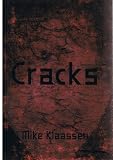
Cracks
by Mike Klaassen by Blue Works
Paperback 
List Price: $14.99
Our Price: $11.95 Buy Now
|
MORE HELP FOR FICTION WRITERS
Need more help? Try Laurie Rosin, editor for thirty-eight national bestsellers, more than fifty million copies in print. Writing fellow, National Endowment for the Humanities. Unparalleled assistance for serious writers. www.TheBookEditor.com
You are also welcome to forward this ezine to your fiction-writing friends. See "Forward email" below.
|
SUBSCRIBE NOW
If you have enjoyed this newsletter and are not already receiving it automatically each month, you are welcome to a free subscription. Just click on the "Join Our Mailing List" button at the top of this page. Or if you prefer, send an email to mike@klaassen.kscoxmail.com and ask to be added to Mike's ezine list.
For a limited time only (subject to cancellation without prior notice), subscribers to the ezine are entitled to Mike's Special Report: "Secrets to Enhancing Emotion in Fiction."
|
|
|
|
|
Copyright 2010 Michael John Klaassen. All rights reserved |
|
|
|
|
|

