|

FOR FICTION WRITERS
BY MIKE KLAASSEN
|
 April 2010 April 2010
Volume I, Issue 10
Published monthly
ISSN: 1948-7150 You are receiving this email either because someone forwarded it to you or you joined our mailing list. To change your subscription, see the links at the bottom of this email.
Please add mike@klaassen.kscoxmail.com to your whitelist or the address book in your email program, so you have no trouble receiving future issues. You are welcome to forward this email to your writing friends. | |
Greetings!
This month I want to welcome new subscribers from the Kansas Writers Association "2010 Scene Conference" in Wichita on March 27. I had the pleasure of presenting my "Writing in Third-Person Intimate Point of View" seminar and workshop. You were a great audience! I also had the opportunity to sit in on several other presentations. The day was both fun and informative. This month's feature article is the second in a series of three about the challenges of writing EXPOSITION. If you wish to view previous issues, they are available at the ARCHIVE . You are welcome to share FOR FICTION WRITERS with your fiction-writing friends. Better yet, encourage them to subscribe so they automatically receive their own copies. Reminder: For a limited time, new subscribers are entitled to my Special Report: "Secrets to Enhancing Emotion in Fiction." Happy Fiction Writing,
Mike |
|
|
FEATURE ARTICLE: "Fiction-Writing: Methods of Presenting Narrative Exposition"
Exposition is the fiction-writing mode for conveying information. The concept of exposition may appear to be
simple, but as explained by Jordan E. Rosenfeld in Make a Scene, "How you reveal information is just as important as
what that information is."
-
Exposition may be delivered through:
DIRECT NARRATION
Although it may be referred to by other names (direct
exposition, objective narration, summary exposition, or simply narration),
direct narration is where the narrator of the story addresses the reader directly. When conveying information by direct
narration, the narrator simply states the information without any pretext of
channeling it through a character or exposing it through some sort of prop.
As noted by Ansen Dibell in Plot, the simplest way is to just slip the information between
scenes as the all-seeing, all-knowing (but impersonal and invisible) narrator.
But, warns Dibell, there's a price for direct narration:
"Authorial intrusions -- the story stopping dead while the author rambles on about
whatever happens to interest him -- used to be common-place, a hundred and a half
years ago." For example, Melville's
cetology chapters telling the folklore, anatomy, and habits of whales. "Now, though," notes Dibell, "they're much
disliked."
Example of exposition through direct narration:
Meanwhile, in a saloon across the
street from Cisco, Black Bart slipped a derringer into his coat pocket.
THROUGH CHARACTERS
"The other choice," according toAnsen Dibell, "is to have your characters give the necessary facts
. . . ."
As stated by Jordan E. Rosenfeld, "Dialogue is a wonderfully
versatile technique for giving the reader information necessary to drive the
plot forward or deepen character understanding . . . ."
But Dibell cautions "Don't ever put into a character's mouth
anything that's strictly and obviously for the reader's consumption. Readers aren't fooled, and you've turned your
characters into unconvincing puppets, dummies making silly speeches at each
other."
Another way for characters to provide exposition is through
thoughts, especially recollection. According
to Dibell ". . . you can have the exposition as one character's reflections or
thoughts -- the fiction writer's version of a soliloquy. Your character can think about something . .
. and thereby let the reader know what you want to convey."
Example of exposition through dialogue:
Gabby grabbed Cisco's
shoulder. "Be careful. I heard that Black Bart carries a derringer
in his pocket."
Example of exposition through recollection:
Cisco paused before stepping into
the livery stable. He recalled hearing
something about how Black Bart had killed a cowpoke in Dodge City. A derringer.
EXPOSITORY DEVICES
Jessica Page Morrell, in Between
the Lines, observes that various devices may be used to convey information.
Examples she provides include
Other time-honored examples of expository devices, or props,
include treasure maps and messages in a bottle.
The advancement of technology is providing new devices: emails, text
messages, podcasts. And in the world of science fiction and fantasy, expository
devices are limited only by the writer's imagination (think Star Trek and Harry
Potter).
Example of using an expository device:
As Cisco approached the livery
stable, a young lad approached him.
"Hey, mister, a lady across the
street asked me to bring you this note."
Cisco unfolded the paper and read
the script, Be careful, Black Bart hides
a derringer in his pocket.
WANT TO USE THIS ARTICLE IN YOUR E-ZINE OR WEBSITE? You may, as long as you include this complete blurb with it: Author Mike Klaassen publishes "For Fiction Writers," a free monthly e-zine.
|
|
ABOUT MIKE
Mike Klaassen is an author devoted to writing novels and to helping others understand the craft of writing fiction.
"My goal as a novelist," says Klaassen, "is to write fiction that even the most reluctant readers will enjoy. My goal as a nonfiction author is to help fiction writers achieve the cutting edge in fiction-writing technique. The objective in each of my articles is to present the most comprehensive analysis of the subject matter available anywhere."
Mike and his wife, Carol, live just outside Wichita with two one-of-a-kind skunk dogs, a cat, and a pond full of gold fish. You can learn more about Mike and his novels at www.mikeklaassen.com Mike Klaassen
P.O.Box 4781
Wichita, KS 67204-0781
(316) 744-4325
|
|
BOOKS BY MIKE
THE BRUTE, by Mike Klaasssen
When a tornado tears through their campsite in the Flint Hills of Kansas, sixteen-year-old Fortney Curtis must fend for six younger scouts while fighting his own explosive temper.
RATED TEEN
- Fist fights
- Boy Scouts
- Broken bones
- Cowgirl
- Kansas
- Cow chips
REVIEWS:
"The Brute could become a classic."
Lillian Phillips Stinnett, The Oklahoman
"Readers who enjoyed Hatchet, by Gary Paulsen, will also enjoy The Brute!"
Judith Nasse, Children's Book Reviews
"Klaassen succeeds in his attempt to pull young readers into his story . . . . Teenagers should identify with the stuggles faced by its protagonist."
Nancy Mehl, The Wichita Eagle
It's one thing to teach or write about fiction; it's quiet another to write novel-length fiction. Get your own copy of THE BRUTE, and see for yourself how Mike incorporates the concepts and techniques of the fiction-writing craft into a novel.
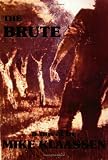
The Brute
by Mike Klaassen by Blue Works
Paperback ~ Release Date: 2005-06-01 
List Price: $14.99
Our Price: $14.69 Buy Now
|
MORE HELP FOR FICTION WRITERS
Jessica Page Morrell, author of Between the Lines: Master the Subtle Elements of Fiction Writing, publishes a monthly ezine called The Writing Life. To subscribe, send an email to jessicapage@spiritone.com
Judith Nasse publishes the Art of Creativity. To subscribe, send an email to nasse@kitcarson.net
|
SUBSCRIBE NOW
If you have enjoyed this newsletter and are not already receiving it automatically each month, you are welcome to a free subscription. Just click on the "Join Our Mailing List" button at the top of this page (also available at www.mikeklaassen.com). Or if you prefer, send an email to mike@klaassen.kscoxmail.com and ask to be added to Mike's ezine list.
For a limited time only (subject to cancellation without prior notice), subscribers to the ezine are entitled to Mike's Special Report: "Secrets to Enhancing Emotion in Fiction."
You are welcome to forward this ezine to your fiction-writing friends. See "Forwards email" below. |
ARCHIVESYou may view copies of previous issues of For Fiction Writers at the following link:
|
|
|
|
|
Copyright 2009 Michael John Klaassen. All rights reserved |
|
|
|
|
|

