|

FOR FICTION WRITERS
BY MIKE KLAASSEN
|

March 2010
Volume I, Issue 9
Published monthly
ISSN: 1948-7150
You are receiving this newsletter either because someone forwarded it to you or you joined our mailing list. To change your subscription, see the links at the bottom of this email.
Please add mike@klaassen.kscoxmail.com to your whitelist or the address book in your email program, so you have no trouble receiving future issues. You are welcome to forward this email to your fiction-writing friends. | |
| Greetings!
The March issue of The Writer has an article by Janet Pocorobba in which she talks about the challenges of learning to write fiction: "I'm coming to think that being a master is not about what you know but how you face what you don't know. Sometimes I think it means letting yourself be a beginner, all over again."
Ever wonder what is being said about you on the Internet? Or if you are being quoted? One way to find out is to go to www.google.com and set up a "Google Alert" using your own name. When your your name appears on the Internet or in the news, Google will automatically send you an email alert. Caveat: this works best if you have somewhat of a unique name, such as Klaassen, rather than Smith or Jones.
This month's feature article is the first in a series of the three about the challenge of EXPOSITION.
Happy Fiction Writing,
Mike |
|
FEATURE ARTICLE: Exposition as a
Fiction-Writing Mode
By Mike Klaassen
Terms such as "information dump" and "expository dialogue"
are reminders that exposition is the ugly duckling of fiction-writing
modes. No other mode is treated with
such disdain and caution.
Robert Kernen, in Building Better Plots, writes that
"[Exposition] can . . . be the quickest way to kill a plot's momentum and
get your story bogged down in detail."
According to Ansen Dibell
in Plot, "Exposition involves
breaking away from ongoing action to give information . . . telling rather
than showing."
Janet Evanovich, in How I Write, notes that "One of the
potential problems with exposition is that it can become tedious and
uninteresting, and the reader tends to skip over it."
If exposition carries such a burden, why do fiction-writers
use it at all?
As explained by Ansen Dibell, "Well-handled exposition gives
perspective, dimension, and needed context that help events in the foreground
make sense." Furthermore, states Robert
Kernen "[Exposition] can be one of the most effective ways of creating and
increasing the drama in your story."
As with many terms in writing, the word exposition means different things to different people. In fiction-writing, exposition is the mode
for conveying information, which may be in various forms: facts, explanation,
opinion.
Not all writers and writing coaches agree as to where
exposition fits in the scheme of writing modes.
Certainly, exposition may be considered a subset of narration, but so
may any or all of the other fiction-writing modes. And direct narration is only one of several
methods that may be used to deliver exposition.
Sometimes exposition is referred to as a form of summary, and a case may
be made for that. But failure to
recognize exposition as a distinct fiction-writing mode:
- Downplays the unique role
exposition plays in fiction
- Diminishes the likelihood
that exposition will be fully analyzed and understood by students of
fiction
- Reduces the likelihood
that exposition will be utilized skillfully and to its full potential
Some how-to books about writing fiction imply that
exposition is predominantly used at the beginning of a story. But exposition may be found anywhere in a
story, and it may affect all five of the elements of fiction. Exposition may be used to develop characters,
enhance plot, establish setting, and to suggest one or more of a story's
themes. And, of course, how exposition
is presented is part of each author's unique writing style.
Exposition may be delivered by either of three techniques:
direct narration, through characters, or by expository devices. Each of these delivery techniques has
advantages and disadvantages and each requires skillful presentation for
effective use. As observed by Ansen
Dibell, "The first, most important part of handling exposition is realizing
that it's going to need handling."
Beyond the three methods of delivering information in
fiction, there are other issues involved:
Misuse and abuse of exposition in fiction has earned it a
reputation akin to an ugly duckling. But
with appropriate respect, care, and craft, conscientious fiction-writers can
transform exposition into something graceful and elegant.
|
|
ABOUT MIKE
Mike Klaassen is an author devoted to writing novels and to helping others understand the craft of writing fiction.
"My goal as a novelist," says Klaassen, "is to write fiction that even the most reluctant readers will enjoy. My goal as a nonfiction author is to help fiction writers achieve the cutting edge in fiction-writing technique. The objective in each of my articles is to present the most concise and comprehensive analysis of the subject available anywhere."
Mike and his wife, Carol, live near Wichita, Kansas with two one-of-a-kind skunk dogs, a cat, and a pond full of goldfish.
Mike Klaassen
P.O.Box 4781
Wichita, KS 67204-0781
(316) 744-4325
|
NEW PRAISE FOR CRACKS
(As posted on Amazon.com)
"Nonstop action and adventure from Mike
Klaassen."
"Cracks is a tight adventure novel that delivers nonstop
action. If you are a fan of wilderness adventure, you will not want to pass by
this strong older teen and young adult novel. It will keep you on the edge of
your seat and leave you with a lot to think about.
"Bodie McCann is a lost cause and he is starting to
figure that out. His life has led him through foster homes and juvenile
detention, and his current scrape with the law has put him in a program of
rehabilitation for juveniles. That program takes teens and gives them
wilderness experiences to help them get their lives together. For Bodie, this
experience begins with spelunking, and a major earthquake is just the beginning
of his potentially life changing problems.
"I don't want to give away too much of the plot because
it is a string of adventures that are best read and savored. This novel is hard
hitting and doesn't shy away from addressing drug use, human suffering, and
youthful cruelty. It is a strong mixture of Lord of the Flies with a
Deliverance-like driver. It will appeal to those who like a great read with
tense situations. Mike Klaassen can be relied on to give the gritty side of
life with a strongly redemptive message-get it."
Lionel D. Alford, Jr.
Author of the Chronicles of the Dragon and the Fox, and numerous other novels
CRACKS is available through the Amazon.com link below.
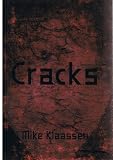
Cracks
by Mike Klaassen by Blue Works
Paperback 
List Price: $14.99
Our Price: $11.95 Buy Now
|
FROM THE MAILBOX
"I enjoyed your latest newsletter and found the article on transitions especially interesting as I wrap up my tenth novel, my most complex yet. It's called City In Shadow and will be out this fall. In this story I have a number of viewpoint characters and switch among them, so it's important that my transitions make it clear how much time has passed since we saw a character last, and what if anything has happened since then. One of my favorite writers . . . has an odd habit of beginning sections without indicating (sometimes for several paragraphs) who we're reading about. It drives me crazy and I get an urge to edit! I don't know why a writer would intentionally make something unclear.
"My latest Hidden Manhattan mystery, Dark Alley, is about to hit stores and has already received some excellent reviews.
"By the way, many years ago I represented Gary Provost and was the agent on Beyond Style. Gary was a wonderful person and we all miss his intelligence and self-effacing humor."
EVAN MARSHALL (Author and Literary Agent)
|
EVENTS AND WORKSHOPS
WORKSHOP
March 27, 2010 -- Kansas Writers Association Scene Conference, Wichita Airport Hilton.
"Writing in Third-Person Intimate Point of View"
BOOK SIGNING
May 1-2, 2010 -- Kansas Sampler Festival, Author's Tent, Leavenworth, KS
|
MORE HELP FOR FICTION WRITERS
Need professional help? Try LAURIE ROSIN, editor for thirty-eight national bestsellers, more than fifty million copies in print. Writing fellow, National Endowment for the Humanities. Unparalleled assistance for serious writers. www.TheBookEditor.com
You are also welcome to forward this ezine to your fiction-writing friends. See "Forward email" below.
|
SUBSCRIBE NOW
If you have enjoyed this newsletter and are not already receiving it automatically each month, you are welcome to a free subscription. Just click on the "Join Our Mailing List" button at the top of this page. Or if you prefer, send an email to mike@klaassen.kscoxmail.com and ask to be added to Mike's ezine list.
For a limited time only (subject to cancellation without prior notice), subscribers to the ezine are entitled to Mike's Special Report: "Secrets to Enhancing Emotion in Fiction."
|
ARCHIVE OF PAST ISSUES
You may view previous issues of For Fiction Writers at the following link.
|
|
|
|
|
Copyright 2010 Michael John Klaassen. All rights reserved |
|
|
|
|
|

