|

FOR FICTION WRITERS
BY MIKE KLAASSEN
|
 February 2010 February 2010
Volume I, Issue 8
Published monthly
ISSN: 1948-7150 You are receiving this email either because someone forwarded it to you or you joined our mailing list. To change your subscription, see the links at the bottom of this email.
Please add mike@klaassen.kscoxmail.com to your whitelist or the address book in your email program, so you have no trouble receiving future issues. You are welcome to forward this email to your writing friends. | |
Greetings!
Brrrrrr! We've had one snow storm after another. And some really cold temperatures. Fortunately, Carol and I got away from it all for a few days on a trip to Puerto Adventuras on the Mayan Riviera just south of Cancun. Had a great time. Thanks Dick and Sally!
This month's issue finishes a three-part series of articles about transitions. Encourage your writing friends to subscribe, so they automatically receive their own copies. Reminder: For a limited time, new subscribers are entitled to my Special Report: "Secrets to Enhancing Emotion in Fiction."
Happy Holidays,
Mike |
|
|
FEATURE ARTICLE: "Fiction-Writing: The Mechanics of Effective Transitions "
By Mike Klaassen
According to Gary Provost, in Beyond Style, "A transition is a phrase or sentence which
takes readers from one place, time, or subject to the next." Jessica Page Morrell, Between the Lines, recognizes an even wider role for transition
when she observes that "Not only do stories move around in time and place,
they also trace the characters' changes in mood and emotion and the general
change in tone that happens in any drama."
Numerous issues should be considered when developing
effective transitions:
* Location
* Timing
* Length
* Selectivity
* Consistency vs. variety
* Obtrusiveness
* Headings and datelines
* Disguised transition
* Multi-tasking
* Reader involvement
LOCATION
Transitions may appear anywhere there is a change within a
story. These changes may reflect shifts
in time, location, viewpoint character, mode, pace, etc. Many changes, especially those within a structural unit of the story,
are so small they require little, if any, transition. Significant changes that require transitional
help are most likely to occur between
structural units of a story.
It may be helpful to review the structural composition of a
story, especially regarding plot. On a
micro level, plot consists of stimulus
and response (sometimes referred to
as action and reaction). On a macro
level, plot has a beginning, a middle, and an ending. But plot also has a
midlevel structure of scenes and sequels. Fiction often has another level of structure
that includes chapters and/or sections.
These structural units don't just pop up in the story, they often
require at least some transition from one unit to another, so structure
actually looks like this:
* Stimulus - - transition - - response
* Scene - - transition - - sequel
* Chapter/section - - transition - - chapter/section
* Beginning - - transition - - middle - - transition - - ending
In addition to the beginning, middle, and ending of the
story as a whole, each scene, sequel, chapter, and section has its own
beginning, middle, and end. Although
changes requiring transition may occur anywhere within a structural unit, the
most significant changes requiring transitions tend to cluster at the ending
and beginning of those units.
TIMING
Transitions may be categorized in several ways, including
their timing. Writers have three
distinct time frames within which to alert the reader of a change:
* Before the change occurs
* During the change
* After the change
An example of a transition BEFORE the change occurs: Cisco grabbed
Gabby by the shoulder. "I'll meet
you back at the ranch in three hours."
Various means may be used to portray changes as they occur,
including action, summary, and dialogue.
An example of a transition DURING the change: Cisco took the shortcut and arrived at the ranch
three hours later.
A shorthand means of signaling a change while it is
occurring is through punctuation: section breaks clearly signal the reader that
a change is occurring. (By default, a
section break coincides with the change: at the end of the previous section, a
change has not yet occurred, but the change has already occurred before the
beginning of the next section.) Section
breaks (also known a line spaces or jump cuts) are only used for significant
changes in time, location, or viewpoint.
Chapter breaks, on the other hand, may be used for a variety of
purposes, including a signal that there has been a significant change in time,
location, or viewpoint,
At the beginning of a new section or chapter, the writer
needs to make clear to the reader:
* from whose viewpoint the section is being viewed
* how much time has elapsed since the last section or
chapter
* where the viewpoint character is located
An example of a transitional phrase AFTER the change: Cisco
eased out of the saddle. He had been
riding for three hours.
Depending on the circumstances and the writer's objectives,
he may signal a change using all three timeframes: before, during and
after. Frequently a major change may be
signaled using just two of the timeframes (for example, a section break and
then a clear transition at the beginning of the next section. Relatively minor changes (such as those
within a scene or between two closely related scenes) may be signaled within
one time frame (using action, for example).
"These clues," according to Morrell, "let the
readers know how much time has elapsed since they last spent time with the
viewpoint character, where he is presently located, and other vital information
needed to resume that part of the story."
LENGTH
Transitions may range from being very short (just one word
or a single item of punctuation) to quite lengthy (paragraphs or even
pages). Long transitions run the risk of
being boring and destroying the pace of the story. Short transitions run the risk of jarring the
reader out of the fictive dream.
In The Marshall Plan
for Novel Writing, Evan Marshall likens transitions and the various units
of a story to a pearl necklace. "The
best-made strands . . . have tiny knots in the string between the pearls, to
hold them tightly in place and keep the necklace strong." David Madden, in the Writer's Digest Handbook of Novel Writing, seems to agree: "Keep
transitions crisp. Do it quickly,
instead of sending readers trudging over a long, elaborately constructed
transition bridge."
SELECTIVITY
Much of writing has to do with making choices, and transitions
are no exception: an author must decide which transitions to show and which to
leave out. According to Morrell, ".
. . readers do not need to follow characters through every doorway. Especially
when your character is performing commonplace or normal action, this sort of
reporting is gaudy, awkward, and unnecessary." Her bottom line on which transitions to use
and which to omit: " . . . if you can leave a transition out . . . without
causing confusion, do."
CONSISTENCY VERSUS VARIETY
Fiction-writing often involves a struggle to find an
appropriate balance between two extremes.
In transitions, a balance needs to be struck between establishing
helpful patterns and avoiding monotonous repetition.
Jessica Page Morrell recognizes the benefit of patterns:
"When you use a pattern that the reader can easily recognize, the pattern,
in a sense, serves as a transition."
For example, in multiple point-of-view fiction, repeated use of section
breaks to signal a change of viewpoint character will accustom the reader to
the change. Likewise, limiting each
chapter to one viewpoint character is, in effect, using chapter breaks to
signal a change of viewpoint character.
At the other end of the spectrum, Morrell advises writers to
"Be sure not to overuse a particular transitional approach. For instance, many writers always use setting
details and weather to announce a change of location or scene. . . . when overused they become dull. Transitions need to be varied," continues
Morrell, "sometimes unobtrusive, sometimes colorful, and always
graceful. Expand your transition
repertoire and find fresh ways to indicate the passing of time and influence
the mood of your story . . . :"
OBTRUSIVENESS
Les Edgerton, in Hooked,
notes that transitions ". . . have to lead into the rest of the story as
effortlessly as possible, so as not to cause the reader to hesitate or even
completely stall. That means you need to
create transitions that are as seamless as possible."
Failure to use a transition may leave the reader
bewildered. Likewise, a transition may
be so subtle that the reader misses it and gets confused. On the other extreme, transitions that are
too obtrusive may jolt the reader out of the "fictive dream." The challenge is to find the balance that
fits the situation just right: transitions that are effective, yet
seamless.
Small, insignificant changes may require no transitions at
all. More pronounced changes may only
require subtle transitions (maybe just a transitional word or two). Big changes, such as a large shifts in time,
location, or viewpoint may require much more pronounced transitions (such as
section or chapter breaks accompanied by appropriate transitional
content).
HEADING AND DATELINES
Two obtrusive forms of direct narration, closely related to
chapter breaks and section breaks are headings and datelines. As explained by Jordan E. Rosenfeld, "To keep
the reader oriented, authors [may] use a header below the chapter title that
gives the character's name, as in: Chapter 1 Mary, Chapter 2 Jack."
Likewise, instead of writing transitional text into the body
of the story to indicate a new location or time, the writer may simply tell the
reader (via direct narration) where or when the new chapter/section takes
place. Tom Clancy uses datelines
extensively in Red Storm Rising, a
novel depicting multiple viewpoint characters scattered geographically. Examples include chapter and section headings
such as:
* USS NIMITZ
* HILL 152, ICELAND
* KIEV, THE UKRAINE
* DOVER AIRFORCE BASE, DELAWARE
DISGUISED TRANSITION
Another technique for creating seamless transitions is to
disguise them as other fiction-writing modes.
An old audiotape commercial used to ask, "Is it real? Or is it
Memorex?" Similar questions
regarding disguised transitions would be:
"Is it transition? Or
is it dialogue?"
"Is it description?
Or is it transition?"
"Is it transition? Or
is it action?"
The answer to each of these questions is that "it"
can be both. And in the world of
fiction-writing, that's highly desirable.
Transitions that are accomplished through the use of one or more of the
other fiction-writing modes can be invisible except to the most discerning
eye. They can also be said to be
multi-tasking.
MULTI-TASKING
Transitions are often designed to accomplish several tasks
in a few sentences. Rather than insert a
transition (of whatever appropriate length), and then writing action, description, or dialogue, the writer combines
them, so the words do double or even triple duty.
For example, Jordan E. Rosenfeld, in Make a Scene, notes that "Scent is a subtle way to transition
. . . ." In Between the Lines, Jessica Page Morrell provides a list of
"transitional devices" which could also be described as multi-tasking
techniques for transitions:
* Lighting, shadow, sun, stars, moon
* Weather
* Seasons, years, eras
* Objects
* Mundane activities
* Character's appearance, health
* Time, date
* Activities, interruptions
Multi-tasking transitions is also an effective way to
economize word usage.
READER INVOLVEMENT
Morrell states that "Crafting transitions might not
make you feel like a creative genius, and it doesn't qualify as one of the
captivating parts of storytelling, but it reveals your respect for your
reader." However, she also ads a
caution: "Transitions are your way of showing courtesy to reader, but do
not imagine your reader is an intellectual invalid." Effective transitions balance the need to be
courteous to the reader, while at the same time trusting the reader to
"get it," to "fill in the blanks" where necessary.
Transitions help the reader adapt to changes of time,
location, and viewpoint character. As
with many aspects of fiction-writing, there are numerous issues which may be
addressed to create effective transition.
WANT TO USE THIS ARTICLE IN YOUR E-ZINE OR WEBSITE? You may, as long as you include this complete blurb with it: Author Mike Klaassen publishes "For Fiction Writers," a free monthly e-zine.
|
|
ABOUT MIKE
Mike Klaassen is an author devoted to writing novels and to helping others understand the craft of writing fiction.
"My goal as a novelist," says Klaassen, "is to write fiction that even the most reluctant readers will enjoy. My goal as a nonfiction author is to help fiction writers achieve the cutting edge in fiction-writing technique. The objective in each of my articles is to present the most comprehensive analysis of the subject matter available anywhere."
Mike and his wife, Carol, live just outside Wichita with two one-of-a-kind skunk dogs, a cat, and a pond full of gold fish. You can learn more about Mike and his novels at www.mikeklaassen.com
Mike Klaassen
P.O.Box 4781
Wichita, KS 67204-0781
(316) 744-4325
|
|
NEW PRAISE FOR THE BRUTE
(As posted on Amazon.com)
Here's a novel with a character teens will enjoy and want to emulate.
Fortney Curtis, Fort for short, has a terrible temper. That wouldn't be
a problem for the sixteen year old, if he wasn't six foot two and as
strong as an ox. The skills that help him on the football field impede
him with his family and his friends, and a guy like him has no luck
with the girls. That's why his nickname is The Brute.
Fort's world is about to change. When a summer tornado wipes out
the scout campsite that includes six other scouts, his father, and
their scoutmaster, the scoutmaster and Fort's father are disabled. That
leaves Fort as the one who has to take charge and take care of injured
adults and scouts. But first, Fort has to get control of himself or
nothing he does will make any difference. He might even win the heart
of the girl in the end.
In this fast paced adventure novel, we get to see Fort begin his
journey to true manhood. He has to face many obstacles, but the
greatest one is himself. The author, Mike Klaassen, tells this story
with tautly drawn prose that makes The Brute a fun novel that teens
will really enjoy. Lionel D. Alford (Author of numerous novels, including Aegypt and The End of Honor)
THE BRUTE is available through the Amazon.com link below. (By accessing Amazon.com through this page before ordering, you help support this publication.)
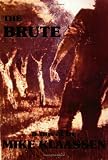
The Brute
by Mike Klaassen by Blue Works
Paperback ~ Release Date: 2005-06-01 
List Price: $14.99
Our Price: $14.69 Buy Now
|
FROM THE MAILBOX
"This is a great newsletter with loads of good info. I heartily endorse it!"
Les Edgerton (Author of Finding Your Voice: How to Put Personality into Your Writing, and many others) |
MORE HELP FOR FICTION WRITERS
Page Lambert offers a combination writer's retreat and horse-riding adventure in Wyoming. Check it out at on Page's mind-blowing website: www.pagelambert.com
|
SUBSCRIBE NOW
If you have enjoyed this newsletter and are not already receiving it automatically each month, you are welcome to a free subscription. Just click on the "Join Our Mailing List" button at the top of this page (also available at www.mikeklaassen.com). Or if you prefer, send an email to mike@klaassen.kscoxmail.com and ask to be added to Mike's ezine list.
For a limited time only (subject to cancellation without prior notice), subscribers to the ezine are entitled to Mike's Special Report: "Secrets to Enhancing Emotion in Fiction."
You are welcome to forward this ezine to your fiction-writing friends. See "Forwards email" below. |
ARCHIVE OF PAST ISSUESYou may view copies of previous issues of For Fiction Writers at the following link:
|
|
|
|
|
Copyright 2010 Michael John Klaassen. All rights reserved |
|
|
|
|
|

