|

FOR FICTION WRITERS
BY MIKE KLAASSEN
|

January 2010
Volume I, Issue 7
Published monthly
ISSN: 1948-7150
You are receiving this newsletter either because someone forwarded it to you or you joined our mailing list. To change your subscription, see the links at the bottom of this email.
Please add mike@klaassen.kscoxmail.com to your whitelist or the address book in your email program, so you have no trouble receiving future issues. You are welcome to forward this email to your fiction-writing friends. | |
| Greetings!
Our skunk dogs have been at it again. We like to feed the birds, especially when it's cold and snowy. But bird feed tends to attract skunks, and our dogs can't resist "playing" with them. P.U.
This issue debuts a new section: From the Mailbox. Agent and author Evan Marshall (The Marshall Plan for Getting Your Novel Published, and others) was nice enough to comment on on a recent article. Check it out.
The feature article this month is the second in a series of the three about the pesky challenge of TRANSITIONS.
Happy Fiction Writing,
Mike |
|
FEATURE ARTICLE: Fiction-writing:
Using punctuation to create transitions
According to Jessica Page Morrell, in Between the Lines, "Transitions are like punctuation in your
sentences - - you employ them as a courtesy to readers so they find their way
through your story and keep the fictional dream flowing."
Punctuation may not be the first thing writers consider when
thinking of transition, but in reality punctuation is all about transition. As observed by Rene J. Cappon, in the Associated Press Guide to Punctuation,
"Punctuation in skilled hands is a remarkably subtle system of signals,
signs, symbols and winks that keep readers on the smoothest road." Those signs and symbols are indicating change
of some sort; in other words, they are facilitating transition.
Transition exists on three levels of punctuation: micro,
meso, macro.
* Micro-level transitions punctuate sentences: periods,
commas, semicolons, colons, dashes, dots, question marks, exclamation marks,
etc.
* Meso-level transitions define paragraph structure with
paragraph breaks.
* Macro-level transition includes the bullhorns of
punctuation: section breaks and chapter breaks.
As stated by Noah Lukeman, in A Dash of Style, "Few people would think of the paragraph
break as a punctuation mark, but it certainly is." Also notes Lukeman, "The section break
(also known as the line space) is the most subjective of punctuation
marks. [It] is used to delineate
sections within chapters, which might range from several paragraphs to several
pages. It signifies a major transition
within a chapter, usually a change of time, place, or even viewpoint."
Chapter breaks, another form of punctuation, are used for a
variety of purposes, but they often coincide with a change in time, location,
and/or viewpoint. As such, they are an
important means of signaling transition.
CHAPTER BREAKS
According to Jordan E. Rosenfeld, in Make a Scene, "The end of a . . . chapter is a note to the reader
that you are concluding something, taking a break from the preceding events in
order to change, refresh, or throw a twist into character or plot
details." As Rosenfeld indicates, a
chapter break may signal a change in the story's action. But a chapter break might also involve a
change in time, location, or viewpoint character.
Readers have been conditioned to expect that the end of one
chapter and the beginning of another coincides with changes of one sort or
another. If the changes signaled by a
chapter break are slight (little or no change in time or location), then the
chapter break alone might serve as an adequate transition.
However, depending on the changes and the needs of the
story, more aid may be desirable to help the reader with the transition. Transitions may occur within three
timeframes:
* BEFORE. A change
may be signaled before it occurs (at the end of the old chapter). For example, using dialogue to signal
transition: "I'll meet you back at the ranch tomorrow around noon."
* WHILE. The chapter
break itself signals that a change is occurring, while it is occurring.
* AFTER. Further
transitional opportunities are available after the change (at the beginning of
the new chapter, to establish the new time, location, or even a new
viewpoint). For example: As Cisco eased
out of the saddle, Gabby stepped out of the bunkhouse door with a sawed-off
shotgun. "You're late!"
SECTION BREAKS
Typically, chapters include at least one complete scene or
sequel. They may also include
sections. The transition from one
section to another, in manuscript format, is indicated with a blank line. These dividers are called section breaks
(also known as space breaks or line spaces).
Les Edgerton, in Hooked,
notes that "Virtually the only times a space break should be used as a
transition is when signaling an abrupt departure from the present scene,
followed by either a different point of view, a switch in geographic location,
or a shift in time, forward or back."
Evan Marshall, in the Marshall Plan for Novel Writing,
states that "Whenever a section featuring one viewpoint character is
followed by a section featuring a different
viewpoint character, use the space-break connector. You can also use the space-break connector to
indicate the passage of time between two sections featuring the same viewpoint
character."
In A Dash of Style,
Noah Lukeman admits that section breaks are rarely discussed, and there is not
even a consensus on how to indicate them.
"In manuscript form, this mark is generally indicated by a blank
line followed by text set flush to left, or by a single asterisk, or by a set
of asterisks running across the page, centered and evenly spaced with a tab
between each."
According to Orson Scott Card, in Characters & Viewpoint, "Readers are trained to recognize
a line space as a signal that a major change is taking place in the story - - a
change in location, a long passage of time, or a change in viewpoint
character. However, you must be careful
that you establish what the change is immediately after the line space. Who the viewpoint character is. Where she is.
How much time has passed."
Jordan E. Rosenfeld, in Make a
Scene, echoes that thought when she observes "Don't make the reader
wait for a page to figure out whose eyes he is looking through!"
Punctuation is an effective shorthand for creating
transition, and it should not be overlooked as an opportunity to enhance the
seamless flow of a story.
WANT TO USE THIS ARTICLE IN YOUR E-ZINE OR WEBSITE? You may, as long as you include this complete blurb with it: Author Mike Klaassen publishes "For Fiction Writers," a monthly e-zine. |
|
ABOUT MIKE
Mike Klaassen is an author devoted to writing novels and to helping others understand the craft of writing fiction.
"My goal as a novelist," says Klaassen, "is to write fiction that even the most reluctant readers will enjoy. My goal as a nonfiction author is to help fiction writers achieve the cutting edge in fiction-writing technique. The objective in each of my articles is to present the most concise and comprehensive analysis of the subject matter available anywhere."
Mike and his wife, Carol, live near Wichita, Kansas with two one-of-a-kind skunk dogs, a cat, and a pond full of goldfish.
Mike Klaassen
P.O.Box 4781
Wichita, KS 67204-0781
(316) 744-4325
|
NEW PRAISE FOR CRACKS
(As posted on Amazon.com)
"Nonstop action and adventure from Mike
Klaassen."
"Cracks is a tight adventure novel that delivers nonstop
action. If you are a fan of wilderness adventure, you will not want to pass by
this strong older teen and young adult novel. It will keep you on the edge of
your seat and leave you with a lot to think about.
"Bodie McCann is a lost cause and he is starting to
figure that out. His life has led him through foster homes and juvenile
detention, and his current scrape with the law has put him in a program of
rehabilitation for juveniles. That program takes teens and gives them
wilderness experiences to help them get their lives together. For Bodie, this
experience begins with spelunking, and a major earthquake is just the beginning
of his potentially life changing problems.
"I don't want to give away too much of the plot because
it is a string of adventures that are best read and savored. This novel is hard
hitting and doesn't shy away from addressing drug use, human suffering, and
youthful cruelty. It is a strong mixture of Lord of the Flies with a
Deliverance-like driver. It will appeal to those who like a great read with
tense situations. Mike Klaassen can be relied on to give the gritty side of
life with a strongly redemptive message-get it."
Lionel D. Alford, Jr.
Author of the Chronicles of the Dragon and the Fox, and numerous other novels
CRACKS is available through the Amazon.com link below.
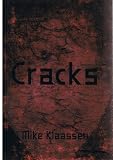
Cracks
by Mike Klaassen by Blue Works
Paperback 
List Price: $14.99
Our Price: $11.95 Buy Now
|
FROM THE MAILBOX
"Great newsletter. Your article about profanity in fiction was especially
interesting to me. I have learned over the years that many readers of
amateur-sleuth mysteries dislike profanity in their novels. They especially
dislike the Lord's name being taken in vain. So I avoid both of these things,
and no one has ever said, "Hey, where's the profanity?!" Amusingly, these same
readers don't mind blood and gore; they just don't like
profanity!"
EVAN MARSHALL
(Author of The Marshall Plan for Novel Writing, and others)
If you would like to comment on FOR FICTION WRITERS (or just say hello) send an email to Mike at: mike@klaassen.kscoxmail.com
|
MORE HELP FOR FICTION WRITERS
Jordan E. Rosenfeld, author of Make a Scene: Crafting a Powerful Story One Scene at a Time (Writer's Digest Books, 2008), is offering online workshops for fiction writers. Check out her classes at: http://www.jordanrosenfeld.net/events-classes.html#online
Author and literary agent, Evan Marshall, hosts an amazing website for writers. Check it out at: http://themarshallplanet.ning.com/
If you want to see the potential of a writers' blog, take a peek at Prairie Chicks Write Romance: http://prairiechickswriteromance.blogspot.com/
You are also welcome to forward this ezine to your fiction-writing friends. See "Forward email" below.
|
SUBSCRIBE NOW
If you have enjoyed this newsletter and are not already receiving it automatically each month, you are welcome to a free subscription. Just click on the "Join Our Mailing List" button at the top of this page. Or if you prefer, send an email to mike@klaassen.kscoxmail.com and ask to be added to Mike's ezine list.
For a limited time only (subject to cancellation without prior notice), subscribers to the ezine are entitled to Mike's Special Report: "Secrets to Enhancing Emotion in Fiction."
|
ARCHIVE OF PAST ISSUES
You may view previous issues of For Fiction Writers at the following link.
|
|
|
|
|
Copyright 2009 Michael John Klaassen. All rights reserved |
|
|
|
|
|

