|

FOR FICTION WRITERS
BY MIKE KLAASSEN
|
 ISSN: 1948-7150 ISSN: 1948-7150
Published monthly.
July 2009
Volume 1, Issue 1
You are receiving this newsletter either because someone forwarded it to you or you joined our mailing list. To change your subscription, see the link at the bottom of this email.
Please add mike@klaassen.kscoxmail.com to your whitelist or the address book in your email program, so you will have no trouble receiving future issues. | |
| Greetings!
If you're like me, you've found that learning to write fiction is a journey of discovery. Ernest Hemingway once said, "We are all apprentices in a craft where no one ever becomes a master." To me, that means the journey never ends!
You've probably heard the old training adage "See one. Do one. Teach one." We've all "seen" fiction by reading it and studying it. If you're already a fiction writer, you're "doing" it. Teaching can take many forms. For me, that includes writing articles about fiction and its craft.
Writing about anything of personal interest can, by itself, provide a great sense of personal satisfaction. But the full reward of writing isn't likely without sharing those thoughts with others. That's the purpose of this newsletter. I hope you enjoy it.
Happy Fiction Writing,
Mike |
|
|
FEATURE ARTICLE: "How to Portray Your Character's Thoughts"
By Mike Klaassen
Copyright 2007-2009 Michael John Klaassen
Introspection, the fiction-writing mode used to convey a character's thoughts, may appear to be simple in published fiction, but the issues facing an author during the writing process are numerous:
PUNCTUATION. Over the years, various forms of punctuation have been used to delineate introspection. From time to time, writers use quotation marks to identify a character's thoughts. This practice causes confusion, especially since quotation marks are the accepted means of identifying dialogue. As stated by Renni Browne and Dave King, in Self-Editing for Fiction Writers, "Never, ever use quotes with your interior monologue. It is not merely poor style; it is, by today's standards, ungrammatical. Thoughts are thought, not spoken."
More commonly, introspection is denoted with italics. But this practice is losing ground to presenting thought in plain type. According to Evan Marshall, in The Marshall Plan for Novel Writing, "Don't use italics or quotation marks for thoughts. However, if a character is recalling dialogue, put the recalled dialogue in italics."
ATTRIBUTION TAGS. Just as dialogue is tagged, where necessary, to identify the speaker, introspection may be tagged with a clause to make clear who is doing the thinking. For example:
Introspection with a tag:
Maybe Bart will listen to reason before someone gets hurt, thought Cisco.
Introspection without a tag:
Maybe Bart will listen to reason before someone gets hurt.
But as stated by Browne and King, "Whenever you're writing from a single point of view -- as you will be ninety percent of the time -- you can simply jettison thinker attributions. Your readers will know who's doing the thinking."
Then again, there are times when a passage just doesn't flow right without a tag to provide rhythm and pace.
Also regarding tags, Nancy Kress in Dynamic Characters writes, "And, of course, I don't have to tell you not to write, 'He thought to himself.' Except for telepaths, there is no other possibility."
TENSE. A character's thoughts may be narrated in either present tense or past tense. Combined with the choices of first-, second-, or third-person narration, they offer a mind-boggling array of choices, with advantages and disadvantages to each. As a practical matter, though, most stories are written in past tense using either first person or third. However, even when a story is narrated in third person and past tense, introspection may be presented in first-person present tense. For example:
Introspection using third person and past tense:
Cisco hoped Bart would listen to reason before someone got hurt.
Introspection using first person and present tense:
I hope Bart listens to reason before someone gets hurt, thought Cisco.
PERSON. Narration may be written in any of the three persons. In the rare situations when second person is used to tell a story, any introspection would also be in second person; so that isn't an issue. And when a story is presented in first person, any introspection would also be in first person; so that too is not an issue.
But authors writing in third person are faced with a choice for each line of introspection: third person or first, each with advantages and disadvantages. Switching to first person allows the use of the character's exact words, but it also creates a narrative shift that may confuse and annoy the reader. Staying within third person for introspection may not allow for the use of the thinker's exact words, but it retains narrative consistency. As stated by Browne and King, ". . . unless you are deliberately writing with narrative distance, there is no reason to cast your interior monologue in first person."
According to Kress, the use of third person and past tense "is a more seamless, less intrusive way to handle thoughts, because you switch neither person nor tense. It's true that the third-person thought will feel slightly less immediate -- more reported to us than directly overheard by us -- but the difference will be slight. And the gain in readability should offset that."
DIRECT VS. INDIRECT INTROSPECTION. According to Evan Marshall, direct introspection uses the character's exact words. Indirect introspection summarizes or paraphrases the thinker's words. For example:
Direct Introspection, using third person:
Maybe Bart will listen to reason before someone gets hurt.
Direct Introspection, using first person:
I hope Bart will listen to reason before someone gets hurt.
Indirect Introspection:
Cisco hoped Bart would listen to reason before someone got hurt.
As stated by Evan Marshall, in The Marshall Plan for Getting Your Novel Published, "To convey a character's thoughts, use the indirect method whenever possible. But use the direct method to convey a character's thoughts when you feel the exact inner words of thought will have greater impact."
VERBS OF THOUGHT. Verbs of thought may be used in attribution tags or within the introspection itself. Examples of thinking verbs include: think, hope, wonder, reason, realize, decide. These plain-vanilla verbs have the advantage of being nearly as unobtrusive as the dialogue attribution "said." There are, of course, many synonyms for these verbs, but other verbs of thought (such as surmised or ruminated) may distract or annoy the reader and are best avoided.
NARRATIVE DISTANCE. According to Browne and King, ". . . how you handle your interior monologue depends almost entirely on your narrative distance." As stated by Nancy Kress, "Distance is the measure of how far you, the author, are standing from your character as you tell the story."
Narrative distance ranges on a continuum from:
* Distant -- observing from the outside, as with the omniscient point of view, to
* Intimate -- perceiving the world through the character's mind and senses.
Regarding introspection, the more distant the narrator is from the character, the more necessary are devices (such as attribution tags, italics, and thought verbs) to delineate the passages as thoughts and who is doing the thinking.
PARAGRAPH TREATMENT. Introspection is often embedded within a paragraph that also includes action or dialogue, but sometimes introspection warrants its own paragraph. As stated by Browne and King, "Where you have a longer passage of interior monologue and are still writing with some narrative distance, it sometimes helps to set it off in its own paragraph, especially when the passage signals a change of mood."
CONSISTENCY. With so many choices available to present a character's thoughts, there is a real risk of confusion. According to Kress, "Whatever presentation you choose for character's thoughts, use it consistently so that your reader, once she's caught on, doesn't have to make mental adjustments for mechanics. That will only distract her from more important things."
Introspection may seem complicated -- that's because it is, especially if you are willing (at the risk of alienating readers) to allow distance between the reader and the character. There are lots of moving parts. Lots of choices.
Effective use of a character's thoughts in fiction requires a thorough understanding of the mechanics of introspection.
But the benefits of skillfully delivered introspection far outweigh the cost of avoiding its use or presenting it poorly.
WANT TO USE THIS ARTICLE IN YOUR E-ZINE OR WEBSITE? You may, as long as you include this complete blurb with it: Author Mike Klaassen publishes "For Fiction Writers," a monthly e-zine. |
|
ABOUT MIKE
Mike Klaassen is an author devoted to writing novels and to helping others understand the craft of writing fiction.
Mike Klaassen
P.O.Box 4781
Wichita, KS 67204-0781
(316) 744-4325
|
| BOOK REVIEW
BETWEEN THE LINES: Master the Subtle Elements of Fiction Writing
By Jessica Page Morrell
2006, Writer's Digest Books
Between the Lines, by Jessica Page Morrell, is an in-depth look at a wide range of novel-writing subjects. As the title implies, this is not meant to be a typical A-to-Z how-to book, and for the most part it lives up to its title.
Between the Lines did quite well on my "Hi-Liter test." As I read a book, I highlight the meaty parts for further reference and note-taking. Books with little substance survive relatively unscathed, while information-packed, insightful books get a heavy dose of yellow ink. My copy of Between the Lines is now awash in yellow. The chapters I found least useful were Tension and Suspense, which included a lot of information I've seen elsewhere.
My "note-taking test" was a little rougher on Between the Lines. After I finish reading a book, I review the passages marked with my Hi-Liter, scribbling notes to be filed by topic. Some of the chapters were packed with insight and juicy tidbits I noted for future reference, but much of the subject matter was a review for me. I took lots of notes about Epiphanies, Revelations, Flashbacks, Foreshadowing, Prologues, and Epilogues. My favorite chapter was Transitions, which by itself is worth the price of the book.
Using a five-star rating system, I rank Between the Lines four stars. I didn't give it five stars largely because of what's missing from the text. Other books cover some of the material with greater insight. And many of the examples could have been better chosen to illustrate the points being made.
Overall, I'm very glad I purchased Between the Lines. I've found that I refer to it and quote from it frequently. I recommend it for the personal libary of any author serious about writing fiction.
WANT TO USE THIS ARTICLE IN YOUR E-ZINE OR WEBSITE? You may, as long as you include this complete blurb with it: Author Mike Klaassen publishes "For Fiction Writers," a monthly e-zine.
|
|
BOOKS BY MIKE
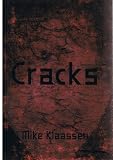
CRACKS, by Mike Klaasssen
When the New Madrid Fault rocks the Ozarks of Arkansas, five troubled teens struggle to survive cave-ins, rock slides, wild animals -- and each other.
Rated Teen+
- Drugs
- Wild boars
- Murder
- Maggots
- Swearing
- Knife fights
Reviews:
"Two messages are brought clearly to the reader's attention in Mike Klaassen's second novel, CRACKS: Crime doesn't pay, but genuine love of family does . . . . This young adolescent's book provides hook after hook to keep teens reading . . . ."
Donna Rothgeb, Teacher
"Combine Holes with Lord of the Flies and Deliverance and you have an appreciation for CRACKS. This is a mature young adult novel . . . . We rated this excellent adventure four hearts."
Bob Spear, Heartland Reviews
It's one thing to teach or write about fiction; it's quiet another to write novel-length fiction. Get your own copy of CRACKS, and see for yourself how Mike incorporates the concepts and techniques of the fiction-writing craft into a novel.
|
|
|
|
|
Copyright 2009 Michael John Klaassen. All rights reserved |
|
|
|
|
|