|

FOR FICTION WRITERS
BY MIKE KLAASSEN
|
 December 2009 December 2009
Volume I, Issue 6
Published monthly
ISSN: 1948-7150 You are receiving this email either because someone forwarded it to you or you joined our mailing list. To change your subscription, see the links at the bottom of this email.
Please add mike@klaassen.kscoxmail.com to your whitelist or the address book in your email program, so you have no trouble receiving future issues. You are welcome to forward this email to your writing friends. | |
Greetings!
I hope you had a lovely Thanksgiving. We all have so much to be thankful for!
Carol and I spent Thanksgiving with our sons at Cowboys Stadium in Dallas -- what a fabulous new, and huge, facility. And the Cowboys won!
Our youngest son announced that he and his girlfriend are now engaged. After celebrating that news, Carol and I took off for Gonzales, Goliad, and San Antonio for a little research on the Texas Revolution -- and a couple of pleasant evenings along the Riverwalk.
This month's issue begins a three-part series of articles about transitions. Encourage your writing friends to subscribe, so they automatically receive their own copies. Reminder: For a limited time, new subscribers are entitled to my Special Report: "Secrets to Enhancing Emotion in Fiction."
Happy Holidays,
Mike |
|
|
FEATURE ARTICLE: "Transition as a Fiction-Writing Mode "
By Mike Klaassen
In the television series Star
Trek, people routinely teleport through space ("Beam me up,
Scotty."). In some episodes they
even slip back and forth though time via wormholes and other gaps in the
space-time continuum. In the world of
fiction-writing, these leaps through time and space are called
transitions.
Fiction, by its very nature, involves movement of one sort
or another, and that requires transition.
Even though fiction is filled with transitions, they can be so subtle
that a casual observer may not even be aware that transitions have occurred.
According to Jessica Page Morrell in Between the Lines, transitions are the words, phrases, sentences,
or paragraphs used to bridge what has been said or has happened with what is
going to be said or will happen. "Transitions
aid the seamless unfolding of stories," notes Morrell, "yet it's
downright shocking how often writers neglect to use them."
Apparently fiction-writers aren't the only ones who ignore
transitions; most how-to books about writing fiction barely mention them. Not so with Jessica Page Morrell, who has
clearly put more thought into the subject than most; her Between the Lines devotes an entire chapter to transitions (which
by itself makes the book worth studying).
As explained in Writing
A to Z (edited by Kirk Polking), "Transitions in fiction lead the
reader from character to character, from place to place, or from present to
future (or past)." Transitions may
also be used to signal changes in other aspects of a story, such as mood, tone,
emotion, and pace.
TRANSITIONS AND THE ELEMENTS OF FICTION
Transitions play a role in each of the fundamental elements
of fiction (plot, character, setting, theme, and style). Transitions pave the way for readers as the
story moves through location and time, i.e., setting. And transitions
help the reader shift from one character
to another in multiple-viewpoint stories.
Transitions provide links between the structural units of plot from the smallest to the largest:
* Between stimulus and response
* Between scenes and sequels
* Between sections and chapters
* Between beginnings, middles, and ends
The influence of transitions on theme may be minimal, but how and when transitions are utilized
throughout a story and the skill with which they are presented are important
aspects of an author's unique writing style.
TRANSITIONS IN TIME
By far the most common transitions in fiction are those
reflecting changes of time. As stated by
Morrell, ". . . in fiction time must always be accounted for. If six hours, six days, or six years have
elapsed between scenes or chapters, you need a means to express this, and
transitions are one of your tools to do so." Jordan E. Rosenfeld, in Make a Scene, notes that "Transitions are the way you speed
past the dull and the mundane, and condense time and space so the characters
can get right to the important work of the plot."
Transitions reflecting changes in time may be compared to
the control buttons on a video player:
* Action and dialogue modes, showing the story in real time
at a normal pace, compare a PLAY button.
* Section breaks and chapter breaks, which allow the writer
to leap forward in time, equate to a SKIP button.
* Summary mode, which allows the writer to compress time and
events, compares to a FAST FORWARD button.
* Recollection, where a character thinks back briefly to
recall events, compares to a SLOW REWIND button.
* A flashback, where the character relives a scene prior to
the "now" of the story, compares to a FAST REWIND button.
POINT-OF-VIEW CHANGES
"Some stories," says Morrell, "must be told
through more than one viewpoint because of the scope, interconnection, and
depth that this structure provides. When
you use more than one viewpoint, the reader has access to a wider range of
information, emotions, motivations, and sensibilities."
The use of more than one viewpoint character, however,
entails risks and challenges. Orson
Scott Card, in Characters & Viewpoint,
warns that "A change of viewpoint character is the most difficult transition
for readers to make."
Jerry Jenkins (Writer's
Digest, October 2003) notes that plenty of secrets can be kept from the
reader, but you don't want confusion as to who is telling the story. Bouncing in and out of more than one
character per scene will make your reader feel like a neglected party guest,
wondering what's going on. Jenkins makes
several suggestions: "Immediately establish a new character, use whole
names to start, continue with solid signals . . . ."
Jordan E. Rosenfeld suggests another potential solution when
she writes that "Many authors dedicate an entire chapter to one character
at a time, which is a very simple, direct way to communicate whose point of
view the scene is in."
TYPES OF TRANSITION
Transitions may be created three ways:
* Transitional words or phrases
* Other fiction-writing modes
* Punctuation
TRANSITIONAL WORDS AND PHRASES. As observed by Jessica Page Morrell, "Simple
transitions are generally, but not always, subordinate clauses placed in the
beginning of a sentence or paragraph and used as an indication of change. They take the reader quickly and smoothly
from one place to another, connect ideas, and add to the overall coherence of
the story."
FICTON-WRITING MODES
Transitions by themselves may be considered a
fiction-writing mode. But transitions
can also be delivered through each of the other ten fiction-writing modes, thus
providing the writer with a vast toolbox from which to select the best means
for dealing with a specific challenge.
For example, a transition signaling that the story has moved forward
three hours may be presented in any of the ten other fiction-writing modes:
* NARRATION: Now dear
reader, we jump ahead three hours where we find our heroic character . . .
* SUMMARIZATION:
Three hours later . . .
* DESCRIPTION: The
scorching sun blazed across the afternoon sky for another three hours, and
Cisco . . .
* ACTION: Cisco
reined his horse to a stop. After three
hours of hard riding, they both needed a rest.
* CONVERSATION:
"It's three o'clock," said Cisco. "Black Bart swore he would be here at
noon."
* EXPOSITION: Cisco
and Gabby had been sitting in the saloon for three hours expecting Black Bart
to show up as promised.
* SENSATION: A blast
of wind chilled Cisco. The temperature
had dropped at least twenty degrees during the last several hours.
* INTROSPECTION:
Cisco glanced at the clock over the bar and realized Black Bart was
three hours late.
* EMOTION: Cisco
slammed the shot glass down on the bar.
Three hours was the longest he had waited for anyone.
* RECOLLECTION: The
clock over the saloon bar chimed three o'clock.
Cisco looked up from his cards and recalled that just that morning Black
Bart had promised to meet him at noon.
PUNCTUATION
Punctuation may not be the first thing writers consider when
thinking of transition, but in reality, punctuation is all about
transition. According to Rene J. Cappon,
in the Associated Press Guide to
Punctuation, "Punctuation in skilled hands is a remarkably subtle
system of signals, signs, symbols and winks that keep readers on the smoothest
road." Those signs and symbols are
indicating change of some sort; in other words, they are facilitating
transition.
Transition exists on three levels of punctuation:
* Micro-level transitions punctuate sentences: periods,
commas, semicolons, colons, dashes, dots, question marks, exclamation marks,
etc.
* Meso-level transitions define paragraph structure with
paragraph breaks.
* Macro-level transition includes the bullhorns of
punctuation: section breaks and chapter breaks.
OTHER CONSIDERATIONS
As observed by Les Edgerton, in Hooked, "Transitions have come a long way from the earliest
days of writing, even more so in the past few years." Words, phrases, punctuation, and
fiction-writing modes might be the means of delivering transition, but that
still leaves numerous other issues, variables, and techniques to be considered:
* Location
* Timing
* Length
* Selectivity
* Consistency vs. variety
* Obtrusiveness
* Headings and datelines
* Disguised transition
* Multi-tasking
* Reader involvement
The ability of Star Trek characters to rapidly teleport from
one location to another and occasionally slip backward and forward in time adds
depth and complexity that helps make the series an ongoing success. Writers interested in improving the
effectiveness of their own fiction may well want to learn more about the
mechanics of transition.
WANT TO USE THIS ARTICLE IN YOUR E-ZINE OR WEBSITE? You may, as long as you include this complete blurb with it: Author Mike Klaassen publishes "For Fiction Writers," a free monthly e-zine.
|
|
ABOUT MIKE
Mike Klaassen is an author devoted to writing novels and to helping others understand the craft of writing fiction.
"My goal as a novelist," says Klaassen, "is to write fiction that even the most reluctant readers will enjoy. My goal as a nonfiction author is to help fiction writers achieve the cutting edge in fiction-writing technique. The objective in each of my articles is to present the most comprehensive analysis of the subject matter available anywhere."
Mike and his wife, Carol, live just outside Wichita with two one-of-a-kind skunk dogs, a cat, and a pond full of gold fish. You can learn more about Mike and his novels at www.mikeklaassen.com
Mike Klaassen
P.O.Box 4781
Wichita, KS 67204-0781
(316) 744-4325
|
|
BOOKS BY MIKE
THE BRUTE, by Mike Klaasssen
When a tornado tears through their campsite in the Flint Hills of Kansas, sixteen-year-old Fortney Curtis must fend for six younger scouts while fighting his own explosive temper.
RATED TEEN
- Fist fights
- Boy Scouts
- Broken bones
- Cowgirl
- Kansas
- Cow chips
REVIEWS:
"The Brute could become a classic."
Lillian Phillips Stinnett, The Oklahoman
"Readers who enjoyed Hatchet, by Gary Paulsen, will also enjoy The Brute!"
Judith Nasse, Children's Book Reviews
"Klaassen succeeds in his attempt to pull young readers into his story . . . . Teenagers should identify with the stuggles faced by its protagonist."
Nancy Mehl, The Wichita Eagle
It's one thing to teach or write about fiction; it's quiet another to write novel-length fiction. Get your own copy of THE BRUTE, and see for yourself how Mike incorporates the concepts and techniques of the fiction-writing craft into a novel.
THE BRUTE is available through the Amazon.com link below. (By accessing Amazon.com through this page before ordering, you help support this publication.)
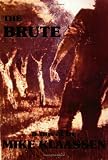
The Brute
by Mike Klaassen by Blue Works
Paperback ~ Release Date: 2005-06-01 
List Price: $14.99
Our Price: $14.69 Buy Now
|
MORE HELP FOR FICTION WRITERS
Jessica Page Morrell, author of Between the Lines: Master the Subtle Elements of Fiction Writing, publishes a monthly ezine called The Writing Life. To subscribe, send an email to jessicapage@spiritone.com
Judith Nasse publishes the Art of Creativity. To subscribe, send an email to nasse@kitcarson.net
|
SUBSCRIBE NOW
If you have enjoyed this newsletter and are not already receiving it automatically each month, you are welcome to a free subscription. Just click on the "Join Our Mailing List" button at the top of this page (also available at www.mikeklaassen.com). Or if you prefer, send an email to mike@klaassen.kscoxmail.com and ask to be added to Mike's ezine list.
For a limited time only (subject to cancellation without prior notice), subscribers to the ezine are entitled to Mike's Special Report: "Secrets to Enhancing Emotion in Fiction."
You are welcome to forward this ezine to your fiction-writing friends. See "Forwards email" below. |
ARCHIVESYou may view copies of previous issues of For Fiction Writers at the following link:
|
|
|
|
|
Copyright 2009 Michael John Klaassen. All rights reserved |
|
|
|
|
|

