|

FOR FICTION WRITERS
BY MIKE KLAASSEN
|

September 2009
Volume I, Issue 3
Published monthly
ISSN: 1948-7150
You are receiving this newsletter either because someone forwarded it to you or you joined our mailing list. To change your subscription, see the links at the bottom of this email.
Please add mike@klaassen.kscoxmail.com to your whitelist or the address book in your email program, so you have no trouble receiving future issues. You are welcome to forward this email to your fiction-writing friends. | |
| Greetings!
In August, Carol and I toured the old fort in Fort Scott, Kansas. I never realized that Fort Scott, Fort Leavenworth, and Fort Smith are part of a chain of bases established to protect the United States along its "Permanent Frontier" at the eastern edge of Indian Territory.
We stayed at the Courtland Hotel a block from the fort, and now we're hooked on historic hotels.
The next day I discussed marketing with a group of writers in Independence and presented my "Scene and Sequel: The Ebb and Flow of Fiction." Welcome to my ezine, ladies! Thank you to Donna Rothgeb for suggesting the Courtland Hotel and for organizing the Independence event.
Happy Fiction Writing,
Mike |
|
FEATURE ARTICLE: Scene & Sequel: The Ebb and Flow of Fiction
Scene and sequel are two of the most important components of
plot, but they also seem to be two of the least understood. If plot were an engine, scene and sequel
would be the pistons powering the drive shaft.
Writers striving to turbocharge their writing might want to fine-tune their
use of scene and sequel.
Let's put plot structure in context. On a micro level, plot consists of action and reaction. On a macro level,
plot has a beginning, a middle, and an ending. But plot also has a
midlevel structure: scene and sequel.
Scene is a unit of drama -- where the action occurs. Then, after a
transition of some sort, comes the sequel -- an
emotional reaction and regrouping, an aftermath.
The structures of scene and sequel are quite different, and
they serve entirely different purposes. Many
how-to books depict the rising action
of a story as a jagged line, or stairway.
What they fail to explain is that the up-thrust lines represent scenes,
while the down-sloping lines represent sequels.
A scene drives the story forward like a wave racing up the beach. A sequel pulls the wave back and gathers
strength for the next scene to surge up the beach even farther than the previous
scene. A novel without scenes would be boring,
but without sequels, a story is just one event after another.
Let's take a closer look at scenes. Fiction-writing books mention at least a few
of the following as being important to plot: tension, suspense, resolution,
motivation, goals, stakes, obstacles, conflict, success, and failure. But most don't mention all of these elements, nor do they explain how they work together
as part of a scene.
Basically, this is how a fully developed scene works.
- The scene setup establishes the point of view, which in many cases
is that of the scene's main character. The setup also establishes setting, including time,
especially in relation to the last scene or sequel.
- The character
has motivation to achieve a
specific goal and moves to
achieve it.
- Failure
to achieve the goal would result in the loss of something meaningful,
i.e., stakes.
- An obstacle complicates the character's
achievement of the goal.
- This
creates conflict, which results
in frustration for the
character and tension for the
reader.
- Since
the character is properly motivated and the stakes are adequate for the
situation, he tries to overcome the obstacle again and fails again and
again, often in the give-and-take form of stimulus and response.
- This
creates doubt as to whether the character will succeed, thus raising the
level of suspense for the
reader.
- The
character is confined somehow
to the situation, and since he has narrowing options and no outlet, pressure rises to a breaking
point.
- The
character tries yet again to overcome the obstacle, and this time (often
his third attempt) his efforts climax,
followed by the scene resolution.
- Resolution
may be in the form of either success
or failure, to one degree or
another, depending on the needs of the story.
- Since outright success too early in the
story would be anti-climatic, the more likely scene resolution would be bittersweet success, outright failure, partial failure, or failure that leaves the character even
farther from his goals than when the scene started.
In one scene of my young-adult novel Cracks, the main character is driving an old Chevy Suburban through
the Ozark Mountains of Arkansas. Before
he accomplishes his goal of reaching the highway, he must fend off the other
characters, navigate a winding mountain road, and avoid hazards created by
earthquakes. The scene ends in disaster
which sets up a sequel and, ultimately, the rest of the story.
Once the scene has reached its resolution, the scene is over. And after an appropriate transition, the sequel
may begin. Jack M. Bickham, in Scene and Structure, presents a
comprehensive explanation of sequel and its use.
Basically, this is how a fully developed sequel works:
- The
resolution of the scene has left the character in a state of emotion, most likely frustration since the outcome was probably
something less than outright success.
- As the
character gains control of his feelings, he enters a time of thought, where he begins to reason
through the situation.
- In the
process, the main character will review
recent events.
- He
will enter a phase of analysis
to digest facts and better understand his predicament, including
alternative courses of action available.
- From
analysis will emerge a phase of planning
regarding the next step.
- Once
the character has planned his next move, he must make a decision to proceed.
- Then
the character must act upon his
decision, thus setting up the next scene.
In my novel The Brute,
a sixteen-year-old boy is frustrated in his attempt to summon emergency help. A flooded creek blocks his route from the
ranch house to the highway. Exhausted
and discouraged, he plops down on an outcropping of rock. He begins to think the situation through, to review
his predicament, and to analyze it. A
plan emerges. He makes a decision to
act, then proceeds to the next scene with a clear goal in mind.
One of the advantages of writing in scenes and sequels is
flexibility. To meet the pacing needs of
the story, scenes and sequels and their various components may be lengthened,
shortened, skipped, or reversed in order.
As Bickham explains, scenes and sequels may be difficult to recognize in
published novels precisely because authors have varied their use to fit the
needs of the story. Flexibility in the
use of scene and sequel allows the author to create an emotional rollercoaster
of ups, downs, twists, turns, and loops to engage and entertain the reader.
If your writing lacks get-up-and-go or seems to sputter like
an engine in need of maintenance, maybe it's time for an overhaul of your
scenes and sequels.
WANT TO USE THIS ARTICLE IN YOUR E-ZINE OR WEBSITE? You may, as long as you include this complete blurb with it: Author Mike Klaassen publishes "For Fiction Writers," a monthly e-zine. |
|
ABOUT MIKE
Mike Klaassen is an author devoted to writing novels and to helping others understand the craft of writing fiction. Mike and his wife, Carol, live in Valley Center, Kansas (just north of Wichita) with two one-of-a-kind skunk dogs, a cat, and a pond full of goldfish.
Mike Klaassen
P.O.Box 4781
Wichita, KS 67204-0781
(316) 744-4325
|
BOOK REVIEW
SCENE & STRUCTURE:
How to Construct Fiction with Scene-by-Scene Flow, Logic and Readability
By Jack M. Bickham
Writer's Digest Books, 1993
Over the years I've read dozens of "how-to-write" books, and
I consider Scene and Structure by
Jack M. Bickham to be one of the most important.
The first chapter provides an overview of the structure of
modern fiction. Subsequent chapters deal
with beginnings and endings of stories, cause and effect, scenes and sequels,
controlling pace, plotting techniques, and structure of chapters. Particularly enlightening is the chapter about sequels. The first chapters include worthwhile information, but much
of that material is also covered in other books. What sets Scene
and Structure apart from others is Bickham's description of sequel and how, combined with scenes,
they can be used to structure and control the pace of a novel. If you're a serious student of the craft of
novel-writing, I whole-heartedly encourage you to obtain a copy and study
it.
Bickham's descriptions of scenes and how to use them was helpful. But his breakdown of the mechanics of sequels was a revelation for me. This one chapter is worth the price of the
entire book, and more.
I was fortunate to have read Scene and Structure as I was drafting my first young-adult novel, The Brute. I incorporated scene-and-sequel structure
into my writing of Cracks from the
beginning of the writing process to the end.
Some of my chapters are structured with easily recognizable scenes and
sequels, but others are adaptations to fit the needs of the story, as suggested
by Bickham.
My target readers are accustomed to the pace of today's
movies and computer games. With scenes
and sequels as the building blocks, I have a chance to create an emotional rollercoaster
that can hold the attention of even the most reluctant readers.
WANT TO USE THIS ARTICLE IN YOUR E-ZINE OR WEBSITE? You may, as long as you include this complete blurb with it: Author Mike Klaassen publishes "For Fiction Writers," a monthly e-zine.
SCENE & STRUCTURE, by Jack M. Bickham is available through the Amazon.com link below.

Elements of Writing Fiction - Scene & Structure (Elements of Fiction Writing)
by Jack Bickham by Writers Digest Books
Paperback

List Price:
$14.99
Our Price:
$7.12
Buy Now
|
|
BOOKS BY MIKE
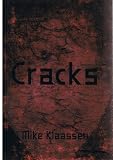
CRACKS, by Mike Klaassen
When the New Madrid Fault rocks the Ozarks of Arkansas, five troubled teens struggle to survive cave-ins, rock slides, wild animals -- and each other.
Rated Teen+
- Drugs
- Wild boars
- Murder
- Maggots
- Swearing
- Knife fights
Reviews:
"Two messages are brought clearly to the reader's attention in Mike Klaassen's second novel, CRACKS: Crime doesn't pay, but genuine love of family does . . . . This young adolescent's book provides hook after hook to keep teens reading . . . ."
Donna Rothgeb, Teacher
"Combine Holes with Lord of the Flies and Deliverance and you have an appreciation for CRACKS. This is a mature young adult novel . . . . We rated this excellent adventure four hearts."
Bob Spear, Heartland Reviews
It's one thing to teach or write about fiction; it's quiet another to write novel-length fiction. Get your own copy of CRACKS, and see for yourself how Mike incorporates the concepts and techniques of the fiction-writing craft into a novel.
CRACKS is available through the Amazon.com link below.
Cracks
by Mike Klaassen by Blue Works
Paperback
List Price: $14.99
Our Price: $11.95 Buy Now
|
MORE HELP FOR FICTION WRITERS
Jordan E. Rosenfeld, author of Make a Scene: Crafting a Powerful Story One Scene at a Time (Writer's Digest Books, 2008), is offering online workshops for fiction writers. Check out her classes at: http://www.jordanrosenfeld.net/events-classes.html#online
Author and literary agent, Evan Marshall, hosts an amazing website for writers. Check it out at: http://themarshallplanet.ning.com/
If you want to see the potential of a writers' blog, take a peek at Prairie Chicks Write Romance: http://prairiechickswriteromance.blogspot.com/
You are also welcome to forward this ezine to your fiction-writing friends. See "Forward email" below.
|
SUBSCRIBE NOW
If you have enjoyed this newsletter and are not already receiving it automatically each month, you are welcome to a free subscription. Just click on the "Join Our Mailing List" button at the top of this page. Or if you prefer, send an email to mike@klaassen.kscoxmail.com and ask to be added to Mike's ezine list.
For a limited time only (subject to cancellation without prior notice), subscribers to the ezine are entitled to Mike's Special Report: "Secrets to Enhancing Emotion in Fiction."
|
|
|
|
|
Copyright 2009 Michael John Klaassen. All rights reserved |
|
|
|
|
|

