|

FOR FICTION WRITERS
BY MIKE KLAASSEN
|
 ISSN: 1948-7150 ISSN: 1948-7150
Published monthly.
August 2009
Volume 1, Issue 2
You are receiving this newsletter either because someone forwarded it to you or you joined our mailing list. To change your subscription, see the links at the bottom of this email.
Please add mike@klaassen.kscoxmail.com to your whitelist or the address book in your email program, so you will have no trouble receiving future issues. | |
Greetings!
Carol and I recently returned from a trip to Dallas and Houston to visit our sons. While in the Houston area we visited the site of the Battle of San Jacinto. Since I began writing my War of 1812 novel, I've become something of a history junky. For me, there's nothing quite like visiting the site of a desperate battle to get those writing juices flowing.
I've also been reading Anatomy of a Story, by John Truby. It's easily one of the best books I've read about the craft of writing fiction. According to Truby, "Becoming a master storyteller is a tall order." He writes about ". . . creating a complex, living story that grows in the mind of the audience and never dies." And ". . . overcoming what appears to be an impossible contradiction--telling a universally appealing story that is also totally original." Isn't that what we would all like to achieve? Happy Fiction Writing,
Mike |
|
|
FEATURE ARTICLE
FICTION-WRITING SCHIZOPHRENIA: The Relationship Between Author, Narrator, Character, and Reader
By Mike Klaassen
To be an effective fiction writer, it helps to be a little
schizophrenic. Well, maybe not with the
actual psychosis, but it certainly helps to be adept at shifting in and out of
four different mindsets.
The mindsets I'm referring to are that of the AUTHOR, the
NARRATOR, the POINT-OF-VIEW CHARACTER, and the READER. This may seem self-evident, but failure to
understand and respect these relationships can lead to unwitting, and possibly
unfortunate, decisions regarding choices for:- Person
and tense of the narration, and
Fundamentally, the concepts are pretty simple.
- The AUTHOR is the creator, doing the brainwork,
making decisions, writing.
- The NARRATOR is the teller of the
story, the orator, doing the "mouth work" (or its in-print equivalent).
- The POINT-OF-VIEW CHARACTER is the consciousness from which the reader hears, sees, and feels the story.
- The READER is not merely the intended
audience; he or she is a critical participant, reacting to the
presentation.
This four-headed relationship dates back to the earliest
storytellers. Cavemen have been getting
a bad rap in TV commercials recently, but fiction writers owe them a lot.
Imagine cave dwellers around a campfire recalling their adventures. A caveman's first story may have been about
success at hunting or an escape from disaster.
The first time the story was told, it might have been quite factual. But as do most stories in the re-telling, it
probably entered the realm of fiction as the wooly mammoth got bigger or the
saber-tooth tiger got faster (just like "fish stories" today) .
Even in this purest form of storytelling, the author was
schizophrenic:
- The
caveman was acting as author by
deciding which parts of the tale to emphasize and which parts to downplay,
or even leave out.
- Since
the story was being communicated orally, the caveman was also the narrator.
- The
caveman's first stories may have been about himself, from his own perspective,
using himself as the point-of-view character.
- If
that first storyteller had any sensitivity at all, he was conscious of his
audience (his readers) and how
they reacted, not only to the story, but to how he told the story.
Throughout generations, as the author developed his craft,
storytelling became more sophisticated and more complicated. Initially, since the storyteller was obvious (literally
onstage at fireside), making no attempt to disguise himself or his voice, he
was an obtrusive author. As the caveman aged, he may very well have
taken a seat and let a younger person re-tell the story. At that point, the author became an unobtrusive author.
Likewise, since the caveman narrated the story himself at
fireside, he was an obtrusive narrator. He was also a self-narrator, not pretending to be anyone but himself. Eventually, he also may have taken on the
role of an actor, pretending to be someone else as he told a story, a fictitious narrator. For other stories, the caveman might have attempted
to downplay his role as narrator by telling the story through the consciousness
of one or more of the characters, thus becoming an unobtrusive narrator.
Initially, the storyteller may have used the first-person point of view to tell
stories, either about himself or about others.
Over the ages as his language allowed for it, he may have used either past tense or present tense. He could also
tell stories about others, using them as characters, maybe even viewpoint
characters, using third-person point
of view, with either a distant
perspective or up close and
personal.
Eventually the caveman grew tired of telling the same old
hunting and survival tales, but since he enjoyed being the center of attention, he began to make up stories, maybe to explain the
wonders around him. Why the sun rose and
set daily. The origin and functions of
the moon and the stars. Explanations for
the weather and the seasons. He may very
well have used third-person omniscient
to tell those tales: "A long time ago, before our world existed . . ."
No doubt, some storytellers worked audience participation
into the stories. They may have learned
that the audience could be counted on to fill in some of the blanks in the
story with certain assumptions and cues.
Who knows, maybe cavemen were the first to say: "Resist the urge to
explain," "Show, don't tell," "Avoid
repetition," and "Leave out the boring stuff."
Even with the invention of writing, the printing press, and
the novel, the basic relationship between author, narrator, character, and
reader has remained largely as it did around the caveman's campfire. The addition of new media with which to tell
stories, however, has endowed the author with a greater range of choices,
pushing author schizophrenia to new levels. For example, the author may choose to:
- Be an
obtrusive author, an unobtrusive author, or anywhere on a continuum in
between:
- Be an
obtrusive narrator, an unobtrusive narrator, or anywhere on a continuum in
between;
- Be a
self-narrator, or to create a fictitious narrator;
- Have
the narrator utilize first-person point of view, to tell his own story or
someone else's, or to utilize third-person point of view, for one character
or more, on a continuum ranging from the all-seeing omniscient to
intimately close to one or more characters; and
- Present
the story in a style that encourages the reader to be actively involved in
the story or, alternatively, presenting the story in a manner that keeps
the reader at a distance, more observer than participant.
The fundamentals of author schizophrenia are relatively
simple to apply. Let's face it, even a
caveman could do it. But when multiple
choices are available in multiple categories, the number of potential
combinations skyrockets (Think Rubik's
Cube, where the puzzle pieces can be rearranged in three dimensions).
Fortunately, novelists don't have to face all of the
variables at one time, at least not for very long. In Writing
the Breakout Novel, Donald Maass notes that since the invention of the
novel, it has been transformed by a progressive narrowing of point of view:
from the once-essential author's voice, to omniscient narration, to objective
narration, to first- and third-person narration, and most recently to close
third-person narration.
As Maass observes, today's
reader is in search of authentic
experience. In the context of the
four mindsets, this substantially reduces
the obtrusiveness of both the author and the narrator while raising the role of the viewpoint
character and participation by the reader.
So unless (for whatever reason), the author wishes to push the reader
away and reduce his participation, the choices are substantially reduced.
The schizophrenic novelist can approach the four mindsets like
tumblers on a multi-wheel combination lock by setting:
- the
author wheel at unobtrusive,
- the
narrator wheel at unobtrusive, self-narration,
- the
point-of-view-character wheel to close
third person, and
- the
reader wheel to very involved.
It's a winning combination for the reader as well as the
author. For me, this is the default
starting combination, only to be strayed from for clear reasons.
That doesn't mean the author and narrator roles are
eliminated, or that the author needs to be less adept at leaping from mind to
mind. On the contrary, it means that the
author's discipline and craft are directed toward the challenge of making the
author and narrator so unobtrusive that the reader can ignore them and experience
the story through the consciousness of the viewpoint character. That's the equivalent of standing fireside in
front of an audience and making yourself disappear. And that's something a caveman couldn't do.
WANT TO USE THIS ARTICLE IN YOUR E-ZINE OR WEBSITE? You may, as long as you include this complete blurb with it: Author Mike Klaassen publishes "For Fiction Writers," a monthly e-zine.
|
|
ABOUT MIKE
Mike Klaassen is an author devoted to writing novels that even the most reluctant readers will enjoy. His two young-adult novels, THE BRUTE and CRACKS, are available on Amazon.com. Mike is currently working on two manuscripts: a novel set during the War of 1812 and a nonfiction book about the craft of writing fiction.
Mike Klaassen
P.O.Box 4781
Wichita, KS 67204-0781
(316) 744-4325
|
BOOK REVIEW
HOOKED: Write Fiction
That Grabs Readers at Page One and Never Lets Them Go
By Les Edgerton
Writer's Digest Books, 2007
THE BOOK ABOUT
BEGINNINGS Books about fiction-writing tend to fall into one of three
categories:
- A-Z
books, which address a wide spectrum of fiction-writing issues
- Quasi-biographical
books, which are as much about the author as they are about writing
- Narrow-focus
books, which take an in-depth look at a specific aspect of fiction-writing
Hooked, by Les
Edgerton, focuses on one aspect of fiction-writing: beginnings. In general, readers should expect a
narrow-focus book to:
- Adequately
address its topic of focus, compiling and reorganizing the body of existing
information
- Debunk
misinformation and out-of-date practices about the topic
- Offer
new ideas and insight about the topic
Les Edgerton has accomplished all of these in Hooked.
Why a whole book about beginnings? As explained by Edgerton, "The simple truth
is, if your beginning doesn't do the job it needs to, the rest of the story
most likely won't be read by the agent or editor or publisher you submit it
to."
Edgerton addresses misinformation and out-of-date practices from
a historical perspective and as they relate to literary fiction. Whenever an author sheds new light on a
subject, there is a risk that someone will be offended: no exception here. Writers, of any genre, in the habit of
beginning stories with hefty servings of backstory or description get an
earful.
Those who believe that studying the classics is the key to
understanding fiction may be turned off by Edgerton's take on beginnings: ". .
. many of the great books from the past aren't practical structure models for
today's market, particularly in the way some of those books begin." And, "Beginnings have changed more than any
other part of story structure."
Likewise, fans of literary fiction may take exception to
some of Edgerton's observations. "Bookscan
has revealed the decline of what is usually referred to as literary
fiction. This category of fiction may be
dying because it has stuck with the story structure model of yesteryear much
more so than any other category."
To Edgerton's credit, Hooked
goes beyond a mere regurgitation and reorganization of the subject of
beginnings. A cornerstone of Edgerton's
lesson is the distinction between what he refers to as the initial surface problem and the story-worthy
problem. Edgerton also breaks new
ground by introducing the concepts of:
- Passive
vs. active description
- Passive
vs. active backstory
As with any new concept, time will tell whether these will
be accepted by the writing community and incorporated into the body of
knowledge surrounding the craft of fiction-writing.
One of the challenges of any narrow-focus book is to take a subject
(which is typically addressed in a magazine article or as a single chapter of a
book) and fill a book-sized manuscript without resorting to repetition, filler,
and padding. Although some points
are belabored and some of the examples are a bit tedious, there is plenty of
valuable information and insight in Hooked.
Critics of the book may note that some of the examples are overly
literary and fall flat for writers of other genres, but Edgerton more than
makes up for this shortfall with examples from popular movies. Although Edgerton pays homage to the use of
scene and sequel, he doesn't adequately explain either, or how they may be used
to construct beginnings. More
information about fiction-writing modes would have been helpful. Maybe future editions of Hooked will address these issues.
Hooked is organized
into eleven chapters:
- Story
structure and scene
- Opening
scenes
- Inciting
incident, initial surface problem, story-worthy problem
- Setup
and backstory
- Combining
inciting incident, story-worthy problem, initial surface problem, setup,
and backstory
- Introducing
characters
- Foreshadowing,
language, and setting
- Opening
lines
- Red
flags
- Opening
scene length and transitions
- View
from the agent's and editor's chair
Although the book doesn't provide a recap or exercises at
end of chapters, it does offer an index at the end for easy reference.
Hooked is a must
for the bookshelf of serious students of fiction. It's the
book about beginnings.
The last chapter is structured as questions and answers from
agents and publishers. For example, from
agent Jodie Rhodes: " . . . the more modest the writer, the better the
writing. That's because good writers
know how much they still have to learn."
WANT TO USE THIS ARTICLE IN YOUR E-ZINE OR WEBSITE? You may, as long as you include this complete blurb with it: Author Mike Klaassen publishes "For Fiction Writers," a monthly e-zine.
HOOKED, by Les Edgerton, is available through the FOR FICTION WRITERS bookstore. (By accessing Amazon.com through the bookstore before purchasing, you help support this publication.)
|
|
BOOKS BY MIKE
THE BRUTE, by Mike Klaassen
When a tornado tears through their campsite in the Flint Hills of Kansas, sixteen-year-old Fortney Curtis must fend for six younger scouts while fighting his own explosive temper.
RATED TEEN
- Fist fights
- Boy Scouts
- Broken bones
- Cowgirl
- Kansas
- Cow chips
REVIEWS:
"The Brute could become a classic."
Lillian Phillips Stinnett, The Oklahoman
"Readers who enjoyed Hatchet, by Gary Paulsen, will also enjoy The Brute!"
Judith Nasse, Children's Book Reviews
"Klaassen succeeds in his attempt to pull young readers into his story . . . . Teenagers should identify with the stuggles faced by its protagonist."
Nancy Mehl, The Wichita Eagle
It's one thing to teach or write about fiction; it's quiet another to write novel-length fiction. Get your own copy of The Brute and see for yourself how Mike incorporates the concepts and techniques of the fiction-writing craft into a novel.
The Brute is available through the Amazon.com link below. (By accessing Amazon.com through this page before ordering, you help support this publication.)
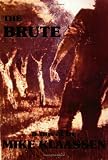
The Brute
by Mike Klaassen by Blue Works
Paperback ~ Release Date: 2005-06-01 
List Price: $14.99
Our Price: $14.69 Buy Now
|
|
MORE HELP FOR FICTION WRITERS Jordan E. Rosenfeld, author of Make a Scene: Crafting a Powerful Story One Scene at a Time (Writer's Digest Books, 2008), is offering online workshops for fiction writers. Check out her classes at: http://www.jordanrosenfeld.net/events-classes.html#online
|
|
|
|
|
Copyright 2009 Michael John Klaassen. All rights reserved |
|
|
|
|
|

