Mike - Head & Shoulders


FOR FICTION WRITERS

BY MIKE KLAASSEN 


Sign me up
November 2009
Volume I, Issue 5
Published monthly
ISSN: 1948-7150
You are receiving this newsletter either because someone forwarded it to you or you joined our mailing list. To change your subscription, see the links at the bottom of this email.
 
Please add mike@klaassen.kscoxmail.com to your whitelist or the address book in your email program, so you have no trouble receiving future issues.

You are welcome to forward this email to your fiction-writing friends. 
IN THIS ISSUE
Feature Article: Profanity in Young-Adult Fiction
About Mike
Books by Mike: CRACKS
More Help for Fiction Writers
Greetings!  
 
Carol and I recently returned from our first-ever cruise on an ocean liner.   Seven southern Caribbean islands in seven days.  A great way to travel, and a great way get a sample of what's out there: snorkeling, catamarans, old forts, and beautiful beaches.

On evenings and weekends I've been busy planting daffodils, pruning trees, and hurrying to transplant stuff before it gets nasty outside.  Sunday afternoons I have the challenging task of being a loyal Chiefs fan.  

Over the next few months, I plan to feature a series of articles about transitions.  Encourage your writing friends to subscribe, so they automatically get their own copies. 
 
Happy Fiction Writing,
 
Mike
FEATURE ARTICLE:  Cuss, Curse, or Clean It Up


Writers make lots of decisions, and writers of young-adult fiction are faced with choices regarding profanity.  Like it or not, the use of profanity is an effective device for portraying emotion in fiction, adding realism to dialogue and to a character's introspection.  So how do writers balance the desire for authenticity with the need to be responsible to young readers? 

The choices come down to:

  • Liberal use of profanity
  • Omission of profanity
  • Sparse use of profanity
  • Summarized profanity
  • Sanitized profanity


LIBERAL USE OF PROFANITY.  In some ways, this is the easiest of the choices.  Rather than agonize about the use of foul language in novels, writers may just use it wherever it seems natural.  After all, nearly everyone has heard and read foul language before, and it's been decades since it's been taboo in fiction. 


On the other hand, there are serious drawbacks to the liberal use of profanity.  First of all, if a writer needs profanity to make teen dialogue seem realistic, then a lot of it may be needed.  For any work of fiction, overuse of profanity can become an annoying distraction to the reader.  For some readers, it's an outright turnoff, leading them to promptly put the book down. 


For young-adult fiction, there's a substantial economic price for the use of profanity.  Although some youngsters purchase their own reading material, buyers of teen novels are often parents, grandparents, teachers, and librarians.  Many adults are reluctant to purchase teen fiction that includes gratuitous use of profanity.  Editors and publishers may share those feelings.


OMISSION OF PROFANITY.  An alternative to the liberal use of profanity is to avoid the issue by totally leaving it out of the manuscript.  After all, the best of fictional dialogue isn't a transcription of real-life conversation: it's distilled down to the very best and most appropriate, given the needs of the story. 


If the characters and dialogue in the story are believable without profanity, there's no problem.  But will all of the characters be believable if they never use profanity, even in situations where its use seems natural?  Maybe a compromise is in order. 


SPARSE USE OF PROFANITY.  Why not use profanity only in those few situations that are most important to the story?  This approach has a benefit: if you seldom use profanity in your writing, it will stand out more when you actually do. 


SUMMARIZED USE OF PROFANITY.  If a writer is trying to limit or avoid the outright use of foul language, but the needs of the story call for it, the use of summary may be an acceptable alternative.  Summarized profanity means using phrases like, "he cussed," and "she cursed," and "he cut loose with a string of expletives."  In fact, summary may very well serve the story better than interrupting the action with dialogue or distracting the reader with specific curse words. 


SANITIZED PROFANITY.  By sanitized I mean sugar-coated substitutes.  "Fiddle-dee-dee," might be fine for Scarlet O'Hara in Gone with the Wind.  "Oh, fudge!" "Shoot!" and "Darn it!" would be appropriate for some characters.  On the other hand, there are situations where the words manure, dung, or poop might not adequately communicate a particular character's emotion.


My young-adult novels deal with troubled teens, boys likely to pepper their conversation with expletives.  As a novelist, I've weighed the costs and benefits of using profanity and have developed my personal guidelines: 

  • The younger the intended reader, the harder it is to justify using any  profanity at all
  • I won't use liberal amounts of profanity in my writing; in fact, I'll use profanity only reluctantly where I believe the benefits outweigh the costs
  • I'll use sanitized cussing where appropriate and summarized profanity where it serves the story best


Writing is largely about making choices, and writers of young-adult fiction are faced with decisions that may influence young people.  Hopefully, this article has helped you make your own decisions about the use of profanity in fiction. 


WANT TO USE THIS ARTICLE IN YOUR E-ZINE OR WEBSITE?  You may, as long as you include this complete blurb with it: Author Mike Klaassen publishes "For Fiction Writers," a monthly e-zine. 


ABOUT MIKE
 
Mike Klaassen is an author devoted to writing novels and to helping others understand the craft of writing fiction. 

"My goal as a novelist," says Klaassen, "is to write fiction that even the most reluctant readers will enjoy.   My goal as a nonfiction author is to help fiction writers achieve the cutting edge in fiction-writing technique.  The objective in each of my articles is to present the most comprehensive analysis of the subject matter available anywhere."

Mike and his wife, Carol, live in Valley Center, Kansas (just north of Wichita) with two one-of-a-kind skunk dogs, a cat, and a pond full of goldfish. 
 
You can learn more about Mike and his novels at www.mikeklaassen.com 
 
Other articles and book reviews by Mike are posted at www.helium.com/users/103975/show_articles
 
Mike Klaassen
P.O.Box 4781
Wichita, KS 67204-0781
(316) 744-4325
 

BOOKS BY MIKE 

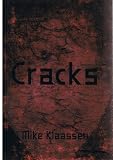
CRACKS, by Mike Klaassen
 
When the New Madrid Fault rocks the Ozarks of Arkansas, five troubled teens struggle to survive cave-ins, rock slides, wild animals -- and each other. 
 
Rated Teen+
  • Drugs
  • Wild boars
  • Murder
  • Maggots
  • Swearing
  • Knife fights

Reviews: 

 "Two messages are brought clearly to the reader's attention in Mike Klaassen's second novel, CRACKS: Crime doesn't pay, but genuine love of family does . . . .  This young adolescent's book provides hook after hook to keep teens reading . . . ."
Donna Rothgeb, Teacher
 
"Combine Holes with Lord of the Flies and Deliverance and you have an appreciation for CRACKS.  This is a mature young adult novel . . . .  We rated this excellent adventure four hearts."
Bob Spear, Heartland Reviews
 
It's one thing to teach or write about fiction; it's quiet another to write novel-length fiction.  Get your own copy of CRACKS, and see for yourself how Mike incorporates the concepts and techniques of the fiction-writing craft into a novel.
 
CRACKS is available through the Amazon.com link below.  
 
Cracks
by Mike Klaassen by Blue Works
Paperback
List Price: $14.99
Our Price: $11.95
Buy Now
 
 
MORE HELP FOR FICTION WRITERS

Jordan E. Rosenfeld
, author of Make a Scene: Crafting a Powerful Story One Scene at a Time (Writer's Digest Books, 2008), is offering online workshops for fiction writers.  Check out her classes at: http://www.jordanrosenfeld.net/events-classes.html#online


Author and literary agent, Evan Marshall, hosts an amazing website for writers.  Check it out at: http://themarshallplanet.ning.com/


If you want to see the potential of a writers' blog, take a peek at Prairie Chicks Write Romance: http://prairiechickswriteromance.blogspot.com/


You are also welcome to forward this ezine to your fiction-writing friends.  See "Forward email" below.
SUBSCRIBE NOW

If you have enjoyed this newsletter and are not already receiving it automatically each month, you are welcome to a free subscription.  Just click on the "Join Our Mailing List"  button at the top of this page.  Or if you prefer, send an email to mike@klaassen.kscoxmail.com and ask to be added to Mike's ezine list.

For a limited time only (subject to cancellation without prior notice), subscribers to the ezine are entitled to Mike's Special Report: "Secrets to Enhancing Emotion in Fiction."

Copyright 2009 Michael John Klaassen. All rights reserved