What is causing Heat Stress?
Unusually warm and dry conditions during May and a forecast
for an equally hot and dry June, lawns are already showing the signs of summer
stress.
 Signs of Heat Stress Signs of Heat Stress
The first sign of heat stress is a grayish-purple appearance and a foot printing effect. Foot printing effect occurs when you step on the grass and it doesn't bounce right back up - it stays flat. If the lawn does not receive sufficient irrigation soon it will turn brown. Once a lawn turns brown it can take up to three weeks before it will fully recover.
Prevention
 Watering - To keep your lawn healthy and lush during periods of dry weather it must receive 1.5 - 2 inches of water per week. It is best to water infrequently for longer periods of time rather than daily light watering. It is always better to water during the morning hours. On very hot days it is good to syringe the turf in the afternoon. Avoid watering at night unless you
have no other choice. Watering - To keep your lawn healthy and lush during periods of dry weather it must receive 1.5 - 2 inches of water per week. It is best to water infrequently for longer periods of time rather than daily light watering. It is always better to water during the morning hours. On very hot days it is good to syringe the turf in the afternoon. Avoid watering at night unless you
have no other choice.
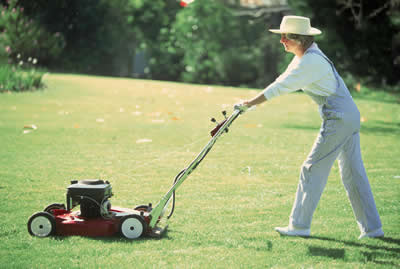 Mowing - Be sure to always mow with a sharp blade. Avoid
mowing during the hottest part of the day, because the lawn can turn brown
instantly. It is best to mow the lawn between late afternoon and dusk. Set the
mower blade no lower than 3 inches, because the longer the grass blade the
longer the root. Mow frequently enough to avoid removing one-third of the grass
blade and always return the clippings. Mowing - Be sure to always mow with a sharp blade. Avoid
mowing during the hottest part of the day, because the lawn can turn brown
instantly. It is best to mow the lawn between late afternoon and dusk. Set the
mower blade no lower than 3 inches, because the longer the grass blade the
longer the root. Mow frequently enough to avoid removing one-third of the grass
blade and always return the clippings.
- Nutrient Management - During periods of hot dry weather Lawn Dawg will adjust our fertilizer program to apply products that help protect the lawn and minimize any potential for burn. Proper nutrient management will speed up the recovery process if the lawn slips into drought stress.
- Pest Management - When a lawn is suffering from heat and/or
drought stress, it becomes more susceptible to invasion and injury from weeds,
insects and diseases. Your Lawn Dawg Representative is an expert at identifying
problems and protecting your lawn from serious injury.
- Notify - If your lawn turns brown, it doesn't
mean its dead. Dormancy is a natural response by a cool-season grass during
excessively hot and dry conditions. However, if you have any concerns please
call us and we'll be happy to inspect the lawn to assure its safe.
|





