|
Join Our List
|  |
|
Hamm Memorial Psychiatric Clinic
| |
Hamm Clinic's Mission is to provide:
- Quality, culturally competent outpatient assessment and treatment for adults in our community, particularly the underserved and those unable to afford the full cost of care.
- Expert training and education for mental health professionals.
- Leadership in our community for effective mental health care.
|
Contact Us
| |
Hamm Clinic
408 Saint Peter Street
Suite 429
Saint Paul, Minnesota 55102
Tel: 651-224-0614
newsletter@hammclinic.org
|
|
| |
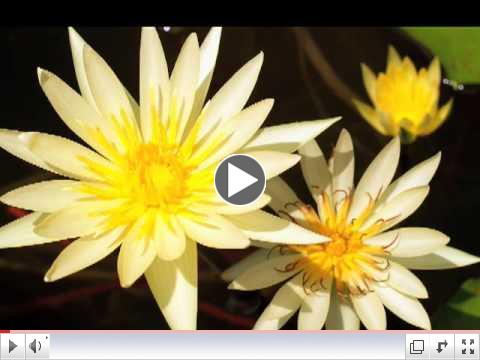
Relaxation Meditation Video
(5 minutes)
|
|
|
|
"Do what you can
Where you are With what you have" Theodore Roosevelt
|
|
Greetings!
Welcome to the Fall issue of "Balanced Living". The theme of this issue is Stress. What is it? And... what can we do about it? Also, did you know that for the past two years, Hamm Clinic and the Landmark Center have co-sponsored a Health and Wellness Fair? Read more below. Don't forget to mark your calendar for October 12th!
If you haven't subscribed, be sure to JOIN OUR MAILING LIST!
|
|
Gayle Godfrey, RN
|
Liz Kelly
| |
Nursing Services
|
Communications
|
|
|
Relief from Stress - by Gayle Godfrey, RN
| |
Ahhhhhhh....... What a Wonderful Thing

We could learn a few things from our furry friends. A fascinating study from Purdue University (Forbes, 2008) found that laboratory mice showed less signs of stress when they were able to control aspects of their environment. To understand the effects of stress, let's first review the definitions.
The term "stress", as it is currently used, was coined by Hans Selye in 1936, who defined it as "the non-specific response of the body to any demand for change". (AIS, n.d.). We know that there are two types of stress: eustress and distress. Eustress is defined as the optimal amount of stress which helps promote health and growth. Sometimes, stressful events push us to perform to higher levels and even excel. Distress, on the other hand, is defined as something that causes strain, anxiety, or suffering. And not surprisingly, unrelieved eustress can become distress.
When we experience stress, we respond physically with the "Fight or Flight Response"... causing the hormones epinephrine (adrenaline) and norepinephrine to be released in the body. This, in turn leads to an increase in pulse and blood pressure. Breathing becomes more rapid and pupils dilate creating tunnel vision, helpful for better focus. Also, our digestion slows allowing blood to flow more efficiently to the muscles.
When we are under constant stress, we are essentially living our lives in panic mode 24 hours a day. Unrelieved eustress becomes distress, and unrelieved distress leads to:
- Heart attack and Hypertension
- Stroke
- Diabetes
- Insomnia
- Accidents
- Immune system weakness
- Headache, Backache and Chronic Pain
Breaking the Cycle of Stress
How does one begin? First, identify activities that relieve stress for YOU. Keep in mind, these activities may be different from those of your friends.
What calms you? What gives you energy? A walk or jog in the park - socializing with friends - reading a compelling book - spending time with your pets - sitting somewhere in a quiet wood?
Meditation, an activity that in recent years has gained recognition by the medical community, has been found to reduce stress. A study done at the University of Massachusetts Medical School found that meditation reduced the symptoms of anxiety and panic in 20 of the 22 participants (Kabat-Zinn, Kristeller, et al. 1992). For more information on meditation see the "Health Tips" section below.
Once you have identified the activities that relieve your stress, make a plan and make it a priority to engage in one of these strategies every day.
American Institute of Stress, (n.d.) Stress, Definition of Stress, Stressor, What is Stress? Eustress? Retrieved online July 21, 2011 @http://www.stress.org/topic-definition-stress.htm
Forbes, B. (2008) Stress relief: Lab mice that exercise control may be more normal. Purdue University. Retrieved online July 28, 2011 @ http://www.purdue.edu/uns/x/2008b/081208GarnerLabmice.html
Kabat-Zinn, J., Massion, A., Kristeller, J., Peterson, L., Fletcher, K., Pbert, I., Lenderking, W., & Santorelli, S. (1992) Effectiveness of a meditation-based stress reduction program in the treatment of anxiety disorders. The American Journal of Psychiatry.
|
|
Health TRIVIA
| |

What's in a Smile?
According to the August, 2011 issue of "O, The Oprah Magazine", Yale professor, Marianne LaFrance, PhD., has uncovered some interesting facts about the SMILE. In a study published last year, researchers who analyzed the photos of 230 male athletes found that the men with big smiles, on average lived longer lives... much longer! These apparently joyful men lived 4.9 years longer than the ones with partial smiles, and 7 years longer than the players with no grin at all.
So go ahead and... SMILE!
|
|
New Mind/Body Wellness Class
| | |

Beyond an Idea
When volunteer Sharon Mrocek heard that the clinic had recently hired a psychiatric nurse, she was delighted. Sharon is a retired psychiatric nurse and has a high regard for her former profession.
What does a psychiatric nurse do?
A psychiatric nurse seeks to engage patients in a positive and collaborative way that will empower them to draw on his or her inner resources in addition to any other treatment they may be receiving.
When Sharon and Gayle met, they discovered that they shared many of the same experiences and had come to similar conclusions about their vocation. They agreed that the mental health care community could do a better job of providing patients with information about maintaining their physical health. For instance, patients may not know that unwanted side effects from medication, such as weight gain or sleeplessness, may be minimized or in some cases eliminated with small adjustments to one's daily routine.
Gayle had a solution in mind. If she could, she would teach a class of Hamm patients, in a small group setting about the Mind/Body connection. Great idea, but how? Unlike therapy and medication management, insurance companies won't reimburse for a "wellness" class. As happens with so many great ideas, it could only happen with outside funding.
Thankfully, the solution presented itself. A few weeks later, Sharon and her husband Richard agreed to fully finance a pilot "Mind/Body Wellness" Class for Hamm Clinic patients. The class, to be taught by Gayle, would complement patients clinical care with information, strategies and techniques for enhanced physical health.
The class began in August. Stay tuned!
|
|
Health TIP from the Nurse
| | |
Try This Simple Meditation Technique
 This meditation technique was pioneered by Harvard physician Herbert Benson in the 1970's. Practiced daily, it can help you control stress, decrease anxiety, improve cardiovascular health and achieve greater capacity for relaxation. This meditation technique was pioneered by Harvard physician Herbert Benson in the 1970's. Practiced daily, it can help you control stress, decrease anxiety, improve cardiovascular health and achieve greater capacity for relaxation.
Find a quiet place where you can sit comfortably and won't be disturbed. Close your eyes. Start by consciously relaxing your muscles. First, tense then relax your feet. Then do the same with the calves in your legs. Continue this process of tensing and relaxing your muscles progressing up to your face. Breathe through your nose in a free and natural way.
Next, pick a word or phrase that has positive meaning. It may be a word like "peace" or it may originate from your own, personal spiritual tradition. The technique consists of the S-L-O-W, silent repetition of a word or phrase while sitting for 10-20 minutes. Resist the urge to fall asleep (though it's a good sign; you are starting to relax.) When intruding thoughts and distractions come (and they will), without judgement, ignore them and return to the repetition. It is OK to open your eyes to check the time, but don't set an alarm.
When you have finished, remain seated, first with your eyes closed and then with your eyes open. Gradually allow your thoughts to return to every day life.
According to Dr. Benson, this technique may require a little practice (give yourself several tries using the same word), but over time, almost anyone can learn to achieve the desired state of relaxation.
|
|
Hamm Clinic NEWS
| | |
Come One - Come All!
 | |
Darcy at Welcome Table
|
3rd Annual
Health and Wellness Fair
MN Landmark Center
75 West Fifth Street
Wednesday, October 12th
(11:00 am - 1:00 pm)
Many of us would like to develop healthier habits but don't know where to begin?
Whether you're at work or home, give yourself a treat. Over the lunch hour on October 12th, visit our 3rd annual Health and Wellness Fair at the historic Landmark Center in beautiful downtown Saint Paul. You might just find your answer.
Here are few of the organizations that will be represented:
- Metro Agency on Aging
- Allied Health and Wellness
- Episcopal Homes of MN
- Clouds in Water Zen Center
- The Emily Program
- Health East Hospice
- Mastel's Health Foods
- Minnesota Psychiatric Society
- Present Moments Herbs & Books
And while you are there, enjoy the entertainment (including live banjo music and the Elizabethan Syngers... a Renaissance inspired ensemble), demonstrations and healthy snacks.
|
|
Help spread the word... FORWARD this newsletter TO A FRIEND!
Have a wonderful day!
|
|
|
|
|


