|
You've Found Newborn Kittens!
Recently we received a panicked call from a woman who reported a litter of newborn kittens, nested in an old sofa that her neighbor had left for Goodwill to pick up. Mama Cat was nowhere in sight, apparently having been frightened off when the sofa had been cruelly moved to the street. Fix Our Ferals volunteers rushed over, rescued the tiny kittens, trapped their mom, and relocated the family to a safe, foster home.
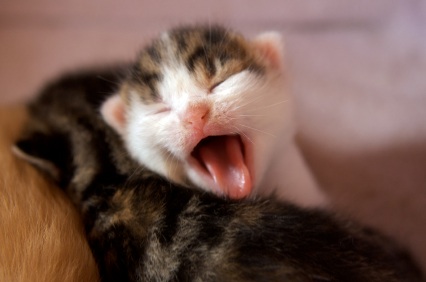 Thankfully, most discoveries of newborn kittens do not call for human assistance, and in fact, no intervention is generally the best thing you can do. Thankfully, most discoveries of newborn kittens do not call for human assistance, and in fact, no intervention is generally the best thing you can do.
February through September is officially Kitten Season, and calls are steadily coming in from people who have discovered a nest of newborns, often in their own backyards. Sometimes, callers are especially distressed because the mother cat is nowhere to be found. And while our good-hearted instincts tell us to rush in and rescue the poor, little itty bitty creatures, the best advice, is to leave them alone, unless you are very certain they have been abandoned.
Here's what to do if you find a nest of newborn kittens:
1. Remember that Mom knows best. The goal is to keep the mother and kittens together to ensure their best chances for the kittens' survival. In the first weeks of their lives, kittens need their mother's care and antibodies from her milk. And as they grow, the mother will begin to give her kittens the critical training they will need to survive outdoors, on their own.
2. Determine the age of the kittens: - Under one week: Eyes shut, ears flat to head, skin pinkish. Part of umbilical cord may be attached. Scooting on belly.
- 10-14 days: Eyes begin to open, ears flat. Smaller than your hand. Still scoot.
- Three weeks: Eyes fully open - blue in color, ears erect, tooth buds visible. Walking but wobbly.
For descriptions of kittens older than 3 weeks, click here.
3. Quietly observe the nest from a safe distance to determine if Mama Cat is present. Though the mother stays continually with her litter for the first day or two after giving birth, she will need to leave the nest for short periods of time in order to find food for herself. If the kittens are clean and sleeping in a heap, mom is most likely out scouting for something to eat. Also, it is instinctual for the mother to move her kittens one at a time to a new "safer" location, especially in the first few weeks of their lives.
If after four hours, she has not returned, you may have to conclude she has abandoned her kittens. As tiny kittens easily become chilled and dehydrated, this would be the time we recommend human intervention.
For information on caring for kittens, click here.
4. Above all, do not interfere with the kittens or the nest. It is essential to their survival that you do not handle them, or try to create a shelter, keep them warm, or feed them, as long as the mother is around. These interventions may stress the mother and cause her to abandon her family.
5. You can help Mama Cat by providing food and water. Be sure to place the dishes far enough away from the nest that you do not disturb mom and her kittens, or draw predators such as raccoons to the nest area. And of course, keep dogs and children far away.
6. Mama Cat needs to be trapped and spayed, but not now. If you happen to trap a female with enlarged nipples, you must search for the kittens. Inform the vet that the mother has kittens. Return her to nurse her kittens within 12 hours of trapping.
As for the Sofa Cat Family, Mama Cat and kittens were placed in foster care. The kittens were eventually socialized and all found good homes. Their mother who was too feral for adoption, was spayed and returned to her neighborhood to live a well-fed and much healthier outdoor life, thanks to a caring individual.
Coming Up Next Month: To Socialize or Not to Socialize. If you choose to socialize a kitten, you must commit to a serious investment of time and money...and to give or find the kitten a good home.
|