|
We hope you enjoy this issue of YWM. In
a timely effort to honor the transformative
contributions of Dr. Martin Luther King, Jr.
to racial equality and social justice in
America, we dedicate this issue to exploring
the concept of social change.
"Change" is a buzzword dominating electoral
politics these days. But what does it really
mean, and is it a viable political message? Younger
women are soul-searching to find a presidential
candidate who resonates with their ideological views,
but can also deliver tangible positive results in their
lives.
In addition to featuring important feminist
headlines from the past month, several of the
articles below strive to broach complex
dilemmas surrounding the most diverse,
explosive presidential field in American
history. Specifically, we have chosen
articles that focus on how younger women
grapple with a unique set of issues when
casting their ballots.
Also featured in this issue is an interview
with YWTF National Coordinating Board Media
Consultant Alyssa Friedland. In an effort to
better acquaint you with the national
leadership of YWTF, the next several issues
will include interviews with board members.
If there are any questions you are dying to
ask the National Board, please send them in!
And finally, there is still time to support
YWTF through making a contribution to our
annual appeal! Click on the link below to
bolster our efforts in making younger women's
voices heard. We are so grateful for your
generous contributions.
Donate
Now!
Sincerely,
Alison, Shannon, Sheerine and
Alyssa
and, as always, the entire Coordinating Board
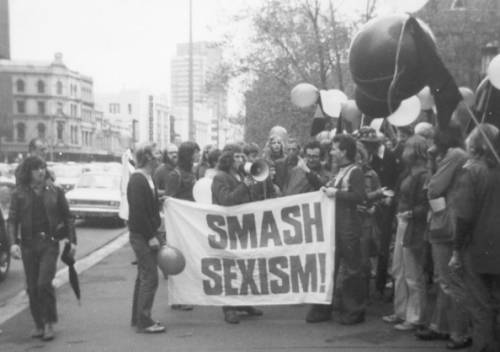
| Seeing Sexism |
 |
|
From
Alternet
In an election where sexism is seen as passé, we
need a politics of gender more than ever.
But it's different this time, say the women
of my
daughter's generation. We've won the battle.
We don't
need the White House. Say what? We don't need
it?
We're past it? We have all heard that before,
too. It's an
old, old story. Hillary is the establishment?
Hillary
stole the vote in New Hampshire? Hillary is
passé.
Hillary is too close to Bill. Hillary is not
close enough to
Bill. Hillary is calculating. Hillary is
cold. Hillary cried.
(Actually, she didn't cry -- as Jon Stewart
and I pointed
out). She just looked human. She showed a
teeny bit
of vulnerability. UNFAIR! They scream. FEMININE
WILES! They scream. The heart of being a
woman is
to be always in the wrong.
Let's be honest here. We don't know how a female
President would act. But we could look
around. I know
America is a provincial country, but we could
look at
Germany, Ireland, England, Pakistan, India,
Argentina,
and Finland--to name a few. We could ask why the
USA, out of all the so-called "civilized"
countries, is so
damned afraid of a woman leader.
|
| Sanctuary's Human Face |
|
|
From
ColorLines
Elvira Arellano met with Felipe Calderon in his salon.
These household names from Michoacán, Mexico
followed starkly different paths to celebrity: the latter, a
Harvard graduate, had just taken the Mexican
presidency with only a .58-percent margin of victory
and amidst fervent dissent; the former, a cleaning
lady, had just been deported from the United States
after taking sanctuary to evade immigration laws.
Elvira came to Felipe seeking a diplomatic visa to
return to the U.S. legally. Already praised as a peace
ambassador and the "Rosita Parks" of immigrant
rights, she believed she could help these two nations
work out a deal on migrants, just as they had with the
North American Free Trade Agreement and the drug
wars. Perhaps uneasy with people who question
authority, or concerned that turning a deportee into a
government officer would upset the markets, Felipe
politely declined. Elvira left the salon disappointed and
criticized her new president to the leading newspaper,
La Jornada: "He is very weak."
|
| Five Reasons Why "Teach Women Self-Defense" Isn't a Comprehensive Solution to Rape |
|
|
From Alternet
Rape prevention efforts have focused on teaching
women to fight back, but stopping assault requires a
more complex strategy.
Before I start this post in earnest, I want to make it
clear that I am not suggesting that women should not
take self-defense courses, that women should not get
involved in martial arts, or that there's no such thing as
a woman who has successfully defended herself
against assault, sexual or otherwise. What this post is
intended to address is the exceedingly common
recommendation in rape threads that women
should "learn how to protect themselves" as the (one-
and-only) solution to rape, and the equally frequent
comment that people have enrolled their daughters in
martial arts classes so they "will know how to take
care of themselves."
Self-protection is, at best, one part of a comprehensive
solution to rape--and it's not even as straightforward
as it may seem. Looking at the complex and practical
realities of what teaching women self-defense in
regard to rape prevention really means is the focus of
this post.
|
| US Abortion Rate Continues Long-Term Decline, Falling to Lowest Level Since 1974 |
|
|
From Guttmacher
Institute
Increased Use of Medication Abortion Stems Decline
in Providers
In 2005, the U.S. abortion rate declined to 19.4
abortions per 1,000 women aged 15-44, continuing
the downward trend that started after the abortion rate
peaked at 29.3 in 1981, according to a new
Guttmacher Institute census of U.S. abortion
providers. The abortion rate is now at its lowest level
since 1974. The number of abortions declined as well,
to a total of 1.2 million in 2005, 25% below the all-time
high of 1.6 million abortions in 1990.
Despite these declines, slightly more than one in five
pregnancies ended in abortion in 2005, an indicator of
how much still needs to be done to help women and
their partners avoid unintended pregnancy. "Our
policymakers at the state and federal levels need to
understand that behind virtually every abortion is an
unintended pregnancy, so we must redouble our
efforts towards prevention, through better access to
contraception," says Sharon L. Camp, president and
CEO of the Guttmacher Institute.
|
| Women are Never Front-Runners |
|
|
From New York Times
THE woman in question became a lawyer after some
years as a community organizer, married a
corporate
lawyer and is the mother of two little girls,
ages 9 and
6. Herself the daughter of a white American
mother
and a black African father - in this
race-conscious
country, she is considered black - she served
as a
state legislator for eight years, and became an
inspirational voice for national unity
Be honest: Do you think this is the biography of
someone who could be elected to the United
States
Senate? After less than one term there, do
you believe
she could be a viable candidate to head the most
powerful nation on earth?
If you answered no to either question, you're
not alone.
Gender is probably the most restricting force in
American life, whether the question is who
must be in
the kitchen or who could be in the White
House. This
country is way down the list of countries
electing
women and, according to one study, it polarizes
gender roles more than the average democracy.
|
| The Fence |
|
|
From Huffington
Post
As a bi-racial, Ivy-League educated,
thirty-something
feminist who campaigned for Bill Clinton, the
election
has me squarely on the fence. I love Barack's
vision
and know intimately the mosaic of ideas and
experiences that helped shape it. I also feel a
profound loyalty to Hillary who, after much
sacrifice,
has the chance to shatter the glass ceiling
once and
for all.
Gloria Steinem's op-ed in the New York Times
didn't
help Team Hillary [full disclosure, GS is my
godmother]. It crystallized for me that
Hillary, no matter
how symbolically potent, runs the risk of
being seen
as a Second Wave candidate. She's one of the
first
women to gain power and access, and may be
one of
the first with power and access to ignore the
criticisms
of women of color, progressive men, and many
young
women, all of whom have been sending clear
messages to Second Wave feminist leadership for
well over a decade.
|
| Black Women Are Invisible This Election Season |
|
|
From Alternet
The presidential candidacy is still out of
reach for a woman of color. Her disadvantage
runs too deep.
Our national conversation is a messy
collision of race and gender, with ageism and
the questionable state of our media tossed in
as collateral damage.
The 2008 presidential race is making us think
hard on everything we thought we knew or felt
about our country -- and who we each are in
it. But as an American woman of color, an
African American, I don't get the feeling too
many others are giving much thought to my place.
|
| Feminism and romantic love make very happy bedfellows |
|
|
From Guardian
Unlimited
The news, for the terminally declining population of
women who identify as feminists, is good. According
to a study by researchers at Rutgers University, New
Jersey, the classic New Yorker cartoon of two women
discussing relationships in a coffee shop - "sex
brought us together but gender drove us apart" - is
plain wrong. Feminists are happier in love and better
in bed.
I'm extrapolating a wee bit optimistically, but it's
cheering to come across a study about the f-word that
doesn't conclude 99% of respondents think the
women's movement was about unshaved armpits.
What the Rutgers researchers actually found was that,
in a survey of college students and older adults, all in
heterosexual relationships, men paired with feminist
partners reported greater relationship stability and
sexual satisfaction. In addition, there was consistent
evidence that male feminist partners were healthier for
women's relationships, while there was scant
evidence that women's feminism created conflict in
liaisons.
|
|
Meet YWTF Board Member Alyssa Friedland |
|
|
|
Meet Alyssa Friedland.
If you're wondering
more about a major force behind the
Younger Women's Movement, you want to
read this feature!
As one of the two Media Consultants that
edits YWM, Alyssa brings a wealth of
experience to YWTF's National Coordinating
Board. Alyssa works in
social-cause advocacy and marketing for a
small public relations firm in DC. Alyssa
graduated from Georgetown University in 2006
where she founded support services for women
affected by eating disturbances.
Alyssa has always been passionate about
health and
science and believes that ensuring all women
are supported and healthy is the root of her
commitment to equality. Learn more about
what makes an accomplished younger woman like
Alyssa tick below:
Tell us more about your full time job.
I try to make the corporate world more
LGBT-friendly. One ad (no rainbows!),
commercial, employee resource group, piece of
legislation, and health care benefit at a
time. I also
help healthcare related organizations and
non-profits with their communications strategies.
Describe the moment you first identified
as a feminist.
It wasn't really a moment and I'm sure I
didn't know what 'feminist' meant, but I was
probably 7 or 8 years old. When I was a kid,
my mom worked as a scientist in a research
lab. She had 2 or 3 grad students working
with her, and they were all women. I would
come to work with her in the evenings and on
weekends and sit in a corner and play blocks
or draw with the students when they were
free. They were my first role models.
Tell us your guiltiest pleasures.
Breakfast foods. I love every breakfast food.
My favorites are pastries dipped in coffee or
chocolate and these amazing
egg/bacon/cheese/avocado/tomato sandwiches
that my boyfriend makes.
Do you have a hidden talent?
I can juggle! 3 things and they have to be
round. I use this skill more than you might
think...
What's the best vacation you've ever been
on?
A few come to mind! In college, 4 friends and
I drove from DC to Montreal for spring break.
On the way, we were nearly in about 3
accidents, we stayed in a house in Vermont so
remote it had no address, we took some photos
that, well, if my friends ever run for
office, I have evidence that could do serious
damage to their images, and I had to be
rescued by ski patrol. But it was fun!
If you had to pick a song that captured
your essence, what would it be?
"Escapade" by Janet Jackson. It is pop heaven
and totally 80's, but I rocked out to that
song from about 1989 until I bought my first
CD player. And now you can watch it on YouTube.
What's the most useful piece of advice you
ever recieved from a female friend or role
model?
"It's not about needing, it's about wanting!"
- My aunt. This
was probably in reference to shoes, but I can
apply it to anything.
|
Brought to you by the Younger Women at YWTF
|