|

New Class to Begin in Advent
Beginning on the First Sunday of Advent, November 27, 2011 at 10:45 AM in the Parish Hall.
A Thrill of Hope: The Christmas Story in Word and Art will begin the 1st Sunday in Advent and continue through Epiphany. The Christmas passages in Luke and Matthew are illustrated by John August Swanson with commentary by members of Candler University faculty.
Discussion follows each presentation. This is a lovely way to enjoy the beauty of this season and reflect on the power of story. Older children may find this interesting.
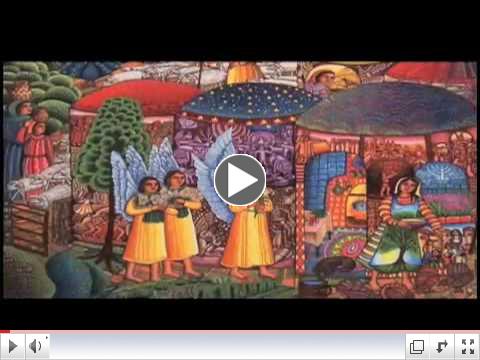 | |
A Thrill of Hope Video Introduction
|
|
|

Adult Christian Education Class
This Sunday, November 6th, the adult class will continue a new study called Transforming Scripture by Frank Wade. This comes from the Episcopal Church's series Transformation: The Episcopal Church in the 21st Century. Learn how we can better study and use scripture to transform our church and our own spiritual life.
Books will be ordered for your purchase. You may find a good deal on half.com or put it on your Kindle. Charles Smith will be the facilitator. The class begins at 10:45 AM in the Parish Hall.
|
|

November 6, 2011
All Saints Day
Proper 27
Prelude "The Trumpet Shall Sound" G.F. Handel
from Messiah
Processional Hymn 287
For All the Saints (vs.1-6
Gloria in Excelsis S 280
Psalm 78; 1-7 (spoken by half verse)
Sequence Hymn 625
Ye Holy Angels Bright (vs.1,2 and 3,4)
Offertory Anthem
"The Peace of God" Russell Schultz
The Doxology
Sanctus S 130
Bayeux Lord's Prayer
Post Communion Hymn 618
Ye Watchers and Ye Holy Ones
Closing Improvisation on Aberystwyth
|
 Liturgical Support for November 6, 2011 Liturgical Support for November 6, 2011
Thanks to those who will be serving us during this Sunday's service: (You can also view the Liturgical Support Calendar by clicking on this link for future reference.)
LECTORS
Mark Lang (8:00 AM)
Autumn Smith (9:30 AM)
Mary Cruz (9:30 AM)
CHALICE SERVERS
John McGarr
Diana McGarr
ACOLYTES
Ian S. - Crucifer
Maddie S. - Torchbearer
Sarah S. - Torchbearer
GREETER C. Towry USHERS C. Letz J.T. Smith Altar Guild
Karen Lang
Sue Cree
|
 ...the History of all Saints Day ...the History of all Saints Day
Christians have been honoring their saints and martyrs since at least the second century AD. The Martyrdom of Polycarp, probably written near the middle of the second century, attests to this reality: Accordingly, we afterwards took up his bones, more precious than the most exquisite jewels, and more pure than gold, and deposited them in a fitting place, so that when being gathered together, as opportunity is allowed us, with joy and rejoicing, the Lord shall grant us to celebrate the anniversary of his martyrdom, both in memory of those who have already finished their course, and for the exercising and preparation of those yet to walk in their steps .
Initially the calendars of saints and martyrs varied from location to location, and many times local churches honored local saints. However, gradually feast days became more universal. The first reference to a general feast celebrating all saints occurs in St Ephrem the Syrian (d. AD 373). St. John Chrysostom (d. AD 407) assigned a day to the feast, the first Sunday after Pentecost, where in the Eastern Churches the feast is celebrated to this day. In the West, this date was probably originally used, and then the feast was moved to May 13th. The current observance (November 1) probably originates from the time of Pope Gregory III (d. AD 741), and was likely first observed on November 1st in Germany. This fact makes the connection of the All Saints Feast with the pagan festival Samhain less likely, since Samhain was an Irish pagan feast, rather than German. The vigil of the Feast (the eve) has grown up in the English speaking countries as a festival in itself, All Hallows Eve, or Halloween. While many consider Halloween pagan (and in many instances the celebrations are for many), as far as the Church is concerned the date is simply the eve of the feast of All Saints. Many customs of Halloween reflect the Christian belief that on the feast's vigils we mock evil, because as Christians, it has no real power over us. However, for some Halloween is used for evil purposes, in which many Christians dabble unknowingly. David Morrison explains the proper relationship between Christians and Halloween. Various customs have developed related to Halloween. In the Middle Ages, poor people in the community begged for "soul cakes," and upon receiving these doughnuts, they would agree to pray for departed souls. This is the root of our modern day "trick-or-treat." The custom of masks and costumes developed to mock evil and perhaps confuse the evil spirits by dressing as one of their own. Some Christians visit cemeteries on Halloween, not to practice evil, but to commemorate departed relatives and friends, with picnics and the last flowers of the year. The day after All Saints day is called All Soul's Day, a day to remember and offer prayers up on behalf of all of the faithful departed. In many cultures it seems the two days share many customs.
|
 Visit St. Matthew's Website Visit St. Matthew's Website
Our website is finally up to date and current with all the information you need to stay informed of all the happenings at St. Matt's! For those who serve as acolytes and readers please consult the Liturgical Support Calendar online by clicking here.  Also you can view our Also you can view our
Monthly Newsletter online by clicking on the button on the left!
|
|