|
Strength does not come from physical capacity.
It comes from an
Indomitable Will. |
|
VISIT OUR PARTNERS


See our ad in this issue of Triad Living magazine:
__________________________
Are You in Need of Pond
|
If you have ever attended the Southern Ideal Home Show in Greensboro, you have seen wonderful displays of gardens, new products for Home or Garden and much more. As advisory board members for the show, Carolina Pondscapes would like to hear your comments or suggestions on what you like and dislike about the show. We are always looking for new ideas and suggestions on how to improve it.
Email us at info@CarolinaPondscapes.com
____________________________
|
|
Join Our Mailing List!
Receive monthy updates on whats
happening by Joining our Mailing list above. |
Need to have your pond cleaned out before the season begins? Call us now to schedule an appointment.
|
Our Newsletter is Growing!!!
If you would like to see certain things that we have not covered in the past newsletters, or would like to advertise with us, contact us at 336-451-0130 or email us and we will discuss those areas with you. We are always looking for great content that provides our customers ideas, products or suggestions on how to enjoy their water feature investments.
Email us at info@CarolinaPondscapes.com
____________________________
|
LED LIGHTINGCarolina Pondscapes wanted to make you aware that not only do we build ponds, but we are certified in landscaping lighting also. Professional lighting is much better than the typical lighting that is sold at the local Home Depot or Lowes. LED lighting is the new Craze! It uses a significantly less amount of electricity and last much longer than the older MR16 light bulbs which tend to burn out prematurely. If you need to upgrade your old lighting system with the new technology, we are here to help. Certification includes the Cast & Vista Lighting.  Email us at info@CarolinaPondscapes.com
____________________________
|
|
|
Two Diaries...
A Story About A Father and a Son
One day a Father took some time off from his busy schedule to take his young son fishing. No phone calls to make, no deadlines, no meetings, no traffic to fight... Just him and his young son at a secluded lake where they talked, went fishing, canoeing, talked some more and caught more fish. Time well spent for a Father and his son. Many years later, two diaries were found from each one of them. In the Fathers diary, it said, "Took my son fishing, a whole day WASTED", but in the sons diary, it said, "Went fishing with my Dad, it was the best day of my Life!"
|
Spring is around the corner!
Now is the time to begin to prepare for the upcoming spring season. Before long, it will be here and we will be enjoying the cool evenings beside out water features and seeing mother nature has in store for our entire landscape. Start planning now: Fish Food, Bacteria, Aquatic Plants...
Carolina Pondscapes can provide a solution for all of these products. Contact us know learn more or order any products.
336-451-0130
|
The Water
Hyacinth...
The water
hyacinth is a beautiful, delicate-looking little plant. Prized as an ornament, it sports six-pedaled
flowers ranging from a lovely purplish blue, to lavender, to pink. You can find it floating on the surface of
ponds in warm climates around the world.
The water
hyacinth is also one of the most productive plants on earth; its reproductive
rate astonished botanists and ecologist.
Although a single plant can produces as many as 5,000 seeds, the method
it prefers for colonizing a new area is to grow by doubling itself, sending out
short runner stems that become "daughter plants."
If a ponds'
surface is fairly still and undisturbed, the water hyacinth may cover the
entire pond in thirty days. On the first
day, you won't even notice it. In fact,
for the first few weeks you will have to search very hard to find it. On day 15, it will cover perhaps a single
square foot of the ponds' surface...a barely significant dollop of color
dotting the expanse of placid green.
On the
twentieth day (two-thirds of the way to the end of the month), you may happen
to notice a dense little patch of floating foliage, about the size of a small
mattress. you would be easily forgiven
if you mistook it for a boy's inflatable life raft, left behind during a family
picnic.
On day 29,
one-half of the ponds' surface will be open water. On the thirtieth day, the entire pond will be
covered by a blanket of water hyacinth.
You will not
see any water at all.
|
Carolina Pondscapes will again be one of the Featured Gardens
at the Southern Ideal Home Show. Come see our Water Feature display in a great outdoor setting.
March 26th-28th!
|
Fish
are cold-blooded creatures that cannot produce their own heat.
Instead, isoenzymes are produced as needed to provide them with bodily
functions such as the production of energy, regardless of temperature.
As the water gradually warms up in the spring, these isoenzymes are no
longer produced and regular enzyme systems begin to function.
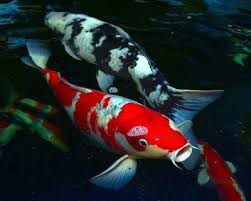
Prior to the fish getting "warm" in summer, there's a narrow period of time where
the water temperature has become too warm for the isoenzymes and too
cold for the fish's own immune system to function optimally. At the
same time, parasitic and bacterial populations are proliferating at
explosive rates - they don't mind the cold water. This is when the fish
are most prone to developing illnesses. Further compounding
these difficulties, fish have usually not been fed all winter - so they
have been in a catabolic energy balance (net loss of energy) instead of
gain. Feeding koi in the springtime is important in rebuilding these
energy stores and supporting the immune system. We recommend a Premium Cold Water Fish Food to restore and support their immune systems. |
Sludge at the bottom of your pond?
Got Algae problems?
We continually see great results with this new product.
Clear Water. Guaranteed!
DefensePAC
5 simple steps
All-Natural pond care that last!

Call now to order or email us at:
|
Where have my frogs gone?
They ribbit and hop in your pond all spring, summer and fall, but when
the cold weather comes, your frogs seem to disappear. Don't worry -
they don't croak! They simply take a long winter nap.
There
are more than 5,000 described species of frogs living on just about
every surface of the planet. From the frigid Arctic Circle to the
hottest deserts and everywhere in between - including your back yard.
These welcome additions to any pond have evolved a well-known strategy
to survive environmental extremes: They hibernate. Frogs that live in
temperate climates with cold winters, like those throughout much of the
United States, enter into a dormant state of sleep while living off
their body fat reserves.
Aquatic
frogs, like the leopard frog and the American bull frog, typically
hibernate underwater. Because their skin can absorb oxygen, they lie
just below the surface among aquatic plants where they'll be safe from
predators and frosty temperatures.
Terrestrial
frogs, like American toads, will hibernate on land. The ones that can
dig will create a comfortable burrow beneath the frost line and sleep
all winter; the ones that can't dig will find safe hiding places, like
hollowed-out logs, between rocks or beneath a pile of leaves, to
protect them from weather and predators. Incredibly, these frogs won't
freeze to death; though they may partially freeze in very cold
climates, a high concentration of glucose in their organs prevents them
from freezing completely. When spring comes, the frozen portions thaw
and they're ready to get back to eating and reproducing.
Frogs
are just one of dozens of critters that are drawn to water features. By
providing a habitat with food, water and shelter, you can draw wildlife
to your pond - which will enhance your enjoyment of it even more.
Now for a Trivia Question?
Do you know what a Group of Frogs are called?
What about a Group of Toads?
A Group of Frogs are called an Army of Frogs
whereas a Group of Toads are called a
Knot of Toads...
|
Learning
about pumps and plumbing in plain English can be valuable for people
who'd like to know more about their water feature, or for prospective
pond owners looking to learn a little bit more. To start off, you'll
want to educate yourself on the purpose of the pump in relation to your
pond's ecosystem. Pumps and plumbing make up the circulatory system of
a water feature and are extremely important when it comes to the
aesthetics of your pond. More importantly, they supply the system with
necessary oxygen levels and keep the water circulating.
There
are several different types of pumps to consider - from swimming pool
pumps to the common sump pump you find in your basement. According to
some experts, sometimes just the variety of pumps that are out there
can confuse potential water gardeners. Pumps made specifically for
water gardens are definitely the way to go. In fact, information about
what kind of system the pump will fit is usually right on the outside
of the box.
Up
until now, submersible pumps have been the craze or the standard for
water gardens. This means, the pump for your pond is submerged down in
the pond or for a newer pond, inside the skimmer box. What many pond
builders and customers are preferring these days is all electricity out
of the water, meaning, leaning towards an external pump, that sits
somewhere in the landscape, not inside the water. The benefits: No
electricity in the water, easier to access, stronger and more reliable
pumps.
Start with
the acronym GPH, meaning gallons per hour. The term "gallons per hour"
represents how many gallons that pump is circulating every hour and can
also be referred to as "rated flow." Other terms listed are volts,
watts, and amps, which basically represent your voltage, electrical
power, and current, respectively.
Then there's shut-off height,
which judges the amount of elevation change a pump can take to pump
water. For example, some pumps may not work with your 20-foot waterfall
and this is a way to find out without having to field test it. Perhaps
the most confusing phrase is total dynamic head (TDH). Total dynamic
head refers to the pressure on a pump caused by the interactions of
flow rate, pipe diameter, pipe length, elevation, and pipe material.
How much will the pump
cost to run it 24 hours a day, 7 days a week?
If you aren't convinced
that knowing a bit about your pumps and plumbing is important, the term
"operating cost" may perk your ears up a bit. This is where you find out how
much your pocketbook gets hit.Obviously, the bigger your pump, the larger the
operating cost per month, but you should also be aware that some pumps have a
lower operating cost than others. Seek out the high-efficiency kind. The basic
difference between the two is the motor. High efficiency pumps use less power.
It's important to note that operating costs are based on a median number,
however, so it isn't exact but will be very close.
AMPS x VOLTS (115 or 230)
= WATTS x HRS PER DAY OF OPERATION / 1000 x COST PER KILOWATT HOUR
Following are some pump operating costs.
Figures are based on 115 volt, 24 hour operation and a cost per kilowatt hour
of $0.09.
Operating cost per day for a pump drawing: 2.0 amps = $0.49, 5 amps = $1.24, 8 amps = $1.98, 10 amps = $2.48 |
|
Plan Now For Aquatic Plants...
Carolina Pondscapes grows our own Aquatic Plants! From a variety of WaterLilies, Pickerels, Iris's, Palms and even Lotuses. If you are wanting to add additional plants to your waterfeature and would like to get an idea of what does best, call us to discuss many options. Remember, the key to keeping a healthy pond is to have at least 60 to 70 percent coverage. This provides a natural filter along with oxygen, that fights off string algae.
| |
|
ORDER YOUR POND SUPPLIES HERE!
Certified Savio Dealer and Contractor
Member - National Assocation of Pond Professionals
Member - Southern Ideal Home Show Advisory Board
|
|
|


